Showing posts with label British media. Show all posts

Monday, 20 June 2016

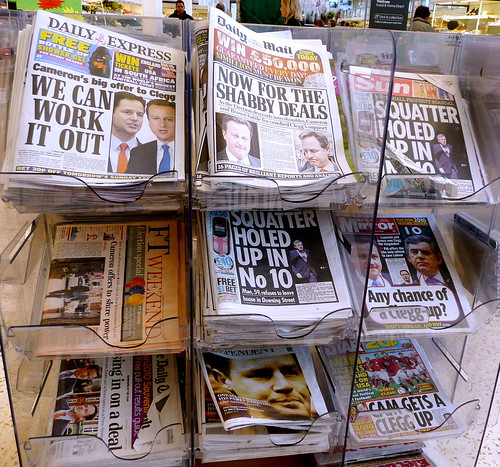
Yes, the gig for the UK journo in Brussels is to stretch the truth

A tell-all Facebook post by a former journalist at The Times has gone viral this weekend, exposing a truth that most in the EU press corps already know.

On Friday Martin Fletcher, a former foreign correspondent for Britain's The Times newspaper, posted some explosive allegations on Facebook.

"For 25 years our press has fed the British public a diet of distorted, mendacious and relentlessly hostile stories about the EU," he wrote. "And the journalist who set the tone was Boris Johnson."

Fletcher describes how, in 1999, he arrived in Brussels as The Times' Brussels correspondent, shortly after Boris Johnson's stint covering the EU capital for The Telegraph. Johnson later went on to become the Mayor of London and the main politician backing a British secession from the European Union. If there is a vote for Brexit on Thursday, Johnson is likely to be the next UK prime minister.

Thursday, 31 October 2013

Toilet humour

British MEPs and their national press were on pun overload this week after they learned that in the coming days the EU is going to set the criteria for which toilets can receive a special ‘ecolabel' based on using less water in a flush.

 The voluntary labels are designed to attract consumers who might want to save money on water or help the environment.

 The European Commission has been issuing these ecolabel criteria for various products such as television sets and textiles since 1992. 17,000 products have been given criteria for the ecolabel so far. But this time, the criteria are for a product that makes people giggle. So as soon as it was picked up as a news story, you could see the reaction coming a mile away.

 Silly topic + EU angle = UK headlines.

 And headlines there were. On Tuesday The Telegraph ran an article saying the EU is planning to “standardise the flush on lavatories”, introducing a “euro-flush” that will be imposed after an exhaustive study of European toilet habits.

Wednesday, 10 April 2013

Thatcher's rose-tinted American legacy

The American media’s reverential depiction of Margaret Thatcher this week says much about how the US and UK differ when looking at history.

As I’ve watched the international media coverage of the death of Margaret Thatcher over the past few days, I’ve almost felt like we're talking about different women.

In America, the wall-to-wall coverage – quite unusual for a foreign leader – has been downright worshipful. This tone has been matched by politicians on both sides of the aisle. "The world has lost one of the great champions of freedom and liberty, and America has lost a true friend,” declared Barack Obama on Monday. “She helped restore the confidence and pride that has always been the hallmark of Britain at its best."

Here in continental Western Europe, where Thatcher was far less popular, the coverage couldn’t be more different. One French politician remarked that Thatcher will see the miners she put out of work in hell, while German MP Michael Roth declared "her radical market policies and her Europe-sceptical politics will certainly not be missed.”

In the UK the coverage has been more nuanced. As people say, she was a bit like Marmite – you either loved her or you hated her. The political persuasions of British papers has determined which side they’ve chosen to emphasise. But no media outlet has ignored the fact that she split opinions. Even Conservative Prime Minister David Cameron’s statement to the Parliament on Monday acknowledged this.

Thursday, 14 July 2011

Will NotW shock force rethink of British press accuracy?

Another day, another euromyth batted about by the British tabloids. Today's little page seven gem, repeated in several papers including the Express and the Telegraph, is that Brussels is planning to force all sports players to wear the EU flag on their uniforms. And like most of the euromyths the British press peddles, this is complete nonsense.

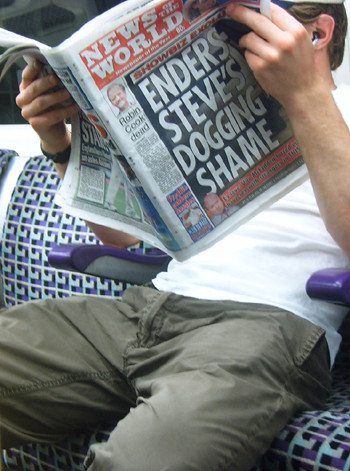
Of course this little piece of news can't hope to compete with the big story this week, the News of the World hacking scandal and the implosion of the Rupert Murdoch media empire in Britain. Commentators are saying that this scandal will erode the public's confidence in the British media. I can't help but think – looking at stories like this EU unform nonsense – that that's probably not such a bad thing. But will this scandal really force the British public to be more sceptical toward the claims made by their printed press, particularly regarding the EU?

As I wrote about in a related post today, the current scandal is not centred around the accuracy of British journalists but rather the methodology used by them in gathering news. The allegations being made may be shocking and sleazy, but not one of them involve false reporting. Will there be a connection, in the public perception, between Murdoch's manipulation of the British political class and his manipulation of the British public? Will people start to think about how their own attitude toward things, for instance the EU, is shaped by the stories they read in the tabloid press? And will they stop being so credulous when reading these things? As I read the comments on this Daily Express article from today, I'm inclined to think little in this respect is going to change.

Why the NewsCorp scandal won't resonate with Americans

The News of the World hacking scandal has progressed with shocking speed in the UK. Yesterday it seemed to reach a fevered climax when Rupert Murdoch withdrew his bid for satellite operator BSkyB after he was ceremoniously denounced by the entire British Parliament in an unprecedented session. It marks an incredible end of an era. Murdoch is effectively being banished from Britain after having held sway over the island's media, government and even police for decades.

Now commentators are speculating that the trouble for Murdoch's media empire News Corp, which also own many papers and Fox News in the US, is spreading across the Atlantic. The shares in News Corp on the New York Stock Exchange came crashing down even before Murdoch's BSkyB bid was withdrawn, and the billionaire himself had to buy up the shares to keep the price from collapsing.

Now there are concerns that the bribery allegations in the UK could get the company into legal trouble in the US, because it is illegal for a company publicly traded in America to pay bribes to foreign officials – which includes police officers. That, combined with new allegations that Murdoch's British papers also hacked into the phones of American 9/11 victims has prompted some Democrats in congress to call for an investigation into the matter. But will the public at large share their outrage?

Friday, 8 July 2011

Is Murdoch's influence in British politics coming to an end?

The News of the World phone hacking scandal in the UK has literally exploded this week, with fresh allegations that the Rupert Murdoch-owned paper hacked into the phones of murder victims, victims of the 7/7 terrorism attacks, relatives of dead soldiers and detectives investigating cases. Late yesterday it was announced that the 160-year-old paper will shut down as a result of the scandal, news that sent shock waves through Britain.

The allegations of bribing police officials and hacking into phones began several years ago, but the latest revelations are so distasteful that it seems to have given British politicians the resolve to publicly denounce Murdoch, something they never dared to do before. At the centre of the scandal is Rebekah Brooks, who was editor of News of the World at the time of the phone hacking but has since risen to become chief executive of Rupert Murdoch's global media empire News Corp. The company, which also owns Fox News and papers such as the New York Post in the US, controls a vast array of British tabloid papers and has long been known in the UK as a political power broker. Murdoch controls British politics, it is claimed, by threatening to use his papers to destroy any politician that doesn't give in to his demands.

But Murdopch's influence over British politics seemed to come to a climactic end this week, as one after another members of the British Parliament took to the floor and denounced not only News Corp, but also the fact that the parliament for so long has been bullied by the company. Conservative MP Zac Goldsmith said News Corp has "systematically corrupted the police and in my view has gelded this Parliament, to our shame.” Labour MP Chris Bryant said the hacking was symptomatic of the way News Corp operates around the world.

Wednesday, 18 May 2011

Protests greet Queen's first visit to Ireland

Queen Elizabeth II is making a historic visit to the Republic of Ireland this week, the first time a British monarch has visited Ireland in 100 years. That the visit is even happening is a sign of how much relations between the republic and its former imperial master have healed in recent times. But there are still people on the island, including both Catholics and Protestants in Northern Ireland, who are quite upset about the visit. And those people were out in force yesterday to greet the British monarch with insults and epithets.

The Queen's 'reconciliation visit' to Dublin, where she will be protected by more than 8,500 police officers backed by the army, has virtually shut down the city centre. Her visit, during which she will be dressed in all green, has been meticulously planned out to the last detail, carefully choreographed around every diplomatic sensitivity. She has been making a tour of memorial sights where Irish republican fighters died fighting against British rule. Today she will visit Croke Park stadium, the site of a notorious massacre where 14 Irish civilians were killed by British troops in 1920. She also spent this morning visiting the Guiness Storehouse, where amusingly she was offered a pint of Guiness at 9:30 in the morning. According to the AP she smiled but politely declined.

Monday, 2 May 2011

A royal weekend of symbolism

Wow, what a weekend – a royal wedding, beatification of a saint and now a martyrdom. What century are we living in again?

Last night's news that after a decade of efforts the United States has at long last killed Osama Bin Laden is just about the only news story people are talking about today. This is to be expected for such a symbolically important event – regardless of its actual real-world impact. The news finished off a weekend when the US was paying more attention than normal to events going on abroad, with the royal wedding in London and the huge mass in Rome that declared Pope John Paul II ready to be a saint. All three of these events were short on real-world impact but high on symbolic value.

Wednesday, 30 March 2011

The EU is not going to 'ban cars'

The credulousness of the UK public when it comes to all things EU-related was on full display Monday in the British media's coverage of the EU's much-awaited policy paper on transport.

Contrary to what you may have read in The TelegraphThe Daily Mail or the Evening Standard, the European Commission has not unveiled a plan to ban all cars from cities in 2050. This is just wrong. No journalist who actually looked at this policy paper could have reasonably come to the conclusion that the EU is banning cars. But the British tabloids never let the truth get in the way of a good story, especially one that fits their pre-defined narrative of how the EU oppresses the beleaguered British public.

The transport policy paper is a non-legislative roadmap that outlines a plan to reduce transport emissions while at the same time seeing an increase in transport over the next 40 years. It sets a goal of eliminating petrol-fueled combustion engines from vehicles meant for city driving by 2050. So, vehicles used for short-haul journeys within cities should either be electric or use alternative fuel in 40 years.

Friday, 13 August 2010

UK may switch to continental time zone

Well after hearing this news about David Cameron proposing to move the UK clocks permanently forward an hour to match the time zone of continental Europe, I must say I am very opposed! Well, only because it would mean I'd have to come in to work an hour earlier, since at the moment I have the advantage of working British hours while in Brussels. But actually I have to say I am very confused about what exactly Cameron is proposing here, and the British press coverage isn't helping.

According to this morning's papers, Cameron wants to move the UK into "permanent summer time," setting British clocks forward one hour year-round. He says he may make such a proposal in the Fall, and if it passes that would mean that instead of "falling back" an hour in October, British clocks would remain on British Summer Time. But at the same time, the rest of Europe would fall back an hour (all European countries observe daylight savings time). That would mean the UK and France would suddenly be in the same time zone for the first time ever!

Friday, 30 July 2010

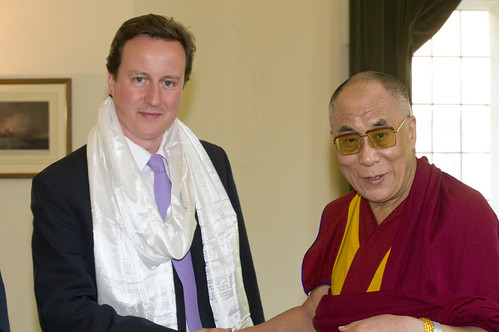
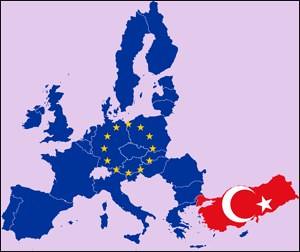
Cameron promises the world to Turkey

This week's speech by UK prime minister David Cameron in Ankara was notably aggressive – not toward his Turkish hosts, but toward Britain’s EU allies. Perhaps it shouldn’t come as too much of a surprise from a leader who promised to be combative with the EU when sticking up for Britain’s interests. But Cameron’s strong (and unrealistic) guarantees to Turkey and his condemnation of Germany and France will set UK foreign relations on a tricky tightrope walk. What exactly is Mr. Cameron playing at here?

In his speech, Cameron was unusually outspoken about his support for Turkey’s membership in the EU. Of course this is long-held British policy, and the previous Labour government was also supportive of the membership. But Cameron went above and beyond this by ratcheting up the rhetoric. Saying he wanted to “pave the road from Ankara to Brussels,” Cameron stated that “the EU would be poor without Turkey.” Pointing to Turkey’s membership in NATO, Cameron said “It’s just wrong to say Turkey can guard the camp but not be allowed to sit inside the tent.”

By contrast German foreign minister Guido Westerwelle, who was in Ankara with Mr. Cameron, was much more cautious. Westerwelle, the leader of Germany’s Liberal party, also supports Turkey’s membership in the EU. But his party is in a governing coalition with Angela Merkel’s Christian Democrats, who strongly oppose such an accession. He’s already been in trouble with Merkel for being too effusive in his public support for Turkish membership in the union, and this time around it was clear he had learned his lesson. Though he encouraged Turkey to carry on in its efforts to join, he gave a frank assertion that Turkey is “not ready” to join the EU. Even more importantly, he pointed out that the EU is not ready to absorb Turkey.

But guess which speech the Turkish media splashed across the front pages? The Turkish press was positively effervescent over Cameron’s lavish praise for Turkey, and his face was all over Turkish TV screens this week. A quick and easy diplomatic coup for the UK no doubt, which is keen to establish strong ties with Turkey’s new Islamist-leaning government.

Wednesday, 28 July 2010

Do-it-yourself policing and garbage cleanup in Britain?

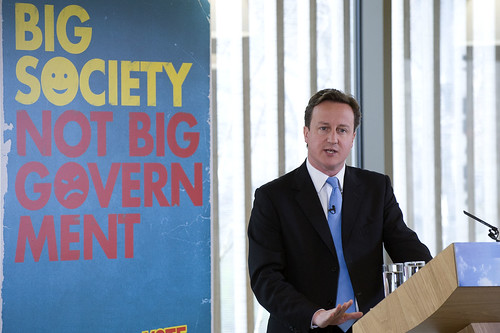
The "big society" initiative, which the new British prime minister David Cameron first came up with during the campaign, has gained sudden prominence in recent weeks. Apparently, it wasn't just a feel-good campaign slogan. The plan, which would devolve local services to voluntary citizens initiatives, managed to take the British media by surprise when it was officially unveiled last week. The plan would entail much more action and restructuring than anyone had expected out of what was thought to be simply campaign rhetoric, and has serious implications for how the UK may organise itself in the future.

"So what's this now," the media is asking, "big society is actually a real thing?" It would be as if Barack Obama, after becoming presient, had set up a "Hope Task Force" in order to monitor and manage the levels of hope in local communities. The media didn't know what to make of it at first, but within days the consensus seems to be that this scheme is merely a cover-up for the massive budget cuts that are about to be made on local community services. Or is it?

Wednesday, 14 July 2010

Belgium and France in race to ban the burqa

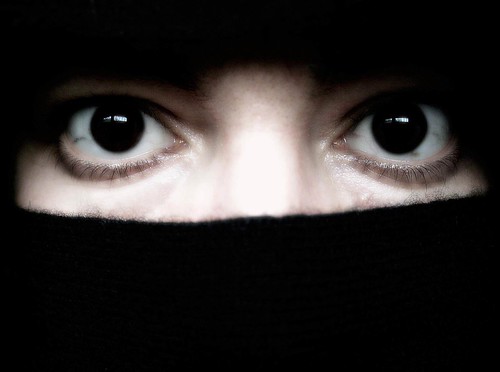
Who will emerge victorious? Belgium and France are currently falling over each other racing to be the first country in Europe to ban full face coverings. Whoever wins the race, both bans are guaranteed to eventually become law. The bans are illustrative not just of the conflict between Europeans and Muslim immigrants, but also of the ideological divide that separates continental Europe from the Anglo-Saxon world.

Both European and the Americans/British may dislike the burqa, but when it comes to how to deal with it, the English Channel and the Atlantic present a wide gulf. On the continent I don't know one person who thinks the ban is a bad idea. Yet I don't know a single American or British person who doesn't think it is a semi-fascistic disgrace.

Yesterday French MPs voted 335 to one in favour of legislation to ban face coverings in public areas. The ban does not specifically mention the Islamic burqa, a full-body garment that covers the entire face except a small slit for the eyes. Rather, it forbids anyone to cover their face in a public place. This would include costume masks or ski masks. A police officer would first ask a person to remove their face covering, and if they refuse, they can be fined €150.

Though the ban doesn’t specifically target Muslims, many Islamic groups and human rights activists are saying its main intent seems to be to send a hostile message to Muslims. They have accused French President Nicolas Sakozy of purposefully exacerbating tensions for electoral purposes. Though only a small minority of French Muslims would be affected by the ban (police figures say fewer than 2,000 of France's 2 million Muslims wear the burqa), Muslim groups have said they think the law stigmatizes all Muslims.

Monday, 12 July 2010

Libel migrates across the pond

Many of my fellow ex-pat friends have joked about the ‘reverse migration’ we see of Americans moving to Europe in search of a better, more comfortable life. But according to a recent article by the New York Observer, we may not be alone in this trans-Atlantic migration – libel lawsuits may be coming with us.

For decades it’s been a well-known fact that media lawyers in the US will frequently file lawsuits in the UK using a satellite office of the offending publication rather than suing in a US court. They are far more likely to win their case in Britain than in the US. The UK has arguably the strictest libel laws in the western world, and many media companies here keep a hefty fund on hand to make regular pay-outs to libel victims. When I first started reporting in the UK I had to attend seminars familiarising me with UK libel law, and in many ways I had to unlearn what I had learnt about libel in journalism school in the US. It’s a wholly different animal here.

Reforming UK libel law has been a priority for the Liberal Democrats, who are now a junior partner in the British government. Last week they announced that the government will bring forward a Defamation Bill next year that will aim to end the abuse of British libel law once and for all.
Wednesday, 30 June 2010

More egg-ceptional inaccuracy from the British media

When it comes to the British tabloids, you can assume that if they use the phrase "you couldn't make it up," that probably means they are making it up. At least, that's certainly the case when it comes to the EU. And it isn't just the tabloids. Blatant lies and flat-out inaccuracies about the EU are par for the course in the British media, even from respected news sources like the Independent or the BBC.

A typical example of this was floating around last week, when the British papers and the BBC were reporting that the EU is planning to ban the sale of eggs by the dozen. It followed a well-worn pattern. First, a right-wing paper like the Daily Mail runs a story about some new horrible injustice that will be perpetrated on the British people by Brussels. They base their information on either a deliberate misreading of the actual law being considered or they just flat out make things up. Eurosceptic blogs pick up the story and it receives chatter in the British blogosphere. Soon other papers are running the same story, with lazy reporters relying solely on the assumptions made by the Daily Mail. It doesn't take long for the BBC to pick it up, as they did with the eggs-by-the-dozen story. All of the subsequent lazy reporting is based solely on the assumptions made by the Daily Mail, which are almost always wrong.

Friday, 16 April 2010

The big debate

The UK election debate last night focused on domestic policy, so sadly I didn’t get my EU fix from them. Still, it was very interesting to watch the first-ever televised political debate in British history after having watched so many in America.

There was a lot of skepticism in the UK over whether this was really a useful exercise. After all, the party leaders already have a televised debate every week with prime ministers questions, when the full parliament sits and the leaders ask each other questions for 30 minutes. PMQs get very raucous, with hooting and hollering, accusations, jeers, laughter, you name it. Over the years they’ve gotten increasingly theatrical and bombastic, to the point where these days it seems a lot more like political theatre than legitimate debate.

There have been calls for the UK to start doing American-style televised debates during their general elections for decades, but every prime minister from Thatcher to Blair has always refused. It was, according to conventional wisdom, the sitting prime minister who had the most to lose by participating in a debate that would put them on an equal playing field with the opposition. But this year Gordon Brown relented, and of course, there’s no putting the lid back on that jar. Last night was the dawn of a new era in British politics. Never again will a sitting prime minister be able to avoid a televised debate.

Wednesday, 11 November 2009

The Sun Overplays its Hand

I’m loath to write about this, as I’m effectively jumping on the same bandwagon I’m about to deride. But given the intense level of media attention “handwritingate” has received over the past three days, it seems it may be impossible to ignore.

I first realized I was eventually going to have to write about this nonsense on Monday, as I was watching a live announcement on SkyNews from UK environment minister Ed Miliband (David’s brother) on a planning approval overhaul that will make it easier for the UK to build nuclear and coal plants. As the speech ended, the 24-hour British news network (owned by Rupert Murdoch’s News Corp) carried about three minutes of the ensuing parliamentary debate, then cut back to the studio. Ah good, I thought, now we’ll hear some analysis of what this announcement means. But no analysis came, in fact there was no mention of the speech we had just seen at all. Instead, the station delved into hour 13 of its non-stop coverage of the fact that UK prime minister Gordon Brown has bad handwriting.

Basically the story goes like this: there have been an extraordinary number of British casualties in Afghanistan over the past few months, attracting increasing public discussion about whether the UK should still be involved in the fight there and whether the troops are properly resourced. Apparently, possibly out of political calculation but more likely out of genuine concern, Gordon Brown has started writing personal handwritten letters to the families of the fallen soldiers. Seems like a nice gesture right? Only problem is the prime minister has horrible handwriting, owing to the fact that he is blind in one eye.

One mother named Jacqui Janes received such a letter from Mr Brown offering condolences for the loss of her son and found it sloppy and riddled with what are either spelling mistakes or illegibilities, depending on your perspective. She was most offended by the fact that the prime minister had appeared to spell her name with an ‘m’ instead of an ‘n’, addressing the letter to “Mrs. James”.

Janes rung up The Sun newspaper, which recently publicly switched its support from New Labour to the Conservatives, and the paper ran with it, making it a lead story two days in a row. The rest of the British media have followed suit, even the venerated BBC. The furore forced the prime minister to personally call the woman to apologise. Janes proceeded to emotionally berate Brown, tape recording the phone conversation and giving (some have speculated selling) it to the Sun, which then released it. Here is the audio below, though I warn it feels like something you shouldn't listening to. (Incidentally, and as awkward as it is to point out, a lack of equipment most likely had nothing to do with her son's death). Brown has since had to address the issue publicly twice in news conferences.


Of course the Sun is also owned by Rupert Murdoch’s NewsCorp, so it is under the same umbrella as another news organisation famous for this kind of thing across the pond – Fox News. The formula works like this: the media outlet picks up a fairly trivial but emotionally charged story, runs it relentlessly as a campaign against the government, and encourages reader/viewer outrage on the subject. It then reports on the viewer outrage, continuing coverage for several more days. Other media outlets worry that they are missing a major story (after all it must be a major story if the Sun/Fox are devoting so much time to it) so they run it as well. Pretty soon the issue is dominating all the front pages, be it manufactured outrage over bad handwriting or created controversy over a presidential address to school students.

However here in Britain there are already signs of pushback against this tried-and-true Newscorp strategy. Much of the readers’ comments under the web version of the original story were defending Brown, perhaps prompting the Sun to block commenting on their subsequent story.

Other papers have begun to note that the Sun risks overplaying its hand in its vigorous crusade against Gordon Brown, which is being fought with all the intensity the newly-converted usually display. The Standard, The Guardian and The Mirror have all been pointing out that much of the public has been disgusted with the Sun’s naked (and rather clumsy) attempt to exploit a grieving mother for its own ideological gain. Even many who dislike Brown are defending him from this rather crude attack.

Given his incredibly low approval rating, the Sun surely sees Gordon Brown as an easy target. And it is a reflection of Brown’s weak position that the paper could so easily bring him to his knees and force three separate grovelling apologies in just three days. However they may have underestimated the British public’s tolerance for cheap shots or blatant manipulation on this occasion. This kind of thing may work across the pond, but in Britain News Corp should perhaps tread a bit more carefully with these kinds of tactics.

After all, as evidenced in the screengrab to the right, perhaps people in glass houses shouldn't throw stones!

Monday, 5 October 2009

Ireland Rejects British Influence

As news breaks that the UK will soon be shut out of a new G4 group of major economies and could lose its seat on the board of the IMF, the bizarre reaction to the Irish referendum by much of the British press continues to look more and more out of touch with the realities of the modern world.

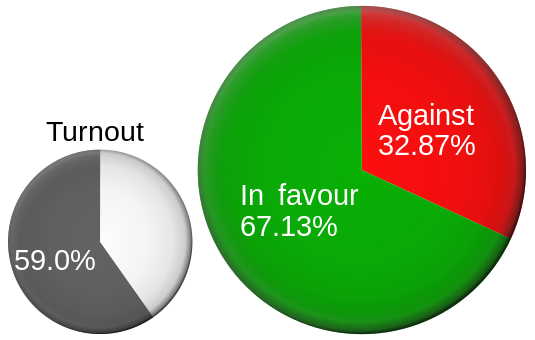
Europe-wide ratification of the Lisbon Treaty is imminent following Ireland’s massive endorsement of the EU reform agreement with a ‘yes’ vote of 67%. It looks as if Czech President Vaclav Klaus has lost his nerve and is ready to end his grandstanding talk of refusing to sign the ratification passed by the Czech parliament – a move which would have been constitutionally questionable anyway. So barring any unforeseen complications, it looks like this long effort to reform the EU to something more appropriate for its current size has been completed.

If the British media is to be believed, after rejecting the treaty in the first referendum in June 2008 Ireland voted yes this time around out of fear. Terrified by their vulnerability in the global economic downturn, the British narrative goes, the Irish have allowed themselves to be bullied into accepting dominance by Brussels, having lost confidence in their own ability to govern themselves. Under this narrative, the Irish made a courageous choice in the 2008 referendum when the treaty was, as the British press frequently puts it, “resoundingly defeated” (never mind the fact that the 2008 ‘no’ vote actually just squeaked by with 53%). Apparently in 2008 a slight majority indicated massive popular will by courageous people against an oppressive super-state, but in 2009 a large majority is the illegitimate result of misguided voters swayed by fear and intimidation. The Irish, it would seem, are only right when they agree with the British.

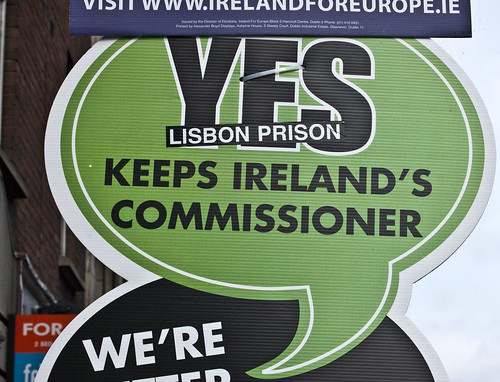
What is never mentioned in the British press is that after the June 2008 result Ireland has been given a basket of concessions and guarantees – the most significant being that the proposal to shrink the size of the European Commission from 27 commissioners to a more manageable size of around 20 has been abandoned. Under existing treaties each country is guaranteed a commissioner in the EC – even though commissioners are not supposed to represent national interests but rather fulfil a specific role of expertise such as trade, environment or energy. The large number of new member states that have joined in the past 10 years has meant there is now an excessive number of commissioners, with new remits for them being invented such as “Commissioner for Information Society and Media” and “Commissioner for Multilingualism”.

However even though it is supposed to be irrelevant which countries these commissioners come from that does not always prove true in practice, and the Lisbon solution to rotate a certain number of Commission seats between the small member states had caused some concern. There was a lot of misinformation spread in the 2008 ‘no’ campaign in Ireland, but this issue was one of the verifiable legitimate concerns that the ‘no’ campaign had – fearing the treaty would lessen the influence of small states in the EU’s executive body. So they won this concession, there will remain 27 commissioners.

While it is true that the actual text of the treaty has not changed (doing so would have required re-ratification by all 27 states and would have held up passage by another five years) the Irish have been given binding guarantees that these changes will be inserted at the time of the next Europe-wide ratification issue, likely the accession of Iceland and Croatia.

The British press also doesn’t mention that this time around there was a much more extensive education campaign on what is actually contained in the treaty – a response to the fact that the exit polling in the 2008 referendum revealed that the most frequently cited reason for voting ‘no’ was a lack of information on what the treaty is. Turnout this time around was also about 10% higher than before.

The British roots of the ‘no’ campaign were also more exposed this time around, making the claim that a ‘no’ vote was a vote for the spirit of dead Irish republicans seem laughable. As the Guardian pointed out in an article last week before the vote, the ‘no’ campaign was full of Brits who flew over to urge a rejection of the treaty, led by Tory lobbyists and Rupert Murdoch’s newspapers. All this prompted fears that a ‘no’ vote would result in what Irish Labour leader Eamon Gilmore called a “two-speed Europe” where there would be “a mainland Europe and the British Isles, where we fall under the influence of Britain." So much for a ‘no’ vote honouring the dead Republicans who fought against the British.

The Tories’ Eurochaos

The ‘yes’ vote was exceedingly bad timing for British Conservative leader David Cameron, as it means the Conservative Party conference this week will be dominated by the ‘Europe issue’, a quagmire that continues to cause rifts between different factions of the party. Cameron had promised to hold a referendum on the treaty in the UK if it remained unpassed by the time they (most likely) come into power next April. However now it looks like the treaty’s changes will be adopted by the EU by the end of the year – and the British parliament already ratified the treaty.

The Eurosceptic wing of the Conservative party is demanding that Cameron hold a referendum on the treaty anyway, asking the public whether Britain should retroactively pull out of a treaty it already signed and which has already gone into effect. The problem is this would not only be illegal under international law, it would also be impossible. If Cameron were to hold such a referendum and the result is ‘no’ (which is the position he has advocated), there is no longer a ‘treaty’ to vote on, the treaty has become the EU. So at that stage, a ‘no’ vote on the Treaty would be a ‘no’ vote on the EU, and the British would have to secede from the union.

This is not an issue Cameron wants to put to a referendum, as the risks of a ‘no’ vote would be too great. Britain pulling out of the EU, as I’ve written about before, would mean it would have to completely renegotiate almost all of its international treaties in trade, labour and markets. It would very likely cause an immediate collapse in the pound, and investors would flee the UK like rats fleeing a sinking ship.

So Cameron has an uncomfortable reality to deal with this week. Trying to throw a bone to the Eurosceptic wing, he has hinted ahead of the conference that the Tories will launch a “public consultation” instead of a referendum, with the aim of moving significant powers away from Brussels and back to Westminster. Party insiders are saying he will announce this week an intention to “repatriate” powers involving social powers, employment and justice to a national level. Of course what he effectively would be asking for are more UK opt-outs, which would be almost impossible to attain retroactively, requiring the approval of all 27 member states. Many of those member states would surely question why the UK deserves special treatment, and would laugh any Tory who demanded such a concession out of the room. Considering Cameron has already enraged the French and German conservative governments by leaving the mainstream centre-right EPP grouping in the European Parliament to form a new alliance with the Eastern European hard right, he has few friends in Brussels or other Western European capitals these days.

UK Shut Out of World Bodies

All of this Tory talk seems particularly incongruous with reality considering that just this weekend it emerged that, following the death of the G8, the US is planning to form a new G4 group of the world’s leading economies that will not include the UK. The new group would be composed of the US, China, Japan and the Eurozone. The Eurozone, remember, does not include the UK because it does not use the Euro currency. Alistair Darling has reportedly been begging for the new group to instead include all of the EU rather than the Eurozone, but US officials have reportedly rebuffed this request saying that the member needs to be able to control a unified monetary policy. The news comes at the same time that Britain is fighting to maintain its seat on the board of the International Monetary Fund.

It was amusing to see the Daily Mail try to spin this as Gordon Brown’s fault, rather than the fault of the isolationist impulse the Daily Mail and papers like it have championed over the past two decades. The fact that it is inevitable that the UK by itself will not be able to justify its seat on these international bodies in the 21st century seems to be lost on them. The paper declines to mention the fact that were the UK on the euro, it would have a seat on this new G4 body and could maintain a board seat in the IMF. Nor does it mention that France and Italy are also in the same boat now that the G8 is being dissolved, yet they will have a major place in the G4 and IMF because they are part of the Eurozone. The comments below the story would be hilarious if they weren’t so jaw-droppingly ignorant, with each commenter deciding that this news is somehow evidence that the UK should leave the EU. Come again?

It will be interesting to see how the ‘Europe issue’ is handled at this week’s Conservative Party conference. Considering Cameron’s populist tendencies, he could probably just get up on the podium and say ‘Europe’ and have the whole hall boo and jeer in order to have a successful day. But Cameron’s crowd-pleasing rhetoric on Europe is on a collision coarse with reality. His recent defection from the EPP is probably but a first instance of this.

Hopefully, Europe can now put this treaty nonsense behind it and focus on more important things, getting on to the real work of guiding the continent through the economic recovery and leading the world in the effort to combat climate change. That is, if the Tories can let a sleeping dog lie.

Friday, 17 July 2009

Britain’s Education Omission

This week I undertook a little experiment, asking friends across Europe if and where they learned about how the European Union functions. The response from the British was, if perhaps not surprising, still incredible. And they go a long way in explaining some of the things I’ve observed over the past week.

This week was the first assembly of the new European Parliament in Strasbourg, at which I got to witness the media circus as Nick Griffin, the newly-elected leader of the far-right, whites-only British National Party, took his seat as a UK MEP. The British media had their knickers in a twist on Tuesday as they breathlessly reported the act of a man sitting down in a chair. But in Strasbourg it was clear this event wasn’t of much interest to anyone except the throng of British reporters. After all, Mr. Griffin will be joining a dozen other far-right racist MEPs from countries across Europe, including France.

The continent wasn’t all that concerned about Mr. Griffin, they were more interested in the big decisions being taken at this week’s session – the selection of the new parliament president and committees. But I grew frustrated over the course of the day, charged with reporting on the developments in this first meeting of the new parliament, and coming up with only articles about Nick Griffin in my English-language searches on Google News. As far as the British media was concerned, this was apparently just a Nick Griffin-sitting ceremony.

The fact is once the British media stops focusing on Mr. Griffin’s activities in Brussels and Strasbourg he will probably stop showing up. After all, his main purpose in being there is to get himself more attention back in blighty. I really doubt he has much interest in the Environment Committee, to which he was appointed this week.

It was yet another illustration of how much the British media don’t understand how the EU works. Faced with the challenge of having to explain the complexities in the formation of a new parliament, they preferred to go with the easy “British fascist takes a seat” story. Their inclination for the easy story was again born out later in the week when Gordon Brown is nominating Tony Blair to be the first “president of Europe” (should such a position be created by the passing of the Lisbon Treaty) further demonstrated the astonishing ignorance of the British on all things European. Last night on Question Time, an audience member asked the guests whether Tony Blair would make a good European president. The panel, composed of senior politicians and journalists, proceeded to descend into a string of bizarre statements that betrayed the fact that they actually didn’t know what the new president position is. For that matter, they didn’t seem to know much of anything about the EU at all.

The “president of Europe” position, as the British media have dubbed it, is actually merely the presidency of the European Council – one of the three governing EU institutions which is made up of the leaders and top ministers from all the member states. That position already exists, but is currently held by entire countries on a rotating basis for 6-month terms. At the moment, the President of the Council is Sweden. That means that the council’s informal meetings are held in Sweden, and Sweden controls the agenda and the message of the council for that period. For instance next week Sweden is hosting a Council meeting on the environment that I’ll be attending in the resort town of Ã…re, where all the Environment Ministers (Ed Milliband from the UK) will meet.

So the Treaty of Lisbon will change this position so that instead of being held by a country for six months, it’s held by a single person for 2 1/2 years. That is the position Tony Blair is being nominated for. It is mostly symbolic, and therefore it’s important to get someone in there who has a high profile. However the president won’t specifically make policy, he or she will merely loosely control the agenda of the European Council which is NOT the executive branch of the EU. The executive branch of government in the EU is the Commission, which has a president (currently Jose Manuel Barroso) who serves a five year term. That position is the only thing that comes close to really resembling a “president of Europe”, and it’s already existed for decades.

Last night on Question Time British MP Margot James responded to the Blair question by saying that she doesn’t think there should be a president position because the British public are already funding too many government positions and so one more shouldn’t be created. I found it to be an odd comment, because this European Council presidency position already exists, and in fact by changing it to be one person rather than moving it to a new country every six months at enormous expense, I assume the EU will actually be significantly reducing the cost of the European Council presidency (though the rotating country designation will still exist in abridged form for the council of ministers, thanks Andreas!). I also find it strange for James to blame the EU for having too many government officials when the number of Euro MEPs has actually just been significantly reduced, while the British Parliament continues to heft at a grotesque 1,384 members representing just 62 million people. The European Parliament has 736 members representing 500 million people.

The fact that this panel of high-ranking MPs and media figures seemed to have little idea how the European Union works reflects just how widespread “EU ignorance” is across Britain. In any society the poor and undereducated are likely to know little about the structures which govern them, but what I’ve been shocked by is the almost complete lack of EU knowledge from educated, intelligent people in the UK. Most of my intelligent British friends have no idea what the European Commission is, even though it effectively dictates probably about 40% of the laws that govern them. These same people could tell me inside and out how the American government works, in fact they are probably better versed in American civics than most of my friends in the US. Yet if I talk about anything related to the EU I’m met with a blank stare and a shrug.

Bad Education?

So why is this? I’ve lived across Europe and I’m not labouring under any kind of delusion that people on the continent know their EU civics inside and out. But in my experience intelligent people on the continent tend to know what the Commission is and how it functions with the other two branches. So why do they know this? I’ve been asking a few of my European friends to find out.

A French friend from Paris, who doesn’t work in politics but takes a marginal interest in it, says his knowledge of the EU (which is good) is shaped by what he reads about it in the media. Ah, there’s the rub. The British media do a notoriously horrible job reporting on Europe. The EU is hardly ever mentioned in British news outlets, and when it is, the reports on it are rife with inaccuracy. By contrast the French media does cover important EU stories, when a piece of legislation will directly effect French people in an important way. But still, EU stories can be fairly boring, and I would be imagine it would be pretty easy for even intelligent French people to tune them out or give them only cursory attention. So that can’t be the entire explanation of the difference.

A German friend from Hamburg told me that though he doesn’t usually read articles about the EU in newspapers (he’ll usually skip them because he thinks they’re boring), he does know the fundamentals of how the EU works because he learned it in school. I tested his knowledge a bit and found that yes, he does have a good mastery of the basics of how the EU works, so I asked him when he learned this. He said he learned it in secondary school, in a required class that was coupled with a course on German civics. Social Studies 101 basically.

Ah ha, so there’s the rub. Education. I suppose it’s understandable that people my age wouldn’t have had extensive education on the EU, as when they were in any secondary school civics course it had only recently become a real significant entity. So I quizzed a few of my British friends on what kind of education they received in school about the structure of the EU.

Again, I was met with blank stares.

I asked several people, and all of them told me they had never received any education in how the EU works, not even as part of a general civics course on British government.
I figured I was getting closer to my answer. British people were never educated in how the EU works and they don’t hear anything about it from their media, so how on earth are they supposed to know what it even is? Yet this is now a body which affects vast areas of their daily life. Education is always a catch-up game I suppose. Perhaps this just takes time to change. Surely young students now must be being taught about how the EU works, given its rapid increase in importance over the past 10 years.

So I asked a friend of mine who teaches in a secondary school here if EU civics is now being taught in school. I was shocked by his response. “Nope, nothing,” he answered matter-of-factly. “Not even in a civics class? Or a government course?” I asked. “I’ve definitely never heard of it being taught,” he answered.

This situation seems rather incredible to me. This may be a hyperbolic example, but it would be like a school system in Texas teaching students only how the Texas state government operates, and completely ignoring the federal government in Washington as if it didn’t exist. It’s a huge disservice to the students who will have to live in a framework where those laws made at the federal level will have a huge impact on their lives, and they will have no idea how they’re made.

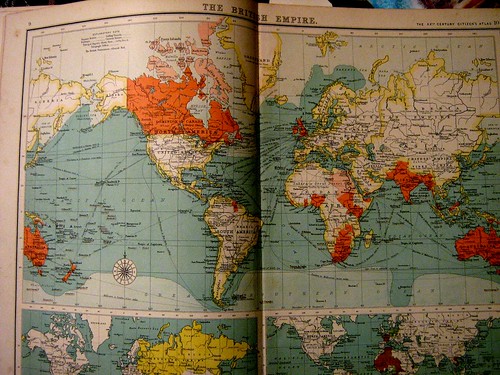
I suppose it’s reflective of the general attitude of educated Britain toward the EU. Deep down they may know its necessary, they may not want to leave it, but they would prefer to just ignore it because to acknowledge that they need it is just too damaging to their national pride. Perhaps it would just be too humiliating for a British history teacher to transition from telling his students about the glories of standing astride the world as the British Empire to telling them the modern reality of being one part of a European coalition. Maybe it’s just a symptom of post-imperial trauma. After all, they say the second stage of any trauma is denial.

But in the mean time, it seems to me the British education system is doing young people a real disservice if they really are ignoring the EU.

Thursday, 9 July 2009

Who will the Hackgate Net Ensnare?

Last night the Guardian newspaper came out with some explosive allegations here in the UK, and the evening news broadcasts were scrambling to unravel a scandal that could ensnare David Cameron, Rupert Murdoch and Scotland Yard all at once.

The Guardian article alleges that British newspapers owned by Rupert Murdoch’s News Corp. have paid £1 million in settlements to people who have had their phones hacked by private investigators hired by the company. The story alleges that such criminal activity was ‘systemic’ at News Corp’s British papers, particularly at News of the World and, to a lesser extent, the Sun. And all of this was going on during the editorship of Andy Coulson, who was recently hired as the Communications Director for Conservative leader David Cameron.

The list of people who had their phones hacked is wide and varied, representing the papers’ multi-faceted role of covering celebrity gossip, sports and politics using the same methods. Celebrities such as Gwyneth Paltrow and Nigella Lawson were hacked along with former deputy prime minister John Prescott and former culture secretary Tessa Jowell.

There are a number of important questions raised here that could have big ramifications. One, did News Corp have a widespread, top-down policy of hacking phones, and then pay to cover up evidence of this policy once it was discovered by police? Two, was Scotland Yard coerced into dropping the investigation after discovering the evidence of widespread bugging? And three, what does it say about the Conservatives’ media strategy that they have hired a communications director that engages in these kind of practices?

Back in 2007, a News of the World reporter named Clive Goodman was convicted and jailed for hacking into the mobile phones of three members of staff for the royal family. News Corp assured parliament at the time that this was a one-off incident, calling Goodman a ‘rogue reporter’. But a source at Scotland Yard told the Guardian that during their inquiry investigators found evidence that News Corp staff had hacked into “thousands” of mobile phones using private investigators.

The investigation they’re referring to came after the Goodman case was exposed. It’s a bit unclear what happened, but it would appear that the Goodman case prompted the police to investigate other reporters at News of the World, evidence of widespread phone bugging was discovered, and some of the victims were informed by the police and others were not. It appears that none of the political victims were informed, but several of the sports and entertainment figures were. One of the figures who was told, Professional Footballers' Association chief executive Gordon Taylor, sued News of the World. According to the Guardian, the company paid Taylor a £700,000 settlement with the stipulation that none of the information about the phone tampering could go public.

The idea that a newspaper would pay a settlement to keep something hidden from the media is pretty shocking. But what’s perhaps more shocking is that, faced with this allegedly overwhelming evidence that criminal activity was taking place, the police chose not to investigate it further or inform the victims. Considering that many of the victims were cabinet-level political figures, this seems downright bizarre.

It appears quite possible from the Guardian’s report that Andy Coulson was, if not directly involved with the strategy of hacking people’s phones, complicit in it by looking the other way. This may create a big headache for David Cameron, who’s decision to hire Coulson as the Tories’ mouthpiece was quite controversial, given his tabloid background. Cameron has been surprisingly cavalier about it so far. When the news broke last night his spokesperson said Cameron was “very relaxed” about the story. Then this morning, speaking outside his home in west London he said: "It's wrong for newspapers to breach people's privacy with no justification. That is why Andy Coulson resigned as editor of the News of the World two-and-a-half years ago… Of course I knew about that resignation before offering him the job. But I believe in giving people a second chance.”

Cameron seems to be suggesting that that because Coulson resigned following the Goodman conviction (which he claimed was a one-off he had no knowledge of), new information that shows he actually presided over a more wide-spread policy of hacking is irrelevant. This is a strange argument to make, and I have a feeling his “second chance” line is going to come back to haunt him as questions about his judgement arise. The BBC is already reporting that the Tories are getting increasingly nervous about this as the day goes on.

Given that Cameron is frequently derided as a “spin-meister” who is all showmanship and little substance, the news that he’s hired a tabloid news editor who is accused of presiding over a newsroom that systematically hacked people’s phones to drudge up dirt on them is probably the last thing he needs for his image. Much like Tony Blair’s PR guru Alistair Campbell before him, Coulson has now “become the story” in a way that is never good for any PR man.

The Guardian is providing a live feed of the developments in this matter as the day goes on. It will certainly be interesting to watch.