Showing posts with label Guido Westerwelle. Show all posts

Friday, 1 March 2013

A week of turmoil for Europe

Yesterday was a big news day for EU politics, with a series of high-profile speeches in reaction to the disastrous election result in Italy on Monday. But despite the many speeches, the message has been singular: there is “no alternative” to austerity, and hostility toward the EU in domestic politics is exascerbating the euro crisis.

The day started with a speech by humiliated ‘technocrat’ prime minister Mario Monti at the European Commission. Having been rejected by his home country, it is perhaps unsurprising that the former European Commissioner wanted to come to Brussels, where people understand him. It was Brussels after all, at the behest of Berlin, who installed Monti on the Italian throne after forcing out Silvio Berlusconi at the height of the Italian crisis in 2011.

And it is no coincidence that it was the ‘Italians abroad inEurope’ voting region in which Monti received his highest share of the vote – 30%. This compares to the 9% of the vote he received at home – less than half the vote chare received by anti-establishment comedian Beppe Grillo.

Friday, 6 May 2011

Europe uncomfortable with US Bin Laden celebrations

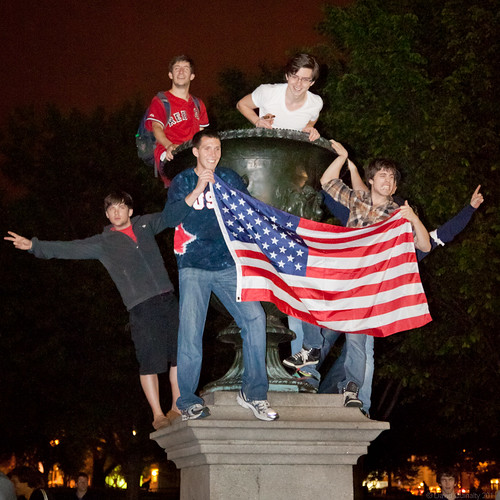
I've had a rather surreal experience this week watching reaction to the news that Osama Bin Laden was killed by American forces. On Monday morning I woke up and opened Facebook (before anything else, naturally), and saw a string of cryptic statuses chanting things like "USA! USA!" or "I'm so proud to be American today". But for whatever reason none of them said what had actually happened. So I had to open up Google News to learn what had inspired these rather unlikely chants from my "liberal elitist" friends in New York City.

The news was, of course, that Osama Bin Laden had been killed. The announcement by President Obama Sunday night prompted sudden exuberant celebrations in cities across America, the biggest outside the White House and in Times Square. It was reminiscent of the Victory Day celebrations at the end of World War II, a cathartic celebration unleashing a decade of angst Americans had felt since the 9/11 attacks. I found the magnitude of the celebrations a little surprising, but perhaps I had underestimated the effect that America's inability to capture Osama Bin Laden has had on the US psyche. A profound sense of anxiety and humiliation seems to have been lifted from Americans' minds with this killing. And both the left and right are jubilant over it. The American media seems to have regarded these celebrations as a universal good, heralding the way they have brought left and right together and united Americans in the same way that they were united after 9/11. The question does not seem to be asked whether Americans can be 'unified' in a counter-productive instinct.

Friday, 30 July 2010

Cameron promises the world to Turkey

This week's speech by UK prime minister David Cameron in Ankara was notably aggressive – not toward his Turkish hosts, but toward Britain’s EU allies. Perhaps it shouldn’t come as too much of a surprise from a leader who promised to be combative with the EU when sticking up for Britain’s interests. But Cameron’s strong (and unrealistic) guarantees to Turkey and his condemnation of Germany and France will set UK foreign relations on a tricky tightrope walk. What exactly is Mr. Cameron playing at here?

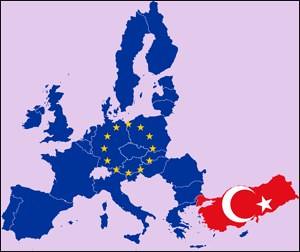
In his speech, Cameron was unusually outspoken about his support for Turkey’s membership in the EU. Of course this is long-held British policy, and the previous Labour government was also supportive of the membership. But Cameron went above and beyond this by ratcheting up the rhetoric. Saying he wanted to “pave the road from Ankara to Brussels,” Cameron stated that “the EU would be poor without Turkey.” Pointing to Turkey’s membership in NATO, Cameron said “It’s just wrong to say Turkey can guard the camp but not be allowed to sit inside the tent.”

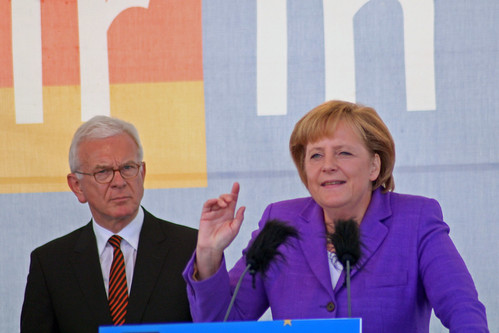
By contrast German foreign minister Guido Westerwelle, who was in Ankara with Mr. Cameron, was much more cautious. Westerwelle, the leader of Germany’s Liberal party, also supports Turkey’s membership in the EU. But his party is in a governing coalition with Angela Merkel’s Christian Democrats, who strongly oppose such an accession. He’s already been in trouble with Merkel for being too effusive in his public support for Turkish membership in the union, and this time around it was clear he had learned his lesson. Though he encouraged Turkey to carry on in its efforts to join, he gave a frank assertion that Turkey is “not ready” to join the EU. Even more importantly, he pointed out that the EU is not ready to absorb Turkey.

But guess which speech the Turkish media splashed across the front pages? The Turkish press was positively effervescent over Cameron’s lavish praise for Turkey, and his face was all over Turkish TV screens this week. A quick and easy diplomatic coup for the UK no doubt, which is keen to establish strong ties with Turkey’s new Islamist-leaning government.

Friday, 23 July 2010

Ireland gets civil unions: now only Italy is left

This week the final signature was put on Ireland's civil partnership bill for gay and lesbian couples. For a fervently Catholic country that only decriminalised homosexuality in 1993, this was a big step. But even more importantly, it's reflective of the sudden rapid advancement Europe is making in the area of gay rights. Well, half of Europe anyway. Yes, the fact that this advance was made despite the historic power of Catholicism over Irish government is a promising sign for proponants of same-sex marriage. But could Ireland's change of heart have more to do with geography than a cultural shift? Let's look at the map.

As you can see from the map above, Italy is now the only remaining Western European country to have no form of gay marriage. The vast swathe of what Donald Rumsfeld used to deride as "Old Europe" is now awash in various shades of blue. And some of those light blues are due to change to dark blue quite soon. David Cameron's conservative-libdem coalition has already said they will upgrade Britain's civil unions to full marriage soon. Anything to not be compared to the Irish I suppose.

Friday, 2 July 2010

Angie takes a licking, but will she keep on ticking?

Angela Merkel may be riding high on the world stage, but at home in Germany she is in trouble. Deep trouble. Already heavily battered by her decision to provide money to Greece to prevent the euro collapsing, her current efforts to make drastic austerity cuts to the German budget caused a major revolt this week within her governing coalition.

The German parliament is this week voting to select a new president for the country. It's a largely ceremonial position, roughly equivalent to the Queen of England bar for the fact that nobody outside of Germany would know who their president is. Ordinarily the leader of the party in power selects the president, because he or she controls the majority of votes in the parliament. Merkel's selection was Lower Saxony governor Christian Wulff, perceived by the public as a rather uninspiring career politician.

Wednesday, 30 September 2009

"Das ist Deutschland Hier"

Oh SNAP! One expects this kind of thing from the French, but from the Germans??

Here is video of the new German foreign minister Guido Westerwelle admonishing a BBC reporter who asked him a question in English on Monday, snapping: "We're in Germany here."

The snippy retort has raised eyebrows in Germany and across Europe, most notably because Germany has long been one of the European countries with the least “language pride”, happy to operate in English as the ‘lingua franca’ of international diplomacy and business. Westerwelle’s comments are particularly surprising coming from a soon-to-be foreign minister, who presumably will need to use his command of English frequently when meeting with foreign dignitaries from around the world.

And incidentally, this BBC reporter was actually reporting for the World Service, which is an English language global news service that doesn't broadcast within the UK, but rather across the world to Africa, Asia, Europe and the Americas.

The French are notorious for this kind of defensive language pride. Could this be a sign that the Germans are starting to feel more confident about defending their own national identity? The BBC reporter’s question was about how German foreign policy would change with Westerwelle as foreign minister. Though he grumpily refused to directly answer the question, his rant may have revealed plenty about how Germany's foreign policy will change under his leadership. Was this a calculated signal to the international community, or a momentary bout of crankiness?

Germany is now the largest and most economically powerful country in Europe by far. Yet Germans are also renowned for their humble and realistic approach to their relative size and importance on the world stage. They have historically accepted the fact that German is not a world language and that English is the lingua franca (hence even though there are three co-equal working languages of the EU – English German and French – German is not often used in an official working capacity). This has set them apart from the French who many view as delusional about the importance of their language in the world. Germany, because of it’s WW2 legacy, has for the past half-century been very self-effacing and accommodating – particularly with English. As is often noted, 'it's not allowed to have German pride'.

Does Westerwelle’s rant signal the rebirth of a newly assertive Germany?