Showing posts with label Belgium. Show all posts

Tuesday, 9 May 2017

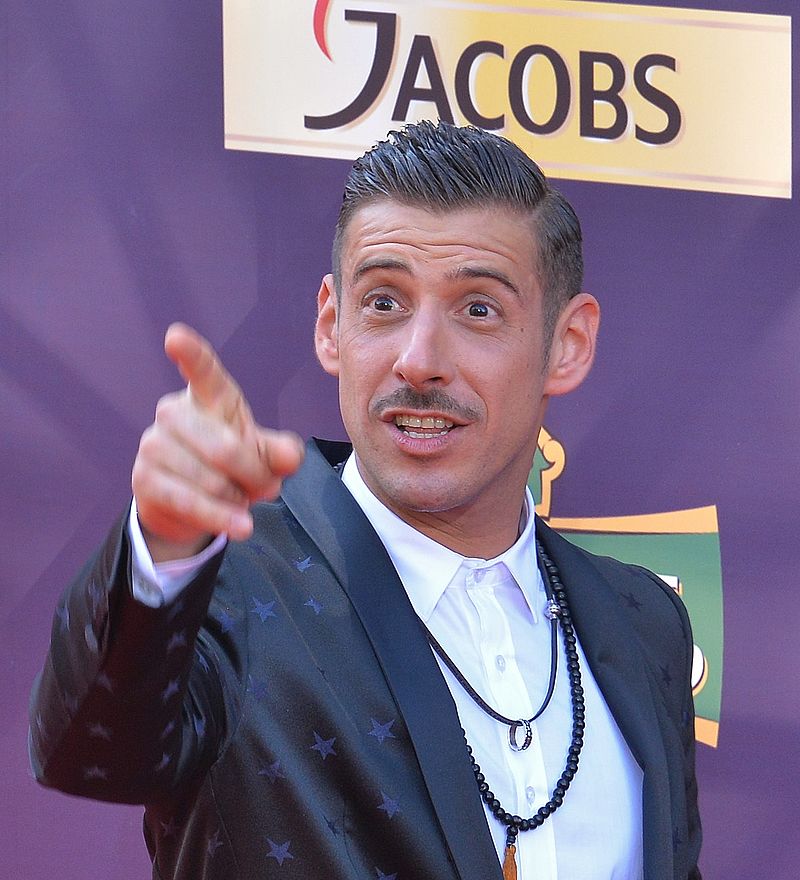
Italy should win Eurovision 2017, but it won't

Bookies think Francesco Gabbani is the man to bring Eurovision back to Rome for the first time since Italy won with a song about the EU in 1990. But language and performance issues present high hurdles.

With the defeat of far-right nationalist Marine Le Pen in Sunday's French election, Europe breathed a sigh of relief. It's no time to relax just yet, but at least for the rest of the week the continent can turn to more fun diversions. And on that note - Sunday also marked the start of Eurovision week.

Of course, the Eurovision Song Contest isn't the same politics-free distraction it once was. This year's competition is in Kiev, following Ukraine's shock win last year with an unabashedly anti-Russian song. After a viciously clever trap set my Moscow, Russia has pulled out of the 2017 contest. Their absence will be keenly felt this week.

Every year, countries try to emulate the previous year's winner. 2017 has been no exception. To match Jamala's haunting winning song about the Soviet genocide and deportation of Crimean Tatars, we have a whole crop of dark, brooding songs this year about serious subjects. But none match the emotional intensity of Jamala's performance last year.

Friday, 14 October 2016

Soft Brexit or Hard Brexit? It's a false choice

Today's vote in Wallonia against an EU-Canada free trade deal makes it painfully clear - Europeans will not approve any arrangement that lets Britain have its cake and eat it too.

Over the past weeks, people in the UK have been engaged in a tortured debate - should we have a "hard Brexit" or a "soft Brexit"?

A hard Brexit, viewed by most people (even the Brexiteers) as the worst outcome, would mean that the UK cuts economic ties with Europe, and continues to trade with the EU only on WTO terms. In other words, the UK is left with the same relationship with the EU enjoyed by Morocco.

A 'soft Brexit' would mean the UK retains market access while formally leaving the EU. This would occur either by the UK joining the EEA (à la Norway and Iceland) or negotiating bilateral treaties (à la Switzerland). Either of the latter two options would involve compromise. Crucially, the EU has made clear that the UK can't have either of these "soft Brexit" scenarios without maintaining freedom of movement (the ability for EU citizens to live and work in any EU country).

Thursday, 19 May 2016

How a memorial meant to be a symbol of Belgian resilience became a symbol of Belgian dysfunction

For two months after the Brussels attacks, the impromptu memorial at Place de la Bourse was left to decay. It will finally be cleaned up tomorrow.

In the hours immediately after the terrorist attacks in Brussels on 22 March, people were unsure what to do. It seemed safest to stay indoors, but as the afternoon developed without incident people wanted to come outside to show their solidarity.

Unable to reach the locations of the attacks themselves, they came to Brussels' most well-known meeting point to pay their respects: the steps outside the giant Leopold-era stock exchange, The Bourse. They began laying flowers and candles on the street in front of the steps, writing messages in chalk on the building and draping flags over the intimidating lions guarding the entrance.

Monday, 25 April 2016

Is Brussels dead?

Media coverage in the aftermath of the terrorist attacks in Brussels have had a crippling effect on the city's economy. But it's only the latest setback for this unloved and underdeveloped city.

There have been reports in the Belgian media that over the past month, as many as 600 cafes, restaurants and hotels have filed for bankruptcy in Brussels. The normal amount is 40 per month.

The reports seem to reaffirm what people in Brussels have seen with their own eyes over the past weeks. Since the terrorist attacks of 22 March, Brussels city centre has been eerily quiet.

I have been mostly in Brussels over the past month rather than in Berlin, and I can confirm that the atmosphere has sometimes resembled a ghost town. At first, people were blaming it on the Easter break. "Brussels would always be empty at this time of year," they insisted. As the weeks wore on, their continued insistence that Easter was the culprit seemed less and less plausible.

Thursday, 24 March 2016

Would an EU Intelligence Service fix weak links like Belgium?

Europeans have lost confidence in the ability of Belgium’s fractured government to deal with jihadists exporting terror to neighboring states.

For reporters trying to cover the Brussels terrorist attacks this week, it has been a frustrating few days. As in any unfolding crisis, incorrect information been quick to spread. But in Belgium, the amount of conflicting information has had a surreal quality. 

Information about whether suspects have been apprehended, or who blew themselves up where, has all depended on which Belgian authority you talk to. And in usual Belgian fashion, the authorities are not communicating with one another. 

Yesterday the Turkish President said his country had arrested one of the suicide bombers last year and deported him, telling the Belgian embassy that he was a foreign terrorist fighter. The Belgian justice minister’s response today? “It’s only normal that a justice minister doesn’t know what happens in embassies. We could not know this.”

Tuesday, 17 November 2015

Why is Brussels a terror nexus?

The combination of balkanised authorities and a marginalised North African population has made Brussels a natural terrorism hub. 

I’m here in Brussels this week, doing a few TV spots and moderating some conferences. As soon as I arrived at the airport last night, I could sense the tension in the city as a result of this weekend's terrorist attack in Paris. 

As I rode the nearly empty tram to my Brussels apartment, a group of young North African men got on the tram, engaged in a heated argument amongst themselves about the recent attacks (they were debating whether or not it was justified). I stopped into my local kebab joint and found another discussion between the Moroccan owners and a white Belgian customer, about how the authorities should respond. Outside, sirens wailed as police searched the city for one of the attackers believed to be on the loose in the city.

Wednesday, 16 April 2014

A noisier EU Quarter in Brussels

Since 6 February, planes have been rerouted from their route over the leafy suburbs of Flanders east of Brussels to straight over the EU quarter. People in the eurobubble say it's another example of Belgium dumping problems on people who cannot vote in general elections.

Today, members of the European Parliament rejected a European Commission proposal that would have allowed the European Union to overrule local authority decisions on the banning of flights at certain times.

The vote was only a rubber-stamping of a decision taken back in January to reject this part of the airport noise proposal. However, some MEPs saw this week's vote as an opportunity to bring up an airport noise issue closer to their hearts – new flight plans in Belgium that send planes from Zaventem airport straight over Brussels city centre and the EU quarter.

Since 6 February, planes taking off from Zaventem have been using a new route ordered by the Belgian federal government. The ‘Wathelet plan' – named after its designer Melchior Wathelet, Belgium's secretary of state of environment, energy, mobility and institutional reforms – has rerouted 80% of flights that used to fly over sparsely populated areas of Flanders east of Brussels. One hundred flights a day are now flying at low altitude through Brussels city - straight over the EU institutions.

Wednesday, 23 October 2013

Dutch rally round ‘right to be racist’

It’s that time of year again. The stockings are being hung by the chimney with care, the hot wine stands are setting up shop, and of course, the Dutch have begun putting on their blackface, big red lips and afro wigs. It’s time again for ‘Black Pete’ to pay us a visit.

And right on cue, it’s also time for the perennial hand-wringing about whether or not this minstrel character, who tags along with Saint Nicholas as he hands out presents to Dutch and Flemish children at Christmas, is racist.

But this year, thanks to some comments by a human rights observer, the debate has taken on an almost frenzied dimension that has even seen a prominent Dutch politician call for the Netherlands to pull out of the United Nations.

The Dutch are furious that a member of the UN’s human rights committee is looking into the issue of whether Black Pete is a racist caricature. The head of the committee, who is Jamaican, told a Dutch TV station she found it impossible to understand how Dutch people do not see it as racist. Dutch people have responded with a torrent of outrage, accusing the UN of trampling on something that is an age-old tradition and is culturally important to them. A petition organised to 'save Black Pete' gathered a million endorsements in its first day. News broadcasters are dressing up as Pete in protest, and Dutch people are making YouTube videos dancing around in blackface singing about how not racist they are.

Sunday, 14 October 2012

Catalonia: on the precipice of secession?


I’m on a plane back to Brussels from Barcelona at the moment, still digesting the amusingly polarised reaction to Friday’s announcement that the EU has won the Nobel Peace Prize. The significance of the announcement was only heightened for me this weekend by the fact that, as the Nobel committee spoke of the achievement of the EU in keeping Europe together, I was in a country that may be about to tear itself apart.

Friday was Spanish National Day, but you wouldn’t have known it on the streets of Barcelona. The Catalans may have been happy to take the day off work, but they were clearly not in the mood to celebrate. There was no parade, no festivities and - most noticeably - not even any Spanish flags.

In fact the only way one would have known it was national day at all was that in the morning, the streets around Placa de Catalonia were filled with Police officers preparing for a planned march by secessionist demonstrators. Helicopters thundered above us, preparing for the possibility that the city would see a repeat of the massive secessionist demonstrations that took place on 11 September (Catalan National Day) that saw more than a million protestors flood the streets of Barcelona. However from what I saw, this time around the Catalans seemed to prefer ostentatious non-observance to demonstrations.

Though there were Catalan flags draped from nearly every window (perhaps left over from the 11 September celebrations), I did not see one Spanish flag except for those on government buildings.

Monday, 4 June 2012

Burqa ban leads to rioting in Brussels

The area of Molenbeek in Brussels was the scene of low-level rioting at the end of last week following the arrest of a woman for wearing a full face-covering niqab. It is the largest and most violent incident of resistance since France and Belgium enacted bans on face-covering in 2010 and 2011.

For those who oppose the burqa ban, the rioting is evidence that it is causing more problems than it solves and giving the garment more power as a symbol of resistance. For those who support the ban, the rioting is evidence that the state was right to take a stand against the increasing radicalisation they say is taking place among Belgium’s sizable Muslim minority of mainly North Africa immigrants.

On Thursday, Brussels police arrested a 23-year-old woman in Molenbeek – one of the neighborhoods of Brussels with a very high Muslim population at over 50% - for refusing to take off her face covering. That night, police say about 100 people surrounded the Molenbeek police station where she was being held, throwing stones at officers. A large number of riot police were deployed, giving the area the feeling of a city under siege. After Muslim prayers on Friday afternoon additional skirmishes broke out in the area, forcing the authorities to shut down some metro stations. The police say the violent demonstrations were organised by the group Shariah4Belgium

Tuesday, 10 April 2012

Brussels, the broken city

Public transport has been shut down in Brussels for four days now, a state of affairs we learned this morning will likely continue until Thursday. The entire situation has seemed to put people here in a more pronounced state of cynicism and disgust than normal, given both the circumstances of the incident which sparked the strike and the behaviour of the transit workers.

Early on Saturday morning, a city bus was involved in a traffic accident with a drunk driver. When a supervisor from Brussels’ public transport agency STIB came to investigate the accident and accused the car driver of being drunk, he became offended and called some friends to defend him. Those friends attacked the STIB supervisorand killed him.

In response, the STIB immediately shut down the network. This was done well before the facts of the incident were clear and before the employee had died (he didn’t die until later in the day at the hospital). Initial reports on the STIB’s web site said the trains weren’t running because of a “lightning strike”. Later it was a stabbing, until eventually it just said a “serious incident with dramatic consequences”.

The STIB employees said they wouldn’t go back to work until they had a meeting with the Belgian government about improving their safety on Monday night (this being Easter weekend, Monday was a public holiday). But last night, without providing much explanation, the STIB workers union said whatever had been offered them was not enough, and they would continue to stay home.

Wednesday, 22 February 2012

Carnivals around the world

Today is Ash Wednesday, a day when Roman Catholic areas can witness in equal number people with ashes on their forehead and those with bags under their eyes. It is the first day of lent – the 40-day fasting period leading up to Easter. But it is also the day after Mardi Gras and the carnival week, a period of revelry which can lead to some serious hangovers at the finish.

This year I went to the carnival celebrations in Cologne, Germany – the largest street festival in Europe (pictured above). I think I’m going for a record at this point – I’ve now been to carnivals in six cities on three continents (I’m not sure if that’s a brag or an embarrassing confession). The carnivals that I’ve seen in Rio de Janeiro, Salvador, New Orleans, Venice, Binche, Maastricht and Cologne have all been remarkably different – reflecting the diversity of the global Catholic community.

An American asked me yesterday if Europeans celebrate the “American holiday of Mardi Gras.” In fact it’s Americans who are celebrating the European tradition of carnival, with Mardi Gras just being a local New Orleans variant. Carnivals have been celebrated in Europe in the days before Lent begins for 1,000 years. The term comes from the Latin carne vale, which means “goodbye to meat”. Traditionally during Lent Catholics were supposed to refrain from drinking or eating rich foods such as meat, dairy, fats and sugar. They were also not to engage in any partying or celebrations, to mark the 40 days that Jesus spent in the wilderness. So in the days before Lent, all rich food and drink had to be disposed of.

Tuesday, 3 January 2012

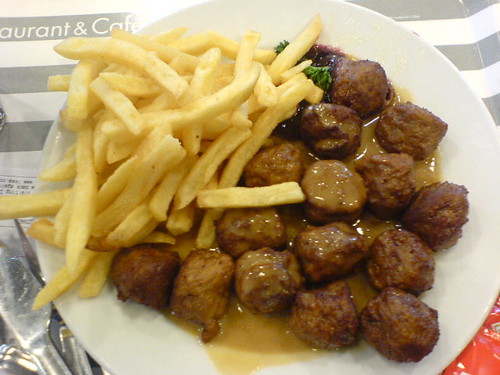
Protest over Ikea meatballs - welcome back to Absurdistan

I’m back in Brussels after spending the Christmas break home in the US. It was yet another trip where I spent most of the time regaling people with the insane stories of the strange place I now find myself living in. I’m pretty sure most of my American friends think I’m making this stuff up. I only wish.

After describing the impromptu general strike three days before Christmas which forced me to pay $500 to rebook my flight home, I moved on to describing to my friends the other union strikes I have witnessed since moving here. From the impromptu metro driver strike that was called after a driver claimed he was punched by a passenger (it turned out the driver had punched the passenger) to the October garbage strike in which the garbagemen went around town lighting the trash bags on fire and throwing them into the street, there’s plenty to describe. And let's not forget the time the taxi drivers blockaded Brussels Airport because an unlicensed taxi driver had been grazed by a bullet while he fled from police during a high-speed chase.

Today I learned about a whole new anecdote of insanity I could have described to my perplexed American friends. According to this story by Belgian news station RTL, the restaurant owners association in Belgium (Horeca) is busing homeless people to Ikea as a protest against their low meatball prices. When I first saw this story I assumed it had to be a joke. Clearly I’ve been in the US too long! Because I forgot that when you hear about something this absurd happening in Belgium, it’s probably true.

Thursday, 1 December 2011

After 18 months, Belgium will have a government again

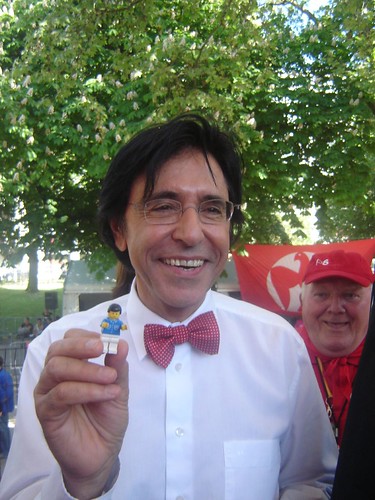
Belgium will make history this weekend in two ways. When a new government is finally formed on Sunday it will end the longest period that any country has gone without a government in modern history. And when Elio di Rupo is appointed prime minister, Belgium will become the first country in the world to have an openly gay male head of government.

I've specified 'male' because Iceland actually beat Belgium to the punch for the first gay leader of any sex – their openly lesbian Socialist Prime Minister Johanna Sigurdardottir was elected in 2009. In both countries the leader’s sexual orientation has been of little concern to the public or the media. In Belgium it is rarely ever mentioned, and in Iceland people were actually confused in 2009 when their PM’s sexual orientation received worldwide attention.

The sexual orientation of Di Rupo, also a Socialist, isn’t the only thing that makes him a different sort of politician. He is the son of Italian immigrants – a sizable population in Belgium’s Wallonia region who are descendants of the Italians who came to work in the mines in the early 20th century. This fact prompted one Belgian politician to say Di Rupo was evidence that the “American dream” is possible in Belgium.

Wednesday, 30 November 2011

Brussels – enter at your own risk

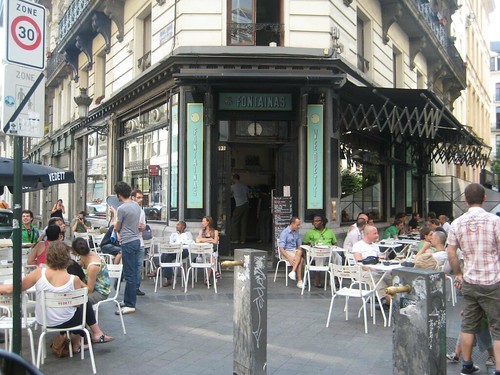
Fontainas, a cafe in central Brussels that could best be described as the headquarters of the city’s gay community, is shut down this week. Its doors have been closed since an incident Sunday night that sent a man to the hospital with severe stab wounds.

News of the attack, which has been spreading like wildfire through social media all week, seems to have left the city’s gay community shocked yet unsurprised at the same time. The storyline has become a familiar one in Brussels. Three drunk men entered the café, began hurling homophobic abuse at the people inside, and before long a violent altercation ensued. The details of what took place are still unclear, but the incident was serious enough to shut the doors of this Brussels landmark since Sunday. And although homophobic attacks are unfortunately common in Brussels city centre - an area of the city that is known for its crime and grime - this incident has still caused huge shock because the establishment is so well-known. Even the soon-to-be Belgian prime minister, who is openly gay, can often be seen there.

A movement has been growing to try to pressure the city authorities to do more to keep the city centre safe since a gay-bashing attack in June that many saw as the straw that broke the camel's back. A man was beaten by a group of young men near the Bourse (stock exchange), just next to Grand Place, because he was gay and behaving in an effeminate manner.

Monday, 5 September 2011

Conservative Party may disband in Scotland

In an attempt to shed its image as an 'English party', members of the Conservative Party in Scotland are considering splintering off from the Tories and forming a new Scottish centre-right party. The move, which would not be the result of any policy disagreement with the Tory leadership but rather for identification issues, reflects just how strong regionalism has become in Europe in recent years.

The change is being proposed by Murdo Frasier, a candidate in the current race for a new leader of the Conservatives in Scotland. The Tories have been pretty much banished from power by Scottish voters for over a decade now, ever since a massive defeat in 1997. They currently hold only 15 of the 129 seats in the Scottish Parliament and only one of Scotland's 59 seats in the British Parliament. Since 2007 the largest party in the Scottish Parliament has been the Scottish National Party, which wants to seceed from the UK.

Frasier has centred his leadership campaign around a promise to break this trend by dissolving the party, which he says has become a "toxic brand" in Scotland because people see it as representing the interests of Westminster over Edinburgh. The new party would likely not even have the words "conservative" or "tory" in its name.

Tuesday, 14 June 2011

Belgium hits one year with no government

A rather embarassing anniversary was reached here in Belgium yesterday - it has been one year since an inconclusive election threw the country into a period with no government. At the time, it would have seemed obscene to suggest that there would still be no government in Belgium in a year's time. But that's where we are today, and perhaps the only thing more surprising than the length of this governmentless period is the barely noticeable effet it has had on the country.

In truth, it's hard to say whether the current governmentless period hit it's one year mark yesterday or a few months earlier. The previous government of prime minister Yves Leterme collapsed in April of last year, so in truth Belgium has not had a government for a year and three months. Either way, this is the longest period any country in modern history has ever gone without a government. In February Belgium surpassed the previous record held by the fledgling Iraqi democracy.

Wednesday, 11 May 2011

Taxi drivers blockade Brussels Airport

In this land of the surreal, nothing surprises me any more. So it hardly phased me this morning when I read in the local paper that last night 200 taxi drivers blockaded Brussels Airport because an unlicensed taxi driver had been grazed by a bullet during a high-speed police chase. 'Still, something isn't right about this story,' I thought. But I figured I must have been not understanding the French article correctly.

But no, it turns out the story really is that bizarre. Last night police were making routine checks for unlicensed taxi drivers near the airport (who are notorious for swindling tourists by charging them three times the normal fare when they pull up to their hotel). According to the local paper La Derniere Heure, when the police signalled for one 28-year-old driver to stop he instead accelerated to speed away. The police officer jumped on the hood of his car, but the driver still didn't stop.

The police officer was then carried 2km (1.2 miles) along the road, clinging to the car for dear life. He fired into the car toward the dashboard, smashing the screen and forcing the driver to stop. A fight erupted and the police officer fired a shot that grazed the driver's shoulder. They then took him into custody.

Friday, 8 April 2011

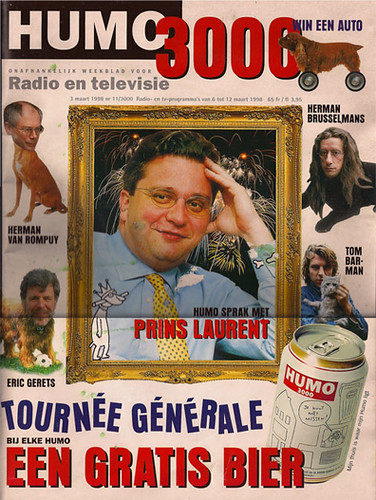
Belgium's rebel prince

The youngest son of Belgian King Albert II is in hot water again after conducting unauthorised diplomatic missions in Africa, including a secret meeting with a leader of the Libyan rebel forces and an audience with the president of Belgium's former colony the Congo, all without any diplomatic oversight. The King had explicitly told him not to go to the Congo.

It's not the first time that Prince Laurent has been in trouble, but it looks like this time he could be facing serious consequences. Even his father, who has defended himin the past, has let it be known that he is displeased with his son's actions. Yesterday Yves Leterme, Belgium's 'caretaker' prime minister while the country has no government, that he will prepare new restrictions on the prince which will mean that if he engages in such behaviour again the government can cut of his annual stipend of €300,000.

Wednesday, 16 March 2011

Belgium adopts full smoking ban

Starting 1 July Belgium will no longer be the last 'smoking island' in Western Europe, as the country adopts a full smoking ban for all public places including bars. Up until now, only establishments serving food faced a smoking ban while bars and clubs remained as smoky as ever. Following a court ruling today, Belgium will join its neighbours France, Netherlands, UK, and most states of Germany in making bars smoke-free.

Since I moved here I've told Belgians it was only a matter of time until their smoky bars went the way of the dodo. After all, when I move somewhere, smoking bans seem to follow. I was living in New York City when the smoking ban went into effect there in the summer of 2003. Then I moved to Chicago and saw a smoking ban take effect there. The same pattern was repeated when I moved to Washington shortly after. I was living in London when the smoking ban began in England in 2007, and I was living in Paris in 2008, the year France's ban on smoking in bars began. So it's been a great eight years for night-before-the-smoking-ban parties!