The father of the protestant reformation has been used as a propaganda tool by many governments over the years, but today he attracts considerably less attention.
Today I took a day trip to Wittenberg, where the protestant reformation began in 1517 after the theologian Martin Luther nailed his 95 theses to the church door. That act of rebellion kicked off a Europe-wide revolt against the corruption in the Catholic church that would eventually lead to the wars of religion in the 16th century, killing thousands upon thousands of people. During all this time, Wittenberg became the center of reformation effort, known as the "Protestant Rome".
Showing posts with label religion. Show all posts
Friday, 13 November 2015
Monday, 4 June 2012
Burqa ban leads to rioting in Brussels
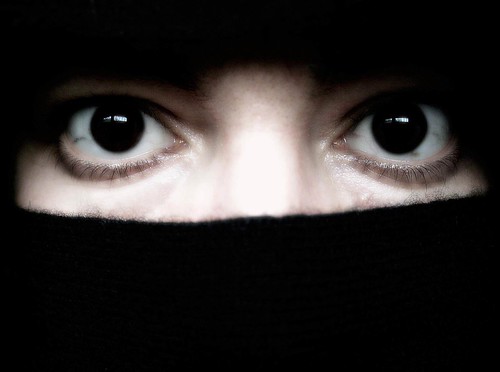
The area of Molenbeek in Brussels was the scene of low-level rioting at the end of last week following the arrest of a woman for wearing a full face-covering niqab. It is the largest and most violent incident of resistance since France and Belgium enacted bans on face-covering in 2010 and 2011.
For those who oppose the burqa ban, the rioting is evidence that it is causing more problems than it solves and giving the garment more power as a symbol of resistance. For those who support the ban, the rioting is evidence that the state was right to take a stand against the increasing radicalisation they say is taking place among Belgium’s sizable Muslim minority of mainly North Africa immigrants.
On Thursday, Brussels police arrested a 23-year-old woman in Molenbeek – one of the neighborhoods of Brussels with a very high Muslim population at over 50% - for refusing to take off her face covering. That night, police say about 100 people surrounded the Molenbeek police station where she was being held, throwing stones at officers. A large number of riot police were deployed, giving the area the feeling of a city under siege. After Muslim prayers on Friday afternoon additional skirmishes broke out in the area, forcing the authorities to shut down some metro stations. The police say the violent demonstrations were organised by the group Shariah4Belgium
For those who oppose the burqa ban, the rioting is evidence that it is causing more problems than it solves and giving the garment more power as a symbol of resistance. For those who support the ban, the rioting is evidence that the state was right to take a stand against the increasing radicalisation they say is taking place among Belgium’s sizable Muslim minority of mainly North Africa immigrants.
On Thursday, Brussels police arrested a 23-year-old woman in Molenbeek – one of the neighborhoods of Brussels with a very high Muslim population at over 50% - for refusing to take off her face covering. That night, police say about 100 people surrounded the Molenbeek police station where she was being held, throwing stones at officers. A large number of riot police were deployed, giving the area the feeling of a city under siege. After Muslim prayers on Friday afternoon additional skirmishes broke out in the area, forcing the authorities to shut down some metro stations. The police say the violent demonstrations were organised by the group Shariah4Belgium
Wednesday, 22 February 2012
Carnivals around the world
Today is Ash Wednesday, a day when Roman Catholic areas can witness in equal number people with ashes on their forehead and those with bags under their eyes. It is the first day of lent – the 40-day fasting period leading up to Easter. But it is also the day after Mardi Gras and the carnival week, a period of revelry which can lead to some serious hangovers at the finish.
This year I went to the carnival celebrations in Cologne, Germany – the largest street festival in Europe (pictured above). I think I’m going for a record at this point – I’ve now been to carnivals in six cities on three continents (I’m not sure if that’s a brag or an embarrassing confession). The carnivals that I’ve seen in Rio de Janeiro, Salvador, New Orleans, Venice, Binche, Maastricht and Cologne have all been remarkably different – reflecting the diversity of the global Catholic community.
An American asked me yesterday if Europeans celebrate the “American holiday of Mardi Gras.” In fact it’s Americans who are celebrating the European tradition of carnival, with Mardi Gras just being a local New Orleans variant. Carnivals have been celebrated in Europe in the days before Lent begins for 1,000 years. The term comes from the Latin carne vale, which means “goodbye to meat”. Traditionally during Lent Catholics were supposed to refrain from drinking or eating rich foods such as meat, dairy, fats and sugar. They were also not to engage in any partying or celebrations, to mark the 40 days that Jesus spent in the wilderness. So in the days before Lent, all rich food and drink had to be disposed of.
This year I went to the carnival celebrations in Cologne, Germany – the largest street festival in Europe (pictured above). I think I’m going for a record at this point – I’ve now been to carnivals in six cities on three continents (I’m not sure if that’s a brag or an embarrassing confession). The carnivals that I’ve seen in Rio de Janeiro, Salvador, New Orleans, Venice, Binche, Maastricht and Cologne have all been remarkably different – reflecting the diversity of the global Catholic community.
An American asked me yesterday if Europeans celebrate the “American holiday of Mardi Gras.” In fact it’s Americans who are celebrating the European tradition of carnival, with Mardi Gras just being a local New Orleans variant. Carnivals have been celebrated in Europe in the days before Lent begins for 1,000 years. The term comes from the Latin carne vale, which means “goodbye to meat”. Traditionally during Lent Catholics were supposed to refrain from drinking or eating rich foods such as meat, dairy, fats and sugar. They were also not to engage in any partying or celebrations, to mark the 40 days that Jesus spent in the wilderness. So in the days before Lent, all rich food and drink had to be disposed of.
Friday, 10 February 2012
UK court ends prayer in town councils - but on technicality
A UK court issued an interesting ruling today – finding that it is not lawful for town councils to say prayers before meetings. What makes it an interesting case is that the UK, unlike the US, does not have a legal separation between church and state.
In fact England has an official state religion – the Church of England. So having local government say Anglican prayers before a government meeting might not seem so unusual. But an atheist counsellor in a town called Bideford in Southwest England decided to challenge his council’s practice of saying a prayer before meetings. The legal challenge, brought by the National Secular Society, said that prayers have no place in "a secular environment concerned with civic business".
Because the UK has no formal constitution, and no domestic legal guarantee of religious freedom, the NSS cited the European Convention on Human Rights - which protects an individual's right to “freedom of conscience” and protects against discrimination. The ECHR (transposed into British law through the 1998 Human Rights Act) is often cited in British cases involving human rights because there is no British constitution to appeal to. This lack of a legal code for human rights often means that Britain is more subject to the non-binding verdicts of the European Court of Human Rights (which guarantees the convention) than other countries.
In fact England has an official state religion – the Church of England. So having local government say Anglican prayers before a government meeting might not seem so unusual. But an atheist counsellor in a town called Bideford in Southwest England decided to challenge his council’s practice of saying a prayer before meetings. The legal challenge, brought by the National Secular Society, said that prayers have no place in "a secular environment concerned with civic business".
Because the UK has no formal constitution, and no domestic legal guarantee of religious freedom, the NSS cited the European Convention on Human Rights - which protects an individual's right to “freedom of conscience” and protects against discrimination. The ECHR (transposed into British law through the 1998 Human Rights Act) is often cited in British cases involving human rights because there is no British constitution to appeal to. This lack of a legal code for human rights often means that Britain is more subject to the non-binding verdicts of the European Court of Human Rights (which guarantees the convention) than other countries.
Wednesday, 27 July 2011
Ireland's dramatic fallout with the Catholic Church
The Vatican took the unprecedented step of recalling its ambassador to Ireland on Monday following a fiery speech from the country's prime minister denouncing the church for covering up cases of child sex abuse. The row is an indication of just how much Ireland, once a loyal foot soldier for the pope, has changed over the past two decades.The fiery speech on the floor of the Irish Parliament by Prime Minister Enda Kenny last week was in reaction to the government's latest report on sex abuse in the Irish church. The report found that the Vatican had deliberately tried to downplay and cover up the rape and torture of children by priests in Ireland, and found that it was doing so as recently as 2009. It also found that the Vatican was trying to interfere with the Irish government's investigation into the matter. This was apparently all too much for Kenny. Denouncing the "dysfunction, disconnection, elitism and narcissism" of the Vatican, Kenny told the parliament:
"This is not Rome. Nor is it industrial-school or Magdalene Ireland, where the swish of a soutane smothered conscience and humanity and the swing of a thurible ruled the Irish-Catholic world. This is the Republic of Ireland 2011. A republic of laws, of rights and responsibilities; of proper civic order; where the delinquency and arrogance of a particular version, of a particular kind of 'morality,' will no longer be tolerated or ignored."
Monday, 30 May 2011
Malta says 'I do' to divorce
By a slim majority, the Maltese voted to legalise divorce in a referendum held Saturday in the tiny Mediterranean island nation. 52.6% of people voted 'yes' to make it legal to divorce your spouse, and the conservative prime minister, who campaigned for a 'no' vote, conceded that he will respect the will of the people and change the law. Malta is the only EU country in which divorce is illegal.
The referendum's result is being heralded as much more than a change in the country's marriage law. For many inside and outside of Malta the vote signals that the island, which for hundreds of years was run by a Catholic religious order with origins in the crusades, is ready to shed its identity as a 'Catholic state'. Apart from the Phillipines, the only other country in the world where divorce is illegal is Vatican City.
The country's Labour opposition leader called the vote, "the birth of a new Malta." The Malta Star wrote on Sunday, "The people haven’t just voted ‘Yes’ to divorce, they have signalled they are happy to embrace the modern age. The new Malta isn’t condemning and stifling, it is relaxed and open.” Saviour Balzan of Malta Today told the Associated Press that the vote will bring Malta closer to Europe culturally. "This is a conservative society, but Maltese still live like Europeans," he said. "This regularizes their lives."
The referendum's result is being heralded as much more than a change in the country's marriage law. For many inside and outside of Malta the vote signals that the island, which for hundreds of years was run by a Catholic religious order with origins in the crusades, is ready to shed its identity as a 'Catholic state'. Apart from the Phillipines, the only other country in the world where divorce is illegal is Vatican City.
The country's Labour opposition leader called the vote, "the birth of a new Malta." The Malta Star wrote on Sunday, "The people haven’t just voted ‘Yes’ to divorce, they have signalled they are happy to embrace the modern age. The new Malta isn’t condemning and stifling, it is relaxed and open.” Saviour Balzan of Malta Today told the Associated Press that the vote will bring Malta closer to Europe culturally. "This is a conservative society, but Maltese still live like Europeans," he said. "This regularizes their lives."
Wednesday, 20 April 2011
Koran burning: US and Europe have different ideas on free speech
The US military is still struggling to quell violence across Afghanistan and elsewhere caused by a Florida pastor's public burning of the Koran. The burning, which took place on 20 March, came months after the same pastor had decided to cancel his first planned book-burning after everyone from senior US military figures to President Obama told him not to do it. They said such a burning would incite violence across the Arab world and put US troops in danger.
In the end, he went ahead and did it anyway. So far at least one US military death is thought to be linked to the protests sparked by the Koran burning, but of course this is difficult to prove directly But throughout all of the warning issued to the pastor by the US military and politicians in the run-up to the burning everyone was keen to stress one thing – though the burning would put the lives of US troops at risk, the pastor had every legal right to burn the Koran under the freedom of speech entitled to him by the first amendment of the US constitution. So, the pastor faces no legal consequence for the Koran-burning he staged. And he is now planning more burnings starting on Good Friday in Michigan.
Contrast this to how a similar incident was handled across the pond in the UK. A man staged a public burning of the Koran at a shopping centre in Carlisle on 19 January. He was arrested, and yesterday a judge sentenced the man to 70 days in jail for religiously aggravated harassment. The judge called his stunt "theatrical bigotry".
In the end, he went ahead and did it anyway. So far at least one US military death is thought to be linked to the protests sparked by the Koran burning, but of course this is difficult to prove directly But throughout all of the warning issued to the pastor by the US military and politicians in the run-up to the burning everyone was keen to stress one thing – though the burning would put the lives of US troops at risk, the pastor had every legal right to burn the Koran under the freedom of speech entitled to him by the first amendment of the US constitution. So, the pastor faces no legal consequence for the Koran-burning he staged. And he is now planning more burnings starting on Good Friday in Michigan.
Contrast this to how a similar incident was handled across the pond in the UK. A man staged a public burning of the Koran at a shopping centre in Carlisle on 19 January. He was arrested, and yesterday a judge sentenced the man to 70 days in jail for religiously aggravated harassment. The judge called his stunt "theatrical bigotry".
Friday, 17 September 2010
As expected, pope visit courts controversy in Britain
This week Pope Benedict XVI is making the first state visit by a pontiff to the United Kingdom. Considering the UK was historically the most anti-Catholic country in Europe (they have a holiday devoted to burning effigies of a Catholic traitor for goodness sake!), no one should be too surprised that this visit is causing some controversy.
In fact from the television coverage, it looks like the pope’s visit could be attracting more protesters than worshipers. The protesters appear to have two objections to the pope's visit. One: because it’s a state visit, the taxpayers are paying for it. Two: they are angry about the child abuse scandal and the Catholic heirarchy’s efforts to cover it up. Those are the ostensible reasons at least. But I suspect that if the Dalai Lama or an imam visited Britain on a state visit it wouldn’t be met with such a protest. Perhaps old historical animosity toward the ‘papists’ has a bit to do with this huge backlash to the visit. A great many public figures and politicians have objected to the visit as well, and the controversy has been raging ever since the visit was first announced. It even became a subject during the prime minister debates during this year's election. Surveys have shown that 2/3 of the British public dissaprove of the visit.
Friday, 23 July 2010
Ireland gets civil unions: now only Italy is left
This week the final signature was put on Ireland's civil partnership bill for gay and lesbian couples. For a fervently Catholic country that only decriminalised homosexuality in 1993, this was a big step. But even more importantly, it's reflective of the sudden rapid advancement Europe is making in the area of gay rights. Well, half of Europe anyway. Yes, the fact that this advance was made despite the historic power of Catholicism over Irish government is a promising sign for proponants of same-sex marriage. But could Ireland's change of heart have more to do with geography than a cultural shift? Let's look at the map.
As you can see from the map above, Italy is now the only remaining Western European country to have no form of gay marriage. The vast swathe of what Donald Rumsfeld used to deride as "Old Europe" is now awash in various shades of blue. And some of those light blues are due to change to dark blue quite soon. David Cameron's conservative-libdem coalition has already said they will upgrade Britain's civil unions to full marriage soon. Anything to not be compared to the Irish I suppose.
Tuesday, 20 July 2010
Atheists and Freemasons - best buds?
Is Atheism a religion? A controversial application of the Lisbon Treaty's new requirements for holding regular meetings with all European religious leaders is putting that question to the test. Yesterday the presidents of the European Commission, European Council and European Parliament held a rather awkward press conference with various religious leaders from across Europe. Watching the leaders crowd together for the 'family photo', there was a temptation to make some kind of joke about a priest, a rabbi and an immam walking into a bar. Inevitably, reporters pressed the EU and religious leaders for their opinions on the upcoming burqa bans in France and Belgium, but the leaders wouldn't take the bait. Both Barroso and Van Rompuy said this was a member state issue that does not involve the EU.
The occasion of this very holy family photo (courtesy of the commission) was the first ‘annual dialogue’ between the EU and Europe’s religious leaders since the Lisbon Treaty came into force. The meeting has actually been taking place every year since 2005, but the Lisbon Treaty has now made the meeting mandatory. This has introduced new political issues that weren’t present before.
Wednesday, 14 July 2010
Belgium and France in race to ban the burqa
Who will emerge victorious? Belgium and France are currently falling over each other racing to be the first country in Europe to ban full face coverings. Whoever wins the race, both bans are guaranteed to eventually become law. The bans are illustrative not just of the conflict between Europeans and Muslim immigrants, but also of the ideological divide that separates continental Europe from the Anglo-Saxon world.
Both European and the Americans/British may dislike the burqa, but when it comes to how to deal with it, the English Channel and the Atlantic present a wide gulf. On the continent I don't know one person who thinks the ban is a bad idea. Yet I don't know a single American or British person who doesn't think it is a semi-fascistic disgrace.
Yesterday French MPs voted 335 to one in favour of legislation to ban face coverings in public areas. The ban does not specifically mention the Islamic burqa, a full-body garment that covers the entire face except a small slit for the eyes. Rather, it forbids anyone to cover their face in a public place. This would include costume masks or ski masks. A police officer would first ask a person to remove their face covering, and if they refuse, they can be fined €150.
Though the ban doesn’t specifically target Muslims, many Islamic groups and human rights activists are saying its main intent seems to be to send a hostile message to Muslims. They have accused French President Nicolas Sakozy of purposefully exacerbating tensions for electoral purposes. Though only a small minority of French Muslims would be affected by the ban (police figures say fewer than 2,000 of France's 2 million Muslims wear the burqa), Muslim groups have said they think the law stigmatizes all Muslims.
Both European and the Americans/British may dislike the burqa, but when it comes to how to deal with it, the English Channel and the Atlantic present a wide gulf. On the continent I don't know one person who thinks the ban is a bad idea. Yet I don't know a single American or British person who doesn't think it is a semi-fascistic disgrace.
Yesterday French MPs voted 335 to one in favour of legislation to ban face coverings in public areas. The ban does not specifically mention the Islamic burqa, a full-body garment that covers the entire face except a small slit for the eyes. Rather, it forbids anyone to cover their face in a public place. This would include costume masks or ski masks. A police officer would first ask a person to remove their face covering, and if they refuse, they can be fined €150.
Though the ban doesn’t specifically target Muslims, many Islamic groups and human rights activists are saying its main intent seems to be to send a hostile message to Muslims. They have accused French President Nicolas Sakozy of purposefully exacerbating tensions for electoral purposes. Though only a small minority of French Muslims would be affected by the ban (police figures say fewer than 2,000 of France's 2 million Muslims wear the burqa), Muslim groups have said they think the law stigmatizes all Muslims.
Friday, 18 June 2010
Diversions and divisions in Israel
I had actually just begun my journey through the Dead Sea area, having rented a car in Tel Aviv and driven down intending to visit the ancient fortress of Masada, the Ein Gedi nature preserve and the main Dead Sea spa. I was driving through the West Bank when I reached the sea, and as soon as I saw it I couldn’t contain my excitement. I parked the car at the first spot I could enter the water and rushed in with reckless abandon. So when I realized my horrible error I was literally in the middle of nowhere, with no phone for miles, in the middle of the disputed West Bank territory, in searing 40 degree weather. It was not a good situation!
Tuesday, 2 February 2010
No red carpet for pope in Britain
Back in September I wrote about my surprise when, during a visit to Prague, I was prevented from entering Prague Castle because the pope was paying a visit. I wasn't surprised that they weren't letting visitors in during the papal visit, that stands to reason. What seemed curious was the fact that we had been in Prague three days, made the journey all the way up the the castle, and all that time we had no idea the pope was visiting the city. Indeed, there was absolutely no sign of the visit - no banners, no news reports, nothing. People on the street seemed to either be unaware or apathetic about it. I suppose that's not surprising in the most atheistic country in Europe. But at the time, I contrasted it to the huge pomp and ceremony that accompanied the pope's visit to Paris while I was living there in the fall of 2009. You couldn't get away from all the fuss during that visit!When I learned this week that the pope is planning a visit to the UK, another of Europe's most atheistic countries, I wondered how the visit will contrast to the ones I've witnessed in Paris and Prague. I suspect it will be an animal all its own, but disinterest may not be the main reaction from the public. The Czech Republic may be a majority atheist country, but it is still nominally Catholic. So it isn't so unusual or notable that the pope would visit. The UK is very much not a Catholic country. Historically it and Prussia were always the most virulently anti-Catholic states in Europe. Not only does the UK have a protestant state religion (with the Queen as church leader), it is also still technically illegal for an heir to the throne or a government leader to be a Catholic. One of the main holidays here actually celebrates burning Catholic effigies.
Wednesday, 13 January 2010
You’ve come a long way, baby
Over the years, Americans have gotten used to bible-beating politicians eventually being exposed as adulterers, prostitute-visitors or gay toilet sexers. It’s become such a regular occurrence that people hardly bat an eyelash anymore when they see a conservative politician go from blasting gays by day to schtupping prostitutes by night. But in Northern Ireland this week the usual ‘moralising politician exposed for moral failings’ storyline has been given a new twist. This time, the offending politician is a lady!As far as I know this is the first time a prominent anti-gay female politician has been caught having an extra-marital affair. It's a proud day for feminism when women can stand toe-to-toe with men in the field of hypocritical bigotry.
Iris Robinson, a rabidly homophobic and self-described “born-again Christian” Protestant Unionist MP, has been caught in an extramarital affair with a 19-year-old boy.This has been big news in the UK, but not because of the affair. In fact, the charge of hypocricy is perhaps the least consequential aspect of the scandal unfolding in Northern Ireland right now. The affair has kicked off a series of events that have been turning quite serious, and could lead to a collapse of the uneasy peace that has existed in NI for over a decade. The sexual indiscretions of the UK's Anita Bryant may not have just been hypocritical, they could have set off a chain reaction that could lead to a return of the violence that plagued the 1990’s.
Friday, 11 December 2009
American desires for Anglican Africa
The continuing controversy over the American Christian right’s connection to a new law in Uganda giving the death penalty to gays may not on its surface seem like a European issue. After all this is a America-Africa story right? But watch with amazement as I find the European connection! There is actually a third player in this story: the Anglican church. In fact this entire episode is an illustration of the continuing conflict between American evangelicals and British Anglicans in a new “scramble for Africa” – as the former works tirelessly to replace the latter as the spiritual coloniser of that “magnificent African cake.”
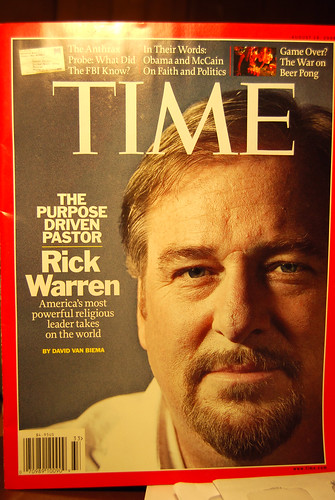
The new legislation in Uganda which is about to be adopted mandates life in prison for gays, death by hanging for gays with HIV, and 3 years in prison for anyone who knows of a gay but does not alert the police. The introduction of the legislation follows the heavy infiltration of that country by American anti-gay Christian evangelical groups. They have sent missionaries to talk to that country’s parliament about the evils of homosexuality. Emissaries to Uganda to talk about the American brand of evangelical Christianity have included Rick Warren, the hugely popular American evangelist who was selected by Barack Obama to deliver the national prayer at his inauguration. They have also included Republican senators James Inhofe and Chuck Grassly.
Sunday, 29 November 2009
Switzerland Declares War on Architecture
In a shocking result, 57% of the Swiss have voted to ban mosques with minarets in their country. Both the majority of cantons and the majority of people have voted to ban the mosques, reflecting the increasingly xenophobic mood of Swiss politics.The vote follows the win of the anti-immigrant Swiss People’s Party (SVP) two years ago. Now the largest party in Switzerland’s parliament, the SVP strongly backed the constitutional ban, saying that minarets (the tall slender towers on traditional mosques) are a sign of militant Islam and a threat to Switzerland. However the rest of the political parties in government opposed the ban and warned that it was not only unnecessary, but also sending a hostile message to the country’s minority populations.
Of course in Switzerland it doesn’t matter that the majority of the government strongly opposed a ban, it is easy for citizens to put virtually anything to a national referendum for people to vote on. And with a saturation of posters like the one above, it’s relatively easy to whip up hysteria about what is essentially a non-issue.As demonstrated time and time again, referendums can never be counted on to protect the rigthts of minorities.
Switzerland has 4 minarets in the entire country, an incredibly low number for a Western European country. This is the result of two factors – the Muslim population is fairly small at 400,000, and planning applications for minarets are almost always refused by local authorities.
The campaigners for the ban have insisted that minarets are a symbol of militant Islam. SVP member of parliament Ulrich Schluer said "A minaret is a political symbol. It is a symbol for introducing, step-by-step, Sharia rights also in Switzerland, parallel to the Swiss law which is a result of Swiss democracy. And this is the problem. It is nothing against Muslims."
The reality of course is that the vast majority of Switzerland’s Muslims are either fellow Europeans from the Balkans or immigrants from Turkey. They’re not exactly coming from hotbeds of Islamic extremism. In fact Switzerland probably has one of the lowest penetrations of Islamic extremism in Western Europe, considering that immigration from geographic areas where Islamic extremism is a problem – North Africa, the Middle East, Pakistan and Indonesia – is very restricted. So it’s hard to see how such a drastic measure as changing the constitution to ban a piece of architecture is necessary.Essentially it’s an imaginary solution to an imaginary problem. There is no Islamic extremism problem in Switzerland, and even if there were, how on earth would getting rid of minarets solve it?
The media has been making a lot of comparisons to the French head scarf ban in public schools, but I don't really think this is an apt comparison. The argument was made that the veil disrupted learning and encouraged hostility by providing visable markers of difference between students. There were also safety and practicality questions raised about students being allowed to cover their face in school. This Swiss minaret ban is entirely different, as there is no legitimate practical issue that this resolves - it's entirely symbolic. Muslim calls to prayer are already not allowed in the country because of blanket noise ordinances, so the presence of a minaret really has no practical effect on the population. A girl wearing a veil in a classroom arrguably has a very real effect on the learning environment for her, her teacher, and other pupils.
In any event, this is a dismaying result for a country that seems to be sliding into increasing xenophobia and nastiness. There is a debate to be had about Islam's place in Europe and in European law, but this largely symbolic vote has no practical effect other than alienating Swiss muslims. Perhaps even more importantly, it sends a troublingly hostile message to the world at large.
***Added 30/11/09: Analysis following the vote has found that the ban is most likely illegal under European and international law. I’ve heard a few comments in the UK about how the vote will be ok because Switzerland is not part of the EU. Actually Switzerland is a member of the Council of Europe and is party to the European Convention on Human Rights and subject to the European Court of Human Rights. Grahnlaw has a good entry summing up the various legal analysis, and the overall conclusion is that the ban is contrary to Switzerland’s obligations under European human rights law and will require corrective measures.
Thursday, 22 October 2009
The Pope makes a bid for Anglicans
The Anglican Church has been in pandemonium this week, with everyone trying to make sense of the surprise announcement on Tuesday that the Roman Catholic Church is making a bid for their members. According to many religion commentators, the historic invitation from the Vatican is very likely to tear the Anglican Communion (which includes Episcopalians in the US) apart. But considering the opposing sides of the church have been at each other’s throats for a decade now, perhaps this open hand from Rome is just what it needs to facilitate an amicable divorce.The Vatican announced that it is going to make special arrangements for protestant Anglicans to defect and join the Catholic Church as full members, while still being able to preserve their Anglican traditions and practices including – most significantly – the right for priests to be married.
Many media outlets, including this really interesting article from the BBC, have billed this as a historic and unprecedented decision. Historic it may be, but not exactly unprecedented. Most of the media has failed to note the fact that the arrangement will be similar to that accorded to the Eastern Catholic Churches, the ancient Christian sects of the Middle East which are in full communion with the Catholic church yet retain their own customs, including different baptism rites and the right of priests to marry.
Thursday, 8 October 2009
"We Face an Aggressive Secular Attack"
The words above raised some eyebrows when they were bellowed yesterday at a conference at Georgetown University in Washington, but they weren’t from a fiery American evangelical – they were from former UK Prime Minister Tony Blair. The same Tony Blair who is currently the bookies’ favourite to become the first “president of Europe”.Continuing my look at the factors in the choice of the first person to take up the President of the European Council position, I thought I'd look at how these comments yesterday might affect the debate. Considering he is currently lobbying to be the symbolic leader of largely secular Europe, the speech seems remarkably ill-timed in its vitriolic attack on atheism (full text of the speach here). According to the Times, Blair said of the world’s religions:
“We face an aggressive secular attack from without. We face the threat of extremism from within.” Arguing that there was “no hope” from atheists who scorn God, he said the best way to confront the secularist agenda was for all faiths to unite against it. “Those who scorn God and those who do violence in God’s name, both represent views of religion. But both offer no hope for faith in the twenty first century.”Apparently to Blair, Atheists and terrorists are two sides of the same coin. To call the comments incendiary is an understatement, and they may well come up during the difficult deliberations over the next month over who should take up the position of Europe’s first symbolic “president”. And it certainly won’t help Blair with secular Europeans that his speech was delivered in ultra-religious America.
Indeed it is Blair’s ties with America that are proving the biggest stumbling block to his candidacy, particularly his relationship with former President George W. Bush. The European left already reviles him for tearing Europe apart in 2003 by being an unquestioning defender of the Iraq war.For me personally, there is just no way I could support someone for this position who said those words above. So my hesitation is over, I can unequivocally say that putting Tony Blair in that position would be a bad move for Europe, and it would not be worth the celebrity and energy he would bring to the role.
Contrary to the conclusions already drawn by the British tabloid media, I actually don’t even think it is very likely he will get the position. As the Economist’s Charlemagne column points out today, the fact that Tony Blair's name has been connected with this position for two years now actually works against him, as front-runners rarely secure euro-jobs in the end. And the reasons for various and disparate groups to oppose him are too high in number to see how he could overcome them easily. Small states don’t want to see the position go to anyone from the big three. The left hates him for the Iraq War, his abandonment of socialism to win UK elections and his sudden conversion to aggressive religiosity. The continental right is at best lukewarm toward him and at worst jealous of his celebrity. The British right reviles him. Who exactly is supporting this man?
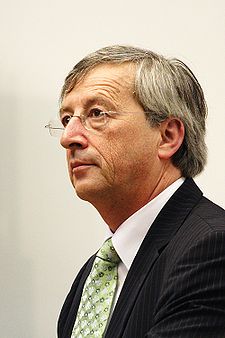
So even though I was on the fence, there’s just no way I can hold my nose and cast my lot for Blair after hearing what he said in Washington yesterday, no matter how much his celebrity would give the EU some much-needed glamour and cache. Juncker may not be a Barack Obama, but given the disillusion many American progressives are now feeling about that presidency across the pond, maybe celebrity presidencies aren’t all they’re cracked up to be.
Friday, 30 May 2008
Welcome to the religion century
Tony Blair made some interesting comments at a fundraising dinner in Toronto last night. Coming on the eve of the launch of his new Faith Foundation, which was unveiled to the world today in New York, it offered a stark and blunt assessment of the century we are entering. While probably true, his comments will no doubt be quite troubling to secular Europe.Speaking at the Women’s College Hospital in Toronto, Blair described the impetus behind his new faith foundation as an effort to “get faith in action,” saying that the goal of his new foundation is to help various religions work together to make the process of globalisation more humane. Sounds innocuous enough. But it was his blunt assessment of the power religion will have over the world over the next century that got my attention. Spoke Blair:
“Religious faith will be of the same significance to the 21st Century as political ideology was to the 20th Century.”
Friday, 7 December 2007
Secular society in the UK
As an American living in the UK, people often ask me what some of the biggest differences are between living in the two countries. Always eager to please, I usually list the positive differences first. For instance, for me, quality of life here is better. Music is more to my taste. Nearby places to travel are more interesting and London is more international than New York City. And of course, free healthcare!But beyond all these things, there’s been an underlying difference which I wasn’t able to really put into words until recently. And it's historically one of the biggest differences two societies can have between one another: religion.
As an Atheist, I feel much freer to express my religious beliefs in the UK than I ever did in the US. In America, I usually felt that I had to keep my religious affiliation to myself, and I knew few others who also openly identified as atheists. Here in the UK, most people I know identify as atheists. For me, it means I feel a greater degree of religious freedom in the UK.
Subscribe to:
Posts (Atom)