Showing posts with label united states. Show all posts

Tuesday, 17 January 2017

May's Brexit vision depends on the goodwill of Australians

Brexit Britain will cut itself off from Europe and 'turn to the world'. But does the world want them? In Australia, feelings are ambivalent.

This morning in London, Theresa May will make what is probably the most important speech of her political career.

The British people "voted to leave the European Union and embrace the world" she will say, outlining a vision for the UK to completely cut itself off from the EU and instead focus on rebuilding a globally-focused maritime trading empire. The first focus will be on the countries which share a monarch with Britain - Australia, New Zealand and Canada. 

I've been travelling through Australia for the past two weeks as part of a month-long visit, and I've been asking Australians how they feel about being part of Britain's glorious new trading vision. The reaction has largely been bemusement. But more on that later.

Wednesday, 11 January 2017

If it comes to US vs China, will Trump make Australia choose a side?

Militarily dependent on America but economically dependent on China, Australia could be the biggest loser in a coming trade war.

I'm in the middle of a three-week visit to Australia, currently on a flight to Brisbane after a fascinating week in Sydney. As I expected, as an American I have spent the week fielding confused and exasperated questions about Donald Trump.

The sentiments have largely echoed what I read in last month's 'Dear America, why did you let us down?' New York Times op-ed by Australian doctor Lisa Pryor. "You may not know us, the people beyond your borders, but we know you," she wrote. "And here we Australians are on the edge of Asia, a small and loyal ally of the United States, caught between our strategic alliance with you and our economic future with China. We feel worried, lucky — and alone."

Sunday, 4 September 2016

"The UK is over?" - America's view of Brexit

The UK's vote to secede form the EU is still an object of fascination in the US, where views range from pity to bemusement.

Last week, standing at a bar in Savannah, Georgia and drinking a 40-ounce of Miller Light, I found myself engaged in a most unlikely conversation.

I had just been introduced to the roommate of an old friend. He was telling the story of a recent unsuccessful date, aborted because of a lack of intellectual heft. "I mean, he didn't even know what Brexit was," he said incredulously.

I had to check my surroundings to remind myself of where I was. I've been working as a journalist covering EU politics in Europe for a decade now, and it's been rare indeed that I've encountered much interest in the topics I cover during my twice-yearly visits home.

Wednesday, 31 August 2016

The rank hypocrisy of Obama’s ‘Appletax’ reaction

The US claims the EU's Apple decision is “political”, but it is the American reaction that is guided by politics. And US disrespect for EU law has a long history.

In the summer of 2001, the US government was furious with the European Union.

Iconic American firm General Electric had just seen a multi-billion dollar merger with Honeywell, which had already been cleared by the US, blocked by the European Commission on competition grounds. US politicians were furious, business leaders were flabbergasted. 

Two years later, the newly-emboldened Commission struck again. It slapped a €497 million fine on American tech giant Microsoft for abusing its dominant market position. Again, there was much sabre-rattling in Washington.

Sunday, 1 May 2016

Norway is the Puerto Rico of Europe

Puerto Rico has to obey laws made in Washington, but has no say in shaping them. Sound familiar?

Over the past two years, Puerto Ricans have been reeling from a government debt crisis that is throwing the island into near chaos. But for their fellow American citizens, it has gone largely unnoticed.

The incomparable John Oliver did a segment about the crisis last week, and like a lot of Americans I found myself watching it with a sense of embarrassment. I also hadn't heard anything about the crisis before.

Continental Americans have a disconnected relationship with the American territory to their south. Many do not know that it is part of the United States, and even those that do know often forget.

Wednesday, 3 February 2016

Please, Europeans, stop obsessing over the US election

"American exceptionalism itself has something of a Sunset Boulevard feel to it, a black comedy where a faded silent movie star believes she is still the most luminous presence on the screen."

Over my decade in Europe I've seen a lot of BBC correspondents come and go from their American postings. But none has seemed to grasp the real affliction facing America like Nick Bryant (quoted above).

His observations during this absolute farce of an election season have been particularly spot-on. And Europeans, who tend to be far more interested in American politics than they really should be, should give him a read.

Thursday, 28 January 2016

Incredible - Europe has fallen behind America in providing roaming solutions

US mobile carriers now allow their customers to use data worldwide for free. Meanwhile, European carriers are still charging to roam within the EU. What's wrong with this picture?

When I first moved to Europe ten years ago, finding cell phone solutions while I was home visiting the US was a bi-annual challenge. 

I go home twice a year - often enough to need a US cell phone while I'm there, but not often enough to maintain a monthly plan. While travelling in Europe, I would buy local prepaid sim cards for extended visits. But in the US, there were hardly any prepaid cell phone options and those that existed charged outrageous rates.

Thursday, 26 November 2015

For the first time, I'm considering leaving Europe

Europe and America are both facing problems, but Europe's governing structures are more vulnerable and seem ready to collapse. It's left me pondering my future.

Since I first moved to Europe ten years ago, I've been surprised by how often I am asked one particular question - "will you ever move back to America?"

It always struck me as unusual, because I don't think a European who moved to America would get that question all the time. But in the four European cities I've lived in, people have seemed genuinely perplexed about why I'm here. Why would someone prefer to be in Europe rather than the United States? The question always annoyed me, and my answer was resolute.

"No, I'm not planning to move back," I responded. "I have a better quality of life here, I'm no longer in an American bubble separated from the rest of the world and, most importantly, I feel more hopeful for the future here than I did in the United States."

As we come to the end of 2015 I have to ask, is there reason for me to feel hopeful for Europe any more?

Friday, 20 November 2015

Longer waits to get back home for EU citizens

EU interior ministers in Brussels agreed today to put in place the same screening procedures for their own citizens as for foreign citizens at the EU's external borders.

As someone with both US and EU nationality, I've been amazed at the very different experience I encounter when entering each one.

When I go home to New York, I always have to wait in a very long line at JFK airport, even though I am entering with my US passport. I have to fill out a customs declaration form, then bring it to a border guard (after a wait of usually around 40 minutes). He runs it through the database, and asks me a serious of questions. Where have I been? Why do I live in Belgium? What is my job? Where am I staying? The whole interview process can take between three to ten minutes.

Contrast this to my experience coming home to the Schengen area using my Italian passport. I've never once been asked any question at the border. Usually, they just glance at my passport and wave me through. Sometimes they quickly run my passport through a scanner. Given how quick the process is I doubt it's running my name through an extensive database.

Tuesday, 11 June 2013

US snooping, seen through a European PRISM

There are few things that can unite the quarrelling factions of the European Parliament, but somehow US President Barack Obama managed to accomplish it this morning. One by one, MEPs from various political factions denounced in the strongest terms the recent revelations of US government access to user activity data from internet giants like Google, Facebook and Microsoft – a programme that went under the codename PRISM.

Interestingly, it was the assurances the US President gave to the American people this weekend that seemed to infuriate the European lawmakers the most. The PRISM programme “does not apply to US citizens and it does not apply to people living the United States,” he told a press conference on 7 June. 

These words may have reassured many Americans, but they have put America's allies in an awkward position. Sites like Google and Facebook are global, after all, and widely used in Europe. If they aren't spying on Americans' internet use, then that means they are spying on people in other countries - including allies in Europe.

“What is coming from other side of the Atlantic is very worrying because they are justifying this system by saying it is not applicable to US citizens, only to foreigners,” Belgian Liberal MEP Guy Verhofstadt said in Strasbourg this morning. “Who are the foreigners? I think we are the foreigners, the Europeans.”

Tuesday, 6 November 2012

The case for four more years? Look at the previous four

Rachel Maddow had an excellent review of Obama's first term last night. It's bizarre that anyone would say the American president "hasn't done anything" in his first term. Historic legislative actions were taken during the first two years. And even after the Republican takeover of the US Congress in 2010 ground all legislative activity to a halt, Obama still took important executive decisions over the following two years that could bypass the congress. Let's take a little stroll down memory lane, shall we?


Europeans are very anxious about the result of today's election in the US. It would appear that it is now up to 8 million people in Ohio to decide the fate of the world. Hopefully they will make the right decision.

Wednesday, 25 July 2012

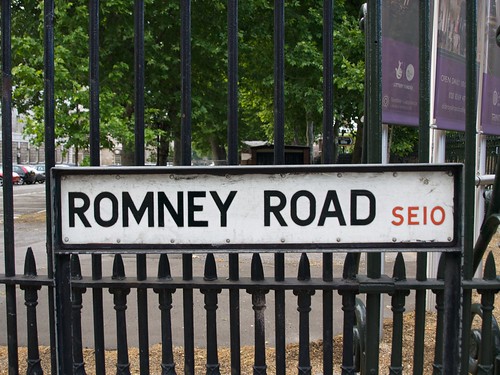
Romney's 'apology for the apology' tour

Mitt Romney has arrived in London today, the first stop on a three-country tour meant to shore up his foreign policy credentials. His tour opened with a remarkably tone-deaf gaffe by a campaign staffer, who told British newspaper The Telegraph that Barack Obama cannot understand the common “Anglo-Saxon heritage” of the US and the UK.

The advisor was likely using the term in the continental European context, which refers to the free-market economic heritage of English-speaking countries. He was likely trying to make some 'Obama as Socialist' characterisation. But this definition is unknown in the English-speaking countries themselves, where the term is a seldom-used ethnic description of English descent (ie, from the Germanic tribes who settled in Southwest England). So it ended up just coming off as shockingly racist. Stephen Colbert hilariously summed up the bemused reaction of Americans to the comment.

It’s a bad start to what is a very important foreign tour for Romney. Over the next few days he will be meeting with virtually every high level politician in the UK. On Friday he will attend the Olympics opening ceremony, surely excited about the prospects for his horse-dancer in the dressage competition.

The Republican presidential candidate’s choice of three countries for this visit is highly significant. After his visit to the UK he will fly to Israel, where he will make a series of high-profile appearances. He will then finish his tour in Poland. All three are countries which the Romney campaign has accused the Obama administration of at best ignoring, and at worst insulting.

Monday, 30 January 2012

What’s wrong with a transfer union?

The eurocrisis has introduced a plethora of strange words into our everyday vocabulary: ‘Contagion’, ‘technocrats’, ‘moral hazard’, ‘austerity’ and of course the derisive description, ‘transfer union’. This last term is used by those in Northern Europe who warn that bailing out the economies of Southern Europe will lead to a European Union where money steadily flows from rich states to poor states and the North loses out. Many argue that, in fact, this is what the EU has always been.

Such feelings are at the core of the German public’s resistance to the Greek bail-outs – emotions that have turned what is normally one of Europe’s most pro-EU countries into a relatively more eurosceptic place these days. “Why should we work hard just to see our money flow to lazy people in the south?” some Germans are asking.

Their resentment is fueled by charts like the interactive diagram below, found in the Guardian newspaper’s new ‘Europa’ section (a truly fantastic project with five other papers that I’m very excited about). It shows which countries are net ‘payers’ into the EU, and which are net ‘receivers’. The statistics are familiar and often brought up when people talk about the European Union – the biggest recipients of EU funds are in Southern and Eastern Europe while the biggest contributors are in Northern Europe.

Thursday, 26 January 2012

Europe’s SOPA?

The European Parliament’s website has been shut down by hackers today, allegedly in a denial-of-service attack from Anonymous in protest of imminent anti-piracy legislation restricting internet freedom. But as the IT folks in parliament scramble to fix the problem, the functionaries are sitting around scratching their heads in confusion. Did we pass internet piracy legislation?

Their confusion is warranted. By all accounts the EU has been on the internet-freedom-lovers side during this debate. During the fallout from the Wikipedia ‘blackout’ last week, US politicians weren’t the only ones beating a path to the door to distance themselves from the now toxic SOPA legislation on internet piracy. On Friday the EU’s Digital Agenda Commissioner Neelie Kroes tweeted that she was “glad the tide is turning on #SOPA,” adding “speeding is illegal too: but you don't put speed bumps on the motorway”.

Home Affairs Commissioner Cecilia Malmström also tweeted against the US legislation, noting that ‘sopa’ in Swedish means garbage. Notably, no public statements about the US anti-piracy bills had been made before the Wikipedia blackout. It’s quite unusual for the EU to make comments about US legislation. But such was the effect of the blackout – which was, after all, global (Eurocrats felt quite helpless without Wikipedia last week!), that even politicians not involved in US lawmaking felt the need to make a statement about it.

Wednesday, 4 January 2012

Is Iowa the problem, or is it the primary system?

While I was home in the US over the past few weeks I witnessed the quadrennial spectacle of the Iowa caucuses - shivering reporters in front of the capital dome in Des Moines, candidates eating corn on the cob while clutching plump cord-fed babies, the usual fare. And I was also able to witness the quadrennial griping about why the United States allows “a few hundred farmers” to pick its president.

The complaining about the Iowa caucus, where the first nominating primary for both political parties’ presidential candidates is held, is both predictable and legitimate – even if the language used sometimes smacks of regional snobbery. The Iowa caucus makes or breaks politicians running for the presidency. Barack Obama owes his presidency to winning the Iowa Democratic caucus in 2008. This year, the result of the Republican caucus will force Michele Bachman and Rick Perry to drop out of the race. And the Iowans have elevated Rick Santorum from obscurity to be the main challenger to frontrunner Mitt Romney.

But the Iowa caucus is a big deal only because it is first. And being first means presidential candidates promise Iowa all sorts of lovely things (just look at the corn subsidies of the past four decades – and you wonder why Americans have corn syrup in most of their food for no reason?). The Iowans go through outrageous lengths to make sure they are first. When South Carolina and New Hampshire tried to move their primaries ahead of them this year, Iowa moved theirs to the earliest possible day in 2012 – 3 January.

This year the criticism went perhaps a little too far. A professor at the University of Iowa (himself a transplant from New Jersey) wrote a column for The Atlantic about a much-asked question – why should a state that is not ethnically or ideologically reflective of the country as a whole be given such a prominent role in selecting the nation’s president? But he asked it in a way that was incendiary to say the least, calling Iowa a place that's "culturally backward" and teeming with "slum towns”, where the 96% white population “clings to guns and religion.”

Sunday, 11 December 2011

Last-minute surprise deal in Durban to save Kyoto

Chaos may be erupting at home in the European Union, but in South Africa news came this morning that the EU has scored a surprising success in international climate talks. A binding roadmap for a globally binding agreement by 2015, which the EU had demanded in exchange for continuing the existing commitments of the 1997 Kyoto Protocol, was signed this morning by all greenhouse gas emitters – including the US and China. It is the first time all major emitters have agreed, in principle at least, to binding emissions reductions.

It was truly surprising news. As of Friday (the day the talks were supposed to end) it looked like they were going to collapse in failure. Though the EU had been able to convince Brazil and South Africa to sign the roadmap, the US, China and India were still refusing. There was fear that Durban would end with no deal, which would mean the end of any internationally binding emission reduction commitments. It would have essentially taken climate talks back to 1995 and made a mockery of the UN process.

The US and China did not participate in the 1997 Kyoto Protocol, which committed nations to binding emissions reductions by 2013. The Clinton Administration signed the Kyoto Protocol, but by the time it came up for ratification in the US the George W. Bush administration had taken over - and they refused to ratify it. They said they would not participate in a binding protocol that did not include China, now the US’s biggest competitor.

Tuesday, 4 October 2011

The Knox verdict: another humiliation for Italy

These are embarrassing times to be Italian. The country is in a financial mess, on the precipice of becoming the latest victim of the debt crisis. The prime minister is now regarded even by most Italians to be a national embarrassment, yet he still clings to power. The waste crisis in Naples has spiralled out of control, and Italy's handling of migrants from North Africa during the Arab Spring has drawn condemnation from human rights groups and European leaders alike. Even their prime minister has heaped scorn upon Italy, calling it a "shitty country". The last thing Italians needed was another embarrassment.

As I write this, Amanda Knox is boarding a plane in Rome, heading back to her home in the US after four years in an Italian jail for a crime the judiciary now says she did not commit. Yesterday's verdict of innocence, the conclusion of the most closely-watched Italian court case in decades, brought jeers and condemnation not just from the crowd of Italians outside but also from the Italian media. Many in Italy see the verdict as the judiciary bending to American pressure. But other Italians agree with the sentiment felt abroad - particularly in the US – that the Italian judiciary and police system are so flawed there was no way Ms Knox could be convicted without significant doubt about her guilt.

Sunday, 25 September 2011

Palestinian UN bid divides Europe

I'm at JFK about to fly back to Brussels, and all around the airport you can see signs of this week's general assembly at the United Nations. I saw several pro-Israel and pro-Palestine demonstrations scattered around the city over the past few days, mostly outside hotels where I assume diplomats and leaders were staying.

Despite the best efforts of the United States and her allies to convince him not to, Palestinian National Authority President Mahmoud Abbas went ahead on Friday with his request to have the UN recognise Palestine as a 'non-voting observer' member. The machinations around this have been described as a slow-motion "diplomatic car crash" by diplomats. Coming as it does in the middle of the 'Arab spring', the United States knows it will look bad if they use their veto in the security council to deny the request. On the other hand, their close alliance with Israel means that the US government believes it has no choice but to veto the move.

But will the US be the only one to issue the veto? And which US allies will support the bid in a full assembly vote? Europe is showing characteristic disunity on the issue. France, which also holds veto power on the security council, is supporting the Palestinian bid. Spain, Portugal, Greece, Belgium and Luxembourg have joined France with their support.

Wednesday, 20 July 2011

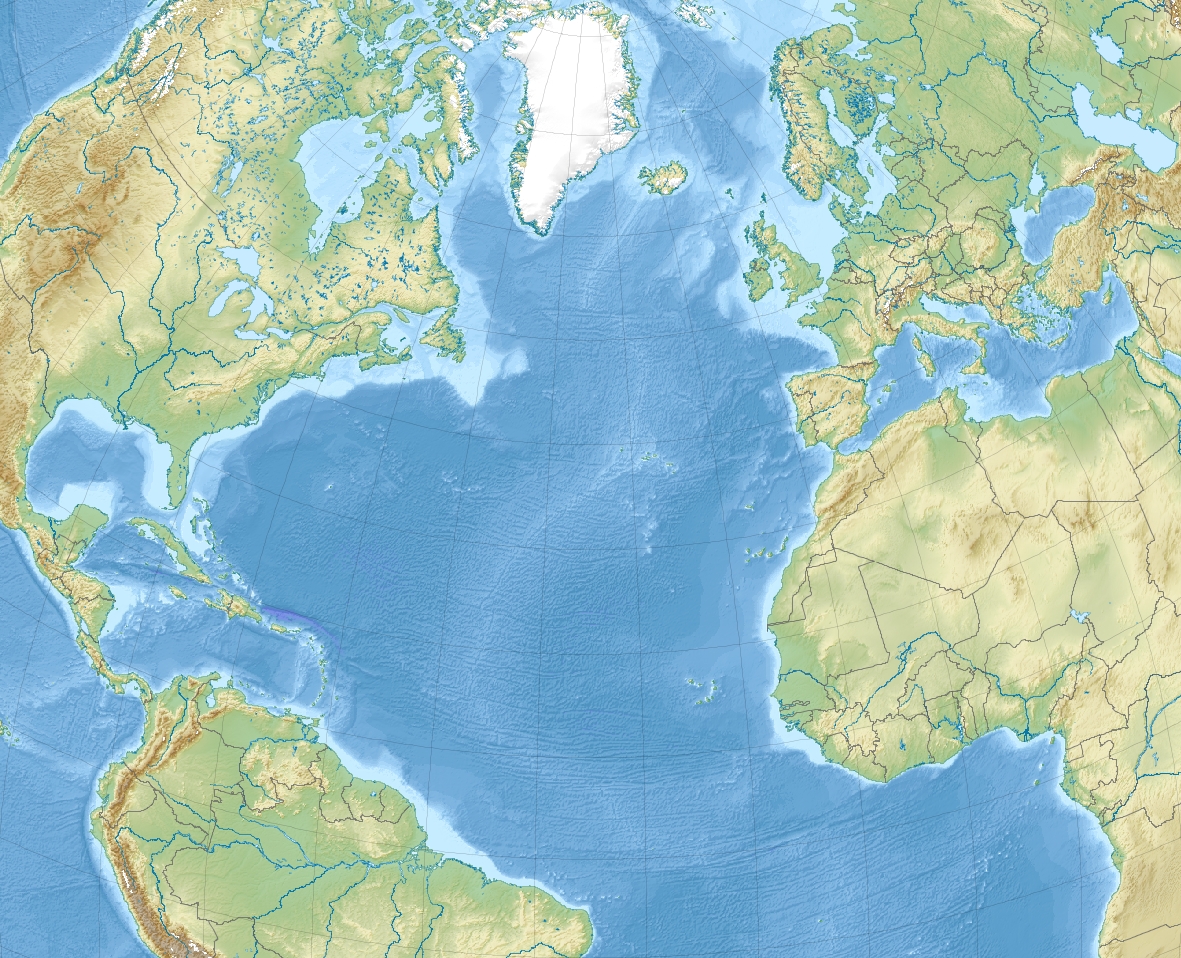
North Atlantic crisis: US, Europe edge toward economic disaster

Normally at this time of year, politicians on both sides of the Atlantic would be preparing for their August break. But there will be no relaxing getaways this year, in what is turning into probably the most anxiety-packed summer of my lifetime.

Both Europe and the US may be just days away from serious financial troubles. And if situations on either continent spin out of control, a worldwide economic panic could be ahead.

On both sides, there are obvious and straightforward solutions that could avert disaster. But in the US, the recent electoral success of a Tea Party movement that wants to see the US default on its debts has rendered the political process incapable of taking action. In Europe, the recent surge toward nationalism and a lack of political courage has rendered the EU incapable of confronting the debt crisis head on. It is a massive failure of the political systems of the Western world.

Monday, 27 June 2011

US getting worried and impatient over euro crisis

The Greek parliament is voting this week on the drastic austerity measures that have been ordered by the EU as a condition for the country receiving the rest of its bailout money. As Washington watches the situation unfold with unease, US officials are voicing an increasing amount of frustration that European leaders do not seem to have the situation under control. And the officials know that if the euro collapses, it could easily take the US economy down with it.

As Quatremer noted today, the euro has become such a powerful currency (now the second reserve currency of the world) that if it runs into trouble it would have a devastating impact not just in continental Europe but throughout the world.

Back in the 1970's when the US took the decision to take the dollar off the gold standard, the situation was watched intensely by the rest of the world. As the US treasury secretary noted at the time, "the dollar is our currency but your problem." Now, with the euro being used by a common market larger than America's, the opposite could be said to America. And the increasing grumblings suggest that American officials don't like being at the whim of decisions being taken across the Atlantic.