Showing posts with label migration. Show all posts

Monday, 19 September 2016

This one map of Berlin shows all you need to know about Europe's refugee divide

Huge gains for an anti-immigrant party in East Berlin reflect the East-West divide in Europe as a whole.

Yesterday, German Chancellor Angela Merkel waited nervously in her unassuming Berlin residence while the voters in Germany's capital city determined her fate.

The vote taking place outside her door technically had nothing to do with her. It was a local election for the Berlin Parliament (landtag), not the national one (bundestag). Berlin and two other German cities (Hamburg and Bremen) are, for historical reasons, also federal states.

But the result would have a direct effect on Merkel's chancellorship because it came hot on the heels of her centre-right CDU party's humiliating defeat in her home state of Mecklenburg-Pomerania. The CDU came in third, behind the centre-left SPD and, alarmingly, the new nationalist party Alternative for Germany (AfD).

Monday, 1 August 2016

Erdogan’s Germans

Politicians in Austria and Germany are becoming increasingly alarmed over the Turkish president’s influence in their countries.

Yesterday in Cologne, 30,000 German residents amassed in the city center to pledge allegiance to a foreign leader.

The demonstrators, Turkish immigrants or people of Turkish decent, were following a call to action from Turkish President Recep Tayyip Erdogan, asking people to show solidarity against the attempted military coup on 15 July. They brandished iconographied pictures of the Turkish strongman, waved Turkish flags and chanted their fidelity to Erdogan’s Islamist AKP party.

The Turkish president himself was supposed to address the crowd via a live video address, but this was banned by the police for fear that it would cause the crowd to become "overexcited".

Thursday, 28 July 2016

Despite a gruesome week, Germans keep calm and carry on

Reports in American media of German 'panic' are greatly exaggerated. Most still believe Merkel's refugee policy is the right thing to do.

Over the past week, as Germany was struck by a string of four violent attacks in a row, German Chancellor Angela Merkel stayed on holiday.

It might seem strange for people in other countries. It stands in stark contrast to the political reaction in neighboring France, where French President Francois Hollande rushed to the scene of recent attacks there and made dramatic pronouncements and new policy promises. 

It has matched the general tone of the measured response here in Germany, both from the media and from politicians. There has been no hysteria.

Of course, this is largely because the scale and scope of the French and German attacks were very different. The German terrorist attacks were failures, killing no one but the perpetrator. While the attacks in Belgium and France were co-ordinated large-sale attacks by ISIS cells, the events in Germany have been small attempts by lone wolves. While the other attacks have had clear links with ISIS, the Germany links are tenuous or non-existent.

Friday, 24 June 2016

Welcome to the 1930s

For years, we thought it would be Greece that would trigger Europe's collapse. It turns out it is England that has brought us to the edge of the abyss.

The world woke up to terrifying news this morning. Against the recommendations of nearly all experts and world leaders, against the expectations of the financial markets and the bookies, England has voted to leave the European Union.

As expected, the world's financial markets went into panic mode. The pound lost 8% of its value, hitting a low not seen since 1985. Continental European markets have lost about 8%, US markets are currently down 3%. Analysts expect further losses on Monday. 

It is all reminiscent of the panic after the Lehman Brothers collapse in September 2008, or perhaps more relevant to Europe, the height of the Greek debt crisis of 2011 and 2012.

Monday, 4 January 2016

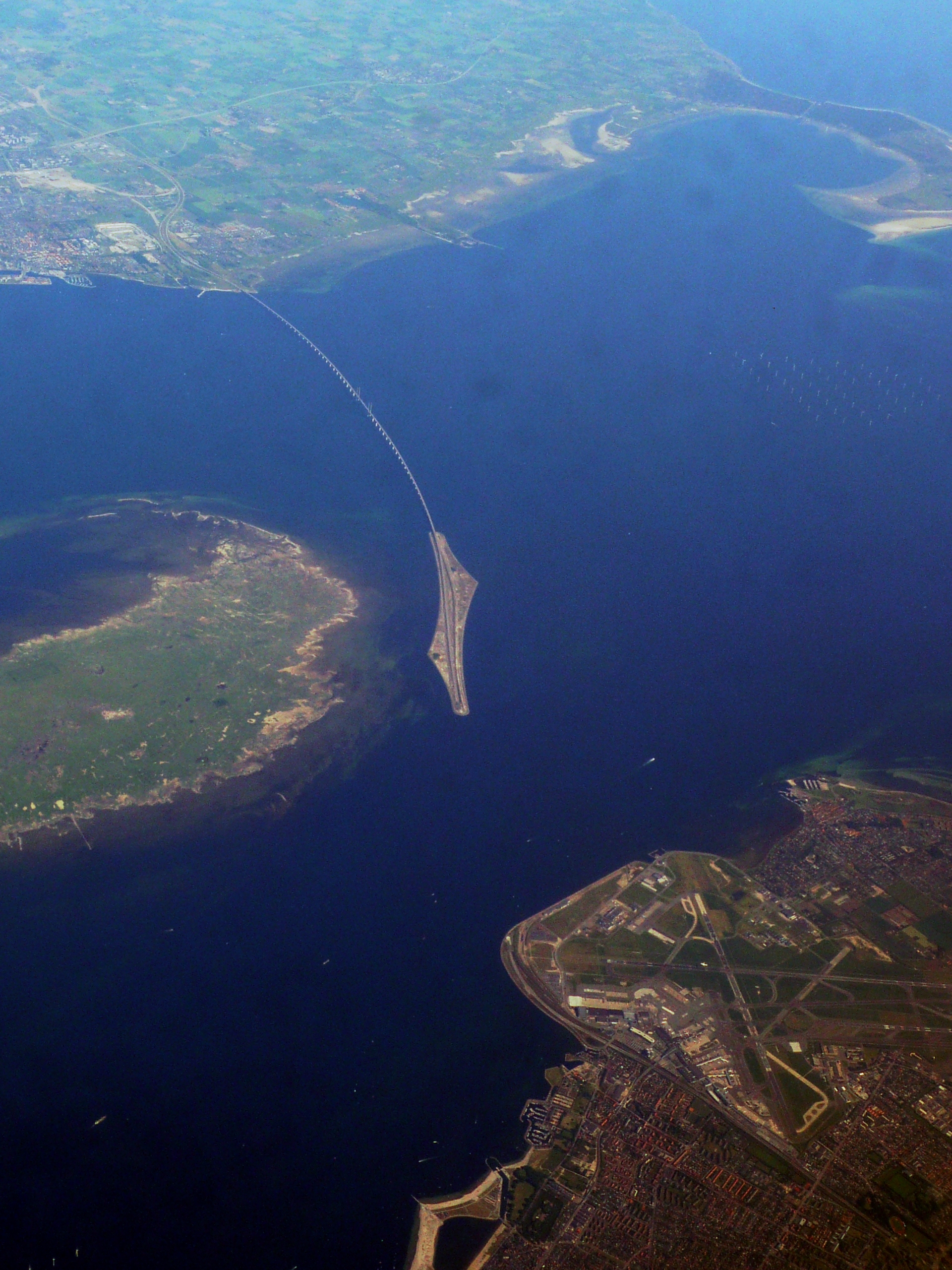
Will the Öresund become a symbol of European disintegration?

For the first time in six decades, Sweden has installed controls at its border with Denmark.

This morning, border checks took effect on the Öresund Bridge, which connects with countries of Sweden and Denmark. 30,000 people use this bridge to commute between the cities of Copenhagen and Malmo each day. For comparison, imagine New York and New Jersey setting up ID checks on the George Washington Bridge


The news might not seem particularly remarkable to British or American readers. After all, they have to go through a passport control to get to any other country, so why shouldn't Swedes or Danes? 

Thursday, 26 November 2015

For the first time, I'm considering leaving Europe

Europe and America are both facing problems, but Europe's governing structures are more vulnerable and seem ready to collapse. It's left me pondering my future.

Since I first moved to Europe ten years ago, I've been surprised by how often I am asked one particular question - "will you ever move back to America?"

It always struck me as unusual, because I don't think a European who moved to America would get that question all the time. But in the four European cities I've lived in, people have seemed genuinely perplexed about why I'm here. Why would someone prefer to be in Europe rather than the United States? The question always annoyed me, and my answer was resolute.

"No, I'm not planning to move back," I responded. "I have a better quality of life here, I'm no longer in an American bubble separated from the rest of the world and, most importantly, I feel more hopeful for the future here than I did in the United States."

As we come to the end of 2015 I have to ask, is there reason for me to feel hopeful for Europe any more?

Friday, 2 October 2015

German unity, but not reunification

Tomorrow is the 'Day of German Unity', marking 25 years since East and West Germany were merged. But don't call it 'reunification day'.

The area around Brandenburg Gate, once home to the 'no mans land' between the two layers of the Berlin Wall, is tonight being decked out for a massive celebration. Tomorrow, 3 October, is the annual celebration of 'German Unity Day'. This year's holiday is no ordinary one. It is marking 25 years since German reunification.

But don't make the mistake of calling it 'Reunification Day'. I called it by this name with a German friend today. I was swiftly deutsched, and told that despite the fact that it is held on the anniversary of the day the East German government was merged into the West, the proper name is 'unity day'.

I was only repeating the term I have read in English-speaking media, as there have been several reports this week about the 25th anniversary. But there are two important reasons why this is not called Reunification Day: it corresponds to an older holiday name, and because pre-war Germany has not been entirely reunited.

Thursday, 10 September 2015

Eastern Europe's discomfort with diversity

Germans may be more sympathetic to Syrian refugees because many of their grandparents were refugees themselves, expelled from their homes after World War II. The Poles and Czechs may be less sympathetic, because it was their grandparents doing the expelling.

This week I took a train to Prague from Berlin, in order to talk to people continuing on the train to Budapest for a radio report I was working on about Europe's disappearing overnight trains. I lived in Prague back in 2002, and it was nice to be back. I met up with a few Czech friends, and at each meeting the subject of the refugee crisis came up. My Czech friends said they were very embarassed of the images being shown to the world, of Czech security officers marking Syrian refugees with numbers and treating them inhumanely. I told them, at least the Hungarians are making you lookmore humane by comparison.

A real East-West split has emerged in the EU over how to deal with the refugee crisis. Right now the 'Vyshegrad Four' - Poland, Slovakia, Hungary and the Czech Republic - are furiously resisting a proposal to resettle the Syrian refugees pouring into Europe in a proportionate way across EU member states. Much ink has been spilled analysing why Eastern European governments are behaving in this way.

Thursday, 3 September 2015

The coalition of the unwilling

Hungary, Poland, Spain and the UK were willing to invade Iraq in 2003, but they are unwilling to deal with the refugee crisis which that invasion has spawned 12 years later. Germany and France are the countries shouldering the responsibility.

Today I bought a ticket for the overnight train from Berlin to Budapest, to interview people next week for a radio story I'm working on about the disappearance of Europe's cross-border rail routes. As I was making the booking at the DB ticket office, the woman gave me a look of concern. "That train is going from Hungary to Germany," she said. "Be careful."

Despite watching the news reports about what is happening at Budapest Keleti Station the past few days, it did not occur to me until that moment that I am going to be on one of these international trains next week. This international train travel piece could end up being very different from what I had planned.

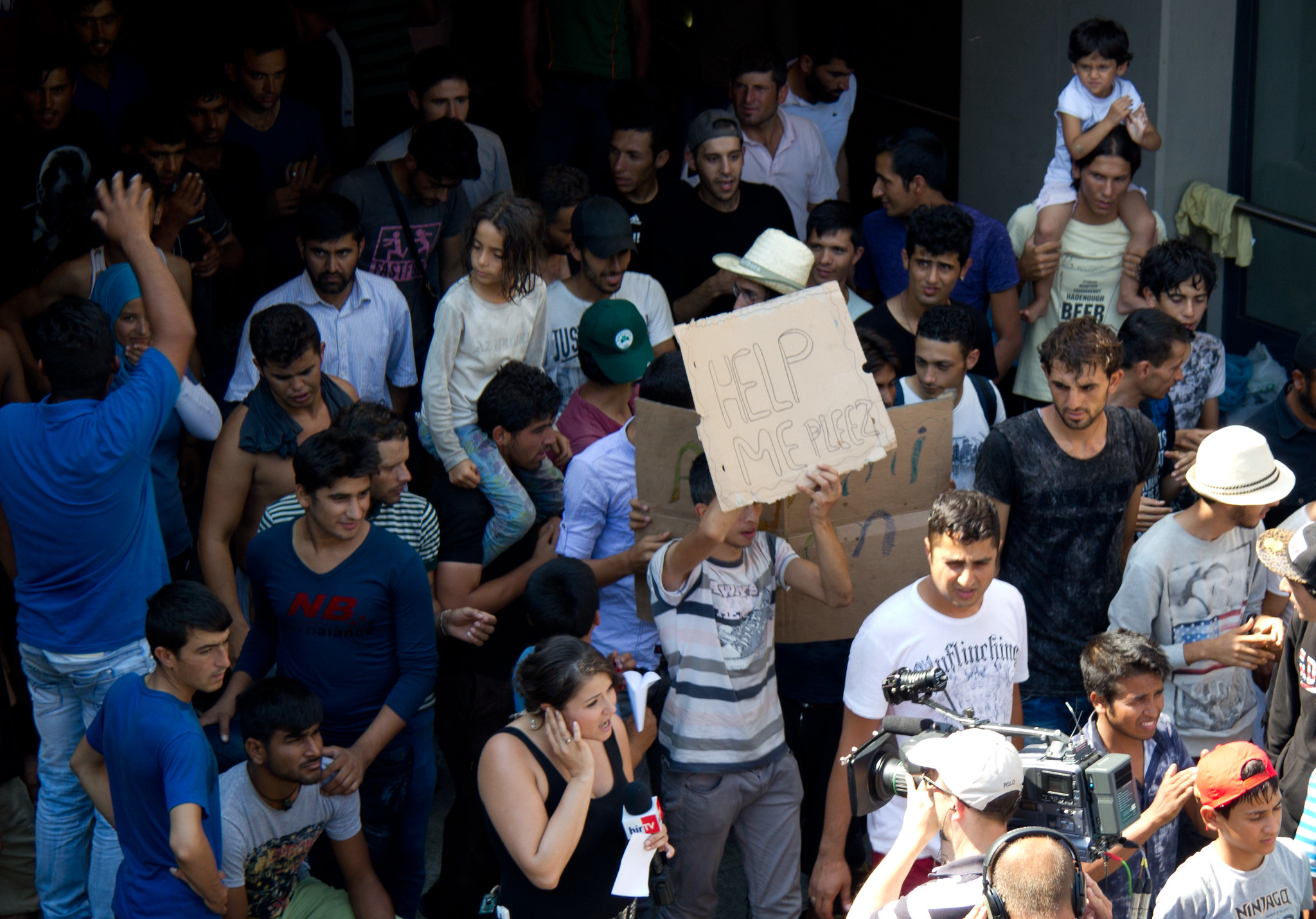
The images of Middle East refugees trampling each other trying to get onto trains to Western Europe in Budapest broadcast today were truly horrific. I'm still a bit unclear about whether these are regularly scheduled trains or specific migrant trains, and whether or not my Budapest-Berlin train will be affected at all. But it's hard to imagine it won't be.

Wednesday, 27 August 2008

UK set to be most populous EU nation by 2060

Here's an interesting note for those in England who complain about immigration. Just a week after new population figures released in the UK showed that the population in that country is growing at quite a healthy rate, figures released for the EU as a whole show the population trend going in the exact opposite direction. In fact, it shows that because of migration, the UK is going to be the only large country in the EU with a healthy population growth rate after 2015.

According to the study by the EU's statistical office Eurostat, deaths will outnumber births in the European Union after 2015. By 2060, the UK is likely to have the largest population in the EU - 77 million, ahead of France and Germany. And though the EU's population is set to fall after 2035, the UK is set to see a 25 percent population growth over the next 27 years, behind only Cyprus, Ireland and Luzembourg.

This will keep the ratio of pensioners to working people at a healthy rate. Though the EU as a whole will see only two people of working age for every person aged 65 or over by 2060, in the UK the disparity is not expected to ne nearly as stark because of a high level of migration.

Thursday, 22 May 2008

The migration mess

The EU currently finds itself in a conundrum. It is now a unified labour block where EU citizens can work in any member country. The benefits to this system are many, but at the same time Brussels has had to move quickly to harmonize labour rules across the bloc to make sure this unified working block has the same working rules. That has included establishing a minimum amount of days off a year (24), laying out basic human rights for workers, and most recently a proposal to introduce an EU ‘blue card’ that would mirror the US green card and allow an immigrant to work anywhere in the EU.

But the union still has a long way to go, and labour laws still vary widely from state to state. One of the trickier issues around labour has been how each state handles illegal migrant workers. Harmonization of the rules has become urgent not just because of the slow coalescence of labour law but also because of the rapidly expanding Schengen Zone, the zone of European countries that have dismantled their internal borders. Now that someone can travel from Estonia to Lisbon without going through a border check, border security, immigration and work status have become very important issues, particularly for those nations which now find themselves at the periphery of the EU, suddenly tasked with patrolling the borders of all of continental Europe. Malta has had the hardest time, constantly faced with waves of immigrants from Africa coming by boat hoping to reach the EU offshore island in the Mediterranean.

Thursday, 25 October 2007

Forget green, go blue!

The EU unveiled its plans for the union-wide “blue card” yesterday. It’s meant to be modeled on, as well as a competitor to, the US green card. Though the card appears to be a logical solution to the problem of hiring skilled labor, it appears to do little to solve the growing problem of illegal immigration in Europe.

The blue card will be like the American green card in that it will be based on a points system that takes into account job skills, language proficiency and the presence of family in the country already. For example someone with an MBA who speaks English and German would have a better chance of getting one of these cards than someone who doesn’t speak any European language and has no family in the EU.

The measure comes at a time when EU countries are facing a severe skills shortage, particularly in the areas of engineering, healthcare and IT. With the EU population aging rapidly, there is an urgent need to bring new immigrants onto the continent. But the way this has been done so far is considered by many to have been not only ineffective, but detrimental to the societies involved.