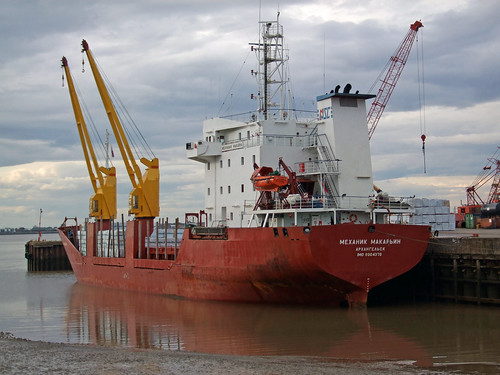
For the first time in six decades, Sweden has installed controls at its border with Denmark.
This morning, border checks took effect on the Öresund Bridge, which connects with countries of Sweden and Denmark. 30,000 people use this bridge to commute between the cities of Copenhagen and Malmo each day. For comparison, imagine New York and New Jersey setting up ID checks on the George Washington Bridge
The news might not seem particularly remarkable to British or American readers. After all, they have to go through a passport control to get to any other country, so why shouldn't Swedes or Danes?
Showing posts with label Sweden. Show all posts
Monday, 4 January 2016
Tuesday, 14 July 2015
The nacktzone: why do Germans love being nude?
Northern Europeans, who live in some of Europe's coldest climes, never seem to want to keep their clothes on. How did this cultural penchant for disrobing come about?
I've splurged a bit and joined a very fancy gym here in Berlin - largely because it's the only chain to have locations I can use in both of my cities. The location here in Berlin is actually half gym and half wellness center, with four saunas, two hamams, a hot tub, an ice bath, a roof deck, and several rooms for "intense relaxation" (which as far as I can tell just means 'sleeping').
Yesterday while I was there there was a bit of a ruckus when a young Polish man became angry that he and his girlfriend were not being allowed into the wellness area with their bathing suits on. Like in any German gym, the wellness area is a 'nacktzone' - nudity obligatory. The young man started shouting angrily in English, "Why do Germans have to be naked all the time?"
I've splurged a bit and joined a very fancy gym here in Berlin - largely because it's the only chain to have locations I can use in both of my cities. The location here in Berlin is actually half gym and half wellness center, with four saunas, two hamams, a hot tub, an ice bath, a roof deck, and several rooms for "intense relaxation" (which as far as I can tell just means 'sleeping').
Yesterday while I was there there was a bit of a ruckus when a young Polish man became angry that he and his girlfriend were not being allowed into the wellness area with their bathing suits on. Like in any German gym, the wellness area is a 'nacktzone' - nudity obligatory. The young man started shouting angrily in English, "Why do Germans have to be naked all the time?"
Tuesday, 24 April 2012
Are Europe's conservatives now dependent on the far right?
Yesterday’s news that the government of Dutch Prime Minister
Mark Rutte had collapsed sent almost immediate shock waves through the world’s
financial markets.
Investors, who were already feeling skittish about the first-round victory of French Socialist presidential candidate Francois Hollande on Sunday, found themselves with something much more serious to worry about. The government of the Netherlands, one of the core austerity-pushing states of the Eurozone, couldn’t even pass the tough medicine they helped design for Europe.
Holland and the three other euro-using countries that still have triple A ratings (Germany, Finland and Austria) have pushed for every eurozone country to make massive cuts by the end of the month. But yesterday Rutte was forced to tender his resignation after it became clear he could not get his own parliament to approve the tough medicine he had helped design for all of Europe.
But perhaps more interesting from a political perspective is who it was that precipitated this crisis – the infamous far right leader GeertWilders. Rutte was only able to form his governing coalition in 2010 by relying on the backing of Wilders and his far right Party of Freedom group, which had polled at 15.5% in that year's election. Wilders has been tried in the Netherlands for hate speech against Muslims, and has been banned from entering the UK in the past.
Investors, who were already feeling skittish about the first-round victory of French Socialist presidential candidate Francois Hollande on Sunday, found themselves with something much more serious to worry about. The government of the Netherlands, one of the core austerity-pushing states of the Eurozone, couldn’t even pass the tough medicine they helped design for Europe.
Holland and the three other euro-using countries that still have triple A ratings (Germany, Finland and Austria) have pushed for every eurozone country to make massive cuts by the end of the month. But yesterday Rutte was forced to tender his resignation after it became clear he could not get his own parliament to approve the tough medicine he had helped design for all of Europe.
But perhaps more interesting from a political perspective is who it was that precipitated this crisis – the infamous far right leader GeertWilders. Rutte was only able to form his governing coalition in 2010 by relying on the backing of Wilders and his far right Party of Freedom group, which had polled at 15.5% in that year's election. Wilders has been tried in the Netherlands for hate speech against Muslims, and has been banned from entering the UK in the past.
Friday, 15 April 2011
Angry birds: Are 'True Finns' about to stage a revolution?
Those who have been tracing the recent rise of the European far right will have their eyes trained on Finland this Sunday, as that country holds a national election. According to recent opinion polls the Finnish nationalist party the "True Finns" could ride a wave of populist fervor to unprecedented electoral success on Sunday.
A Gallup poll last month put the True Finns in second place at 18.3% of the vote, just behind the ruling centre-right National Coalition Party. Led by MEP Timo Soini, the party has all the ingredients of today's far right in Europe: anti-immigration, anti-EU and pro-nationalism. They also display all the anomalies of today's far right: pro social welfare (but for ethnic Finns only), relatively pro gay rights, and working hard to project a respectable, PR-friendly image.
It is the same formula that has led to success for the Sweden Democrats in neighboring Sweden, the Danish People's Party in Denmark, the Freedom Party in the Netherlands, the National Front in France and the British National Party in the UK. And in the same way as all of these other countries, the main parties of Finland have been working to co-opt much of the far right's message in order to blunt their electoral impact.
A Gallup poll last month put the True Finns in second place at 18.3% of the vote, just behind the ruling centre-right National Coalition Party. Led by MEP Timo Soini, the party has all the ingredients of today's far right in Europe: anti-immigration, anti-EU and pro-nationalism. They also display all the anomalies of today's far right: pro social welfare (but for ethnic Finns only), relatively pro gay rights, and working hard to project a respectable, PR-friendly image.
It is the same formula that has led to success for the Sweden Democrats in neighboring Sweden, the Danish People's Party in Denmark, the Freedom Party in the Netherlands, the National Front in France and the British National Party in the UK. And in the same way as all of these other countries, the main parties of Finland have been working to co-opt much of the far right's message in order to blunt their electoral impact.
Thursday, 20 January 2011
Is David Cameron forming an Anti-European Union?
Nicolas Sarkozy's plans for a "Mediterranean Union" may be floundering, but at the other end of Europe British Prime Minister David Cameron is just getting started with plans to form a 'Northern European Union.'
The leaders of Britain, Sweden, Denmark, Norway, Finland, Iceland, Latvia, Lithuania and Estonia are all meeting in London today to discuss the potential for a grouping which Cameron is calling an "alliance of common interests". He wants to boost trade between the UK and the Nordic and Baltic countries, but also to increase the flow of ideas. These include ideas on technology and economic and social policy, areas in which Northern Europe has similarities and expertise that are not necessarily shared by many countries in other parts of Europe.
Cameron insinuated as much yesterday when he said a northern grouping could become an "avant garde" for economic growth in Europe. And of course, Northern European countries have deep historical ties as most were ruled by Denmark at one time or another. And before the EU came along the Nordics had their own attempted intergovernmental union, the Nordic Council.
The leaders of Britain, Sweden, Denmark, Norway, Finland, Iceland, Latvia, Lithuania and Estonia are all meeting in London today to discuss the potential for a grouping which Cameron is calling an "alliance of common interests". He wants to boost trade between the UK and the Nordic and Baltic countries, but also to increase the flow of ideas. These include ideas on technology and economic and social policy, areas in which Northern Europe has similarities and expertise that are not necessarily shared by many countries in other parts of Europe.
Cameron insinuated as much yesterday when he said a northern grouping could become an "avant garde" for economic growth in Europe. And of course, Northern European countries have deep historical ties as most were ruled by Denmark at one time or another. And before the EU came along the Nordics had their own attempted intergovernmental union, the Nordic Council.
Tuesday, 16 November 2010
David Cameron's lucky day
It's been a good day for UK Prime Minister David Cameron. This morning Britain's Prince William announced he will wed his long-time girlfriend Kate Middleton in a lavish royal wedding next year. Cameron was reportedly ecstatic when he announced the engagement to his cabinet, and it's not hard to see why. A royal wedding is exactly the sort of thing the Tories need to lift the spirits of the British public, who are suffering so much from the economic crisis and the budget cuts. In fact the engagement announcement already started fulfilling its role as a much-needed distraction today as it completely drowned out the simultaneous announcement from 10 Downing Street of a raft of new cuts including, ironically, the scrapping of legal aid for poor people getting a divorce. So while the royal family celebrates an upcoming wedding, their subjects learn it will now be harder for them to obtain an equitable separation.
Meanwhile over in Brussels, word came this morning that Cameron may get his wish for a complete freeze in the EU budget after all. Talks between member states and the European Parliament over the 2011 EU budget broke down last night. With no agreement in sight, it will mean that the 2010 budget will have to be used next year. Freezing the EU budget at 2010 levels was exactly what Cameron wanted, though this is probably not the way he wanted to get it. But Brussels was in despair today over the failure to reach an agreement, which will have very serious consequences for the EU. Both the commission and the parliament seemed to be shocked by the deliberate sabotaging of the budget that appears to have been led by the UK with the aid of their Dutch and Danish eurosceptic allies.
It was particularly shocking considering that parliament had broken precedent and completely capitulated to member states' demand that the budget not be raised by more than 3% (the parliament had originally called for a 6% raise). What appears to have happened is that certain member states are using the budget negotiations as a power play, seeking to sideline an increasingly assertive European Parliament that has sought to use the new powers it was granted by the Lisbon Treaty. The irony of the situation was lost on no one in Brussels today. The British Conservatives, who are constantly whining about the "democratic deficit" in the EU, are seeking to marginalise the only directly elected EU institution. And they are willing to play a dangerous game to do so.
Meanwhile over in Brussels, word came this morning that Cameron may get his wish for a complete freeze in the EU budget after all. Talks between member states and the European Parliament over the 2011 EU budget broke down last night. With no agreement in sight, it will mean that the 2010 budget will have to be used next year. Freezing the EU budget at 2010 levels was exactly what Cameron wanted, though this is probably not the way he wanted to get it. But Brussels was in despair today over the failure to reach an agreement, which will have very serious consequences for the EU. Both the commission and the parliament seemed to be shocked by the deliberate sabotaging of the budget that appears to have been led by the UK with the aid of their Dutch and Danish eurosceptic allies.
It was particularly shocking considering that parliament had broken precedent and completely capitulated to member states' demand that the budget not be raised by more than 3% (the parliament had originally called for a 6% raise). What appears to have happened is that certain member states are using the budget negotiations as a power play, seeking to sideline an increasingly assertive European Parliament that has sought to use the new powers it was granted by the Lisbon Treaty. The irony of the situation was lost on no one in Brussels today. The British Conservatives, who are constantly whining about the "democratic deficit" in the EU, are seeking to marginalise the only directly elected EU institution. And they are willing to play a dangerous game to do so.
Monday, 20 September 2010
The mainstreaming of Europe's 'stealth far-right'
The results from yesterday’s general election in Sweden are in – and continuing the narrative of European elections over the past five years, the results are bad news for the left. The centre-left Social Democrats lost 17 seats in the parliament – just the latest blow for a party that until recently had dominated Swedish politics. But the ruling centre-right coalition, who will hold on to power, weren’t exactly jumping out of their seats last night in celebration. Only Prime Minister Fredrik Reinfeldt's party managed to gain seats, while his three coalition partners all lost seats. This left the coalition just short of a majority, and they will have to ally with the Swedish Greens in order to put them over the threshold. So if everyone seemed to lose seats, where did the votes go? They went to the far-right Sweden Democrats (SD), who will now enter the parliament for the first time after winning 20 seats in yesterday’s election. It's a stunning development for a historically left-of-centre country like Sweden.
Thursday, 20 August 2009
Homegrown piracy
As video was played over European airwaves this weekend of the Russian defense minister proudly reporting to President Medvedev that the navy had gloriously rescued the Russian freighter that had gone missing in the English Channel, there were many in Europe who weren’t feeling as visibly reassured as the Russian president appeared to be. Though Russia has tried to portray the rescue of the apparently hijacked ship as an unparalleled success, the reality is quite different. This hijacking– thought to be the first incident of piracy in European waters since the 17th century – could herald a dangerous new era for European shipping.Details about what exactly happened in this mysterious ship disappearance have been slow in coming. The 4,000-ton ship, named the Arctic Sea, first left Finland with a load of timber bound for Algeria in late July. However after passing through the Baltic and North Seas, it disappeared from radio contact in the English Channel. There was wild speculation for a few days about what could have happened to it. Because the Russian shipping industry is permeated by organised crime, people immediately thought it had something to do with drug or weapons smuggling, or perhaps political intrigue. Wilder theories speculated there could be nuclear equipment on the boat.
Over the weekend the Russians revealed they had tracked down the ship near the islands of Cape Verde off the coast of West Africa. The 15 Russian crew members were rescued and eight hijackers - from Russia, Estonia and Latvia - were arrested. They said the rescue effort had been a joint Russian, Swedish, Finnish and Maltese (the ship was flying under a Maltese flag) operation, and that no media had been informed about what was going on for the hostages’ safety. According to the Russians, the crew reported that they were boarded by a group of men in an inflatable boat while they were in Swedish waters. The men claimed to be police looking for drugs, but then forcibly hijacked the ship and forced it to go to West Africa. The ship’s insurance company says they were contacted with a $1.5 million ransom demand, threatening to blow the ship up if they didn’t receive it.
Saturday, 25 July 2009
Naked Fiddlers in the Swedish Mountains
The final press conference of the EU environment and energy ministers meeting in Åre, Sweden has just concluded, and I'm now on the bus that will bring me across the border to Norway. This was my first time covering an EU ministerial, and overall it was a really interesting experience. I made lots of contacts and got a few decent stories, but perhaps the most valuable aspect of the trip was observing the interaction between the Brussels press corps and EU officials.I was rather surprised by the high level of security at the meeting. After all, these are only energy and environment ministers, and we're out in the middle of nowhere in Åre, a ski resort deep in the center of the country, seven hours by train from Stockholm. There were security guards everywhere, and even the accredited journalists were very restricted in where we could and couldn't go. Are environment ministers really prime targets for destabilising elements? I mean, I don't even know who most of them are, and I cover this area!
Wednesday, 5 September 2007
Helsinki
One of the most striking things about Helsinki is the dominance of its skyline by two very different churches. Approaching the city from the sea, you see the blazing white Helsinki Lutheran Cathedral to the west, and the glowing red Uspenski Orthodox Cathedral to the east. Inside the two cathedrals, the differences couldn’t more striking. The Russian Orthodox cathedral is littered with golden Byzantine iconography, while the Lutheran church is a sparse, monotone mass of white walls.
Given their geographic locations, its not hard to see the two as symbols of a country torn in two different directions, between the Lutheran Swedes to the west and the Orthodox Russians to the east. Finland spent 300 years under Swedish rule, followed by a century under Russian rule after Russia wrested the territory from the Kingdom of Sweden in 1809. It was only in 1917 following World War I that Finland declared its independence and became an independent country for the first time in its history.Monday, 3 September 2007
Stockholm
I'm here in Stockholm, just got back from my first day of interviews for the story I'm working on. Luckily all the appointments were relatively close to one another (it's a very centralized city, nice change of pace from London!) so it was relatively painless. Although they all started to get rather repetitive and by my last interview of the day I was definitly ready to be done.So I'm back in my hotel room to write a quick blog before I meet my friend for dinner. My hotel is laughably horrible. I was trying to prove a point, or something, by booking the cheapest hotel I could find.
Wednesday, 23 May 2007
Sweden
I'm now on the plane from Gothenburg to London, flying over the Northern tip of Denmark at the moment. No the plane doesn't have wireless (I wish), but I'm just writing this offline and I'll publish it when I get home. The Gothenburg conference was very fruitful, I made a lot of contacts and it gave me a clearer picture of our magazine's ideal target audience, which will be helpful for the conference we're planning on organizing in San Francisco early next year.Gothenburg itself was nothing special, pretty small. It is the second biggest city in Sweden, but I guess that's not saying much. One amusing anecdote from the conference, during one of the main sessions someone's cell phone went off, and I think they get the prize for the most embarrassing ring tone to go off at a very bad time. The speaker was in the middle oh a rather passionate speech about IP reform when all of a sudden a blaring police siren went off somewhere in the room. Everyone looked around a bit confused, thinking maybe it was a fire alarm. Then a familiar tune started, and I realized it was, I kid you not, the theme song for the cartoon "Inspector Gadget." It begins with a police siren. And I thought my ring tone was embarrassing! (It's Mason's Exceeder).
Tuesday, 19 September 2006
Europe's Left Falling?
It's interesting that there seem to be simultaneous blows to Europe's left happening right now. Sunday's election in Sweden saw that country's conservative coalition claim an unbelievably narrow victory over the social democrats. The coalition has been running on a platform of tax cuts and drastic alterations to Sweden's cherished social model. This historically hasn't been a popular platform, as Swedes enjoy the highest quality of life in the world due to their generous social policies. Poverty is virtually non-existent, everyone has quality healthcare.
It was only by softening his party's stance that Fredrik Reinfeldt, the 41-year-old leader of the Moderate Party, who will become prime minister, was able to win Sunday. He ran on a platform of tax cuts and other pro-business incentives, but pledged to tweak, not uproot, the Swedish welfare system. His premise is that high taxes in Sweden discourage entrepreneurship and wealth accumulation. To fund the tax cuts, Reinfeldt is going to send Sweden on the most massive sell-off in its history, privatizing a host of now government-controlled companies including Nordea, a major bank; TeliaSonera, the largest phone company; OMX, the stock exchange operator; and SAS, a Swedish airline.
Subscribe to:
Posts (Atom)