
Showing posts with label environment. Show all posts
Showing posts with label environment. Show all posts
Tuesday, 1 August 2017
Is Berlin overthinking dieselgate and Russia sanctions?

Friday, 28 July 2017
The German autostate

The allegations that have surfaced this month against German automakers seem to confirm the worst suspicions that many in Europe hold about the EU’s largest country: while they insist on rigid enforcement of rules for everyone else, Germans seem to think the rules don’t apply to them.
A report by Der Spiegel magazine last week alleged that Germany’s five biggest automakers - Volkswagen, BMW, Daimler, Porsche and Audi - have been colluding for two decades on pricing, suppliers and diesel technical standards, in order to give them leverage over foreign competitors. This week the European Union said it is investigating the issue, and has appointed a vice president to oversee the investigation.
Friday, 9 December 2016
Is Trump pulling a Juncker with his cabinet picks?
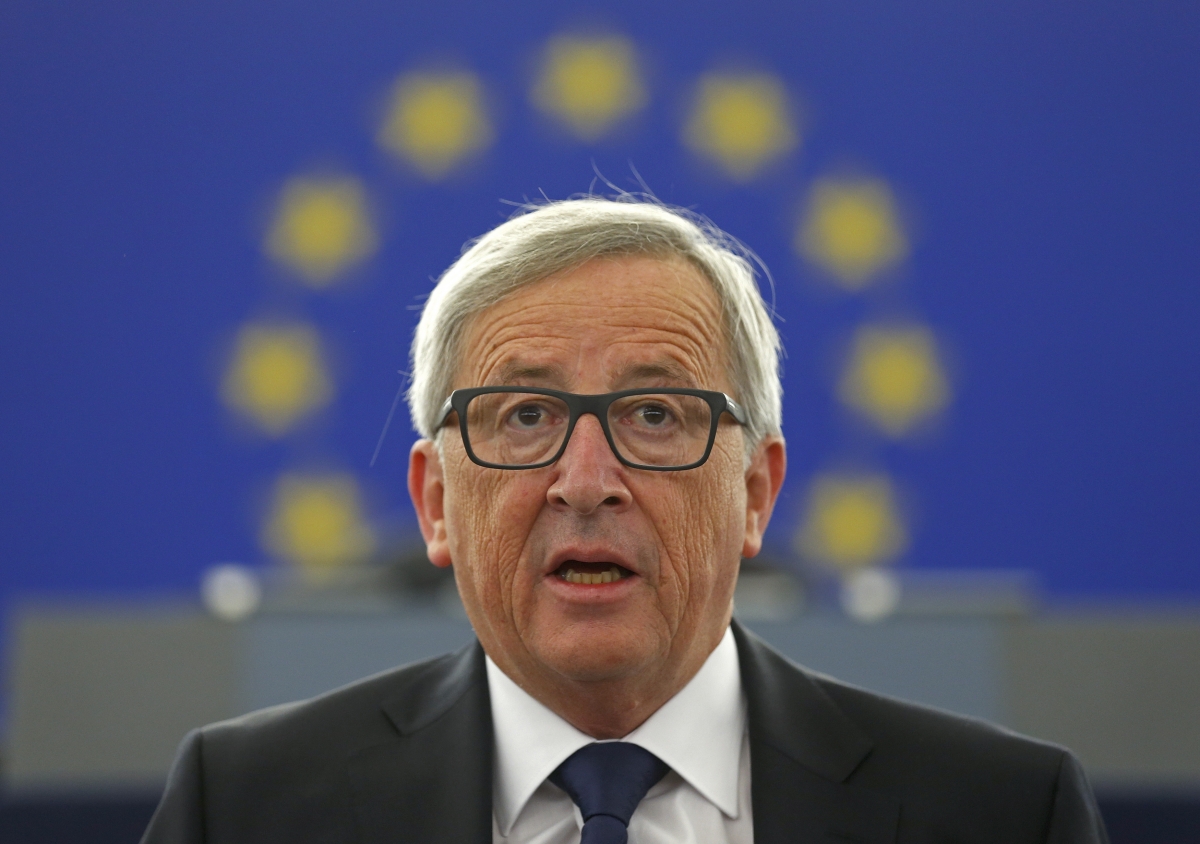
"You know, sometimes I think Trump is trolling us, people,” he said. “It’s like the ultimate troll! Because you realize, every single person he’s picked for his cabinet wants to destroy the thing that they’ve been put in charge of."Trump has appointed a man who hates the Environmental Protection Agency (and is even currently suing it) to run that same agency. He's appointed a fast food executive opposed to workers rights and the minimum wage as labor secretary. He's appointed a conspiracy-peddling alarmist as national security adviser. The list goes on.
Thursday, 9 January 2014
Target fatigue

The EU's attitude toward targets has changed dramatically over the past five years.
Back in the heady days of 2008, before the European Union
was plunged into a period of crisis around both its currency and its
legitimacy, setting hard targets for solving the climate change problem was all
the rage. Flash forward to 2014 and the world is a very different place.
The European Commission is planning to come forward later
this month with a proposal to set new climate targets for 2030. These would
follow the '20-20-20' package set in 2008: 20% emissions reduction based on
1990 levels, 20% share of renewable energy and 20% increase in energy
efficiency. The first two targets were binding, while the third was indicative.
For 2030, the Commission is going to try a different tact.
The emissions target strategy will remain roughly the same – a binding target
increased to 40% for 2030 (though this is still subject to some internal
wrangling in the Commission). But for the renewable energy target, there is
likely to be a shift in strategy. The draft proposal being submitted for review
within the Commission tomorrow will make the 2030 target non-binding, without
individual legally-enforceable targets for member states.
Thursday, 31 October 2013
Toilet humour

The voluntary labels are designed to attract consumers who might want to save money on water or help the environment.
The European Commission has been issuing these ecolabel criteria for various products such as television sets and textiles since 1992. 17,000 products have been given criteria for the ecolabel so far. But this time, the criteria are for a product that makes people giggle. So as soon as it was picked up as a news story, you could see the reaction coming a mile away.
Silly topic + EU angle = UK headlines.
And headlines there were. On Tuesday The Telegraph ran an article saying the EU is planning to “standardise the flush on lavatories”, introducing a “euro-flush” that will be imposed after an exhaustive study of European toilet habits.
Sunday, 11 December 2011
Last-minute surprise deal in Durban to save Kyoto

It was truly surprising news. As of Friday (the day the talks were supposed to end) it looked like they were going to collapse in failure. Though the EU had been able to convince Brazil and South Africa to sign the roadmap, the US, China and India were still refusing. There was fear that Durban would end with no deal, which would mean the end of any internationally binding emission reduction commitments. It would have essentially taken climate talks back to 1995 and made a mockery of the UN process.
The US and China did not participate in the 1997 Kyoto Protocol, which committed nations to binding emissions reductions by 2013. The Clinton Administration signed the Kyoto Protocol, but by the time it came up for ratification in the US the George W. Bush administration had taken over - and they refused to ratify it. They said they would not participate in a binding protocol that did not include China, now the US’s biggest competitor.
Wednesday, 26 October 2011
US-EU trade war looming over airline emissions
 This week the US House of Representatives passed a bill that would ban US airlines from participating in the EU's emissions cap-and-trade scheme. It is just the opening shot in what is likely to be a nasty trade war between the two blocs over the coming months. The winner will determine whether 72 million tonnes of CO2 are emitted into the Earth's atmosphere over the next eight years.
 While international climate talks have stalled the EU has pushed ahead with its own unilateral action on climate change, the keystone of which is the Emissions Trading Scheme (ETS). Under the scheme industries with heavy emissions are capped on the amount of greenhouse gases they can produce, and if they want to emit more they must buy credits from others who are using less than their cap. The scheme is already up and running, but starting in January airlines will be included. The decision to include airlines in the scheme was taken back in 2008.
This will mean all airlines that fly in or out of the EU must purchase carbon permits. The plan has not met with significant resistance from the European airline industry, but it has met ferocious resistance from American, Indian and Chinese airlines. US Airlines have challenged the law at the European Court of Justice, but the court has already indicated it will rule against them. So the airlines have now turned to the US Congress, and they have found a receptive ear.
Thursday, 22 September 2011
Bike sharing coming to New York?
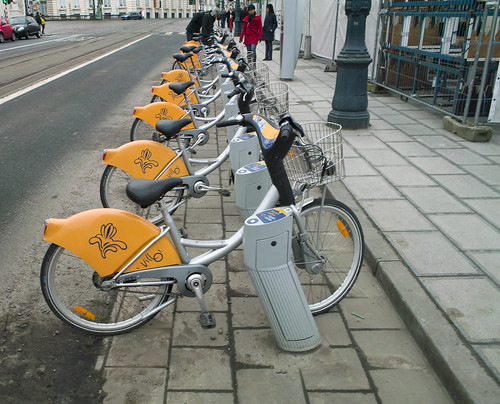
I use the Brussels bike-share scheme every day actually, it’s quite nice to have in a city with not very comprehensive public transportation. It’s quite simple really. For €30 a year I can check out a bike from any the stations scattered around Brussels and return it to a different station at my destination. It’s free as long as I return it to another station within a half hour. If I want to take it out for longer, it’s €1 for every 30 minutes. It’s particularly nice because my apartment is downhill from my office, so I take the metro to work and check out a bike to coast home.
Today I’ve learned that New York is considering implementing a similar scheme. But will it work in New York as well as it’s worked in European cities?
Tuesday, 5 July 2011
Tory Euro-MPs defy Cameron on climate change

By a margin of ten votes, the parliament voted today to remove the call for the EU to up its commitment in UN negotiations from 20% to 30% from a resolution, prompting the resolution's collapse. Conservative British Prime Minister David Cameron could have swung the vote the other way if he had been able to convince even just a few of his 26 euro-MPs to support the call for 30%. But he was unable to do so, despite considerable effort. Cameron has made action on climate policy a cornerstone of his political platform and he took the lead among EU leaders in calling for the increased commitment.
Last week Cameron sent his energy minister to Brussels to tell the euro-MPs to vote for the measure, but they refused. It's an uncomfortable setback for the British leader and an indication of just how little control he has over his rebellious motley crew in Brussels. They are, as one London-based Tory told me, "completely beyond London's control". The political wild west in which Tory euro-MPs operate has caused problems for Cameron in the past, particularly when their actions seem to clash with the progressive social agenda Cameron has adopted in order to bring the party back into the British mainstream. He has been criticised in the past for allowing Tory euro-MPs to vote against pro gay rights resolutions in the European Parliament.
But the British Conservatives weren't the only ones bucking their party leadership on this issue. The centre-right leaders of Germany and France have also called for the EU to raise its commitment to 30%. But Merkel and Sarkozy's party members in Brussels also defied their party leaders' positions and voted with the centre-right grouping in the parliament to block the resolution. The seeming incongruity will be an awkward reality for those leaders as well. But neither of them have made the environment such a core issue of their political appeal like David Cameron has. And he is being heavily criticised by the left-leaning British press today as a result.
Wednesday, 22 June 2011
Here comes Poland: the EU's 'anti-environment' presidency?
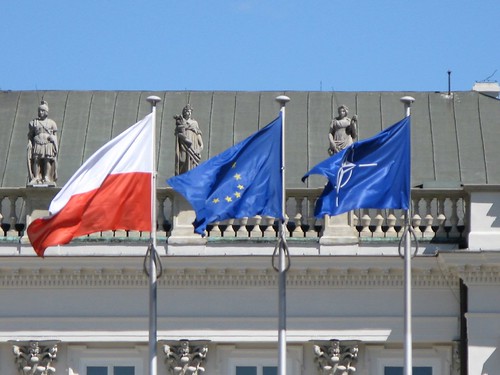
Hungary eventually relented, a little, but the timing of the law's enactment meant that for the last six months the Hungarian presidency has been associated with media repression. Many were questioning how a country which seemed to be so far outside the European mainstream in respecting press freedom could lead the bloc. And really, these sorts of questions never went away - particularly as a new controversy erupted with the ruling party unilaterally drawing up a new constitution for the country.
That pattern may be about to be repeated with the Polish presidency. Just nine days before Poland is set to take over the EU presidency, the Polish environment minister shocked his counterparts by announcing at an environment ministers meeting in Luxembourg yesterday that Poland would single-handedly block adoption of the EU's 2050 energy roadmap. The policy document sets a non-binding EU goal for a 40% cut in carbon emissions by 2030, a 60% cut by 2040 and an 80% cut by 2050, compared to 1990 levels. The Polish minister said it was just all too much for Poland, which generates 90% of its electricity from coal. "We expect higher solidarity in Europe, understanding the situation of particular Member States," the minister complained.
Wednesday, 30 March 2011
The EU is not going to 'ban cars'

Contrary to what you may have read in The Telegraph, The Daily Mail or the Evening Standard, the European Commission has not unveiled a plan to ban all cars from cities in 2050. This is just wrong. No journalist who actually looked at this policy paper could have reasonably come to the conclusion that the EU is banning cars. But the British tabloids never let the truth get in the way of a good story, especially one that fits their pre-defined narrative of how the EU oppresses the beleaguered British public.
The transport policy paper is a non-legislative roadmap that outlines a plan to reduce transport emissions while at the same time seeing an increase in transport over the next 40 years. It sets a goal of eliminating petrol-fueled combustion engines from vehicles meant for city driving by 2050. So, vehicles used for short-haul journeys within cities should either be electric or use alternative fuel in 40 years.
Wednesday, 2 March 2011
Low taxation of company cars: a perverse incentive to pollute?
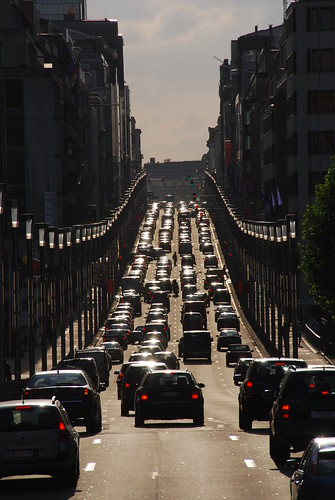
I myself have never owned a car, having always lived in large cities with good public transport systems. I still don't own a car in Brussels, but after living here a year I can say I've never before felt such temptation to get one. Not necessarily because I have difficulty getting around here. Despite its flaws I find the public transport to be sufficient for my needs, and when it's not I go by bike. But I feel like a bit of an oddity sometimes for getting around the city by metro, tram and bike. Peer pressure? Car envy? I'm not sure, but the fact that most of my friends drive is making me suddenly want a set of wheels. By contrast, none of my friends in London or New York had cars.
But if the Brussels public transport system is sufficient, why do all of these white collar workers I'm friends with – many of whom are only in Brussels temporarily – have cars? The answer is simple – Belgium pays them to have one.
Thursday, 15 July 2010
As US spill continues, EU confused over its own drilling
 As the US waits with baited breath to see if BP's latest attempt to cap the gulf oil spill will work, across the Atlantic European leaders are frantically trying to assess whether they too are vulnerable to such a spill. If the Deepwater Horizon disaster was apparently caused by a lack of oversight and regulation by the US government, things must be much more safe over here on a continent notorious for high levels of regulation, right? Well, nobody seems quite sure.
Over the past month I've attended numerous seminars, parliamentary hearings and press conferences trying to answer that question. And Europe's leaders seem no closer to answering it today than they were three months ago when this leak began. It turns out that oil drilling in the EU is remarkably uncoordinated and there is little reliable data about what is going on Europe-wide. This has infuriated green groups and politicians. This frustration was evident last night when I went to a press briefing after a meeting between the EU energy commissioner and top oil industry execs. As the oil industry representatives entered the commission there was a crowd of Greenpeace activists gathered by the front door, covered in oil and holding signs demanding an immediate moratorium on oil drilling in European waters. Unfortunately for them, by the time the oil execs arrived a sudden torrential rainstorm had washed all their oil off, leaving them shivering in their underwear and looking more like they had come to demonstrate for the rights of nudists than protest oil drilling. Still, I think the oil execs got the message.
Wednesday, 5 May 2010
Populism, David Cameron, and the gulf oil spill

I’m on the Eurostar back to Brussels at the moment and feeling pretty bummed to be leaving right before the big day. I have a feeling the real excitement is going to begin Friday when the parties have to somehow hash out how they form a government from a hung parliament.
If I had to sum up the mood of my London friends in one word it would be anxious. They all come from various political stripes, but interestingly most everyone I know is planning to vote Lib Dem. Whatever their political ideology they have one thing in common – David Cameron makes them very nervous. They fear the former PR-turned-politician is all window-dressing with little real policy ideas, and in reality it will be the “nasty Tories” of the 1990’s that will be taking power. Having not lived through this period in Britain I can’t entirely relate, but some of them feel very strongly about this fear. But an opinion piece in the Independent this weekend compared the situation with the campaign of George W. Bush in 2000. He also promised "compassionate conservartism" but in the eyes of many he turned out to be just a populist front man for a Neo Conservative cabal with a very specific agenda. That agenda included going to war with Iraq.
Thursday, 8 April 2010
The Black Forest
 This weekend I was able to see firsthand the effects of a number of European environmental policies I’ve been reporting on while taking a scenic drive through the Black Forest in Southwestern Germany.
 I’ve lived in Europe four years now, yet every year I seem to forget that we get a 4-day weekend for Easter here. So every year I end up scrambling to find some impromptu thing to do, which usually ends with me heading down to my dad’s house in Zurich and we go on a road trip somewhere. One year in was Venice, another it was Geneva. This year we decided to drive up through the Black Forest in Germany to Baden-Baden and Freiburg.
The Black Forest, or “Schwarzwald” in German, is popular tourist destination known for its hiking and skiing. It gets its name from the closely-packed pattern of the trees, which makes the forest look very dark when you look into it. Because they get no sunlight in the interior, the trees have no leaves on them for most of the bark, creating this eery world within the forest. It sits on a low-level mountain range over the Rhine valley, so it also commands astounding views. The vast majority of the tourists who go there are German (though when we were there I overheard a lot of French Alsatians), and English was in short supply. I’ve heard from my German friends that they can’t understand any of the local Swabian dialect there, and they even have trouble understanding people in the forest when they speak high German because of their strong accents. Incidentally, the Black Forest is also the birthplace of the cuckoo clock, and of course, black forest cake.
Monday, 21 December 2009
Europeans and Americans see Copenhagen through different eyes
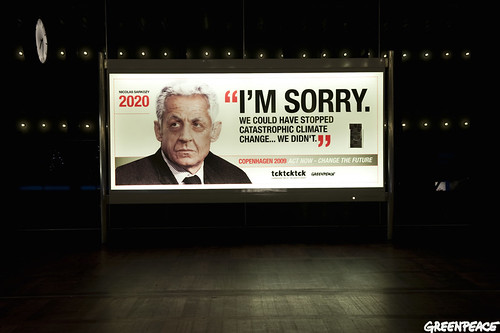
The Copenhagen Accord, finalised after hours of intensive negotiations, theoretically recognises a goal of limiting global warming to two degrees Celsius, but contains no targets to achieve that. There are no specific emission reduction actions by developing countries and no specific commitments on long term financing for mitigation and adaptation efforts. Not only is it non-binding, the agreement wasn’t even adopted by all UN countries. Instead it has just been 'noted', which means that countries recognise its existence but don’t necessarily agree with it.
European NGOs and governments were united in their condemnation of the Copenhagen climate summit’s result this weekend, which failed to include any kind of binding agreement and was only able to muster an optional “accord”. Though the language the political leaders were using was obviously more diplomatic than that being used by the climate activists (Greenpeace’s director called Copenhagen a “crime scene”), the basic message is still the same: the summit failed. Swedish prime minister Frederik Reinfeldt, still holding the EU presidency, said the agreement, “will not solve the climate pressures, the climate threat to mankind.” Commission president Jose Manuel Barroso said, "The level of ambition is not what we were hoping for." The British leadership has been railing against the Chinese all weekend, pointing the finger of blame squarely in their court. Brown said that they were, "clinging to their version of what an international organisation should not do,” and British environment minister Ed Milliband delivered the extraordinary charge today that the Chinese hijacked the summit. If there is a mainstream European publication that did not use the word ‘failure’ today to describe the summit, I am not aware of it.
Thursday, 17 December 2009
NGO fury after Copenhagen ban
 Yesterday’s decision by the UN to ban a large number of NGO delegates from the main venue of the Copenhagen climate change summit was, to say the least, unpopular on the ground.
Delegates from the green group Friends of the Earth arrived at the Bella Centre Wednesday morning to find their badges were no longer valid. This news apparently spread like wildfire both within the Bella Centre and among the protestors on the streets, stoking a feeling of resentment among the marchers. One delegate described to me his heartbreak as he saw a girl crying on the train, saying she had waited for years to attend the summit and was now being made to feel like an intruder.
The UN insists the move was necessary after it received word that FoE members were going to facilitate a security breach and let protesters into the centre. But yesterday’s move seems to be part of a wider strategy to block access to NGOs in the final day of the conference. This may be necessary as more heads of state and VIPs need to get into the centre.
According to reports NGOs have now been ordered to give up 35% of their access passes. Today the number observers allowed in was limited to a list of 300 names. Apparently the NGOs weren’t told before thge summit that thsi siphoning off of access would happen in the final days.
Thursday, 10 December 2009
Obama's troublesome shadows
Senator James Inhofe, who once called climate change the “greatest hoax ever perpetrated on the American people,” will be leading a group of Republican congressmen to deliver just that message. Climate change legislation is currently struggling in the US senate and it is by no means certain that it will pass. Polls show the number of Americans who believe climate change is caused by man is actually decreasing, falling to its lowest point in three years in October. With the entire House of Representatives and many senators up for reelection next year, it could be a tough sell to convince conservative Democrats to back legislation with teeth - particularly those from coal states. Many in congress have said they will fight any effort by the Environmental Protection Agency to bypass congress by regulating GHG emissions under the Clean Air Act.
The Republican lawmakers at the summit next week won’t be just a sideshow distraction, they will be a reflection of political reality. Much of the American media coverage to the summit has been sceptical, with the hacked email scandal receiving a large amount of attention. An editorial by potential 2012 Republican presidential candidate Sarah Palin calling on the US to boycott Copenhagen saw wide circulation on Tuesday.
Certainly the US won’t be the only country with opposition parliamentarians grumbling in the background next week – the Australian government faces some of the same challenges. But given that the US is key to any successful outcome, the American opposition may receive quite a bit of attention, particularly at home.
Friday, 14 August 2009
Songs, Sailing and Slaughter in Denmark
 “Don’t worry, we will try it again.” The headmaster’s frustrated yet encouraging words were met with smirks and giggles by the journalists around the piano struggling to keep a straight face as we half-heartedly sang ‘Let it Be’. One had to admire his tenacity in trying to convert this group of hardened (and tone-deaf) international journalists to his lifestyle of self-enlightenment through group singing of ‘60’s hippie anthems, all sung out of a small blue-binded book that resembled a church hymnal.
I was part of a group of journalists being led on a tour of Denmark taking a look at environment-related projects they have there. As a base we stayed at a “folk high school” in central Jutland overlooking a beautiful lake, normally populated by young adults on a quest to find themselves (a quest that is half government-funded I might add). The headmaster’s efforts to teach us the ways of being in harmony with the earth were quite adorable, if in the end unsuccessful. We may have been environment reporters, but we’re still cynical journalists after all!
 Yet as cynical as we were, you didn’t have to be a hippie to be impressed by Denmark’s pioneering green efforts. The tour was linked in to the hugely important UN climate change summit that will be held in Copenhagen in December. The meeting was pushed three years ago by Denmark with the intention of giving nations a firm deadline by which to be ready for a worldwide agreement on how to combat climate change. Denmark has been a natural leader in this fight, having been one of the earliest movers in environmental legislation. It was the first country to establish an environment ministry in 1973. Since a dispute with OPEC in the ‘70’s it has weaned itself almost completely off oil, now getting its electricity from a mixture of renewable energy and coal. It set up its first wind turbines in the 70’s and today wind power provides 20% of Denmark’s power generation (renewables in total provide 28%), The country is well positioned to meet the EU’s requirement of 30% energy consumption from renewables by 2020, and it is planning to go even further.
Seasick Journos
We were on our way to visit one of these wind turbine farms far out in the North Sea on Tuesday when some of us realized we were in for more than we had bargained for. We were taken out for the 8 hour sea voyage in a small wooden boat which, though beautiful, took us for a wild ride as we bounced up and down on the tempestuous sea. It was quite an experience, and as the wooden boat creaked and moaned its way out from the Danish port of Estbjerg in Southwest Jutland, I could really get a sense of what ye olde long sea voyages must have been like (i.e., not pleasant!).
As we neared the windfarm site of Horns Rev, feared by sailors for centuries because of its wild winds and shallow waters, the boat began to literally leap up and down from the sea, and we all had to hold on to keep from being knocked over. A number of the journalists started losing their lunch over the side of the boat. Luckily I had taken a motion sickness tablet in the morning so I was ok.
 When we finally reached the garden of turbines jutting majestically up from the sea, it was undeniably impressive. These things are massive, rising 115 metres into the air. The blades alone are 45 metres in length. Much of the objection to setting up wind turbines has been that they make a lot of noise, and yet I can attest that even though these blades are the size of a football pitch, I couldn’t hear anything even when the ship was right next to them (granted, the waves were pretty loud). Just one of these turbines supplies energy to 2,200 households. In total the whole Horns Rev site provides 350,000 households with power.
But the project hasn’t been an unblemished success. When they first installed the turbines there was a problem with the gears. Essentially they weren’t strong enough to handle the massive amount of wind in this area of the ocean. So all of the turbines had to be retrofitted with new motors, costing wind turbine company Vestas a massive amount to fix them.
 We met with the CEO of Vestas on Wednesday, and I asked him about their recent decision to pull out of the UK which has resulted in demonstrations and a plant takeover on the Isle of Wight. He said straight up that the UK is not an attractive market for investment in onshore wind power right now, and now that the US has opened up as a renewables market with the Obama administration’s climate bill, they are focusing their energy there. That may be making the UK government quite nervous, as environment minister Ed Milliband just announced a big target for wind energy in the UK. Does this target reflect economic reality when the private sector seems to be wary of wind in the UK? I’m working on an article on this topic for the September ENDS Europe report.
Clean Houses and Dirty Waste
 I actually had the opportunity on this junket to do two things I had also done on the Holland junket in June – visit a waste incineration plant and an energy-generating house.
It was interesting to compare and contrast the Dutch and Danish versions of these two things. The waste incineration plant was pretty similar, both in terms of its capacity to generate electricity and district heating and in its set-up. But the energy house was different in some significant ways. Whereas the Dutch version had been specifically designed to look like an average home and to be affordable in scale, the Danish house we looked at was designed as a luxury home.
I have to admit, the one in Denmark was a gorgeous house. It had an enormous amount of windows, meant to reduce the need to use lights during the day but that were also able to stop the sun from heating up the interior by being recessed. It also had a wind/temperature reading device at the top that would adjust the settings in the house to be the most energy-efficient. It would use its calculation of the speed and direction of the wind and temperature to automatically open and shut windows in the house and close/open shades. The entire thing was controlled by this futuristic control panel in the kitchen that gave out readings for the energy use of the whole home.
 However the cost, at 5 million Danish crowns, would be prohibitive for any middle-class family in Denmark. Looking at it I got the impression I was seeing the house of the future, but perhaps not the practical energy-efficient house of today. It definitely looked nicer than the Dutch house, with almost unnoticeable solar panels built right into the roof as opposed to the obvious ones on the roof of the Dutch house (and also no wind turbine, which was good because the turbine on the roof of the Dutch house didn’t look very nice). But realistically, could anyone really afford to live in the Danish luxury house?
Both Denmark and the Netherlands are one of the few countries to offer feed-in tariffs for households with solar panels or wind turbines, letting customers actually output the excess energy they generate into the power grid. They then build up a credit with the power company and they can work off that credit when they need to take in energy from the grid at night whhile the sun isn’t out (a battery for just one house would be prohibitively expensive even for the luxury home). One interesting difference though was that in the Dutch house, if you didn’t use all the excess energy you had generated at day during the night, the power company would pay you for the leftover energy. In the Danish feed-in tariff system, that payment is not available.
Next week I’m going to pop up to Camden in London to take a look at such an energy house in the UK, where there is no feed-in tariff regime available at all. With the UK rather notoriously lacking in sunlight, I wonder how this Camden house can possibly be cost-effective.
Green Slaughterhouses
One of our final stops yesterday was at the main Danish Crown abattoir outside Arhus. It’s the second largest slaughterhouse in Europe, in a country which leads the continent in pork exports. It kills an astonishing 87,000 pigs a week (17,500 every weekday) and we saw the whole process from start to finish. The facility is brand new, and almost everything in it is automatic. Each pig is stunned, killed, bled, gutted, chopped up and ready in less than a minute.
 I’d never seen a slaughterhouse before, and wondered how I would react to it. It’s kind of a gross thing to watch, but as a meat-eater I felt I’m obligated to watch the process. It actually wasn’t all that surprising, in fact it was cleaner and more efficient than I was expecting. The actual moment of death was fascinating to watch, a man shoves a blade into each pigs throat one after the other in rapid succession as they come through hanging on a conveyor belt, limp and unconscious. It’s an almost constant in-out-in-out with the blade. Gruesomely efficient. Seeing it didn’t really change my opinion about eating meet. I’m dating a vegetarian right now and my flatmate is one as well, so I get a lot of pressure to convert.
After the slaughterhouse we went next door to see the biogas plant that uses the fat and unused organs from the pigs to produce biodiesel for use in cars. The EU has set a discretionary target for using biodiesel, although this is a bit up in the air now given the controversy over ethanol disrupting food supply. Biodiesel from animal fat is really the “good” kind of such fuel, as it’s made from animal parts that would just have been thrown out anyway rather than from food that could have been eaten.
Uncover the Bridge!
 I spent Wednesday evening in Arhus, which is really a lovely town. It was amazing to see its transformation from a rather gritty port to a lovely preserved Scandinavian town. The river running through it had long ago been covered over and made into a road, with the water running under it in pipes (something unfortunately done in many European cities during industrialisation). But earlier this decade they decided to uncover it, making an actual river with a lovely pedestrian walkway running along it. We were given a tour by an architect instrumental in the design, who is now also involved in the redevelopment of the port into a knowledge-based business centre. Seeing the results, I wondered if the same thing could be accomplished in Brussels, where the Senne river was covered up a century ago. It would certainly go a long way in making Brussels a nicer place to be, something it badly needs.
Overall it was impressive to see all the green progress Denmark has made, and it was interesting to hear the observations and comparisons by the other journalists from around the world. Just like on the Holland trip we had a significant contingent from Brazil, who were particularly interested in the biodiesel. And once again I was the only American in the group.
 Sitting in the main hall at the folk high school, I had a rather funny experience that showed how much my self-identification has changed over the past three years. At one point the headmaster was telling a story about an epiphany he had in Africa on a safari, and he was about to say something unflattering about some Americans with him there (Americans are often used as a foil in European anecdotes!) when he stopped and checked – “Oh, do we have any Americans here tonight?” There was a period of silence, and then I suddenly realized everyone was looking at me. “Oh right, I’m kind of American, I guess” I said sheepishly. I had literally forgotten for a minute there! Perhaps I only remember I’m American when people are telling flattering stories, not when someone’s about to launch into a diatribe. But usually, European stories about Americans fall into the second category!
All in all a fun trip. Now I’ve got two whole weeks in London without travel. Time to relax!
Sunday, 9 August 2009
Jetting Around Jutland
I'm in Denmark this week, on a press tour organsied by the Danish government showing journalists different environmental sites around the country. I'm in Copenhagen tonight, came a bit early to spend the weekend here and visit some friends. I was last here two years ago, so it's good to be back. It's a beautiful city.
Tomorrow we're heading out to Jutland, the mainland part of Demark (that "juts" out into the North Sea. It should be pretty interesting. On Tuesday we'll be taking a boat out to an offshore windfarm out in the North Sea off the Western coast. We're also staying in a "folk high school" which is a form of live-in adult education popular in Northern Europe.
I suppose I'll be blogging about the trip when I'm back in London on Friday, until then here's a map of where I'll be going. Being an environmental journalist kind of rocks!
View Larger Map
Tomorrow we're heading out to Jutland, the mainland part of Demark (that "juts" out into the North Sea. It should be pretty interesting. On Tuesday we'll be taking a boat out to an offshore windfarm out in the North Sea off the Western coast. We're also staying in a "folk high school" which is a form of live-in adult education popular in Northern Europe.
I suppose I'll be blogging about the trip when I'm back in London on Friday, until then here's a map of where I'll be going. Being an environmental journalist kind of rocks!
View Larger Map
Subscribe to:
Posts (Atom)