Showing posts with label European Council. Show all posts

Monday, 26 February 2018

In rejecting spitzenkandidaten, Macron has let the perfect be the enemy of the good

National leaders, led by Emmanuel Macron, have refused a European Parliament demand that citizens should select the next EU president. The reasons have more to do with institutional rivalries than citizens’ interests.


“Don’t count your spitzens before they hatch,” tweeted Lithuanian President Dalia Grybauskaitė ominously as she entered Friday’s summit of EU leaders in Brussels. 

The Lithuanian president was referring to the so-called ‘spitzenkandidaten’ process, used in the last European Parliament elections in 2014 for the first time to select the European Commission President as a result of the public vote. National leaders of the 27 future EU member states (that is, all except the UK) were meeting Friday to decide whether to use the process again in next year’s election.

Thursday, 20 July 2017

“Why are you still here?”

As they exit international bodies, the US and UK are refusing to give up their seats at the tables they plan to leave. The question is whether their international partners will let them get away with it.

This week, the difficult negotiations over the UK’s exit from the European Union began in earnest in Brussels. David Davis, the UK’s chief negotiator, squared off against Michel Barnier, his EU counterpart.

Davis called for both sides to “get down to business” for arranging a swift British exit from the EU. He then promptly went back to London, 60 minutes later. He gave no explanation for his own swift departure, which left the EU negotiators perplexed. Just days earlier, Barnier had warned the UK that it is is running out of time to negotiate its exit, which must be completed by March 2019. “The clock is ticking” he said sternly.

Tuesday, 5 July 2016

The EU can, and should, reject any new UK commissioner

The British government is trying to find the most palatable candidate to survive European Parliament confirmation. But it is unclear why the EU should accept any British commissioner.

Prime Minister David Cameron's resignation in the hours after the Brexit referendum result on 24 June was the abdication heard round the world. But later that day, there was a less-noticed but also significant resignation in Brussels.

Lord Jonathan Hill, the European Commissioner from the UK, who is in charge of EU financial services, also stepped down. "As we move to a new phase, I don't believe it is right that I should carry on as the British Commissioner as though nothing had happened," he said in a statement. "In line with what I discussed with the President of the Commission some weeks ago, I have therefore told him that I shall stand down."

For awhile, it was unclear whether any new British commissioner would be sent to take his place. But today the Financial Times reported that the UK is about to nominate Sir Julian King, the current British ambassador to France. The Times writes that King would be considered an "apolitical appointment to ensure Britain is not left unrepresented at the EU’s executive body". 

The paper said the European Parliament is likely to reject any nominee that backed Brexit. At the same time, an incoming pro-Brexit government in the UK might be unhappy about having the pro-remain King be their man in the Commission.

But it is unclear to me why any UK nominee should be acceptable to the European Parliament.

Friday, 4 March 2016

Good at the big things, bad at the small things

Eurosceptics are wrong when they say the UK has no influence in the EU, but they are right that Britain is outgunned and outmanoeuvred in Brussels lawmaking. What they don't tell you is that this is self-inflicted impotence.

When the new European Commission of Jean-Claude Juncker took office in 2014, they promised to counteract increasing euroscepticism by being "big on the big things and small on the small things". In other words, no more 'Brussels meddling' in small issues that should be left to national governments. 

Of course, they had a British audience and an upcoming Brexit referendum chiefly in mind. Years of media reports on bendy bananas and 'Anglo-French Friendship ponds' have led to an impression, generally accepted as gospel in the UK, that eurocrats like legislating for legislating's sake. The Commission's 'better regulation' drive is meant to counter this impression, whether or not it's an accurate one.

As I've written before, these UK media outrages over small regulations are not really about the laws themselves, but about who has the right to make them. The regulations being complained about in the British media, when they are actually a real thing (which is maybe 40% of the time), would attract no attention at all if they were made at Westminster. 

Thursday, 17 October 2013

The car chancellor

Allegations of nefarious influence have abounded this week in Brussels, with German chancellor Angela Merkel accused of controlling the Council of Ministers, and automaker BMW accused of controlling her.

So who's really pulling the strings? And how did we get here?

On Monday, Germany overturned a deal on car emission limits in some very unusual circumstances, somehow convincing several other member states to switch positions on a deal that had already been agreed in June.

On Tuesday, it was revealed that Merkel's Christian Democratic Union (CDU) party received a donation of €690,000 from the Quandt family, which owns 46.7% of BMW, just days before Monday's fateful meeting. The revelation has prompted German media to dub Merkel "the car chancellor" and question whether hers is a pay-for-play government.

A gift from a partial stakeholder of an automaker might not have raised eyebrows were it not for the very heavy-handed and unusual way Germany has gone about trying to avoid this emissions limit at the last moment - a limit the industry has known was coming since 2008. 

In terms of how Germany has worked to change this EU proposal, the country has technically not violated any rules. But Berlin has become involved in this legislation at two highly inappropriate times that are outside the normal legislative procedure – during the Commission drafting of the proposal and during a vote to rubber-stamp an already-agreed deal.

Tuesday, 8 October 2013

Vapers win the battle, but not yet the war

Despite the message being sent today by Europe's media, the e-cigarette war is not over. Chalk it up to an oft-repeated confusion about EU policymaking.

Following today's vote on new EU tobacco rules in the European Parliament, a wave of jubilation from the so-called ‘vapers' spread across the Twittersphere.

These enthusiasts of new electronic cigarettes have been working tirelessly to convince MEPs to block a European Commission proposal to regulate the new contraptions as medicines for the purposes of market approval.

Today they got their wish. Members of the European Parliament voted 350-300 to instead classify the cigarettes as tobacco, even though they in fact do not contain any tobacco.

The cigarettes deliver nicotine electronically, without the smoke or tobacco responsible for most adverse health effects from smoking. The vapers had argued that the bureaucracy involved in getting a medicine to market would be too much for the small companies getting started in this sector and kill the industry. Some health advocates agreed with them.

Thursday, 28 June 2012

The showdown: Germany v. Italy

The centre of political gravity may be in Brussels today as EU leaders meet for yet another “make-or-break” summit, but all eyes in Europe will tonight be on Warsaw. The German and Italian football teams will be battling it out to see who will go on to the European Championship final on Sunday.

Like the Germany-Greece game last week, tonight’s game will be fraught with political tension. Thankfully, German Chancellor Angela Merkel will not be at the match tonight to humiliate her Southern neighbours, as she did at the match with Greece. Instead she will be here in Brussels, perhaps watching the match with Italian prime minister Mario Monti. And as the Germans and Italians battle it out on the field in Poland, their leaders will be battling it out here in Brussels.

Monti, the ‘technocrat’ prime minister put into place by EU leaders after they forced disgraced former prime minister Silvio Berlusconi to resign, is coming to Brussels today with a list of demands. He wants the EU to take immediate measures to save the Italian and Spanish economies, which are teetering on the brink of collapse. Specifically, he wants the EU to collectivise debt by issuing ‘eurobonds’ – a joint bond guaranteed by all countries using the euro.

Wednesday, 20 June 2012

In Cypriot hands

When Cyprus was admitted to the European Union in 2004, it was hoped that membership would help unify the divided island into a single state once again. But in an ironic twist of fate, the EU itself may be divided while it is under the leadership of Cyprus over the next six months.

On 1 July Cyprus will take over the rotating 6-month presidency of the European Union from Denmark. It is almost the perfect storm of fragility – the union is set to be led by one of its weakest members at a time when its own weakness threatens to tear it apart.

The Greek Cypriot government, which is the one that will be taking over the presidency, rules over just 800,000 people - fewer than live in the EU’s ‘capital city’ Brussels. This of course excludes the 300,000 Turkish-speaking people in Northern Cyprus, a self-governing break-away territory that has been separate since the country’s civil war in 1974. But as the EU does not recognise the existence of Northern Cyprus, nominally the entire island is taking over the presidency.

Turkey, whose military still occupies Northern Cyprus, is the only country that recognises it as a country. The Greek Cypriot government considers itself to be the ruler of the whole island, as does the EU. But they are effectively two separate countries in an open state of war, but with a cease-fire.

Friday, 18 May 2012

Obama gets tough with Merkel, but is it too late?


Now that German Chancellor Angela Merkel has been hobbled by the loss of her key ally in France, it seems the Obama administration is wasting no time in pressuring her into a course correction. The chorus of anti-austerity (and by extension anti-Merkel) voices is growing louder by the minute.

At next week’s G8 summit at Camp David, Barack Obama is reportedly going to put pressure on Germany to drop its insistence on the Eurozone economies adopting a severe austerity regime. He will ask Merkel to instead pursue a policy of stimulus and growth. He will apparently do so in no uncertain terms – warning Merkel that if she does not change course quickly she risks plunging the world into another deep recession that would be even worse than the Lehman Bros collapse in 2008.

The Guardian reports that the Obama administration is expected to try to forge close ties with new French President Francois Hollande at the first meeting of the two leaders on Tuesday. They are keen to rapidly establish Hollande as an ally in exerting pressure on Merkel to change course.

Obama already has the support of UK Prime Minister David Cameron, who while unwavering in his demand for austerity at home, publicly chastised the German chancellor in a speech yesterday for her lack of flexibility. Saying that the eurozone either had to “make up…or break up”, he said urgent steps are needed quickly to prevent an economic implosion of epic proportions in the coming weeks. He will reportedly tell Merkel this weekend to use Germany's wealth to rescue Southern Europe before it is too late.

Friday, 9 December 2011

9 December 2011: The day Britain left Europe

David Cameron emerged as the villain of the hour in the early hours of this morning as news broke that after tense all-night discussions, the UK has vetoed treaty change to save the faltering euro. The meeting then went to plan B, forging ahead on a new treaty with just the 17 countries of the eurozone. But nine non-eurozone countries then said they would also sign the new treaty, leaving the UK as the lone one out. This may sound like a small detail, but in reality it is huge. As the world press is reporting this morning, this effectively means the UK has begun the process of leaving Europe. And even the UK’s usual allies in the American media were aghast.

“UK Threatens Eurozone” headlined ABC News this morning. “UK to Euro nations: We’re out, good luck” heralded CBS News this morning. The reason for Cameron’s veto is bound to make him even more unpopular globally. In order to give his assent to the treaty change, which would not have affected Britain but only the countries using the euro, he demanded that the UK be given an opt-out from proposed increased regulation on banks and financial traders. That financial transaction tax (or 'banker tax') proposed by the EU earlier this year had nothing to do with last night's negotiations.

France and Germany balked, and Cameron walked. As one journalist friend noted last night, "The UK has refused to help solve the crisis because it wants to help the banks who started the crisis." Because the other 26 members walked away and went ahead without Britain, it means the financial transaction tax is still on the table, and the situation on that issue is unchanged from what it was before the summit. Cameron walks away with nothing.

Putting the global economy at risk in order to protect London City traders may not be the most popular stance given the current economic crisis. And Sarkozy emerged from the meeting this morning eager to exploit this. “You cannot have an opt-out and then ask to participate in all the discussion about the euro that you did not want to have, and which you also criticised,” Sarkozy declared to the press after emerging from the meeting at 5:30 this morning. It took Cameron a full half-hour after Sarkozy spoke to comport himself and figure out what he was going to say in his own press conference.

Thursday, 8 December 2011

Cameron's choice tonight: will UK be inside or outside the room?

The degree to which the Left has become irrelevant in Europe was in evidence today as the European People’s Party (EPP), the EU grouping of Europe’s centre-right conservative parties, met in Marseille. The annual meeting of centre-right leaders, which coincidentally is this year a day before the final European Council, has toda become a first round in the treaty change talks. US Treasury Secretary Timothy Geithner has been there meeting with Europe's Conservative leaders, helping them to devise a strategy to save the Euro. Every leader who is important in this process was there today.

But it is not only the Left that is noticeable in their absence today in Marseille. Despite being a centre-right conservative leader, David Cameron is not there either. That’s because in 2009 Cameron took the decision to take his Tory party out of the EPP group and create a new, europsceptic grouping called ‘European Conservatives and Reformists’. That group is essentially just the British Conservatives, with a few hard right parties from Eastern Europe thrown in for good measure.

That decision, which was the fulfilment of a promise he made to the Eurosceptic wing of the Tory party in 2005 in order to be appointed party leader, may well be weighing heavily on the British leader’s mind today. He has already been locked out of the discussions amongst Eurozone leaders to devise a strategy to end the euro crisis. Now he is also locked out of the pre-summit meeting today in Marseille where so much of the strategy is being formulated. The later is a self-inflicted wound, and must be particularly hard to take considering it’s hard to see how creating a new EU group has benefitted the Tories in any way.

Tuesday, 6 December 2011

Kicking them while they’re down

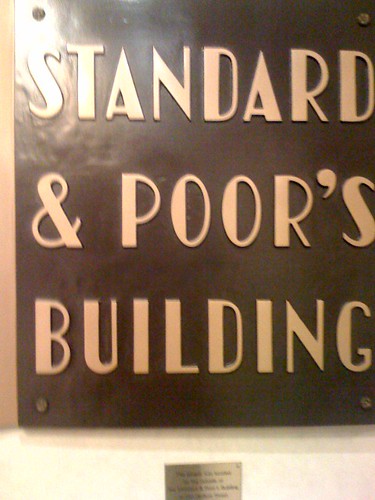
It wouldn’t have taken much to make the US-based ratings agencies less popular in Europe. But Standard & Poor’s decision last night to put all 17 countries that use the euro on review for a possible downgrade has left European leaders seething with anger. Just two days before the make-or-break European Summit that was supposed to save the euro, the markets seem to have decided that whatever the European heads of government decide will not be enough.

Just hours before the S&P news broke, German Chancellor Angela Merkel and French President Nicolas Sarkozy had emerged from an emergency meeting in Paris outlining a plan for rapid and fundamental treaty change in order to stem the crisis – to be agreed on Friday. That, combined with Italy’s unveiling of drastic austerity cuts over the weekend, caused European markets to rally and Italy’s long-term borrowing rate to fall below 6% on Monday afternoon – the lowest it’s been since October. But S&P soon put an end to the party by announcing that the AAA ratings of the FANG countries (Finland, Austria, Netherlands and Germany) are in jeopardy. Without that AAA rating these countries can’t hope to bail out the collapsed economies of the PIGS (Portugal, Italy, Greece and Spain).

It’s not hard to see what influenced S&P's decision. Merkozy - I mean, Merkel and Sarkozy - had emerged from their meeting at the Elysee Palace in almost lock step. Sarkozy, who has been pleading with his German counterpart for months to embrace the idea of ‘Eurobonds’ that would collectivise European debt, suddenly did an about-face.

Thursday, 1 December 2011

After 18 months, Belgium will have a government again

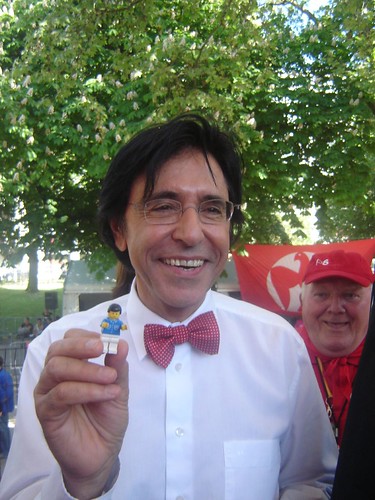
Belgium will make history this weekend in two ways. When a new government is finally formed on Sunday it will end the longest period that any country has gone without a government in modern history. And when Elio di Rupo is appointed prime minister, Belgium will become the first country in the world to have an openly gay male head of government.

I've specified 'male' because Iceland actually beat Belgium to the punch for the first gay leader of any sex – their openly lesbian Socialist Prime Minister Johanna Sigurdardottir was elected in 2009. In both countries the leader’s sexual orientation has been of little concern to the public or the media. In Belgium it is rarely ever mentioned, and in Iceland people were actually confused in 2009 when their PM’s sexual orientation received worldwide attention.

The sexual orientation of Di Rupo, also a Socialist, isn’t the only thing that makes him a different sort of politician. He is the son of Italian immigrants – a sizable population in Belgium’s Wallonia region who are descendants of the Italians who came to work in the mines in the early 20th century. This fact prompted one Belgian politician to say Di Rupo was evidence that the “American dream” is possible in Belgium.

Friday, 21 October 2011

Indignant occupiers and the EU’s ‘sink or swim’ moment

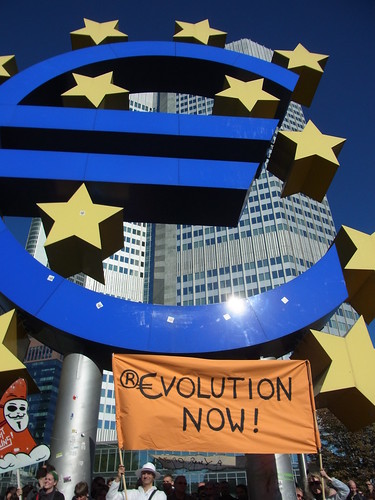
The past few weeks have witnessed a remarkable coalescence between the months-old ‘Indignados’ movement that started in Spain and spread to other European capitals with the ‘Occupy Wall Street’ movement that started in New York and spread to other American cities. Coordinated demonstrations and unrest took place this weekend in from London and Paris to Brussels and Frankfurt.

I was in Italy on Saturday when Rome saw the worst of the violence outside Greece, and the news coverage was clearly unnerved in tone. Everyone is now wondering – where is this all going?

The protests on both sides of the Atlantic are expressing the same frustration: people feel powerless and confused by a North Atlantic economic crisis where solutions seem to be dictated by the all-powerful 'markets'. It's reminiscient of how the Pope in Rome excersised ultimate authority over kings and queens in midieval Europe. Now European and American leaders follow the dictates of 'the markets'. In 2008 following the Lehman Brothers collapse, the US congress was told that it must immediately pass a rescue package for the banks or 'the markets' would panic, causing economic catastrophe. Now European leaders are being told that they must immediately inject an enormous amount of cash into the struggling Southern European economies to prevent 'the markets' from panicing.

Friday, 24 June 2011

Commission laments 'rising xenophobia' as Schengen unravels

The June summit of EU leaders has wrapped up here in Brussels – the blockades are being removed from the streets and the whirl of helicopters overheard is slowly starting to dissipate. As expected, the council voted to establish a "safeguard mechanism" in the Schengen passport-free travel zone that would allow member states to reintroduce internal EU border controls in exceptional circumstances.

The final text adopted today says the border checks should only be reintroduced "as a very last resort" in a "truly critical situation where a member state is no longer able to comply with its obligations under the Schengen rules as concerns the prevention of illegal immigration of third country nationals."

Such a mechanism was demanded by Italy and France earlier this year when the two got into a row over illegal immigration happening as a result of the Arab spring. France accused Italy of deliberately sending Tunisian migrants to France and issuing them bogus identity cards because they wanted to get them out of Italy as soon as possible. France said it should be allowed to set up border controls with neighboring countries who are failing in their duties to protect the EU external border. But existing rules forbid member states from imposing border controls at internal EU borders. Italian PM Silvio Berlusconi wholeheartedly agreed, as if to say "Yes, we're completely incompetent. Please allow France to set up protections against us."

Wednesday, 22 June 2011

Here comes Poland: the EU's 'anti-environment' presidency?

The Hungarian presidency of the EU, which is now drawing to a close, got off to a rough start. Just before taking the reigns of the rotating ministerial presidency, which goes to a different EU country every six months, they passed a media law which critics said severely curtailed press freedom in the country. The European Commission became so concerned that in January, just 48 hours into the Hungarian presidency, they warned Hungary that the media crackdown could be a violation of EU law.

Hungary eventually relented, a little, but the timing of the law's enactment meant that for the last six months the Hungarian presidency has been associated with media repression. Many were questioning how a country which seemed to be so far outside the European mainstream in respecting press freedom could lead the bloc. And really, these sorts of questions never went away - particularly as a new controversy erupted with the ruling party unilaterally drawing up a new constitution for the country.

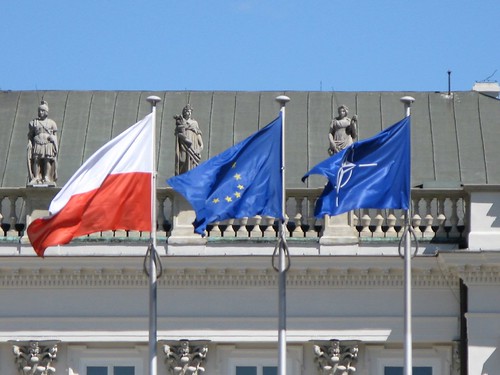
That pattern may be about to be repeated with the Polish presidency. Just nine days before Poland is set to take over the EU presidency, the Polish environment minister shocked his counterparts by announcing at an environment ministers meeting in Luxembourg yesterday that Poland would single-handedly block adoption of the EU's 2050 energy roadmap. The policy document sets a non-binding EU goal for a 40% cut in carbon emissions by 2030, a 60% cut by 2040 and an 80% cut by 2050, compared to 1990 levels. The Polish minister said it was just all too much for Poland, which generates 90% of its electricity from coal. "We expect higher solidarity in Europe, understanding the situation of particular Member States," the minister complained.

Thursday, 14 April 2011

When tax policy and climate change collide

Generally, there are few areas in which the fiercely eurosceptic English public thinks EU regulation serves a useful purpose. One of those areas has traditionally been climate change. Even the Conservatives, the most anti-EU of the three main British parties, have highlighted the constructive role EU legislation can play in Europe's efforts to fight climate change. The EU is good as a free trade block and as a way of pooling efforts on climate change, they say, but it should stay out of areas best dealt with by member states such as taxation, finance, immigration, health and safety, transport and human rights.

The problem is it isn't that simple. Efforts to combat climate change in a coordinated pan-European way must by definition spread into many sectors, including all of those mentioned above. This conundrum was evident yesterday when the European Commission presented its plans to revise the EU energy taxation directive in a way that would change fuel taxes to make them more in line with climate change goals.

Saying the existing EU rules dating from 2003 are "outdated and inconsistent", the commission has proposed setting a minimum rate at which member states can charge fuel tax based on the carbon dioxide emitted and the energy produced rather than on the volume of the fuel. This would end the situation where renewable fuels are taxed the same as fossil fuels and some of the least energy-efficient fuels are taxed less than more energy-efficient ones. Fuel taxes have actually decreased by 10 cents per litre since 1999.

Tuesday, 29 March 2011

Cloned meat headed for EU menus as talks break down

Three years of negotiations over banning the use of cloned animals for food in the EU broke down early this morning after member states and the European Parliament could not come to an agreement. The parliament wanted to ban meat from both cloned animals and their offspring, while the national governments insisted the ban should only apply to the cloned animals themselves.

Health campaigners have said enacting a ban just on cloned animals is useless because a cloned animal is so expensive to produce it would never be used for meat. The main purpose of cloned animals is to produce genetically superior babies, and it is the offspring that would be intended to end up in your sandwich. During negotiations the parliament offered a compromise to just have labelling of meat that comes from cloned animals or their offspring, but member states said they could only agree to such labels for beef. Beef is already heavily labelled and tracked because of previous mad cow scares. The parliament negotiators said no deal.

Wednesday, 15 December 2010

EU gets tough with Switzerland

Any Swiss citizen working in the EU, or vice versa, should take note of some stern language used toward Switzerland by EU foreign ministers in Brussels yesterday. Warning Switzerland that the system of bilateral agreements that govern the Alpine country's relationship with the EU has "clearly reached its limits," the ministers called the current arrangement incoherent and unwieldy. Switzerland, they warned, is in danger of losing its rights for free movement of goods, persons, services, and capital with its neighbours.

Switzerland's relationship with the EU is governed by a complex system of bilateral agreements which make the country a sort of "semi-member state". Switzerland has to follow certain areas of EU law, but doesn't have to follow others. It participates in the free movement provisions of EU law, which means that any EU citizen can work in Switzerland, and vice versa. It also participates in certain common market rules, but is not part of the customs union (which is why you can buy tax-free goods when flying from Switzerland to elsewhere in Europe). At the same time, as a non-EU member it gets no European Commissioner, has no vote in the European Council and does not have MEPs in the European Parliament.

Friday, 12 November 2010

Is direct democracy preventing a solution to the euro problem?

Angela Merkel may have won her battle for a change to eurozone rules last month, but as lawyers grapple with exactly how to make those treaty changes, the devil is proving to be in the details. The greatest irony of the whole situation may be that it is the eurosceptic populations of Northern Europe - who have been the most unfairly hurt by the euro currency crisis - that are proving the biggest block to making changes with real teeth that would stop Southern European states from from again abusing the rules of the common currency.

Ever since the German chancellor reluctantly agreed to bail out the collapsed Greek economy and create a permanent mechanism for similar crises in the future, she has insisted that EU treaty changes are needed to prevent the bail-out being challenged in Germany's constitutional court. So she has called for treaty changes explicitly allowing such bail-outs and also measures to punish eurozone states who abuse the bloc's rules as Greece did. The later element would have the objective of preventing the need for another such-bail-out in the future. The changes are needed urgently, she says, because that future may be of the not-too-distant variety considering the recent economic news coming out of Ireland and Spain.