Showing posts with label immigration. Show all posts

Thursday, 10 November 2016

Think you can escape America? Think again


Horrified by what I was seeing from Americans, I left the country a decade ago. But I came to learn that wherever I go, the American people determine my fate.

On 2 November 2004 I made a fateful choice. I was living in Chicago at the time, and was watching that year’s presidential election results at a friend’s apartment. We were all pretty sure that Democrat John Kerry was going to win. After all, sitting president George W Bush had been completely discredited by the Iraq War debacle, right?

It didn’t work out that way. Despite polls predicting a Kerry win, Bush emerged victorious. People at the apartment were perplexed, some were crying. I left by myself and walked to Lake Michigan. I stared out at the water and decided I did not see a future for myself in the United States. I vowed to move to Europe.

Monday, 26 September 2016

The Brexit diaspora

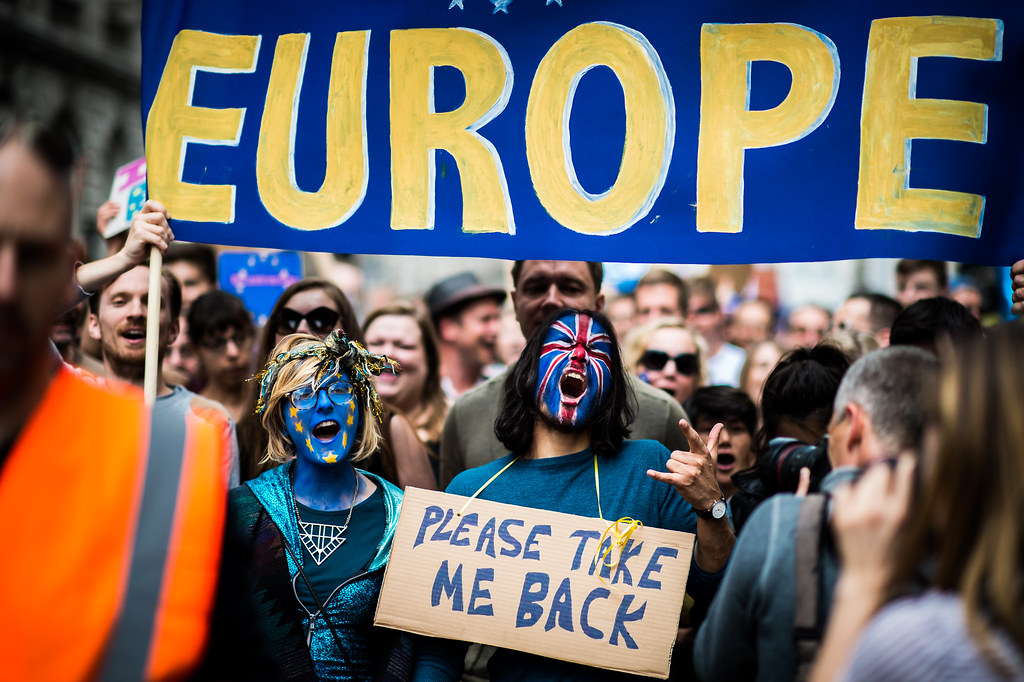
After Brexit, many British expats are considering never returning to a home that now feels alien to them.

I'm in Brussels this week, and have spent much of it catching up. I was away all summer, and though I was here briefly for work in early September, this is the first time I've been able to see a lot of my friends since that fateful day on 22 June.

Belgium may be experiencing a sunny Indian summer at the moment, but somehow the city still feels dark. There is a palpable fear about where the world is going. Post-Brexit, and possibly pre-Trump, we find ourselves in a moment of extraordinary unease. In my entire life, I've never felt such an overwhelming air of pessimism and fear all around me. It seems as if everyone has lost hope.

Nobody seems to be feeling this more acutely right now than Brits in Brussels. They've dedicated much of their lives to the idea that they were part of a grand project - citizens of a unifying Europe. Suddenly, half of their countrymen have pulled the rug out from under them, upending their entire lives. You are no longer a European citizen, they have been told. Come home at once.

Friday, 24 June 2016

European in London? Here's what's going to happen to you

In a great irony, there is likely to be an increase in immigration from Europe over the next two years as people hope to be grandfathered in to a future visa regime.

Many of my friends who are non-English EU citizens living in London (a category I myself used to be in) have asked me today what's going to happen to them. 

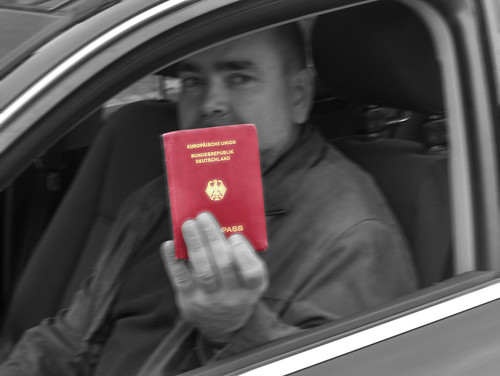
They live and work in the UK on the basis of their EU passport. What happens when the UK pulls out of the EU, and freedom of movement across the channel comes to an end? Are they going to be immediately deported?

I've reassured them that most likely some kind of arrangement will be made for those EU citizens who have been living in the UK a long time. They're not all going to be immediately deported. But some of them might. I think it is likely that in two years, EU immigrants already in the country are going to have to apply for permission to remain, on the basis of the existing tiered visa regime.

Here are the different possibilities:

Monday, 13 June 2016

Orlando has no relevance to Brexit

The ad created today by Leave.eu was not only in poor taste - it was a lie.

Given that we are in the final week before the UK's momentous referendum on EU membership, there has been a lot of speculation today about what effect this weekend's tragic event in Orlando will have on the vote.

Some, it appears, were eager to ensure it had an impact. This morning the Leave.eu campaign sent out a tweet with this political ad, with an accompanying message saying the EU allows free movement for AK-47s.

Thursday, 5 May 2016

Gleisdreieck: the new Berlin wall

The old border between East and West may be imperceptible these days, but Berlin still feels like two different cities.

This week, after I had finished moving into my new apartment in the Neukolln neighbourhood of Berlin, I went to the annual re:publica conference nearby. It's an event focused on the politics of the internet - a subject close to German hearts

It is held at The Station, an extraordinary event facility housed in a former postbahnhof - a train station for mail. Today it sits under a dizzying intersection of several different train lines at Gleisdreieck Station - where U2, U1 and DB long-distance tracks converge. It has a beautiful outdoor area that faces Gleisdreieck Park. 

But this spot wasn't always so lovely. For decades this area was a barren weed-filled wasteland under and along the railroad tracks, separating the West Berlin neighbourhoods of Schoneberg and Kreuzberg.

Friday, 20 November 2015

Longer waits to get back home for EU citizens

EU interior ministers in Brussels agreed today to put in place the same screening procedures for their own citizens as for foreign citizens at the EU's external borders.

As someone with both US and EU nationality, I've been amazed at the very different experience I encounter when entering each one.

When I go home to New York, I always have to wait in a very long line at JFK airport, even though I am entering with my US passport. I have to fill out a customs declaration form, then bring it to a border guard (after a wait of usually around 40 minutes). He runs it through the database, and asks me a serious of questions. Where have I been? Why do I live in Belgium? What is my job? Where am I staying? The whole interview process can take between three to ten minutes.

Contrast this to my experience coming home to the Schengen area using my Italian passport. I've never once been asked any question at the border. Usually, they just glance at my passport and wave me through. Sometimes they quickly run my passport through a scanner. Given how quick the process is I doubt it's running my name through an extensive database.

Thursday, 24 October 2013

Immigrant-on-immigrant xenophobia

Italians were shocked yesterday to learn that a Northern Italian teenager who had recently gone to the UK to study and find work had been beaten to death over the weekend. Joele Leotta, 19, was brutally attacked by a group of young men who accused him of “stealing English jobs”, the Italian papers reported.

The Italian papers were quick to make a connection to increasing anti-European and anti-immigrant rhetoric from the Conservative government in the UK. Some intitial reports in Italy mentioned the new campaign by the government to send vans into certain neighbourhoods telling illegal immigrants to “go home” in big letters.

The initial press coverage prompted Hannes Swoboda, the leader of the Socialist (S&D) group in the European Parliament, to issue a press release saying the murder was the result of the xenophobic climate created by the government. "The xenophobic, aggressive climate inflamed by populists such as UKIP and by the rhetoric of the Conservatives in government is now leading to murder in the streets of Britain,” said Swoboda in a statement. “Campaigns such as vans with slogans telling immigrants to 'go home' and continuous negative rhetoric against foreigners – including EU citizens – are creating an ugly mood in Britain, which has long prided itself on being an open-minded and tolerant nation.”

Wednesday, 30 November 2011

Brussels – enter at your own risk

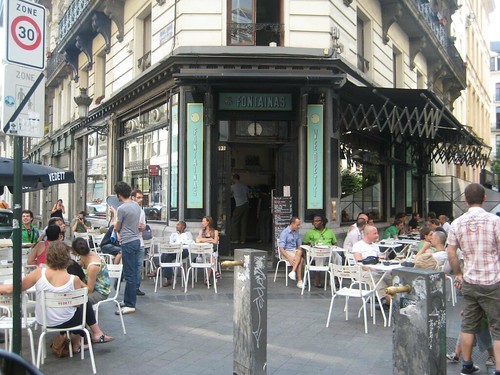
Fontainas, a cafe in central Brussels that could best be described as the headquarters of the city’s gay community, is shut down this week. Its doors have been closed since an incident Sunday night that sent a man to the hospital with severe stab wounds.

News of the attack, which has been spreading like wildfire through social media all week, seems to have left the city’s gay community shocked yet unsurprised at the same time. The storyline has become a familiar one in Brussels. Three drunk men entered the café, began hurling homophobic abuse at the people inside, and before long a violent altercation ensued. The details of what took place are still unclear, but the incident was serious enough to shut the doors of this Brussels landmark since Sunday. And although homophobic attacks are unfortunately common in Brussels city centre - an area of the city that is known for its crime and grime - this incident has still caused huge shock because the establishment is so well-known. Even the soon-to-be Belgian prime minister, who is openly gay, can often be seen there.

A movement has been growing to try to pressure the city authorities to do more to keep the city centre safe since a gay-bashing attack in June that many saw as the straw that broke the camel's back. A man was beaten by a group of young men near the Bourse (stock exchange), just next to Grand Place, because he was gay and behaving in an effeminate manner.

Friday, 16 September 2011

Denmark's election: is the Left clawing its way back?

The centre-left Social Democratic Party scored a victory in yesterday's closely-watched general election in Denmark, ending the 10-year reign of a conservative coalition that had been moving steadily further and further to the right.

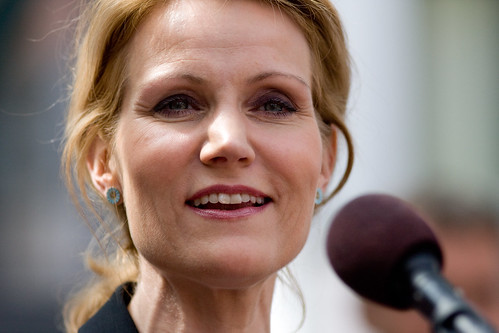
The campaign of the centre-left coalition, called the 'Red Bloc', was centred around a promise to raise taxes on the country's investment banks and wealthiest citizens, reversing a trend of decreasing corporate taxes led by the previous government. The victory for this message is a stinging rebuke to the current austerity crusade dominating the governments of Europe. The Social Democrats, led by Helle Thorning-Schmidt (pictured above), promised to actually expand Denmark's welfare system, which is already one of Europe's largest. They have also promised to use the proceeds from increasing taxes on investment banks and the wealthy to improve roads, schools and hospitals.

So is this a sign that Europe's hobbled left may be on it's way back? Are voters across Europe growing tired with the messages of the right and ready to turn to a new direction? Or are the circumstances of this change in direction limited to Denmark?

Friday, 29 July 2011

Where does the Norway shooting leave Europe’s conservatives?

Last week’s far right terrorist attack in Norway has prompted a lot of questions in European capitals, and many of the hardest questions are being asked inside the party headquarters of Europe’s center-right. Many of Europe's conservative parties have spent the last few years courting the far right vote, by co-opting some of their messages on immigration and cultural identity issues. In several countries including Denmark, Italy and the Netherlands the mainstream conservative parties have even allied themselves with the far right and invited them into governing coalitions. After the Norway attack, are those days over?

To answer this question, one must understand the current political balance in Europe, and why it has come about. Conservative parties now dominate the national governments of Europe as well as the EU institutions, relegating the left to just a few Southern countries. The Guardian put out a great interactive map today where you can trace Europe’s left-right balance over the past 50 years. Contrast the map just ten years ago in 2001 on the left with today’s situation in 2011 on the right (left-of-center in red and right-of-center, including Liberal parties, in blue). Considering that Spain and Greece now have their policies dictated to them by their conservative Northern European creditors, the left has effectively disappeared from Europe.


So why has Europe veered rightward at a time of economic crisis? There are probably many contributing factors – but the biggest cause is the complete disarray of the European left. From Scandinavia to Germany to France to Italy, European Social Democrats are in complete chaos, torn by infighting, a lack of enthusiasm and confusion over ideology. Europeans have voted conservative not because of some great ideological shift toward economic liberalism and laissez-faire capitalism. They have done so because the parties of the left have not offered any credible alternative for governance.

Sunday, 24 July 2011

Europe's Timothy McVeigh

Europe is in shock this weekend after Friday's horrifying act of terrorism in Norway that killed 76 people. Because of the stated aims of the perpetrator, it is already prompting questions over whether Europe has been looking the other way as the far right has grown in numbers and power.

When the news first broke on Friday that a car bomb had gone off outside the prime minister's office in Norway, many people assumed it was an act of Islamic terrorism. But soon after, news broke that the bombing had been followed by a shooting spree at a political youth retreat for the country's ruling Labour party. Then it was clear that this was unlikely to be an act of Islamic terrorism, since it seemed to fit the modus operandi of either a deranged lone gunman or an act of far-right domestic terrorism. In the end, it turned out to be the latter.

The man accused of orchestrating the attack, Anders Behring Breivik, reportedly carried out the attack on the ruling Labour party because he felt that their tolerant attitude toward Islam was destroying the country. It was an anti-government, far-right, fundamentalist Christian act of terrorism - similar to the Oklahoma City bombing in the US in 1995 committed by far-right extremist Timothy McVeigh.

Thursday, 7 July 2011

Poland fires warning shot over Denmark's 'nationalist' moves

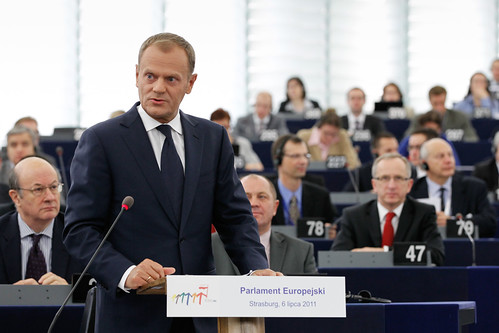
Poland is not usually known as a very pro-EU country. In fact, it has gotten the reputation as the most Eurosceptic of the new member states. But yesterday Polish Prime Minister Donald Tusk lambasted recent moves by Denmark, France and Italy to undermine the European project. He signalled he intends to halt the current slide, led by those Western countries, toward reintroducing border controls at internal EU borders.

Tusk was speaking to the European Parliament in Strasbourg to mark the start of Poland's presidency of the EU, which will last the next six months. "The answer to the crisis is more Europe," he said, not less. He indicated that he will fight against efforts to further erode EU principles, and suggested he was unhappy with the deal reached among member states last month to allow temporary internal border patrols to deal with increased immigration.
"I am against any barriers to internal free movement under the pretext of dealing with migration problems. What Denmark is doing is a concern for anybody who thinks that free movement is going to be restricted even further," he told the parliament. "Europe, with its institutions, its budget and its objectives, is not the source of this crisis. And following those who say the opposite would be a fatal mistake. Undoing the European construction at this time and turning to nationalism as an answer to the crisis would be a very big mistake."
It was a fairly unusual move for the incoming presidency to take such a political stance against what other member states are doing, because the presidency is supposed to be a neutral negotiator in the council. But Poland has always marched to the beat of its own drummer when it comes to the EU.

Friday, 24 June 2011

Commission laments 'rising xenophobia' as Schengen unravels

The June summit of EU leaders has wrapped up here in Brussels – the blockades are being removed from the streets and the whirl of helicopters overheard is slowly starting to dissipate. As expected, the council voted to establish a "safeguard mechanism" in the Schengen passport-free travel zone that would allow member states to reintroduce internal EU border controls in exceptional circumstances.

The final text adopted today says the border checks should only be reintroduced "as a very last resort" in a "truly critical situation where a member state is no longer able to comply with its obligations under the Schengen rules as concerns the prevention of illegal immigration of third country nationals."

Such a mechanism was demanded by Italy and France earlier this year when the two got into a row over illegal immigration happening as a result of the Arab spring. France accused Italy of deliberately sending Tunisian migrants to France and issuing them bogus identity cards because they wanted to get them out of Italy as soon as possible. France said it should be allowed to set up border controls with neighboring countries who are failing in their duties to protect the EU external border. But existing rules forbid member states from imposing border controls at internal EU borders. Italian PM Silvio Berlusconi wholeheartedly agreed, as if to say "Yes, we're completely incompetent. Please allow France to set up protections against us."

Thursday, 23 June 2011

'Baby steps' toward a real EU border patrol

The EU institutions and member states reached an agreement last night to beef up the EU's border patrol agency, Frontex. The news, coming just before the summit of EU national leaders today and tomorrow in Brussels, shows how much immigration concerns are at the centre of the political agenda right now. While the populist rhetoric in member states is more often calling for less EU rather than more of it these days, an agreement to expand the EU's border patrolling powers was easily reached.

The deal will allow Frontex to buy its own equipment, so that it will be less dependent on helicopters and vehicles leased from member states. It will also make it binding for member states who have pledged personnel to the agency to deliver on their promises. The Frontex patrols will now be coordinated into "European border guard teams" that will be swiftly brought in if a member state is struggling to control it's external EU border – but still only on the invitation of the member state. To date, the only EU member state that ha summoned a significant number of Frontex forces is Greece.

Friday, 13 May 2011

A return to walls in Europe

There's something rotten in the state of Denmark, and the rot is spreading fast throughout the European Union. Brussels is in shock today following yesterday's announcement by Denmark that it will reintroduce border controls with neighbouring Sweden and Germany.

The move is a violation of the bloc's Schengen passport-free rules and a worrying sign as EU ministers meet in Brussels today to discuss possible changes to the Schengen rules. The plan would set up the first border control between Sweden and Denmark in more than 50 years.

The move is no doubt intended as a pre-emptive strike ahead of today's negotiations, a message to the EU that if the ban on internal border controls isn't loosened member states are going to ignore it and unilaterally re-impose passport checks. Denmark likely feels confident enough to take this bold unilateral move because of the letter sent to the European Commission by Nicolas Sarkozy and Silvio Berlusconi two weeks ago.

The letter demanded that member states be allowed to reimpose internal EU borders in "exceptional circumstances." They believe that the current increase in migrants trying to come to Europe from North Africa qualifies as one of these circumstances. Denmark clearly feels that this letter from two large member states gives them cover to unilaterally impose their own border control. It is the first country ever to reimpose permanent border checks in the history of the Schengen Zone, and there is now fear of a 'chain reaction' that would see the reintroduction of controls at all internal borders.

Wednesday, 27 April 2011

Berlusconi and Sarkozy slam on the brakes

Usually it's the Northern European countries that are the ones clammoring for rollbacks on EU integration. But in a strange twist this week it's the reliable core stalwarts of France and Italy that are agitating for a step back in the EU integration project. The leaders of the two countries sent a letter to the European Commission yesterday asking for the ability to re-establish border controls between Schengen states in 'exceptional circumstances'.

The letter was sent after Nicolas Sarkozy and Silvio Berlusconi held a summit in Rome yesterday trying to diffuse the diplomatic crisis between the two countries. Italy has demanded help from its EU neighbours, saying that it can't handle the influx of economic refugees floating across the Mediterranean to escape the chaos in North Africa and landing on Italian shores.

Deciding that the EU wasn't acting fast enough to provide assistance, Silvio Berlusconi's government started issuing the migrants with "temporary residence visas" and telling them they could use them to seek work in other EU states, knowing full well that the French-speaking Tunisians and West Africans would go to France. The French were furious, and started stopping trains at the French-Italian border which they suspected of carrying the migrants. Each side is accusing the other of violating the EU's Schengen agreement, which allows passport-free travel between member states.

Monday, 18 April 2011

Tensions flare at French-Italian border

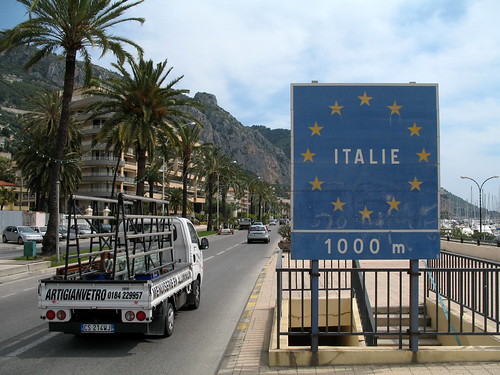
France and Italy are locked in a war of words today after France stopped several trains from crossing the border between the two countries over the weekend. France, suspecting that Italy was trying to dump North African immigrants into the country, stopped the trains at the old border station between Ventimiglia and Menton, 20km east of Nice. Now, each country is accusing the other of violating the rules of the EU's passport-free Schengen Zone.

Since the pan-Arab uprising began in January in Tunisia, Italy has been sounding the alarm bell about an increase in migrants trying to cross the Mediterranean to escape the chaos in North Africa. The tiny Italian island of Lampedusa, just off the Tunisian coast, has been inundated with refugees washing up on its shores in makeshift boats. There are now more migrants housed in a refugee camp on the island than there are residents.

Italy has asked the EU for assistance in dealing with the migrants, most specifically through deployment of the EU's Frontex border patrol force. They have also asked other member states to contribute financially to the effort, saying that Italy can't afford to patrol the EU's borders all on its own. Because the Schengen Zone is a passport-free area, most of the migrants crossing into Italy are just trying to get into the EU. Once they get into Italy they can go to France, Sweden or Germany without facing a border check.

Tuesday, 22 February 2011

Chaos in EU backyard causing panic

The situation in Libya continues to spiral out of control, and EU foreign ministers are scrambling to figure out what to do about it. After the bloc spent days hemming and hawing about whether it would organise an evacuation of EU citizens, Libyan airspace was closed yesterday trapping thousands of EU nationals in the country.

Now there are fears that the country's erratic and defiant leader Colonel Gaddafi will use the trapped Western foreigners as hostages in what is developing into a tense stand-off with the EU. Over the weekend Gaddafi threatened that if the EU criticised his crackdown on protests he would "unleash a flood" of refugees across the Mediterranean to Italy.

The past few days have seen incredible bloodshed in Libya, where Gaddafi's forces have killed as many as 519 protestors. The Libyan air force is even reportedly bombing the protestors from the skies. Yesterday two Libyan pilots landed in Malta seeking asylum, saying they had been ordered to bomb civilians in the protests.

Tuesday, 15 February 2011

Angela, David and Nicolas agree: multiculturalism has failed

European leaders don't seem to be able to agree on much these days, but it seems one idea they can all get behind is that 'multiculturalism' has failed in European societies.

Over the past few months there's been a torrent of speeches from Europe's most high-profile leaders declaring the European 50-year experiment a failure. It started with Germany's chancellor Angela Merkel, who declared in October in a much-anticipated speech that the country's efforts to create a multicultural society where immigrant groups maintained their own identity and culture had "utterly failed". Weeks later, Belgian prime minister Yves Leterme said he agreed with her and the experience in Belgium has been the same.

At the start of this month British prime minister David Cameron picked up the theme while speaking at a security conference in Munich, announcing in a headline speech that "state multiculturalism" in the UK had failed, and that a stronger British identity needed to be forged and passed on to immigrants. Five days later French President Nicolas Sarkozy, responding to a question during a television interview, also condemned multiculturalism. "We have been too concerned about the identity of the person who was arriving and not enough about the identity of the country that was receiving him," he said.

Yesterday the Netherlands became the latest country to join the anti-multiculturalism club, with the leader of the ruling Christian Democrats telling a TV show that the Dutch model of a multicultural society has failed.

Monday, 14 February 2011

Tunisian refugees overwhelming Italy

Egypt may have stolen the spotlight from the revolution in Tunisia, but the situation there is still in chaos. Since the uprising that overthrew long-time President/Dictator Zine al-Abidine Ben Ali there have been strikes and clashes on the streets and a state of lawlessness still exists as many police officers have abandoned their posts.

Amid all of this Italy said this weekend a flood of Tunisian refugees coming across the Mediterranean Sea have overwhelmed the tiny Italian island of Lampedusa, just off the Tunisian coast. More Tunisian immigrants have arrived on the island in the past week there are residents of the island, they say.

But the situation seems to be mired in confusion and perhaps not a small amount of exaggeration. Though the Italian foreign minister claims that he asked for EU help in stemming the flow of migrants on Saturday, today a European Commission spokesperson said there has been no such request from Italy. In fact, he said, the EU offered Italy assistance but the Italian government refused it. So they were "surprised" by the foreign minister's comments, he said.