Showing posts with label Schengen. Show all posts

Sunday, 26 June 2016

Ireland faces its doomsday scenario

Both sides of Ireland are in a panic because Brexit could make the peace process unravel. But perhaps the North has come far enough to allow a non-violent reunification of the island.

"Of all the things that could happen to an Irish government short of the outbreak of war, this is pretty much up there with the worst of them," wrote The Irish Times, the republic's main newspaper, as the world woke up to the "Brexit nightmare" on Friday morning.

"Ever since David Cameron announced that he would hold a referendum back in 2012, Irish officials have regarded the prospect of a British exit from the EU as the worst thing that could happen [to Ireland]," the paper wrote. "[Irish PM] Kenny now faces leading Ireland through a period of difficulty and uncertainty unprecedented in the last 50 years, more complex and unpredictable than the recent financial crisis, more destabilising the Northern Troubles."

The UK is Ireland's biggest trading partner. One billion euros worth of goods flow freely across the Irish Sea each week, tariff-free because both countries are in the European Union. If the UK leaves the EU while the Republic of Ireland stays in, customs duties will have to be imposed on that trade. That is, unless the UK joins the EEA, but I've written before on why that is unlikely.

Monday, 15 February 2016

Is Latin America a vision of Europe's fenced future?

Europeans should look at the hassles faced by other continents before they thoughtlessly toss out Schengen's decades of free movement.

I'm spending this weekend at Iguazu Falls, the mammoth waterfalls at the border of Brazil, Argentina and Paraguay. It's a truly spectacular sight, more powerful than Niagara and wider than Victoria (the falls, not the queen).

Perhaps even more interesting than visiting the falls has been exploring the three towns at the 'triple frontier', Foz do Iguacu, Puerto Iguazu and Ciudad del Este. It is essentially one large urban conurbation spanning three borders. I've taken to collecting visits to sites like this. It's my fourth triple border, after NL-BE-DE, CH-FR-DE and CH-LI-AU.

Monday, 4 January 2016

Will the Öresund become a symbol of European disintegration?

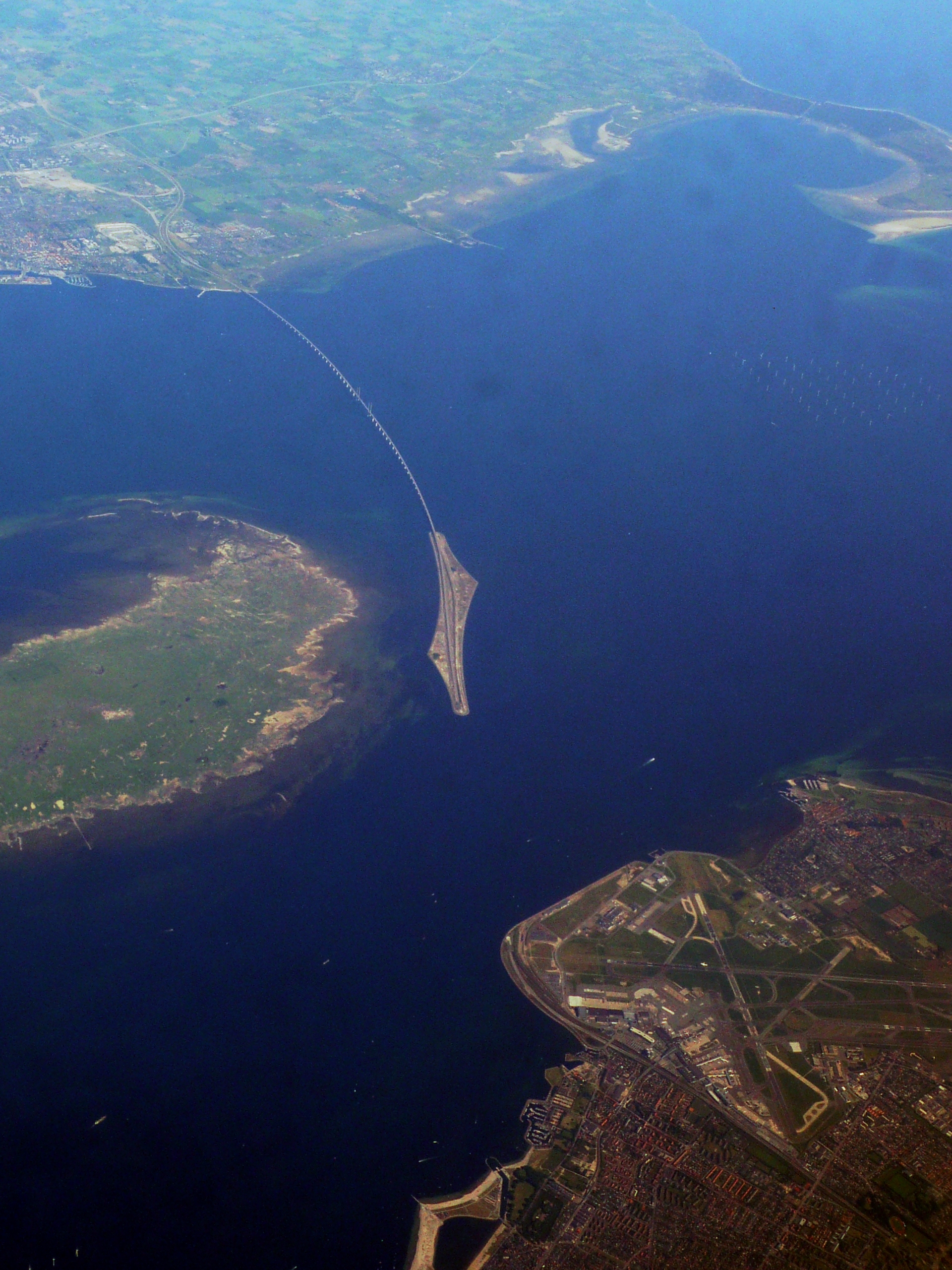
For the first time in six decades, Sweden has installed controls at its border with Denmark.

This morning, border checks took effect on the Öresund Bridge, which connects with countries of Sweden and Denmark. 30,000 people use this bridge to commute between the cities of Copenhagen and Malmo each day. For comparison, imagine New York and New Jersey setting up ID checks on the George Washington Bridge


The news might not seem particularly remarkable to British or American readers. After all, they have to go through a passport control to get to any other country, so why shouldn't Swedes or Danes? 

Friday, 20 November 2015

Longer waits to get back home for EU citizens

EU interior ministers in Brussels agreed today to put in place the same screening procedures for their own citizens as for foreign citizens at the EU's external borders.

As someone with both US and EU nationality, I've been amazed at the very different experience I encounter when entering each one.

When I go home to New York, I always have to wait in a very long line at JFK airport, even though I am entering with my US passport. I have to fill out a customs declaration form, then bring it to a border guard (after a wait of usually around 40 minutes). He runs it through the database, and asks me a serious of questions. Where have I been? Why do I live in Belgium? What is my job? Where am I staying? The whole interview process can take between three to ten minutes.

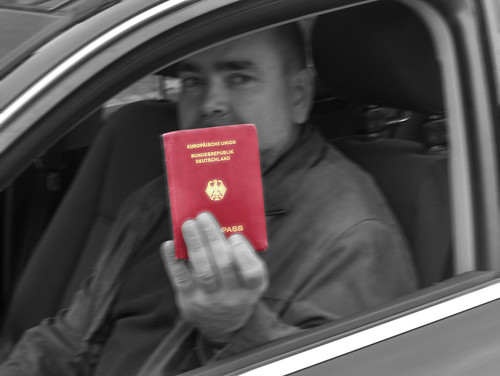
Contrast this to my experience coming home to the Schengen area using my Italian passport. I've never once been asked any question at the border. Usually, they just glance at my passport and wave me through. Sometimes they quickly run my passport through a scanner. Given how quick the process is I doubt it's running my name through an extensive database.

Thursday, 14 November 2013

EU citizenship for sale

As the holder of an EU passport through some arcane and perhaps undeserved reasons (ancestry), I’m often asked by my fellow Americans how they too can get in on this European action. For me it’s been an incredible asset, to hold both EU and American citizenship, and I know many people in America who would cut off their right arm to have the right to come and work in Europe for awhile.

Well Americans, today’s your lucky day. This week the Maltese Parliament approved a measure that would allow anyone to purchase Maltese citizenship for the low low price of €650,000 ($875,000). What a bargain!

When Europe’s media got wind of this news yesterday, people were scandalized. This tiny island nation of 450,000 people is part of the EU and therefore a holder of a Maltese passport would have the right to live and work anywhere in the union. They would have the right to free healthcare throughout Europe and free/reduced tuition at any of Europe’s universities. And they would benefit from visa-free travel arrangements between the EU and the United States.

Tuesday, 5 November 2013

Eastern enthusiasm

A visit to Lithuania this week showed me how history and geography make such a difference to attitudes toward the EU.

Lithuania is a land in between. Part of the Soviet Union until just two decades ago, it today finds itself sandwiched between two dangerous and unpredictable neighbours. It’s not a very comfortable geography, to say the least.

To its East lies the pariah state of Belarus - Europe’s last dictatorship and, one might also say, Europe’s last Russian satellite state. To its West lies the Russian exclave of Kaliningrad - a barren, unforgiving place that few dare enter, repopulated by Russians in 1949 after its German inhabitants were killed or expelled.

But to its North and South lie fellow countries of the European Union – Latvia and Poland. The 103km border between Poland and Lithuania therefore forms a perilous land bridge between unfriendly Russian talons. Since2009 the two countries have been part of the EU’s passport-free Schengen area, giving the border additional importance as the only way to get to the Baltic and Finnic countries to the North without a visa.

But despite this pivotal importance, this narrow passageway faces a dearth of infrastructure connections. As I write this I am on a plane flying back from Vilnius, the Lithuanian capital, where I spent the last two days at a conference devoted to this lack of connection.

Tuesday, 13 August 2013

Ins and outs

As the British seek new EU opt-outs, Danes will likely vote to end theirs.

Over the past several years, as UK prime minister David Cameron has taken his country further and further toward the EU exit door, he has been keen to stress that the UK is not alone in its desire for a more devolved EU. He points to the increasingly Eurosceptic Dutch, who have, like the UK, recently conducted a review of the EU's powers. He points to the Danes and Swedes, who are also voluntarily remaining outside the Eurozone.

So when news came this week that it now looks likely that Denmark will hold an ‘EU referendum' next year, it may have seemed like welcome news for the British Conservatives. Cameron has attracted a large amount of ill will on the continent by scheduling an in/out EU referendum for the UK in 2017. But why should Britain be singled out for scorn, when the Danes are holding their own EU referendum?

However the Danish case is a very different animal. The British referendum will be a vote on a theoretical new EU-UK relationship which the government will negotiate, giving the UK more opt-outs from EU law. The Danish referendum will be the opposite – a vote on whether to end the opt-outs Denmark negotiated for itself back in 1992.

Monday, 10 June 2013

A week of border concerns

I'm on a train to Strasbourg for this week's plenary session of the European Parliament, for what promises to be a week largely focused on borders and travel. The fact that my train via Luxembourg has been plagued with delays seems appropriate given the travel/border legislation which is coming up this week.

On Wednesday MEPs will vote on two legislative packages seeking to change the EU rules on asylum seekers and Schengen area of passport-free travel. Both of these pieces of legislation were put forward in the early days of the Arab Spring, when a sudden influx of refugees from North Africa cast doubt on the EU's existing rules.

Border states like Italy, Greece and Malta said the existing rules, in which member states can return asylum-seekers to the EU country they first entered, complained that the existing system was unfair. 

Among other things, the new rules will put in place a monitoring system for any sudden influx of migrants and allow a suspension of the rules.

Saturday, 3 December 2011

Customs, security and immigration - learn it, live it, love it

I have many irrational pet peeves, and many seem to involve air travel. One of the most silly may be my disproportional irritation when people use the word 'customs' when they really mean immigration or airport security. But as silly as this little hang-up is, it actually does make a big difference not only to public policy but also to your rights and plans as a traveler. And yet I hear people confuse these three things very often when they're telling their travel stories, even frequent travelers. I'm in Switzerland this weekend visiting my father, himself a very frequent traveler, and I was just explaining the difference to him. So I thought it might be helpful to write a blog post about it.

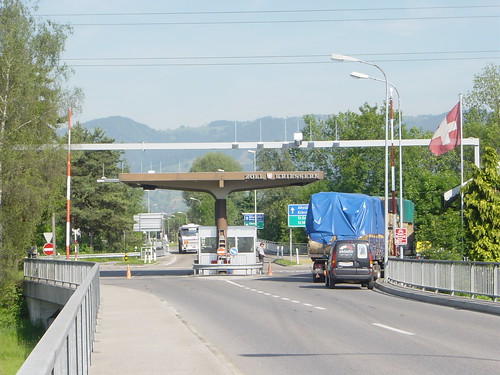
Customs, immigration and airport security checks are three distinct processes you may encounter at an airport or border crossing. Sometimes you may have to go through all three, other times you just encounter one or two and other times you won't go through any. It all depends on which countries you're traveling between. For instance, when you travel between Belgium and the UK you go through immigration, but not customs. When you travel between Belgium and Switzerland you go through customs, but not immigration. If you're flying between Belgium and Finland you would only go through security, the same as you would if you were flying between Florida and California. Confused yet? Here's a quick guide.

Thursday, 7 July 2011

Poland fires warning shot over Denmark's 'nationalist' moves

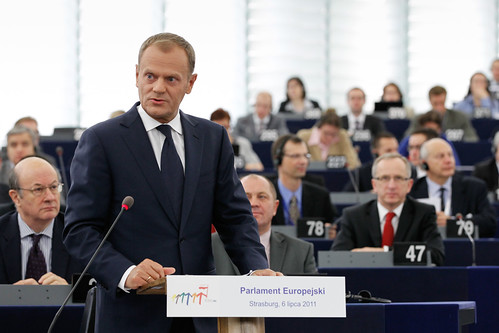
Poland is not usually known as a very pro-EU country. In fact, it has gotten the reputation as the most Eurosceptic of the new member states. But yesterday Polish Prime Minister Donald Tusk lambasted recent moves by Denmark, France and Italy to undermine the European project. He signalled he intends to halt the current slide, led by those Western countries, toward reintroducing border controls at internal EU borders.

Tusk was speaking to the European Parliament in Strasbourg to mark the start of Poland's presidency of the EU, which will last the next six months. "The answer to the crisis is more Europe," he said, not less. He indicated that he will fight against efforts to further erode EU principles, and suggested he was unhappy with the deal reached among member states last month to allow temporary internal border patrols to deal with increased immigration.
"I am against any barriers to internal free movement under the pretext of dealing with migration problems. What Denmark is doing is a concern for anybody who thinks that free movement is going to be restricted even further," he told the parliament. "Europe, with its institutions, its budget and its objectives, is not the source of this crisis. And following those who say the opposite would be a fatal mistake. Undoing the European construction at this time and turning to nationalism as an answer to the crisis would be a very big mistake."
It was a fairly unusual move for the incoming presidency to take such a political stance against what other member states are doing, because the presidency is supposed to be a neutral negotiator in the council. But Poland has always marched to the beat of its own drummer when it comes to the EU.

Friday, 24 June 2011

Commission laments 'rising xenophobia' as Schengen unravels

The June summit of EU leaders has wrapped up here in Brussels – the blockades are being removed from the streets and the whirl of helicopters overheard is slowly starting to dissipate. As expected, the council voted to establish a "safeguard mechanism" in the Schengen passport-free travel zone that would allow member states to reintroduce internal EU border controls in exceptional circumstances.

The final text adopted today says the border checks should only be reintroduced "as a very last resort" in a "truly critical situation where a member state is no longer able to comply with its obligations under the Schengen rules as concerns the prevention of illegal immigration of third country nationals."

Such a mechanism was demanded by Italy and France earlier this year when the two got into a row over illegal immigration happening as a result of the Arab spring. France accused Italy of deliberately sending Tunisian migrants to France and issuing them bogus identity cards because they wanted to get them out of Italy as soon as possible. France said it should be allowed to set up border controls with neighboring countries who are failing in their duties to protect the EU external border. But existing rules forbid member states from imposing border controls at internal EU borders. Italian PM Silvio Berlusconi wholeheartedly agreed, as if to say "Yes, we're completely incompetent. Please allow France to set up protections against us."

Thursday, 23 June 2011

'Baby steps' toward a real EU border patrol

The EU institutions and member states reached an agreement last night to beef up the EU's border patrol agency, Frontex. The news, coming just before the summit of EU national leaders today and tomorrow in Brussels, shows how much immigration concerns are at the centre of the political agenda right now. While the populist rhetoric in member states is more often calling for less EU rather than more of it these days, an agreement to expand the EU's border patrolling powers was easily reached.

The deal will allow Frontex to buy its own equipment, so that it will be less dependent on helicopters and vehicles leased from member states. It will also make it binding for member states who have pledged personnel to the agency to deliver on their promises. The Frontex patrols will now be coordinated into "European border guard teams" that will be swiftly brought in if a member state is struggling to control it's external EU border – but still only on the invitation of the member state. To date, the only EU member state that ha summoned a significant number of Frontex forces is Greece.

Friday, 13 May 2011

A return to walls in Europe

There's something rotten in the state of Denmark, and the rot is spreading fast throughout the European Union. Brussels is in shock today following yesterday's announcement by Denmark that it will reintroduce border controls with neighbouring Sweden and Germany.

The move is a violation of the bloc's Schengen passport-free rules and a worrying sign as EU ministers meet in Brussels today to discuss possible changes to the Schengen rules. The plan would set up the first border control between Sweden and Denmark in more than 50 years.

The move is no doubt intended as a pre-emptive strike ahead of today's negotiations, a message to the EU that if the ban on internal border controls isn't loosened member states are going to ignore it and unilaterally re-impose passport checks. Denmark likely feels confident enough to take this bold unilateral move because of the letter sent to the European Commission by Nicolas Sarkozy and Silvio Berlusconi two weeks ago.

The letter demanded that member states be allowed to reimpose internal EU borders in "exceptional circumstances." They believe that the current increase in migrants trying to come to Europe from North Africa qualifies as one of these circumstances. Denmark clearly feels that this letter from two large member states gives them cover to unilaterally impose their own border control. It is the first country ever to reimpose permanent border checks in the history of the Schengen Zone, and there is now fear of a 'chain reaction' that would see the reintroduction of controls at all internal borders.

Wednesday, 27 April 2011

Berlusconi and Sarkozy slam on the brakes

Usually it's the Northern European countries that are the ones clammoring for rollbacks on EU integration. But in a strange twist this week it's the reliable core stalwarts of France and Italy that are agitating for a step back in the EU integration project. The leaders of the two countries sent a letter to the European Commission yesterday asking for the ability to re-establish border controls between Schengen states in 'exceptional circumstances'.

The letter was sent after Nicolas Sarkozy and Silvio Berlusconi held a summit in Rome yesterday trying to diffuse the diplomatic crisis between the two countries. Italy has demanded help from its EU neighbours, saying that it can't handle the influx of economic refugees floating across the Mediterranean to escape the chaos in North Africa and landing on Italian shores.

Deciding that the EU wasn't acting fast enough to provide assistance, Silvio Berlusconi's government started issuing the migrants with "temporary residence visas" and telling them they could use them to seek work in other EU states, knowing full well that the French-speaking Tunisians and West Africans would go to France. The French were furious, and started stopping trains at the French-Italian border which they suspected of carrying the migrants. Each side is accusing the other of violating the EU's Schengen agreement, which allows passport-free travel between member states.

Monday, 18 April 2011

Tensions flare at French-Italian border

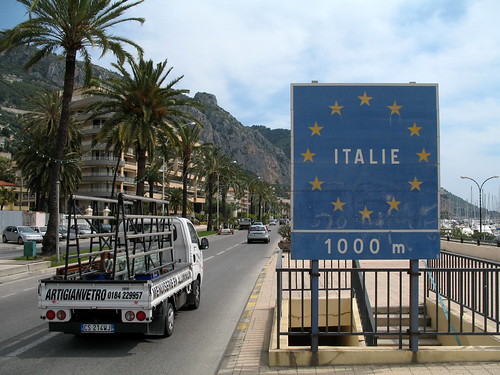
France and Italy are locked in a war of words today after France stopped several trains from crossing the border between the two countries over the weekend. France, suspecting that Italy was trying to dump North African immigrants into the country, stopped the trains at the old border station between Ventimiglia and Menton, 20km east of Nice. Now, each country is accusing the other of violating the rules of the EU's passport-free Schengen Zone.

Since the pan-Arab uprising began in January in Tunisia, Italy has been sounding the alarm bell about an increase in migrants trying to cross the Mediterranean to escape the chaos in North Africa. The tiny Italian island of Lampedusa, just off the Tunisian coast, has been inundated with refugees washing up on its shores in makeshift boats. There are now more migrants housed in a refugee camp on the island than there are residents.

Italy has asked the EU for assistance in dealing with the migrants, most specifically through deployment of the EU's Frontex border patrol force. They have also asked other member states to contribute financially to the effort, saying that Italy can't afford to patrol the EU's borders all on its own. Because the Schengen Zone is a passport-free area, most of the migrants crossing into Italy are just trying to get into the EU. Once they get into Italy they can go to France, Sweden or Germany without facing a border check.

Monday, 10 January 2011

Mexico on the Aegean

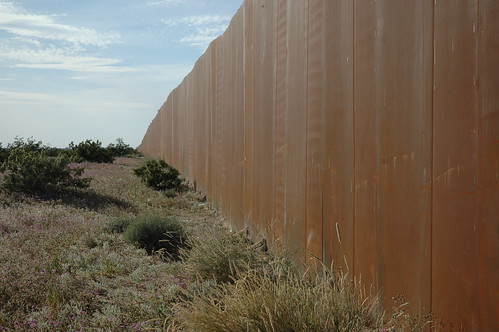
Is there anything more controversial than a wall? From Berlin to Palestine to Mexico, border walls have often proven to be as incendiary as they are ineffective. Recently, Greece signaled to the European Union that it wants to build a wall along its border with Turkey similar to the wall that has been partially built along the US-Mexico border. But the European Commission was quick to shoot down the idea last week, saying walls and barriers are merely short-term measures that cannot solve the EU's immigration problems.

Greece has been struggling to deal with a huge influx of illegal migrants trying to cross its land border with Turkey after the EU cracked down on illegal sea crossings from Africa to Europe via the Mediterranean over the past two years. According to the Greek government, 200 illegal migrants are crossing its land border with Turkey every day. These migrants aren't Turkish, instead they have crossed through Turkey from countries further afield in Central Asia and Africa. And since Greece is in the passport-free Schengen Zone, once the migrants get in they can travel to almost all other EU countries (with the notable exception of the UK and Ireland who have opted out of Schengen) without having to show identification.

Wednesday, 10 November 2010

EU to crack down on Schengen border violations

Today the European Commission announced a crackdown on member state compliance with the Schengen passport-free area rules, and during the press conference I couldn't help but smile to myself. The other week I had a bit of a rant with my friends after I encountered a British woman on a airport shuttle bus in Prague who didn't know what Schengen was. Since then the joke has been that I'm obsessed with Schengen. So naturally, I had to write a blog entry about the new proposal.

So, the Prague airport story. I was taking the airport shuttle to the airport and we were just pulling in to terminal 1 (the "international" terminal with flights to the US, China, etc) when an announcement came on saying that this terminal was for non-Schengen countries, and the following terminal would be for Schengen Area countries. I had my headphones on but I could see that there was a woman a few seats away from me with a confused expression on her face asking her neighbour something. By the time I took my headphones off we were already on our way to terminal 2, but I could then hear that the woman was frantically asking people what Schengen was. Apparently her neighbour, also a Brit, had reassured her "Oh Schengen means EU. You're going to London? Then terminal 2, definitely."

Thursday, 22 January 2009

What's Going on at Switzerlands Borders??

Something very strange is going on here. Back on 12 December, Switzerland joined the passport-free Schengen Zone, which enables travel between it and all of its EU neighbors without a passport check. Yet from stories I've been hearing it seems that Switzerland's borders have actually become harder to cross since it entered Schengen.

In the past two weeks two friends of mine have come to visit from Paris, both taking the direct high-speed TGV train. Both of their trains were stopped at Basel for 30 minutes while authorities came on board and checked people's passports. On the first visitor's train into Switzerland two weeks ago, the authorities adked everyone for a passport and searched everyone's luggage. The second visitor who came last week also had his train stopped. He hadn't brought his passport, and only had his French national ID. The border guard took his ID to the other end of the train car and made a phone call about it for ten minutes before eventually handing it back and continuing down the train. Last night I was talking to a German friend who lives here in Zurich and he said he encountered the same thing when driving up to Germany for Christmas. All of the cars were being stopped and passports were demanded.

Now this strikes me as rather unusual because under the precepts of the Schengen Agreement authorities at borders within the zone are actually not allowed to ask people for passports just because they are crossing the border. And before Switzerland joined the zone last month, passport checks on trains and roads leaving/entering Switzerland were sporadic and not frequent. Both me and my father have taken that TGV between Zurich and Paris many times before last month and neither of us has ever been asked for a passport (the train never stopped for thirty minutes in Basel either). The same goes for trains I've taken from Geneva into France and from Lugano into Italy.

So why has Switzerland's Schengen entry resulted in the exact opposite of what the entry was supposed to accomplish? I've been searching for answers this week. Switzerland's Schengen status is a bit different from the others because it is still a separate trade zone from the EU and therefor can still have customs checks at its borders, unlike borders within the EU. But my understanding is that the current arrangement allows them to search luggage but not to ask for travel documents. But on the other hand Swiss, French, German and Italian police all have the right to demand identification from anyone, anywhere, at any time. Does that invalidate the Schengen clause about not being allowed to demand travel documents?

A contact who works for the Cantonal government in Schaffhausen tells me he's heard that Switzerland has cracked down on its border with Germany in response to Germany doing so immediately after 12 December. He says starting on 13 December the Germans started manning every single one of their border checks with Switzerland (usually around 30 percent of these are not staffed at any given time). So in response, Switzerland started aggressively checking everyone coming the other way, and perhaps, he speculated, they've followed suit with their other borders now as well. In other words, Germany started it. That's all well and good, but when is it going to end? And is what the Swiss (and their neighbors) are doing at the borders allowed under the Schengen Agreement? I'll keep trying to get to the bottom of this.

All of the friends who have been stopped have been aware of Schengen Rules, but none of them has had the nerve to challenge the border guards on their right to ask them for a passport (it's not the type of situation you want to make trouble in!). But this weekend I might take a drive up to Germany's black forest and see if I can ask some questions to the border guards there on what their instructions are currently.

If Switzerland isn't going to follow the rules of the Schengen Agreement, one wonders what the point of them joining was.

Sunday, 4 January 2009

No Passport in Liechtenstein

I'm back in Switzerland after my holidays in New York, and yesterday I decided to take a drive over to the border with Liechtenstein to see if they had set anything up as a result of the Schengen discrepency. As I expected, there is no new passport check along the section of the Rhine seperating the tiny principality from Switzerland, but interestingly, I didn't see any sign of the reported surveilance systems that they've now set up either.

Switzerland joined the Schengen zone, which allows passport-free travel between European countries, last month. However Liechtenstein has not yet joined, because the EU is trying to strong-arm it into cracking down on tax cheats before it will allow the principality in. Liechtenstein, which has had an open border with Switzerland since 1923, is now wedged between two Schengen countries and in theory, Switzerland must now set up border checks with Liechtenstein for the first time. This could be a big headache because for all intents and purposes Liechtenstein is pretty much part of Switzerland. It uses the Swiss franc, relies on Switzerland's military for defense, and many people live in one country and work in the other. Aside from a few small signs at the border, there is little differentiating the principality from its neighbor.

The border guard corps in Eastern Switzerland has said it is setting up a series of surveilance cameras along the bridges in order to comply with Schengen rules, and in theory if any cars look suspicious they have border guards ready to investigate. However I didn't see any sign of such cameras when I was there, and considering I was walking around taking pictures you'd think if anyone was watching they might have come to ask me what I was doing! Perhaps they haven't set them up yet. Interestingly, I've heard that this surveilance system is going to cost several million francs, just to be dismantled once Liechtenstein does eventually join. Liechtenstein has even had to issue Schengen visas free of charge to foreign nationals living there, who would now in theory be legally trapped within the 160 square kilometre country. I guess Brussels has proven that it can make life difficult for the tax havens when it wants to.

I had never been to Liechtenstein before, it's a pretty weird place. It is true that from the prince's palace you can see almost the entire inhabited area of the country. It's really just a small strip of land on one side of the Rhine in a valley. It was a Saturday afternoon and Vaduz, the capital, was completely deserted. It was just me and some Eastern Europeans who seemed to also be there for the novelty factor, taking pictures of every Liechtenstein flag in sight.

On the way back I came across a reminder of another ongoing issue with Switzerland's entry into the Schengen Zone. Switzerland's bilateral agreements with the EU requires that all EU nationals be allowed free movement in and out of the country, but Switzerland is going to vote on whether the two newest entrants, Romania and Bulgaria, will be afforded the same access. That vote will be February 8th, and in St. Gallen I came across this billboard from the FDP urging people to vote yes to giving Romanians and Bulgarians the same rights as other EU citizens. The billboard points out that a no vote, being advocated by the conservative SVP party, would send a hostile signal to Switzerland's neighbors and lead to further isolationism. It shows two people with SVP signs destroying a rail bridge to the rest of Europe. It reminds of the Swiss of the infamous "guillotine clause," which says that if Switzerland renegs on any treaty its already signed with the EU, all of the bilateral treaties will be rendered invalid, effectively completely cutting off the country from its neighbors.

Tonight I noticed that the SVP has put up a contrary billboard right outside my dad's house urging people to vote no (photo below), with their usual motif of dark nefarious foreigners greedily eyeing Switzerland's riches.

Honestly the idea that people would be making decisions on these important issues based on some childish cartoons seems pretty absurd to me, but it's typical of this country's obsession with referendi. Neither of these cartoons clearly conveys what's really at stake with this vote. The SVP ad seems to be suggesting that this is some kind of additional right that the Swiss people can choose to give to their neighbors to the east, when in reality a no vote would be reneging on a treaty that Switzerland has already signed. The EU has made very clear that Switzerland cannot pick and choose which parts its bilateral agreements it's going to obey as if it was some sort of dipomatic buffet. On Saturday Switzerland's EU ambassador Michael Reiterer told the newspaper Tribune de Geneve that if the Swiss refuse to extend the free movement clause to the new entrants it will invalidate the country's entry into the Schengen Zone and the whole agreement will be torn up.

I'll be watching with interest to see what happens in that referendum. After stopping in Leichtenstein I drove over the border with Austria and as expected I found the border check dismantled. If the Swiss vote no in February 8th, those checkpoints may have to be hastily reassembled. And contrary to Reiterer's optimism, I'm not so certain the referendum will pass. A few years ago the referendum to join Schengen did not pass by a large margin, and the recent success of the SVP may reflect the fact that public attitudes on immigration may have continued to harden since then. In the mean time I'll be interested to hear from people here whether they understand what reprocutions a no vote could have.

Friday, 12 December 2008

Happy 'Switzerland Joins Schengen' Day!

After so much anticipation, I rose early this morning at dawn to creep down to the fireplace and see if I had received a visit from Schengen Clause. I gasped with joy to find it was true, he'd come! The border check with Germany had disappeared!

Ok I can't really see the German border from my dad's house in Zurich (although I can see the border with the next Canton), but I did eagerly check the news this morning to see if it had indeed come to pass. I have no idea why, but the moment which countries open their borders with other countries really excites me.

At midnight CET this morning Switzerland joined the Schengen Zone, the 25-member European block that allows passport-free travel between the member states. Switzerland is not technically in the EU, but it has a series of bilateral treaties with the EU which make it in many ways a "virtual member," bound to follow EU regulation although it has no representation in the EU parliament.