Showing posts with label European Commission. Show all posts

Thursday, 2 March 2017

Five paths for the post-Brexit EU27

Wednesday's Commission tract on the EU's future suggests a 'two-speed Europe' is probably the way forward. But wouldn't this just create more chaos and confusion?

Should the European Union separate or federate, or somewhere in between? 

This was the question posed in yesterday's remarkably honest and self-reflective white paper on the future of the EU, published by the union's executive body in preparation for a 'declaration of purpose' to be adopted at a summit in Rome next month by the 27 member states who will remain in the EU after Brexit (if it ever happens, that is).

The paper outlines five scenarios for how the EU should react to the Brexit vote - not in terms of how it should proceed with the divorce negotiations, but whether and how it should change itself to avoid any more member states choosing to leave.

Wednesday, 31 August 2016

The rank hypocrisy of Obama’s ‘Appletax’ reaction

The US claims the EU's Apple decision is “political”, but it is the American reaction that is guided by politics. And US disrespect for EU law has a long history.

In the summer of 2001, the US government was furious with the European Union.

Iconic American firm General Electric had just seen a multi-billion dollar merger with Honeywell, which had already been cleared by the US, blocked by the European Commission on competition grounds. US politicians were furious, business leaders were flabbergasted. 

Two years later, the newly-emboldened Commission struck again. It slapped a €497 million fine on American tech giant Microsoft for abusing its dominant market position. Again, there was much sabre-rattling in Washington.

Tuesday, 5 July 2016

The EU can, and should, reject any new UK commissioner

The British government is trying to find the most palatable candidate to survive European Parliament confirmation. But it is unclear why the EU should accept any British commissioner.

Prime Minister David Cameron's resignation in the hours after the Brexit referendum result on 24 June was the abdication heard round the world. But later that day, there was a less-noticed but also significant resignation in Brussels.

Lord Jonathan Hill, the European Commissioner from the UK, who is in charge of EU financial services, also stepped down. "As we move to a new phase, I don't believe it is right that I should carry on as the British Commissioner as though nothing had happened," he said in a statement. "In line with what I discussed with the President of the Commission some weeks ago, I have therefore told him that I shall stand down."

For awhile, it was unclear whether any new British commissioner would be sent to take his place. But today the Financial Times reported that the UK is about to nominate Sir Julian King, the current British ambassador to France. The Times writes that King would be considered an "apolitical appointment to ensure Britain is not left unrepresented at the EU’s executive body". 

The paper said the European Parliament is likely to reject any nominee that backed Brexit. At the same time, an incoming pro-Brexit government in the UK might be unhappy about having the pro-remain King be their man in the Commission.

But it is unclear to me why any UK nominee should be acceptable to the European Parliament.

Friday, 1 April 2016

Would Brexit banish English from continental Europe?

'Brussels English' could be vulnerable to French attack if the UK leaves the EU.

Much has been written about the future of the UK if it chooses to leave the European Union in June’s referendum. Less has been written about the effect of Brexit on the EU. 

The loss of British influence in Europe would be felt in many ways, most likely resulting in a less neoliberal, free-market-oriented bloc. Recently I’ve written about the possibility of a more proactive EU environmental policy if the UK were to leave. But could a Brexit also affect linguistics?

Today The Local, an expat newspaper in France, published a tongue-in-cheek (note today's date) evaluation of what a Brexit would mean for the English language in Europe, given that it has long been in the crosshairs of the French government. They imagine a future where the Academie Francaise, France's notoriously strict language enforcer, would send patrols around the country looking for British expats who can't speak French. Given the (well-deserved) reputation of Anglophones for not sufficiently learning the langauges of the countries they move to, the April Fools article hits where it hurts.

But in fact there is truth behind this gag. Right now UK citizens have the right to live and work in France, and the government cannot require them to speak French in order to do so. Were the UK to leave the EU and not be allowed to join the European Economic Area, it would mean Brits would have to apply for a visa to live in France. And France could easily require language proficiency as a requirement for granting visas.

Friday, 4 March 2016

Good at the big things, bad at the small things

Eurosceptics are wrong when they say the UK has no influence in the EU, but they are right that Britain is outgunned and outmanoeuvred in Brussels lawmaking. What they don't tell you is that this is self-inflicted impotence.

When the new European Commission of Jean-Claude Juncker took office in 2014, they promised to counteract increasing euroscepticism by being "big on the big things and small on the small things". In other words, no more 'Brussels meddling' in small issues that should be left to national governments. 

Of course, they had a British audience and an upcoming Brexit referendum chiefly in mind. Years of media reports on bendy bananas and 'Anglo-French Friendship ponds' have led to an impression, generally accepted as gospel in the UK, that eurocrats like legislating for legislating's sake. The Commission's 'better regulation' drive is meant to counter this impression, whether or not it's an accurate one.

As I've written before, these UK media outrages over small regulations are not really about the laws themselves, but about who has the right to make them. The regulations being complained about in the British media, when they are actually a real thing (which is maybe 40% of the time), would attract no attention at all if they were made at Westminster. 

Thursday, 9 January 2014

Target fatigue

The EU's attitude toward targets has changed dramatically over the past five years.

Back in the heady days of 2008, before the European Union was plunged into a period of crisis around both its currency and its legitimacy, setting hard targets for solving the climate change problem was all the rage. Flash forward to 2014 and the world is a very different place.

The European Commission is planning to come forward later this month with a proposal to set new climate targets for 2030. These would follow the '20-20-20' package set in 2008: 20% emissions reduction based on 1990 levels, 20% share of renewable energy and 20% increase in energy efficiency. The first two targets were binding, while the third was indicative.

For 2030, the Commission is going to try a different tact. The emissions target strategy will remain roughly the same – a binding target increased to 40% for 2030 (though this is still subject to some internal wrangling in the Commission). But for the renewable energy target, there is likely to be a shift in strategy. The draft proposal being submitted for review within the Commission tomorrow will make the 2030 target non-binding, without individual legally-enforceable targets for member states.

Wednesday, 4 December 2013

Caving in on the cave-in


The humiliating saga of the ETS aviation dispute has exposed the limits of respect for EU law, both outside and inside Europe.

It's not looking good for the European Commission's proposal to undo an EU law that would have charged all airlines for the emissions of flights taking off or landing in Europe. An increasing number of member states and MEPs are coming out in opposition. But they don't have a problem with the retreat. They say the Commission isn't retreating far enough.

Last week Germany, France and the UK told a meeting of member states that they want to change the proposal to a more complete surrender.

In October, in response to intense international pressure, the Commission proposed to change the law so that emissions that take place outside EU air space are exempt. But Germany, France and the UK want to exempt foreign airlines from the Emissions Trading Scheme (ETS) entirely - even for the portions of flights that take place within EU airspace - because anything less would not be politically acceptable to China, India, Russia and the United States.

Thursday, 14 November 2013

EU citizenship for sale

As the holder of an EU passport through some arcane and perhaps undeserved reasons (ancestry), I’m often asked by my fellow Americans how they too can get in on this European action. For me it’s been an incredible asset, to hold both EU and American citizenship, and I know many people in America who would cut off their right arm to have the right to come and work in Europe for awhile.

Well Americans, today’s your lucky day. This week the Maltese Parliament approved a measure that would allow anyone to purchase Maltese citizenship for the low low price of €650,000 ($875,000). What a bargain!

When Europe’s media got wind of this news yesterday, people were scandalized. This tiny island nation of 450,000 people is part of the EU and therefore a holder of a Maltese passport would have the right to live and work anywhere in the union. They would have the right to free healthcare throughout Europe and free/reduced tuition at any of Europe’s universities. And they would benefit from visa-free travel arrangements between the EU and the United States.

Friday, 24 May 2013

A storm in an olive cup

Yesterday, the European Commission announced a rather unusual U-turn on a new regulation that would have banned restaurants from serving olive oil in refillable bottles. The cave-in came after a week of media pressure that even saw the leaders of Britain and Holland weighing in on the subject at Wednesday's European Council.

The law was set to quietly enter into effect at the start of next year, and would have mandated that any olive oil served at a restaurant table be in labelled, pre-packaged bottles with a tamper-proof dispensing nozzle. It was approved by a recent vote of EU member states, with 15 out of 27 countries approving it.

This is probably a case of a kernel of a good intention morphing into a monster PR disaster. At heart this was supposed to be a labelling regulation – making sure that restaurant owners don't buy expensive bottles of labelled olive oil and then refill them with cheaper varieties once they are empty.

But it ended up covering all containers, even unlabelled glass bottles. This made less sense, given that a consumer can't be tricked by a misleading label if no label is present.

Wednesday, 22 May 2013

Backtracking on Commission size

EU leaders are expected shortly to announce that they have agreed between themselves not to reduce the size of the European Commission, overruling the text of the Lisbon Treaty. The change will likely be agreed unanimously this afternoon, according to Council sources.

The treaty had originally envisioned a reduction in the college at the start of the current Commission in 2010. Large countries would have maintained a permanent seat in the college, but smaller countries would have had to rotate the remaining chairs among themselves.

Dissatisfaction with this arrangement was cited as a reason for the Irish people rejecting the Lisbon Treaty in their first referendum in 2008. Before a second referendum was held the following year, it was agreed to add a provision into the Treaty extending the existing system until the end of the current Commission in 2014 "unless the European Council, acting unanimously, decides to alter this number." The Irish passed the treaty in the second referendum.

Friday, 14 September 2012

EU citizens embrace the eurobots

Citizens of the European Union may have lost faith in their leaders, but they have not lost faith in robots. This according to a reassuring press release put out today by the European Commission, which boldly declares, “More than two-thirds of EU citizens (70%) have a positive view of robots.”

In fact Europeans are apparently ecstatic about these automatons, particularly those who have already had some personal experience with a robot. According to a survey conducted by the EU, 26% of Europeans would be comfortable with having a robot walk their dog. Bulgarians seem to especially love the robots, with 21% of them saying they would even trust the robots to look after their children or elderly parents.

But not all Europeans are willing to embrace the robots. The Greeks do not like these robots, not one bit. 46% of Greeks say they do not like robots, making it the most anti-robot country in the EU. Greek Cypriots are as wary as their mainland cousins, with 98% of them saying the robots need to be “carefully managed”.

Tuesday, 26 June 2012

Yet another tone-deaf video from the EU

A familiar pattern is emerging for the European Commission’s promotional videos: Commission pays six-digit figure for a promotional video, video is released, video causes uproar, video is pulled. Whether its racism, sexism or neocolonialism, the private consultancies who make videos for the Commission seem to have developed a talent for causing offense.

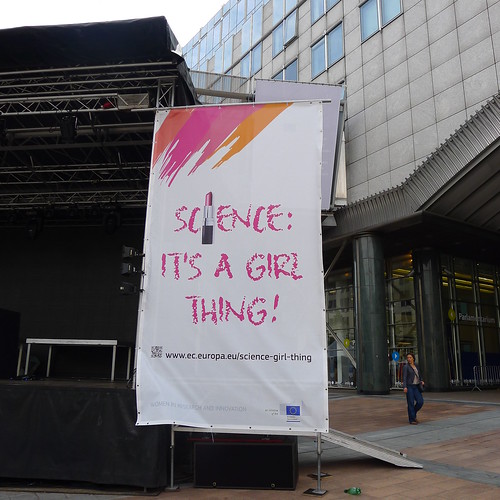
The latest offender is a video promoting the launch of the Commission’s ‘Science: It’s a Girl Thing’ campaign last week. The campaign is meant to attract young women to careers in the sciences. Apparently the makers of the video decided that the best way to do that was to depict science as an episode of Sex in the City.

The video starts with a serious man peering into a microscope. He is suddenly confronted by three skinny, fashionable girls wearing three-inch high heels. They strut on the catwalk as shots of lipstick and make-up are interspersed with the chemical processes that made them.

Wednesday, 9 May 2012

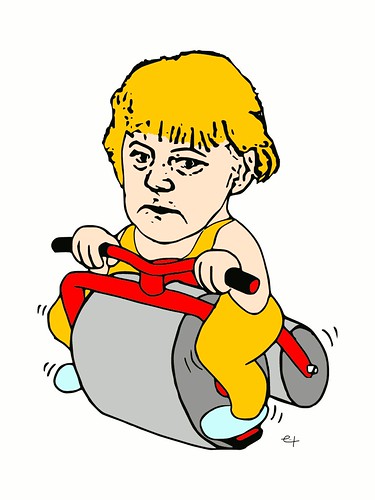
Angela vs. the growth

As predicted, Socialist Francois Hollande ousted the centre-right Nicolas Sarkozy in French elections on Sunday after a campaign in which he railed against the German-led austerity drive in Europe. He has insisted that Europe needs to end its obsession with austerity to dig its way out of the debt crisis, and instead focus on growth.

Coming as it did on the same day that anti-austerity parties in Greece took a majority of the vote, Sunday has been interpreted as a Europe-wide rejection of German Chancellor Angela Merkel and her insistence on austerity and budget cuts. The markets have certainly interpreted it as such. Stock exchanges across the world have taken a dive the last three days, particularly in Europe, over fears that the delicately crafted ‘fiscal union pact’ worked out over the past several months is now about to fall apart.

Whether that actually comes to pass may depend less on Hollande than on how his victory is interpreted in other European capitals. All eyes will be on the new French president’s first meeting with Merkel next week, a day after he is sworn in on 15 May. It is in both of their interests that the meeting goes well. Hollande needs to walk away with something to say that he “renegotiated” the fiscal compact, while Angela needs to reassure the German people that Eurozone countries will still have to adhere to strict budgetary rule while at the same time reassuring the markets that there will be no Franco-German rift.

What will likely be worked out is the addition of a paragraph about stimulating the economy into the compact – something that wouldn’t require new ratifications by national parliaments.

Thursday, 26 January 2012

Europe’s SOPA?

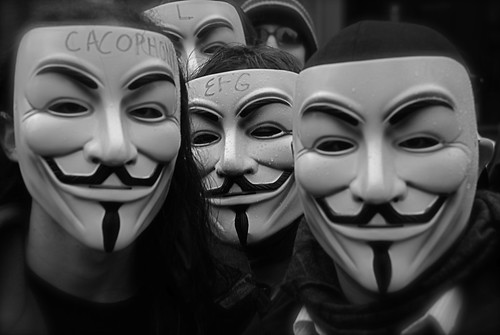
The European Parliament’s website has been shut down by hackers today, allegedly in a denial-of-service attack from Anonymous in protest of imminent anti-piracy legislation restricting internet freedom. But as the IT folks in parliament scramble to fix the problem, the functionaries are sitting around scratching their heads in confusion. Did we pass internet piracy legislation?

Their confusion is warranted. By all accounts the EU has been on the internet-freedom-lovers side during this debate. During the fallout from the Wikipedia ‘blackout’ last week, US politicians weren’t the only ones beating a path to the door to distance themselves from the now toxic SOPA legislation on internet piracy. On Friday the EU’s Digital Agenda Commissioner Neelie Kroes tweeted that she was “glad the tide is turning on #SOPA,” adding “speeding is illegal too: but you don't put speed bumps on the motorway”.

Home Affairs Commissioner Cecilia Malmström also tweeted against the US legislation, noting that ‘sopa’ in Swedish means garbage. Notably, no public statements about the US anti-piracy bills had been made before the Wikipedia blackout. It’s quite unusual for the EU to make comments about US legislation. But such was the effect of the blackout – which was, after all, global (Eurocrats felt quite helpless without Wikipedia last week!), that even politicians not involved in US lawmaking felt the need to make a statement about it.

Friday, 18 November 2011

The new Italy: this is what technocracy looks like

Former EU commissioner Mario Monti, appointed as Italian prime minister on Sunday after Silvio Berlusconi was forced by the markets and EU leaders to resign, had his ‘technocrat government’ approved by the Italian parliament today.

Neither Monti nor the members of his cabinet have been elected by the Italian people. They are not politicians but instead experts in their respective fields. The 'government of experts' has been brought in because, it was thought, both within and outside Italy, the Italian political system is so broken that only unelected non-politicians could be trusted to implement the reforms EU leaders say are necessary to prevent the country’s economic collapse.

American readers may be wondering how on earth a national leader in a democracy could come into power without having been elected. It has to do with a quirk in parliamentary democracy. Members of the upper houses of many of Europe’s parliaments (their equivalents of the US Senate) are appointed rather than elected. A prime minister can come from either house, so if the parliament wishes to appoint a leader who has not been elected they simply have the president appoint that person to the senate.

Friday, 9 September 2011

War of words between PIGS and FANGs

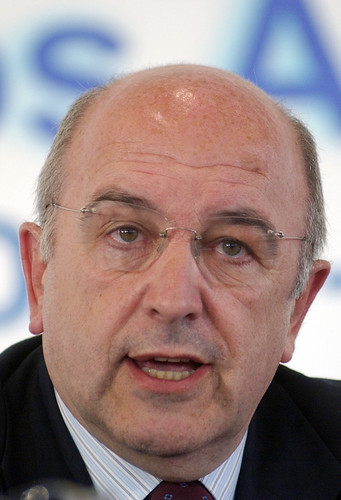
The European Commissioner from Spain delivered a surprising attack yesterday on the Northern European countries pushing Southern Europe to adopt painful austerity measures. The comments follow a controversial proposal from the Dutch prime minister earlier this week which called for EU member states struggling with debt to be put under the 'guardianship' of the European Commission, surrendering their ability to make their own financial decisions.

"There are member states, in particular some of the most powerful -- Germany, Netherlands, Finland, Austria -- who feel that they don't have this kind of problem," Almunia told a group of business executives in New York. "[They believe] they don't need to make an additional effort to compensate the lack of resources of the countries who have the most difficulties to reduce imbalances."

The rhetoric was then ratcheted up to an even more dramatic level today when the European Commissioner from Germany told the tabloid Bild that if indebted (read: Southern) EU countries refuse to comply with new rules on debts and deficits, their flags should be flown at half mast outside institutional buildings. Mourning the loss of fiscal prudence, perhaps?

Wednesday, 6 July 2011

EU sets goal to abolish roaming charges by 2015

European consumers will soon have the option to choose a separate mobile carrier for when they are in other EU countries, under a proposal put forward by the European Commission today. The goal is to stimulate competition in the market to make the phone companies stop charging the exorbitant rates for voice and data with which they sometimes make up to 99% profit.

The move is just the latest in a long-running battle between the mobile operators and the EU, but this is the most aggressive move yet. It is also an acknowledgement that the caps the EU set in 2007 and then extended in 2009 have not been successful in fixing the dysfunct in the market. Those caps lowered roaming rates to 45 eurocents (c) per minute within the EU. Previously the rate had been, on average, around 2 euros per minute.

Under the new plan, from July 2014 operators will be forced to open their networks to upstart competitors who can offer customers cut rate charges for roaming. They will also have to allow their customers to sign up to a seperate carrier for roaming if they so choose. The customer's phone would automatically switch to the other carrier when they go abroad, but they would keep the same number and sim card. They would then receive a separate bill from their 'roaming carrier'. Before it becomes law, the proposal must first be approved by the European Parliament and member states.
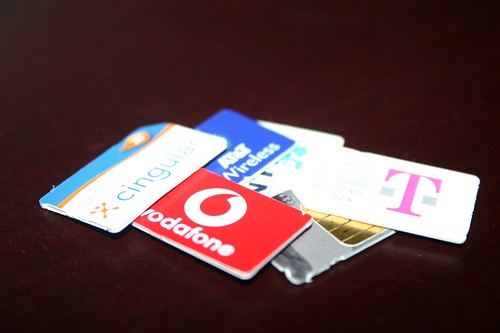
The new plan is intended as a long-term fix that will permanently alter the market. The commission hopes it will lead to a situation by the end of 2015 where the caps are no longer necessary. because healthy competition has made the large carriers offer their customers roaming rates that are the same as domestic rates. Opening the networks will also provide incentives for large mobile companies to operate across the EU. The long-term objective is to get to a situation where there is no longer 'roaming' within the EU, in the same way that there is no roaming charge when you go to a different state in the US (though when mobile phones first came out, there were such roaming charges within the US. Competition within the market eventually made those go away).

Thursday, 14 April 2011

When tax policy and climate change collide

Generally, there are few areas in which the fiercely eurosceptic English public thinks EU regulation serves a useful purpose. One of those areas has traditionally been climate change. Even the Conservatives, the most anti-EU of the three main British parties, have highlighted the constructive role EU legislation can play in Europe's efforts to fight climate change. The EU is good as a free trade block and as a way of pooling efforts on climate change, they say, but it should stay out of areas best dealt with by member states such as taxation, finance, immigration, health and safety, transport and human rights.

The problem is it isn't that simple. Efforts to combat climate change in a coordinated pan-European way must by definition spread into many sectors, including all of those mentioned above. This conundrum was evident yesterday when the European Commission presented its plans to revise the EU energy taxation directive in a way that would change fuel taxes to make them more in line with climate change goals.

Saying the existing EU rules dating from 2003 are "outdated and inconsistent", the commission has proposed setting a minimum rate at which member states can charge fuel tax based on the carbon dioxide emitted and the energy produced rather than on the volume of the fuel. This would end the situation where renewable fuels are taxed the same as fossil fuels and some of the least energy-efficient fuels are taxed less than more energy-efficient ones. Fuel taxes have actually decreased by 10 cents per litre since 1999.

Wednesday, 30 March 2011

The EU is not going to 'ban cars'

The credulousness of the UK public when it comes to all things EU-related was on full display Monday in the British media's coverage of the EU's much-awaited policy paper on transport.

Contrary to what you may have read in The TelegraphThe Daily Mail or the Evening Standard, the European Commission has not unveiled a plan to ban all cars from cities in 2050. This is just wrong. No journalist who actually looked at this policy paper could have reasonably come to the conclusion that the EU is banning cars. But the British tabloids never let the truth get in the way of a good story, especially one that fits their pre-defined narrative of how the EU oppresses the beleaguered British public.

The transport policy paper is a non-legislative roadmap that outlines a plan to reduce transport emissions while at the same time seeing an increase in transport over the next 40 years. It sets a goal of eliminating petrol-fueled combustion engines from vehicles meant for city driving by 2050. So, vehicles used for short-haul journeys within cities should either be electric or use alternative fuel in 40 years.

Tuesday, 29 March 2011

Cloned meat headed for EU menus as talks break down

Three years of negotiations over banning the use of cloned animals for food in the EU broke down early this morning after member states and the European Parliament could not come to an agreement. The parliament wanted to ban meat from both cloned animals and their offspring, while the national governments insisted the ban should only apply to the cloned animals themselves.

Health campaigners have said enacting a ban just on cloned animals is useless because a cloned animal is so expensive to produce it would never be used for meat. The main purpose of cloned animals is to produce genetically superior babies, and it is the offspring that would be intended to end up in your sandwich. During negotiations the parliament offered a compromise to just have labelling of meat that comes from cloned animals or their offspring, but member states said they could only agree to such labels for beef. Beef is already heavily labelled and tracked because of previous mad cow scares. The parliament negotiators said no deal.