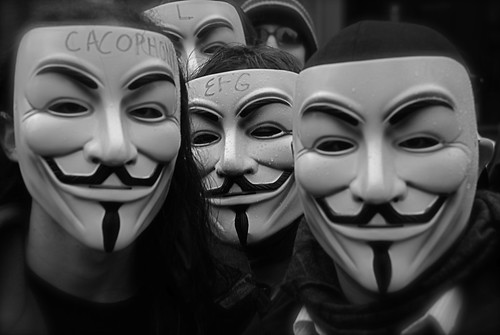
The European Parliament’s website has been shut down by hackers today, allegedly in a denial-of-service attack from Anonymous in protest of imminent anti-piracy legislation restricting internet freedom. But as the IT folks in parliament scramble to fix the problem, the functionaries are sitting around scratching their heads in confusion. Did we pass internet piracy legislation?
Their confusion is warranted. By all accounts the EU has been on the internet-freedom-lovers side during this debate. During the fallout from the Wikipedia ‘blackout’ last week, US politicians weren’t the only ones beating a path to the door to distance themselves from the now toxic SOPA legislation on internet piracy. On Friday the EU’s Digital Agenda Commissioner Neelie Kroes tweeted that she was “glad the tide is turning on #SOPA,” adding “speeding is illegal too: but you don't put speed bumps on the motorway”.
Home Affairs Commissioner Cecilia Malmström also tweeted against the US legislation, noting that ‘sopa’ in Swedish means garbage. Notably, no public statements about the US anti-piracy bills had been made before the Wikipedia blackout. It’s quite unusual for the EU to make comments about US legislation. But such was the effect of the blackout – which was, after all, global (Eurocrats felt quite helpless without Wikipedia last week!), that even politicians not involved in US lawmaking felt the need to make a statement about it.
Showing posts with label Japan. Show all posts
Thursday, 26 January 2012
Tuesday, 15 March 2011
Will Japan disaster force nuclear rethink in Europe?
Europe is on edge today as the world waits for the outcome of the Japanese nuclear accidents following Friday's earthquake. EU Energy Commissioner Gunther Oettinger is today holding emergency closed-door meetings with national nuclear safety regulators. Meanwhile across Europe countries are falling over themselves to reassure a jittery public over the safety of nuclear power plants. In Germany Angela Merkel has ordered safety checks of all of the country's plants. Austria called for such checks to be carried out across the EU, and the two main political groups in the European parliament backed that call. Spain and Portugal, both under Socialist governments, yesterday called for the phase-out of nuclear energy in Europe.
All of this is in response to the unfolding crisis revolving around several nuclear power plants in Japan that were damaged during the devastating earthquake and tsunami there on Friday. Yesterday a third explosion was seen at the Fukushima power plant, the most serious one so far. The government says to date the amount of radiation leaked into the atmosphere is not dangerous to humans outside of the evacuated 20km radius. But right now everyone is waiting to see if this ends up being a minor Three Mile Island type incident or, in the worst case scenario, another Chernobyl.
Subscribe to:
Posts (Atom)

