Showing posts with label language. Show all posts
Showing posts with label language. Show all posts
Sunday, 10 September 2017
Should Germans stop speaking English in Berlin?

Tuesday, 9 May 2017
Italy should win Eurovision 2017, but it won't

With the defeat of far-right nationalist Marine Le Pen in Sunday's French election, Europe breathed a sigh of relief. It's no time to relax just yet, but at least for the rest of the week the continent can turn to more fun diversions. And on that note - Sunday also marked the start of Eurovision week.
Of course, the Eurovision Song Contest isn't the same politics-free distraction it once was. This year's competition is in Kiev, following Ukraine's shock win last year with an unabashedly anti-Russian song. After a viciously clever trap set my Moscow, Russia has pulled out of the 2017 contest. Their absence will be keenly felt this week.
Every year, countries try to emulate the previous year's winner. 2017 has been no exception. To match Jamala's haunting winning song about the Soviet genocide and deportation of Crimean Tatars, we have a whole crop of dark, brooding songs this year about serious subjects. But none match the emotional intensity of Jamala's performance last year.
Friday, 6 May 2016
English has taken over Eurovision

When the Eurovision Song Contest began in 1956, organisers had not thought to specify any policy for what language the acts could sing in. It was just assumed that each country would sing in their own language.
That changed in 1965, when Sweden showed up to the contest with an entry in English. France was not amused. They convinced the Geneva-based European Broadcasting Union, which runs the contest, to impose a rule requiring each country's entry to be in an official language of that country. Otherwise, they argued, English would erode the contest's cultural legitimacy.
Friday, 1 April 2016
Would Brexit banish English from continental Europe?

Much has been written about the future of the UK if it chooses to leave the European Union in June’s referendum. Less has been written about the effect of Brexit on the EU.
The loss of British influence in Europe would be felt in many ways, most likely resulting in a less neoliberal, free-market-oriented bloc. Recently I’ve written about the possibility of a more proactive EU environmental policy if the UK were to leave. But could a Brexit also affect linguistics?
Today The Local, an expat newspaper in France, published a tongue-in-cheek (note today's date) evaluation of what a Brexit would mean for the English language in Europe, given that it has long been in the crosshairs of the French government. They imagine a future where the Academie Francaise, France's notoriously strict language enforcer, would send patrols around the country looking for British expats who can't speak French. Given the (well-deserved) reputation of Anglophones for not sufficiently learning the langauges of the countries they move to, the April Fools article hits where it hurts.
But in fact there is truth behind this gag. Right now UK citizens have the right to live and work in France, and the government cannot require them to speak French in order to do so. Were the UK to leave the EU and not be allowed to join the European Economic Area, it would mean Brits would have to apply for a visa to live in France. And France could easily require language proficiency as a requirement for granting visas.
Friday, 6 November 2015
English in Berlin? Not as widespread as you might think

One of the biggest adjustments for me moving from Brussels to Berlin has been linguistic. For one thing, I moved from a city where I speak the language (French) to one where I don't (German).
But I'll admit it - even though I speak French I preferred to do most things in my native language when possible. In Brussels, this was most of the time. I only spoke French when I absolutely had to, either for work (a lot of French lawmakers don't speak English or are not allowed to), for dealing with Belgian administration, or socially if I was with a group of all Francophones (that didn't happen very often).
Saturday, 5 September 2015
Ich habe Deutsch gelernt

This week I 'graduated' from my first intensive German course, finishing level A1 (elementary). I did pretty well on the final exam actually, so despite my fears about it being such a daunting language I think I'm doing alright. But, as I was warned, it is very challenging.
It's been a very different experience from learning French at the Sorbonne in 2008 in Paris. For one thing, I started in July with absolutely no knowledge of German, whereas I had already taken French in high school. But even with this in mind, I found French to be a much easier language to learn because the sentence structure is quite similar.
Thursday, 1 December 2011
After 18 months, Belgium will have a government again
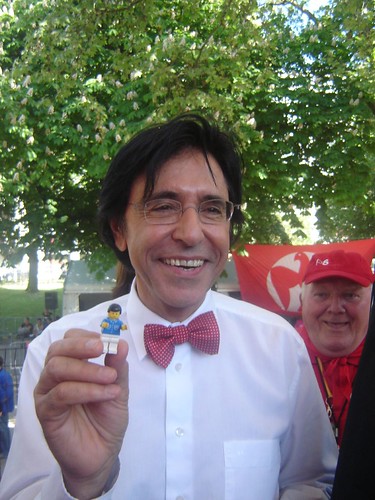
I've specified 'male' because Iceland actually beat Belgium to the punch for the first gay leader of any sex – their openly lesbian Socialist Prime Minister Johanna Sigurdardottir was elected in 2009. In both countries the leader’s sexual orientation has been of little concern to the public or the media. In Belgium it is rarely ever mentioned, and in Iceland people were actually confused in 2009 when their PM’s sexual orientation received worldwide attention.
The sexual orientation of Di Rupo, also a Socialist, isn’t the only thing that makes him a different sort of politician. He is the son of Italian immigrants – a sizable population in Belgium’s Wallonia region who are descendants of the Italians who came to work in the mines in the early 20th century. This fact prompted one Belgian politician to say Di Rupo was evidence that the “American dream” is possible in Belgium.
Monday, 19 September 2011
Another small victory for Europe's Left - or is it?
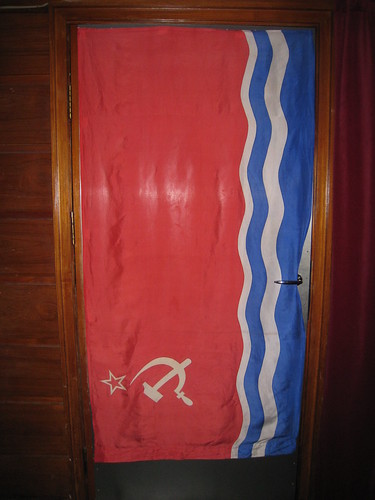
Saturday's general election in Latvia yielded a victory for the country's centre-left coalition Harmony Centre. The coalition won the largest amount of seats in the parliament. But though this may seem like yet another promising victory for Europe's left following Thursday's election in Denmark, the facts on the ground are a bit more complicated than that.
Harmony Centre is a coalition between the Social Democratic Party and the Socialist Party (the communists). The SP is essentially an ethnic Russian party, formed in 1991 to replace the Communist party after the country achieved independence from the USSR. Though the new state was formed around the Latvian ethnic and linguistic identify, in fact less than 60% of people in Latvia are ethnically Latvian. Almost 30% of the country is made up of ethnic Russians, some of whom moved there during the Soviet period but others of whom have lived there hundreds of years. The majority of the ethnic Russians cannot speak Latvian. In some of latvia's largest cities they constitute the majority of residents by far.
Wednesday, 25 May 2011
Music wars on the Brussels metro

I never thought to question it because, as is the case in most European countries, the majority of songs on the radio are always in English as well. But I had never noticed before that despite the fact that this is a Francophone city, I have never heard a song in French. Nor have I ever heard a song in Dutch, the city's other official language (spoken as a primary language by 7% of the Brussels population).
Apparently there is method to this madness. According to an article today in FlandersNews, the Brussels public transport company STIB has a policy of only playing English songs on the metro, with a smattering of Spanish and Italian songs thrown in for good measure. French and Dutch songs have not been played for fear of aggravating tensions between the two sides of the language divide here.
Thursday, 17 February 2011
Who punched whom? Brussels transit hangs in the balance

On Monday night the conductor got into an argument with a passenger and then throttled him. Afterward, fearing he would get in trouble, he lied and said the passenger had punched him. Upon hearing this, the transit workers union immediately rallied to his defence and that night, just two hours after the incident occurred, called an immediate strike. Every transit worker walked off the job, and did not come back the next morning.
So when I and everyone else went to the metro station Tuesday morning we found it shut - with no explanation. There was no sign, no people telling us what was going on, nothing. I had to go all the way back to my apartment and go online to find out what was going on. All metro trains, trams and buses didn't run the entire day. And with every cab taken, I had no choice but to work from home.
Monday, 7 June 2010
Belgian elections - the EU fiasco around the corner
 Belgians will go to the polls this Saturday to vote for a new government, just two weeks before the country is slated to take over the rotating EU presidency from Spain. Considering that it took Belgium nine months to form a government after the last general election in 2007, Brussels is getting increasingly worried about a potential leadership vacuum in the council after 1 July.
 The difficulty, as with everything in Belgium, is over language. The Belgian government collapsed in April over a disagreement between French- and Dutch-speaking parties over whether an electoral district on the outskirts of Brussels should be part of the Brussels Capital Region or Flanders. It may sounds like an innocuous issue but it goes to the heart of the language conflict, as explained in this previous blog entry.
Wednesday, 24 March 2010
A Gallic Plot?
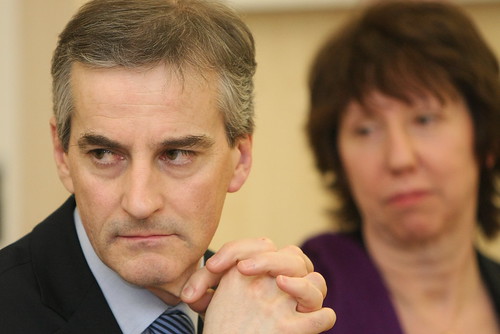 Yesterday there was an amusing story going around about how the French Europe minister has invited Catherine Ashton, the native Brit recently appointed as the EU’s first foreign minister, to learn “the language of diplomacy” at a school near Avignon.
 It was more of a tongue-in-cheek jest than an actual offer for assistance, but Ashton has taken him up on it and will be spending a month this summer in the south of France taking French lessons. But of course France’s offer wasn’t really about language. It reflects the increasing French dissatisfaction with Ashton as she creates the new EU diplomatic corps, which they fear is going to be dominated by the English.
Ashton speaks only rusty French, and she will only take questions at press conferences in English – a fact which has deeply irritated the French media. The fact that Ashton does not speak fluent French has been continually pointed out by those who think she is not qualified for the job. This is particularly true in France, where the phrase “the language of diplomacy” is not used with a smirk or as an old-timey throwback, but as their actual understanding of the world. Of course the reality is that French ceased to be the language of diplomacy 70 years ago, but don’t tell that to the French. Even within the EU, English has largely replaced French as the lingua franca since the accession of the Eastern European member states in 2004.
Friday, 19 February 2010
From Portugal to Brazil (and back again)
 It's a bit of a shock to the system to be back in cold, rainy London after two glorious weeks in sunny Brazil. And unfortunately I mean that literally. Foolishly I thought I could get away with not bringing a jacket, and was forced to shiver my way home from the airport Tuesday in just a jumper. Now, of course, I have a cold.
It was an amazing trip, and really interesting - especially in the way we bookended it with some time in Portugal. We got a really cheap flight to Brazil with TAP, Portugal's national airline, but it required a 24 hour stopover in Porto on the way there and another stopover in Lisbon on the way back. So it was a little colonial recreation, if you will. This theme for the trip was heightened by the fact that the first port of call was Salvador, the capital of Brazil during the colonial period. The city is billed as having the largest collection of colonial architecture in Latin America, and it didn't disappoint.
Friday, 15 January 2010
Who wants an EU Grammy?

Apparently this award show has been going since 2004, and previous winners include France’s Carla Bruni, Germany’s Tokio Hotel, Italy’s Tiziano Ferro and Benito Benasi, Sweden’s Basshunter and Britain’s The Ting Tings. This year’s awards took place last night in the Netherlands, hosted by the BBC’s Jools Holland.
Intrigued by the concept, I did a little basic esearch and found that the objective of the awards, sponsored by the Commission and the European Broadcasting Union, is to “highlight the success of 10 debuting European artists in selling albums and touring outside their home territory” to “stimulate the cross-border circulation of artists' works”.
Wednesday, 30 September 2009
"Das ist Deutschland Hier"
Oh SNAP! One expects this kind of thing from the French, but from the Germans??
Here is video of the new German foreign minister Guido Westerwelle admonishing a BBC reporter who asked him a question in English on Monday, snapping: "We're in Germany here."
The snippy retort has raised eyebrows in Germany and across Europe, most notably because Germany has long been one of the European countries with the least “language pride”, happy to operate in English as the ‘lingua franca’ of international diplomacy and business. Westerwelle’s comments are particularly surprising coming from a soon-to-be foreign minister, who presumably will need to use his command of English frequently when meeting with foreign dignitaries from around the world.
And incidentally, this BBC reporter was actually reporting for the World Service, which is an English language global news service that doesn't broadcast within the UK, but rather across the world to Africa, Asia, Europe and the Americas.
The French are notorious for this kind of defensive language pride. Could this be a sign that the Germans are starting to feel more confident about defending their own national identity? The BBC reporter’s question was about how German foreign policy would change with Westerwelle as foreign minister. Though he grumpily refused to directly answer the question, his rant may have revealed plenty about how Germany's foreign policy will change under his leadership. Was this a calculated signal to the international community, or a momentary bout of crankiness?
Germany is now the largest and most economically powerful country in Europe by far. Yet Germans are also renowned for their humble and realistic approach to their relative size and importance on the world stage. They have historically accepted the fact that German is not a world language and that English is the lingua franca (hence even though there are three co-equal working languages of the EU – English German and French – German is not often used in an official working capacity). This has set them apart from the French who many view as delusional about the importance of their language in the world. Germany, because of it’s WW2 legacy, has for the past half-century been very self-effacing and accommodating – particularly with English. As is often noted, 'it's not allowed to have German pride'.
Does Westerwelle’s rant signal the rebirth of a newly assertive Germany?
The snippy retort has raised eyebrows in Germany and across Europe, most notably because Germany has long been one of the European countries with the least “language pride”, happy to operate in English as the ‘lingua franca’ of international diplomacy and business. Westerwelle’s comments are particularly surprising coming from a soon-to-be foreign minister, who presumably will need to use his command of English frequently when meeting with foreign dignitaries from around the world.
And incidentally, this BBC reporter was actually reporting for the World Service, which is an English language global news service that doesn't broadcast within the UK, but rather across the world to Africa, Asia, Europe and the Americas.
The French are notorious for this kind of defensive language pride. Could this be a sign that the Germans are starting to feel more confident about defending their own national identity? The BBC reporter’s question was about how German foreign policy would change with Westerwelle as foreign minister. Though he grumpily refused to directly answer the question, his rant may have revealed plenty about how Germany's foreign policy will change under his leadership. Was this a calculated signal to the international community, or a momentary bout of crankiness?
Germany is now the largest and most economically powerful country in Europe by far. Yet Germans are also renowned for their humble and realistic approach to their relative size and importance on the world stage. They have historically accepted the fact that German is not a world language and that English is the lingua franca (hence even though there are three co-equal working languages of the EU – English German and French – German is not often used in an official working capacity). This has set them apart from the French who many view as delusional about the importance of their language in the world. Germany, because of it’s WW2 legacy, has for the past half-century been very self-effacing and accommodating – particularly with English. As is often noted, 'it's not allowed to have German pride'.
Does Westerwelle’s rant signal the rebirth of a newly assertive Germany?
Friday, 25 July 2008
A week in Provence
 Driving from Catalonia to Provence was interesting, most notably because of the number of similarities between the two regions. For one thing the flags of both are very similar, both with red stripes on a yellow background. The native languages of the two regions are also very similar, and I’m told that Provencal and Catalonian are actually almost mutually comprehensible. Of course the big difference is that Catalan is actually the functioning, used language of Catalonia. Provencal is effectively a dead regional language, now only used for scholarly purposes (and, we noticed, on street signs in some of the city centres of the region). The French were just better at enforcing language conformity I guess.
 We began the French section of our trip in Montpellier, a university town on the southern French coast. The city isn’t technically or historically part of Provence, but rather the province of Languedoc. We actually didn’t find Montpellier to be very interesting, but that may have a bit to do with the fact that our hotel was terrible and far from the city centre. We did however drive out to the town of Carcassone to the West of Montpellier, a middle ages fortified city that has been remarkably preserved. That was definitely very cool, even if it did remind me of Epcot Center a bit (I could have done without all the kids running around with plastic swords and knight’s helmets). It was a stunningly beautiful city though.
Tuesday, 3 June 2008
Brazil devours its mother tongue
 By decree of a law passed last week, Portugal will no longer use Portuguese.
Well, not the same kind of Portuguese anyway. In a highly controversial vote that’s been debated for many years, the Portuguese Parliament has effectively changed the written language of Portugal to the type of Portuguese used in Brazil. This new standardization requires a change in spelling for hundreds of words and adds three new letters to the alphabet. All books will have to be republished in Brazilian Portuguese, and school curriculums will now be taught using the new language standardization.
The change was enormously controversial because it was seen as a matter of national pride by the former colonial power. But the seven other Portuguese-speaking countries in the world - Brazil, Angola, Mozambique, East Timor, Cape Verde, Guinea-Bissau, and Sao Tome and Principe – had already standardized to Brazilian years ago.
Tuesday, 30 October 2007
Weaving through Wales
This weekend two friends and I took a little road trip to South Wales. It was my first time there so it was a good opportunity to see more of the UK than just London, or even just England. It’s a beautiful landscape, but once again I found myself perplexed by some of the historical curiosities of modern Wales.
 On the way to Wales we made a quick stop at Stonehenge, something I’ve been dying to see since I arrived here. The Brits seem to really have something against it. Everyone we talked to told us not to go, or if we’re going to go make sure it’s on the way to somewhere else, because it’s horribly boring. But I thought it was quite interesting. First off there’s the natural appeal of getting a photo of yourself in front of a world-famous landmark. But beyond that it is interesting to actually see this thing you’ve seen so many times in photos up close and personal (or as close as they’ll let you get). It is much smaller than you’d think it was, but I think it’s worth the trip.
We stopped off for a pub lunch in a little English village called Bromham, which was quite charming. Then it was on to Wales, crossing the massive Severn estuary. The water level was shockingly low, which was a preview of the rest of the bodies of water we would encounter in Wales. I don’t know if we just kept encountering these things at low tide, but everywhere we went there was no water but just massive banks of mu
 On the way to Wales we made a quick stop at Stonehenge, something I’ve been dying to see since I arrived here. The Brits seem to really have something against it. Everyone we talked to told us not to go, or if we’re going to go make sure it’s on the way to somewhere else, because it’s horribly boring. But I thought it was quite interesting. First off there’s the natural appeal of getting a photo of yourself in front of a world-famous landmark. But beyond that it is interesting to actually see this thing you’ve seen so many times in photos up close and personal (or as close as they’ll let you get). It is much smaller than you’d think it was, but I think it’s worth the trip.
We stopped off for a pub lunch in a little English village called Bromham, which was quite charming. Then it was on to Wales, crossing the massive Severn estuary. The water level was shockingly low, which was a preview of the rest of the bodies of water we would encounter in Wales. I don’t know if we just kept encountering these things at low tide, but everywhere we went there was no water but just massive banks of mu
Thursday, 10 May 2007
Fannies and packies

The first came just a few weeks after I arrived here. I was in the break room with a group of my coworkers and we were discussing a project that needed to get done. They were saying that a certain woman in the office needed to get to work on it because she hadn’t done anything so far. So I said,
“She just needs some pressure on her, give her a little kick in the fanny.”
The room went silent. They stared back at me with expressions of horror and disgust. And I left completely puzzled as to why it got so quiet after I said that.
Monday, 22 January 2007
A weekend in Cologne
This weekend I went to Cologne to visit my friend Hale, who is there doing a program with the state department and was having a birthday party Friday night. It was really fun. I went Mark and Vanessa, a Dutch couple who recently moved to London who know Hale from San Diego. We stayed at a hostel right in the city center (next to the Dom) so what was pretty cool.
Hale had the party Friday night at the bar he’s working at, and there was a pretty good turnout. I met a lot of interesting people, including one girl who’s being living and working in Germany for five years. We were swapping stories of the difficulties Americans face getting work visas in Europe, and she told me that next time I enter the US I should be prepared for a thorough grilling. She said every time she comes home they ask her a million questions.
“Why were you in Germany?”
“Studying””Why can’t you study in the US?”
“I preferred to study there”
“Why have you chosen to work there?”
“Because I wanted to”
It’s kind of ridiculous. And this is just to get back in to your own country, which, by the way, is still taxing you even while you work abroad (the only country in the world to do so as far as I'm aware).
Hale had the party Friday night at the bar he’s working at, and there was a pretty good turnout. I met a lot of interesting people, including one girl who’s being living and working in Germany for five years. We were swapping stories of the difficulties Americans face getting work visas in Europe, and she told me that next time I enter the US I should be prepared for a thorough grilling. She said every time she comes home they ask her a million questions.
“Why were you in Germany?”
“Studying””Why can’t you study in the US?”
“I preferred to study there”
“Why have you chosen to work there?”
“Because I wanted to”
It’s kind of ridiculous. And this is just to get back in to your own country, which, by the way, is still taxing you even while you work abroad (the only country in the world to do so as far as I'm aware).
Subscribe to:
Posts (Atom)