Showing posts with label Herman Van Rompuy. Show all posts

Friday, 1 March 2013

A week of turmoil for Europe

Yesterday was a big news day for EU politics, with a series of high-profile speeches in reaction to the disastrous election result in Italy on Monday. But despite the many speeches, the message has been singular: there is “no alternative” to austerity, and hostility toward the EU in domestic politics is exascerbating the euro crisis.

The day started with a speech by humiliated ‘technocrat’ prime minister Mario Monti at the European Commission. Having been rejected by his home country, it is perhaps unsurprising that the former European Commissioner wanted to come to Brussels, where people understand him. It was Brussels after all, at the behest of Berlin, who installed Monti on the Italian throne after forcing out Silvio Berlusconi at the height of the Italian crisis in 2011.

And it is no coincidence that it was the ‘Italians abroad inEurope’ voting region in which Monti received his highest share of the vote – 30%. This compares to the 9% of the vote he received at home – less than half the vote chare received by anti-establishment comedian Beppe Grillo.

Thursday, 29 September 2011

What would the world look like without the EU?

They used to say that when America sneezes, Europe catches a cold. That’s certainly what they (and I) were saying during the 2008 economic crisis, when misadventures on Wall Street and the subsequent collapse of Lehman Brothers created a disaster that quickly spread to Europe. How the tables have turned. Now the US is waiting helplessly to see if Europe can avoid a disaster that would eclipse Lehman Brothers in scale and could throw the US back into recession.

It’s a testament to just how important Europe has become to the global economy that it is now Europe’s sneeze that can give the world a cold. The EU is now a larger market than the United States, and over the past twenty years it has literally become the world’s regulator. Is it conceivable that this entire project could now collapse?

This is the question that is now being asked in the United States. When I was home last weekend I was asked by friends, “Is the EU going to fall apart?” Trying to show a bit of false confidence, I assured them that it is not. Germany is in the end going to suck it up and do what needs to be done to save the euro, I insisted, because the alternative is complete economic meltdown. The vote for the increased bailout fund today in the German parliament seems to go some way in justifying that optimism. The truth is that Europe’s problems are not insurmountable.

Friday, 4 March 2011

While the right leads in Helsinki, the left is sidelined in Athens

Europe's two main political groupings – the center-right European People's Party (EPP) and the center-left Party of European Socialists (PES) – are today holding dueling summits in Helsinki and Athens, respectively. The simultaneous timing of the two-day events, a bit like the party conferences in the UK or US – is highly unusual. But they are coinciding because they are both meant to get each side singing from the same hymn sheet at next Friday's incredibly important European Council summit. And given Europe's current political reality, the choice of a Northern capital for the right's meeting and a Southern capital for the left's meeting seems entirely appropriate.

But despite the fact that these are nominally meetings of Europe's two main political groups, the reality is that the Helsinki summit will effectively be a meeting of those running Europe while Athens will be an ignored meeting of those sitting on the sidelines. Because the European left has been pushed to Europe's geographic fringes and marginalized by the debt crisis, the Athens meeting will be a meeting of politicians "in opposition". In Helsinki, German chancellor Angela Merkel will lead a meeting of representatives of the governments of 17 of the 27 EU member states. At the Socialist conference in Athens only five governments will be represented.

In addition to national leaders like Merkel, Berlusconi and Ireland's incoming prime minister Enda Kenny, European Commission President Jose Manuel Barroso and European Council President Herman Van Rompuy– both from the EPP – are also in Helsinki. The president of the European Parliament, EPP politician Jerzy Buzek, may come tomorrow. They will be discussing the Eurozone Competitiveness Pact drawn up by Merkel and Sarkozy as well as the debt relief fund. They will also discuss a united European response to the events in North Africa. In effect it will be a sort of mini European Council summit.

What will they talk about in Athens? Who knows. Who cares? Whatever is on the agenda, it will have little consequence for the direction of EU policy.

Friday, 4 February 2011

An embarrassing day for Ashton and Van Rompuy

Today's summit of European leaders is winding down, and now everyone is waiting for the prime ministers and presidents to emerge to announce what they have decided for the stability of the Eurozone. Between the euro crisis and the turmoil in Egypt, this council has turned out to bear little resemblance to the gathering it was supposed to be – a special summit on European energy issues.

This is actually the first European Council (the summits of European heads of government) that I've covered. Since my beat is environment, there hasn't been an occasion so far where the leaders have had an environmental issue on the agenda important enough for me to spend the day here. Today was supposed to be different. European Council President Herman Van Rompuy, now one year into his newly created position, called for this summit dedicated to energy last year. But as the European debt crisis has raged on, in the past two months it became clear that the seemingly non-pressing issue of energy security and sustainability was going to take a back seat to the crisis. And now that a revolution is underway in Egypt, by yesterday few were expecting to see anything significant come out of this council in the way of energy - even though that was still purportedly the main subject behind today's meeting.

Sure enough, at noon today we received a very short list of conclusions on energy by the council - and there was little to really sink your teeth into. I'm told the leaders spent just an hour talking about energy before moving on to the Egypt issue. Essentially they just looked over the pre-agreed conclusions and signed off on it. Ah well, it did mean I could file my story earlier and be done with it!

Wednesday, 5 January 2011

Belgium's 'invisible' EU presidency comes to an end

As the clock struck midnight last Friday, it wasn't just 2010 that was coming to an end. Here in Brussels, the new year also meant the end of Belgium's six-month period at the helm of the EU, as the country handed over the baton to Hungary. It was an interesting period for the rotating presidency, held for the entire six months by a country with no government. Yet despite the domestic political chaos, the presidency actually seemed to run fairly smoothly - or at least there weren't any noticable disasters. In fact if you weren't looking for it, you might have missed the Belgian presidency alltogether. It was a low-key, almost invisible affair.

Perhaps this was exactly the type of presidency that the EU needed at this time. After all, the Lisbon Treaty's creation of the new posts of President of the European Council and High Representative for Foreign Affairs was meant to downgrade the role of the rotating presidency to that of just a coordinator. Spain was the first country to take over the presidency after the treaty's adoption 13 months ago, and for those first six months of 2010 there seemed to be some confusion about the rotating presidency's new role. The Spanish foreign minister got in hot water a few times for appearing to speak for EU states when that role is meant to now be held by the new EU foreign affairs chief Catherine Ashton. And Spanish Prime Minister Jose Luis Zapatero, effectively the last Socialist leader left in power in Europe, seemed to be pushing for high-profile agenda items in a way that overlapped with the role of the new European Council president Herman Van Rompuy.

Contrast this with Yves Leterme, who is temporarily holding the Belgium prime minister position as a caretaker while the country continues to struggle forming a government. Leterme was pretty much invisable during the entirety of the Belgian presidency. At the European Councils he was happy to hand the reigns over to Van Rompuy, who as luck would have it is not only a fellow Belgian but also a member of Leterme's own political party. And I'm not even aware of the name of the Belgian caretaker foreign minister, I never heard from him or her at all last year. Given that the caretaker government is not authorised to propose new policy, perhaps this is unsurprising.

Friday, 19 November 2010

Today’s EU-US 'summit': progress or face-saving?

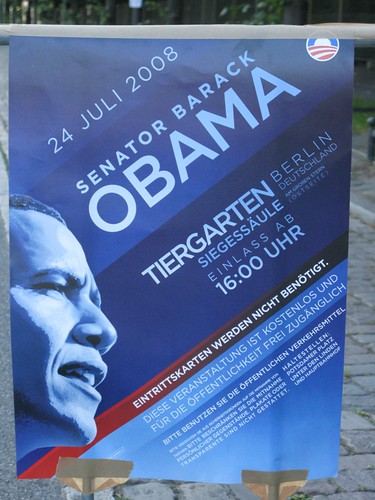
All this week I was inundated with press releases, previews and briefing notices leading up to the big EU-US summit taking place in Lisbon today, the first such summit since the Lisbon Treaty went into force a year ago. From the way the EU institutions were hyping it, you would think this was some kind of massive meeting of powers set to define the course of the next century. The reality? Barack Obama is taking two hours out of his busy schedule while at a NATO summit in Lisbon to meet with European Council President Herman Van Rompuy and European Commission President José Manuel Barroso on the sidelines.

Apparently this is all that US officials were willing to offer the new “EU president” even though the EU was originally thinking they could get a separate day with Obama while he was on the continent for the NATO gathering. But the EU grabbed the opportunity for even a two-hour meeting, eager to avoid another massive humiliation after Obama snubbed the union last May when he suddenly backed out of a planned EU-US summit in Madrid. The entire summit was cancelled after that last incident, and apparently EU officials didn’t want to have to go all of 2010 with the US president not meeting with his new EU counterpart.

Monday, 21 June 2010

Flemish nationalists win big in Belgium

I’m back in cold, rainy Belgium, which is truly painful after a week in the warm sunshine. I spent this past weekend in the muddy, rain-soaked fields south of Waterloo, attending a reenactment of the decisive battle 200 years ago that spelled the final defeat for Napoleon. Despite the rain it was quite an experience (check out the video I shot below). I was particularly impressed with the international diversity of the people there, - both of the spectators and the 3,000 people participating in the battle. Most significantly, I noted that there seemed to be an even mix of Flemings and Walloons who had come to watch the battle. The harmony on the battlefield seemed a contrast to the battle going on at the moment between the country’s politicians.

The country went to the polls last Sunday to vote for a new government, and as predicted the result was inconclusive. But surprisingly, the election delivered more certainty than had been expected. There was a clear winner in both French-speaking Wallonia and Dutch-speaking Flanders. There was a large (though not surprising) victory for the Socialists in Wallonia, and a shock victory for the New Flemish Alliance (N-VA), a nationalist party, in Flanders. Because the parties did so well in each of their regions, there is now a realistic prospect that the two could form a coalition by September, with the Socialist MP Elio di Rupo to be appointed prime minister. Significantly, he would become Belgium’s first Wallonian prime minister in decades.

Monday, 7 June 2010

Belgian elections - the EU fiasco around the corner

Belgians will go to the polls this Saturday to vote for a new government, just two weeks before the country is slated to take over the rotating EU presidency from Spain. Considering that it took Belgium nine months to form a government after the last general election in 2007, Brussels is getting increasingly worried about a potential leadership vacuum in the council after 1 July.

The difficulty, as with everything in Belgium, is over language. The Belgian government collapsed in April over a disagreement between French- and Dutch-speaking parties over whether an electoral district on the outskirts of Brussels should be part of the Brussels Capital Region or Flanders. It may sounds like an innocuous issue but it goes to the heart of the language conflict, as explained in this previous blog entry.

Wednesday, 2 June 2010

The European left: an endangered species?

At the moment, Europe is a conservative-dominated continent. The anecdotal evidence that Europeans have been veering to the right at this time of economic crisis has been evident for some time, especially in last year’s European Parliament elections where voters handed a strong majority to the conservative EPP. But the string of centre-right victories over the past few months has demonstrated clearly that the European public is gravitating toward conservative ideologies as their own economic situations become more uncertain. And looking at the geographic location of the few centre-left governments left in Europe, once can see that Europe’s Social Democrats are really in trouble.

This weekend Czechs went to the polls to select a new government. They faced a stark choice between the centre-left Social Democrats who promised during the campaign to increase spending and social benefits, and the centre-right Civic Democratic Party (ODS) who pledged to make drastic budget cuts and reduce the deficit. It is a battle economists have been waging as well. As most countries emerge from recession, is it better to maintain state spending to fuel the recovery or to make drastic cuts to tackle the large deficits and public debt?

Thursday, 25 February 2010

Nigel Farage, europhile hero?

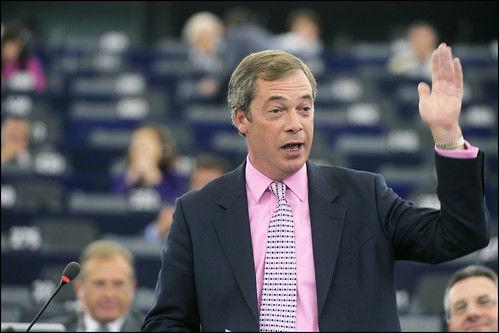
Has the world gone topsy turvey? It's safe to say there is little that unites the rabidly Eurosceptic Nigel Farage of the UK Independence Party with pro-Europeans. Yet during newly-appointed European Council president Herman van Rumpuy's first appearance before the European Parliament this week, Farage was the only MEP to even remotely express the frustration many Europhiles are feeling with the presidential selection. And when Nigel Farage is the only one willing to say what the europhiles are thinking, it's a strange time indeed!

Farage delivered yesterday a blisteringly insulting attack on the new "EU President", telling him he has the "charisma of a damp rag" and the "appearance of a low-grade bank clerk". Now, such personal attacks may be commonplace in Westminster, but that is not how the European Parliament operates (or any other parliament I know of! Except maybe Australia...). MEPs today have been furious about the outburst. The parliamen's president is considering disciplinary action against him, and has summoned him for a meeting on Tuesday to discuss the incident.

Wednesday, 3 February 2010

Obama 'snubs' Europe

Given that this is a blog about EU-US issues, I would be remiss if I didn’t mention the sad, sad tears that are being shed today over Barack Obama’s decision to ditch the planned EU-US summit in Madrid in May.

Spain appears to be livid about it, while papers across Europe seem to be responding not in anger but rather in a rather depressed and humiliated shrug. The White House announced yesterday that Obama would not be attending the planned joint summit, which apparently came as quite a shock to its organisers. Apparently EU officials found out about the decision, first reported by The Wall Street Journal, through the news media.

Spain, which currently holds the rotating EU ministerial presidency (not to be confused with the newly-created council presidency), is now saying it will postpone the summit until the president can attend. Holding it without him would be humiliating for Europe and would lack symbolic significance.

Friday, 20 November 2009

EU Low Representatives?


The look on Catherine Ashton’s face last night said it all. Shocked, flustered and almost a little embarrassed, the largely unknown British commissioner chosen to be the EU’s first “foreign minister” said it was a sign of her surprise that she had no acceptance speech prepared. Speaking in a softly reassuring tone, she said she would pursue a “quiet diplomacy” - characteristic of her low-profile approach to politics. 

Standing beside her, the expression of the unassuming Belgian prime minister Herman Van Rompuy was equally telling. Constantly switching languages every few minutes, he spoke of his reluctant acceptance of the offer from member state leaders to become the European Council’s first president. Oscillating between English, French and his native Dutch, a portrait emerged of a man who has gained a reputation as a quiet consensus-builder, having rescued the national Belgian government from collapse two years ago. 

And with them on the podium stood a beaming European Commission President José Manuel Barroso, a clear winner from last night’s announcement. In these two very low-profile picks Barroso will not have the competition for leadership he feared from a pick like Tony Blair or Jean-Claude Juncker. Since Rompuy will largely relegate his role to being a secretary-coordinator for the European Council, Barroso will continue to be the EU’s de facto leader. And with the demise of the rotating council presidency, he no longer has the prospect of an upstart national leader stealing the show every once in awhile. 

Together the three of them have been dubbed by bloggers today as the “Troika of Boredom” - three rather unengaging and unambitious politicians who are unlikely to give the EU the respected high profile it had sought to achieve by creating these new positions. Indeed, the reaction from Brussels blogs last night and this morning has been overwhelmingly unimpressed. Many are seeing the choice of two rather weak personalities as a deliberate effort by Angela Merkel and Nicolas Sarkozy to ensure that there is no strong supranational EU figure that could challenge their authority in the council. 

As for the fourth man standing in the group, his body language made it clear where his institution is headed. Frederik Reinfeldt, Prime Minister of Sweden (which currently holds the rotating council presidency), was practically being edged off the stage. The rotating country leadership will still continue to host meetings for the Council of Ministers, but it will no longer have any symbolic leadership role.

Franco-German Stitch-Up
Though the people selected for these new EU positions are being seen as boring, the selection itself is anything but. In fact, it is incredibly important. The remit of these two positions was left very vague in the text of the Lisbon Treaty, and all along its been said that the presidency would be defined by the first person who holds the job. 

If it were a high-profile person with much political clout, the presidency could become a powerful position capable of speaking with one voice for the EU on the world stage. If it was a low-profile choice, the presidency would become merely a coordinator role, a consensus-builder who would work behind the scenes to get the different leaders of member states to reach agreement. With the selection of Van Rompuy, member state leaders have made a clear decision about which way the presidency should go. His term length may just be two-and-a-half years, but if Rompuy takes a ‘low-profile coordinator’ approach to it as expected, it would be difficult for the next president to fundamentally reshape the precedent the Belgian set. 

But is this really what EU leaders wanted? Gordon Brown may have had his differences with Tony Blair in the past, but he seems to have been legitimately insistent that Blair should get the position. Indeed, it appears the choice of Ashton was made as a compromise to Brown in exchange for his abandoning the Blair cause. Sweden’s foreign minister seemed less than enthusiastic about the choice this morning, and many in Eastern Europe have been voicing grumbling discontent with the decision today. Certainly the Socialist leaders of Spain, Portugal and Greece can’t be pleased about it, considering they got the short end of the stick. Ashton is a fairly moderate politician who has little to no foreign policy experience. 

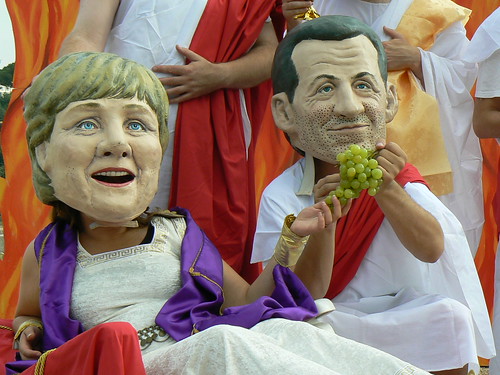
This will be largely seen as a Franco-German stitch-up. Merkel had indicated her preference for Van Rompuy early on, and after she persuaded Sarkozy to give up his preference for Tony Blair, the two announced they would be presenting a united front in their selection. This provoked accusations of bullying, with Sweden’s prime minister saying the decision should not be made by just the French and Germans. Certainly, it is a sign of Britain’s lack of influence in Europe that even as one of the ‘big three,’ it was unable to fight against a Franco-German alliance.

“Political Pygmies”

Certainly these two new ‘high representative’ positions were not the only part or even the main part of the Lisbon Treaty. Still, they were a significant part. And after eight long years of fighting for it, this decision has many asking, “What was the point?” The intention of the positions was to give someone the authority and clout to represent the EU on the world stage and stand toe-to-toe with the US and China. These two are unlikely to be able to do that, which bounces authority back to Barroso and back to the status quo, with no united voice for Europe. 

Many federalist Europhiles found themselves in the strange position of agreeing with UKIP leader Nigel Farage last night. Bizarrely, he told the BBC, "We've got the appointment of two political pygmies. In terms of a global voice, the European Union will now be much derided by the rest of the world."  But…isn’t that exactly what UKIP wants? The cognitive dissonance is even more impressive than usual on this one. 

For their part, the Tories praised the decision to go with a low-profile person rather than Tony Blair, with shadow foreign secretary William Hague saying, "I am very pleased that those of us across Europe who said that the president should be a chairman, not a chief, have won the argument.” 

Both the Tories and UKIP were also quick to point out that Baroness Ashton has actually never been elected to anything in her life. She spent most of her career working for a charity run by Prince Charles before being appointed as leader of the House of Lords in 2007 by Gordon Brown. When Peter Mandelson left his “Brussels exile” to return to Westminster in 2008, she took his place as EU Commissioner for Trade, where she’s served for about a year. Trade Commissioner is one of the most important roles in the EU and involves a lot of negotiation with foreign trade bodies (particularly those in the US and China). However it doesn’t necessarily involve any areas of foreign policy outside of trade. 

For his part, Van Rompuy is being lauded by his supporters as someone who united the warring Flemish and Frencophone factions of the Belgian parliament and brought the national government back from its year-long long shutdown in 2008. He reportedly took that job reluctantly after being asked by the Belgian king, who pleaded with him for 90 minutes. He had been set for retirement, and had already been on a long hiatus from politics. Merkel and Sarkozy have argued that his skills as a quiet consensus builder make him perfectly suited to coordinate the diverse member states of the EU. 

But it’s unclear whether this skill will translate to a European level. The disagreements in Belgium are between two parties, not 27. And authority in Belgium has been so devolved to the regions of Flanders and Wallonia by this point that the national government barely does anything at all – as evidenced by the fact that it was barely noticeable when the national government shut down for about a year. Is it that impressive that he was able to bring back to function a body that is largely symbolic by this point anyway? The EU may have it’s problems but it is by no means dysfunctional and is not about to shut down.

Realism

Perhaps the consensus reached last night appropriately reflects the fact that many Europeans are not ready for the notion of an “EU President.” The Liberal Democrats in the UK had an interesting interpretation of the decision yesterday, telling the BBC that the decision would expose the stupidity of the Eurosceptic British media referring to the Lisbon Treaty as if it was solely designed to create a powerful EU presidency for Tony Blair. Foreign affairs spokesman Ed Davey said,
"With low-profile appointees, no-one can take seriously any longer the Eurosceptic deception that these positions would challenge the supremacy of nation states acting together when they agree."
From the perspective of the UK and Scandinavia, where the prospect of an “EU President” was most unpopular, this may be true. But what about the many other Europeans who wanted the EU to speak with a stronger, more coherent voice on the world stage? Who now will have the clout to stand up to the United States in situations like the Iraq War? Who now will bring trade power to bear in negotiations over climate change? The decision to choose low-profile people may allay some of the fears expressed in the British media, but does it do so at the expense of offering a solution to the problem the Lisbon Treaty was trying to solve? 

Time will tell how these two will use their roles, but it looks like the wild card is more likely to be Ashton than Van Rompuy. She is younger, newer, and there is less known about her political stances on foreign policy issues (she by the way has a very left-of-centre husband I understand). Van Rompuy is unlikely to surprise anyone and will probably stick to a low-profile role. But it she wants to, the Baroness could shape the EU's foreign policy positions to be far more powerful than the presidency. 

That is, if she is so inclined.