Showing posts with label Liberal Democrats. Show all posts

Saturday, 14 September 2013

Total recall

In the coming months, the UK is set to enact a right to recall elected politicians. But the American example shows this may not be the boon to democracy it appears.

Recently, the disgraceful tale of a Scottish politician refusing to resign in the face of 23 (yes, 23) separate domestic abuse convictions has revived talk in the UK of that old populist hobby-horse – the right to recall.

Bill Walker, a Scottish National Party member of the Scottish Parliament (pictured below), was convicted last month of a series of domestic abuse offenses against three different ex wives and a stepdaughter over three decades.

Though he was expelled from the SNP after the conviction, for weeks Walker refused to vacate his seat – and there was nothing the SNP or the Scottish Parliament could do to make him leave. As the British media examined the bizarre situation, those who advocate establishing a citizen's recall law in the UK came out in force to argue that this disgraceful state of affairs makes their case.

Wednesday, 12 September 2012

The peril and promise of a new treaty

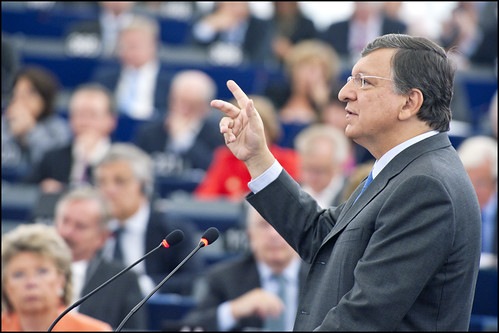
European Commission president Jose Manuel Barroso dared to use the ‘F word’ in his state of the union address here in Strasbourg today – federalism.

“Let’s not be afraid of the word, we will need to move towards a federation of nation states,” he told the European Parliament. “Today, I call for a federation of nation states. Not a superstate.” This federation, he continued, will ultimately require a new treaty, as German Chancellor Angela Merkel had suggested last week. EU leaders, still traumatized by the painful experience of ratifying the Lisbon Treaty in the last decade, have been desperate to avoid this.

“Before the next European Parliament elections in 2014, the Commission will present its outline for the shape of the future European Union. And we will put forward explicit ideas for treaty change in time for a debate.”

Barroso has been hesitant to use the word federal in the past when describing the future direction of the European Union, aware of the images of a power-grab it can conjure up in member states. But in his state of the union addresses, a yearly tradition itself created by the Lisbon Treaty, Barroso has been keen to make the European Parliament happy. He clearly thought that by finally using the F-word, he could do it.

Tuesday, 20 September 2011

Lib Dems declare 'rhetoric war' on Conservative allies

This week's Liberal Democrat party conference in the UK has been generating big headlines in the British press as each successive speaker tries to outdo the previous one in denouncing the party's coalition allies. But do the harsh words signal an impending divorce with the Conservative Party, or are they merely a move to stop the freefall in Lib Dem support.

According to opinions polls the party has lost more than half of its supporters since its decision to join with the Conservatives to form a coalition government last year. A subsequent u-turn on tuition fees and the loss of the alternative votereferendum – the prize they had been awarded for allying with the Conservatives – has sent the party to what some think could be their lowest popularity ever. This despite the fact that they are now in government for the first time.

The language being used at this week's conference shows the party is going to try a drastic change of tact in order to stop the haemorrhaging of support. Though they have been restrained in showing major disagreement with their coalition partners over the past year, after this week the honeymoon is clearly over - rhetorically at least.

Wednesday, 12 January 2011

UK throws a spanner into EU integration

British prime minister David Cameron survived a potential party revolt last night after successfully guiding his "European Union Bill" through a key vote in parliament. The bill, which honours a campaign promise to require every EU Treaty change be put to a public referendum in Britain, has been derided by the Conservative Party's hardcore Eurosceptic wing as being a soft touch.

The hardcore Eurosceptics are furious that the bill would make an exception for "minor" treaty changes, such as the upcoming establishment of a permanent financial rescue mechanism to aid faltering Eurozone states. The Tory leadership has insisted any designation of a treaty change as "minor" would be open to challenge by citizens, but the Eurosceptics counter that the final decision would be made by a judge and therefor the bill is not really "putting power back in the hands of the people" as Cameron claims. The rebel MPs say that what Cameron promised during the campaign was to submit every change, no matter how small, to public vote. They are alleging that the bill has been watered-down to appease the pro-European Liberal Democrats, who the Conservatives are now in coalition with.

But in a showdown vote last night the Eurosceptic rebels were only able to convince 39 coalition MPs to vote against the bill. The opposition Labour Party also voted against it, though they weren't exactly profiles in euro-defending courage in doing it - saying only that it was a 'distraction' from more pressing issues. The bill sailed through this stage of the process and looks set for passage.

Today the British media are heralding a victory for Cameron over the hardcore Eurosceptics who were unable to intimidate the prime minister into enacting a harsher bill. So hooray hoorah, on to the next subject. Brussels must be elated to have been spared this harsh retribution, right?

Thursday, 9 December 2010

Violent protests in London as government increases tuition

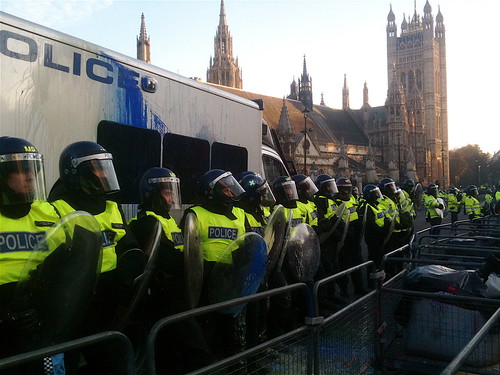
London was rocked today by the most violent anti-austerity protests yet seen, with Parliament Square becoming the scene of incredible sights of mayhem. The near-rioting took place just outside the Houses of Parliament where, inside, British politicians were casting the big vote on increasing English tuition rates by 300%. Horses charged into the crowd, fires raged and several police officers were seriously injured. Protesters broke into the treasury building and ransacked it. Christmas shoppers on Oxford Street were attacked. Even Prince Charles and Camilla were attacked as they tried to drive to the theatre, with protesters surrounding their car and smashing the windows.

The turmoil outside was mirrored by turmoil inside. The Liberal Democrats, who are in the governing coalition with the Conservative Party, saw a rebellion over the issue. Half of the Liberals defected, as did several Conservatives, shrinking the coalition's 84-seat majority to a majority of just 21 on this vote. The opposition Labour Party brutally criticised the plan, which will for the first time put British students in tens of thousands of pounds of debt after finishing a four-year degree - a situation that will be unique in all of Europe.

Wednesday, 2 June 2010

The European left: an endangered species?

At the moment, Europe is a conservative-dominated continent. The anecdotal evidence that Europeans have been veering to the right at this time of economic crisis has been evident for some time, especially in last year’s European Parliament elections where voters handed a strong majority to the conservative EPP. But the string of centre-right victories over the past few months has demonstrated clearly that the European public is gravitating toward conservative ideologies as their own economic situations become more uncertain. And looking at the geographic location of the few centre-left governments left in Europe, once can see that Europe’s Social Democrats are really in trouble.

This weekend Czechs went to the polls to select a new government. They faced a stark choice between the centre-left Social Democrats who promised during the campaign to increase spending and social benefits, and the centre-right Civic Democratic Party (ODS) who pledged to make drastic budget cuts and reduce the deficit. It is a battle economists have been waging as well. As most countries emerge from recession, is it better to maintain state spending to fuel the recovery or to make drastic cuts to tackle the large deficits and public debt?

Thursday, 13 May 2010

So who are these "liberals" anyway?

I've had a lot of Americans ask me this week "what the hell is a Liberal Democrat?" The UK election has received some coverage across the pond over the past weeks, and I've been watching with interest how the American media has been covering it. Some have chosen to leave any mention of the Liberal Democrats out for fear of confusing people. Others (Fox News notably) have described them as being "another liberal party" with Labour.

The confusion seems to be the result of the fact that "liberal" has different meanings in America and Europe. In the US "liberal" means someone on the left who believes in a combination of social liberalism, public welfare and a mixed economy. The American right wing has been relatively successful in giving the word "liberal" a negative connotation since the 1980's, hence the rise of the word "progressive".

But in Europe "liberal" is associated with classical liberalism, which is someone committed to the ideal of limited government, individual liberty and free markets. The difference has to do with the fact that the term, which originated in 19th century England, was never adopted in the US until the 1930's when FDR coined it to describe his New Deal policies. European liberals can be thought of more as "Libertarians" in the American context. Think Bill Maher.

Wednesday, 12 May 2010

An unholy alliance

Well, that was a crazy couple days. But last night it all came to a dramatic and sudden end as Gordon Brown abruptly drove to Buckingham Palace to hand in his resignation to Queen Elisabeth II, making Conservative leader David Cameron prime minister. So now it’s all done and dusted right? Hardly.

The excitement started Monday afternoon when, as the Conservatives and Liberal Democrats were still holding their negotiations, Gordon Brown emerged from 10 Downing Street to announced that Lib Dem leader Nick Clegg had approached the Labour Party to see what they could offer instead. And, most dramatically, Brown announced that he would be resigning as leader of the Labour Party.

That announcement soon sparked breathless speculation throughout the media. Gordon Brown stepping down was considered by many to be a precondition for a Liberal Democrat – Labour coalition. Surely, the media inferred, Brown would not have made that dramatic (and rather humiliating) announcement unless some kind of deal had been worked out. For the rest of the day Monday the assumption was that some kind of Lib-Lab coalition was being formed. The problem of course was that a Lib-Lab union would still not meet the threshold of reaching a majority in the parliament.

Monday, 10 May 2010

Brussels holds breath as leaked Tory memo shows plan of attack

It’s safe to say that EU leaders have bigger things to worry about today than the UK general election. But a leaked memo about the Conservatives’ Europe strategy is likely causing extra heartburn throughout Brussels today. And it’s likely also added an extra dose of complication to the fertive negotiations going on between David Cameron and Nick Clegg.

The talks are proving difficult because the two parties are so far apart on major issues, and it’s going to be difficult for them to come to some kind of an understanding on how they can govern together. One of those major issues is Britain’s relationship with the EU, and hopes of agreement in this area were dramatically undermined last night when a top-secret letter from shadow foreign secretary William Hague to David Cameron was leaked.

The letter, written last week, assumed a Tory victory on Thursday and outlined a plan for a brash and aggressive introduction of the new UK government to EU foreign ministers at a meeting today. According to the document, Hague planned to tell the foreign ministers "the British relationship with the EU has changed with our election". Hague then planned to tell the ministers there would be no further integration of the UK with the rest of Europe. Instead, the UK would be clawing back national powers over criminal justice, social policy and employment policy during the first term of the Tory government. He also planned to tell the foreign ministers bluntly "we will never join the euro".

Saturday, 8 May 2010

The British election explained

Nick Clegg is holding intense talks with David Cameron today, and it looks like these negotiations could go on for days. At the heart of the complications is this fact - even if the two men can work out an agreement and trust between them on how they would join together to form a government, they would still need to get that agreement approved by their parties. And given the big political differences between the Conservatives and the Liberal Democrats, that could be a herculean task.

Many Americans I've talked to have been confused about what exactly is going on here, and I can certainly sympathize. First they were hearing that this was the Liberal Democrats' year, that following the televised debates the "Clegg effect" was going to transform this election and make the UK's third party politically relevant for the first time in decades. But then when the results came in Thursday night, Americans heard that the Liberal Democrats had suffered a stunning defeat, actually losing seats in the parliament. Oh well, so much for that then. But wait, come Friday they learn that the Liberal Democrats are now the most important factor in these post-election days, as they will be selecting who will be prime minister. So how does someone lose so badly and yet end up selecting who the winner will be?

Friday, 7 May 2010

Westminster in chaos

It was a long night, and it was only just a moment ago that the BBC was finally able to declare an official UK election result – or non-result, as the case may be. For the first time in decades, a British election has yielded a hung parliament. No single party has a majority, with the Conservatives falling well short of the 326 seats they needed to form a government. Now the clock is ticking as politicians scramble to come up with some kind of solution.

It’s looking as if a Liberal Democrat – Labour coalition may not be enough for a majority either, which may rule out that option. It was a disastrously disappointing night for the Lib Dems and their supporters. Despite all the speculation after the first televised debate that this could be their year, the Lib Dems actually lost seats in this election. It’s truly stunning.

Of course along with all the polling showing surging support for the Lib Dems after the first debate came notes of caution that the pollsters did not know how the increased support would affect the actual vote. UK elections still use a peculiar first-past-the-post system for their elections which heavily favours the two main parties. This type of electoral system is normal in the presidential system of the US, but it is unusual in a parliamentary system. Most other parliamentary democracies use a ranked voting system where people indicate your first choice and then a second choice. The Lib Dems have made switching to a proportional representation or ranked system a cornerstone of their campaign, and recently Labour agreed to put it to a referendum. The Tories have refused to consider such a change, but it is likely that the Lib Dems would demand this if they were to enter into a coalition with the Conservatives..

Friday, 16 April 2010

The big debate

The UK election debate last night focused on domestic policy, so sadly I didn’t get my EU fix from them. Still, it was very interesting to watch the first-ever televised political debate in British history after having watched so many in America.

There was a lot of skepticism in the UK over whether this was really a useful exercise. After all, the party leaders already have a televised debate every week with prime ministers questions, when the full parliament sits and the leaders ask each other questions for 30 minutes. PMQs get very raucous, with hooting and hollering, accusations, jeers, laughter, you name it. Over the years they’ve gotten increasingly theatrical and bombastic, to the point where these days it seems a lot more like political theatre than legitimate debate.

There have been calls for the UK to start doing American-style televised debates during their general elections for decades, but every prime minister from Thatcher to Blair has always refused. It was, according to conventional wisdom, the sitting prime minister who had the most to lose by participating in a debate that would put them on an equal playing field with the opposition. But this year Gordon Brown relented, and of course, there’s no putting the lid back on that jar. Last night was the dawn of a new era in British politics. Never again will a sitting prime minister be able to avoid a televised debate.

Thursday, 15 April 2010

The UK election and the EU – a stark choice

It’s really an incredible thing to witness – British elections apparently don’t slowly emerge and gather pace, but instead arrive with a loud thud. Last week Prime Minister Gordon Brown called an election, and on Monday the Queen ceremoniously dissolved parliament. Almost on cue, my Facebook feed suddenly lit up with status messages from Brits asking who they should vote for.

It’s strange, because it’s been known for months that the election would be at some point in May. it’s literally the last moment at which Gordon Brown could have called an election since the last one was 5 years ago. But I guess it isn’t ok to start thinking about how you will vote until the Queen tells you to!

This will be the first UK election I will have observed since moving there. The process is extremely different from that in the US. Once the parliament is dissolved, MPs have just a few weeks to rush home to their constituencies to campaign. On 6 May the Brits will go to the polls, and whichever party gets the most votes will be able to appoint the prime minister. But one part of this year’s election will be very American. For the first time ever, the leaders from the three main parties will take place in an American-style TV debate. The first one will air tonight.