Showing posts with label euroskepticism. Show all posts

Friday, 4 March 2016

Good at the big things, bad at the small things

Eurosceptics are wrong when they say the UK has no influence in the EU, but they are right that Britain is outgunned and outmanoeuvred in Brussels lawmaking. What they don't tell you is that this is self-inflicted impotence.

When the new European Commission of Jean-Claude Juncker took office in 2014, they promised to counteract increasing euroscepticism by being "big on the big things and small on the small things". In other words, no more 'Brussels meddling' in small issues that should be left to national governments. 

Of course, they had a British audience and an upcoming Brexit referendum chiefly in mind. Years of media reports on bendy bananas and 'Anglo-French Friendship ponds' have led to an impression, generally accepted as gospel in the UK, that eurocrats like legislating for legislating's sake. The Commission's 'better regulation' drive is meant to counter this impression, whether or not it's an accurate one.

As I've written before, these UK media outrages over small regulations are not really about the laws themselves, but about who has the right to make them. The regulations being complained about in the British media, when they are actually a real thing (which is maybe 40% of the time), would attract no attention at all if they were made at Westminster. 

Friday, 26 February 2016

Brexit is the British Trump

After years of vilifying the EU, the English elite have created a Frankenstein's monster they cannot control.

It now looks increasingly likely that Donald Trump will be the Republican nominee for the US Presidency, and the world is looking on in bemused horror. What kind of hysteria has propelled this man toward becoming the American right's standard-bearer?

It has been widely observed over the past months that this is a monster of the Republican Party's own making. For years the party has driven turnout by peddling a narrative of fear, and stoking the worst instincts of its base. Truth became relative, and 'truthiness' was the name of the game. If it felt true, then go with it.

Monday, 10 February 2014

Switzerland's misleading model

The EU helps Eurosceptics when it allows Switzerland to be in the single market while pretending to be outside of it.

Last week, when Dutch Eurosceptic politician Geert Wilders unveiled a much-anticipated 'nexit study' (Netherlands exit from the EU), Switzerland featured prominently in the press conference.

The wealthy Alpine nation, about the same size as the Netherlands geographically, was held out as the paradise which would await a country if it leaves the EU.  Mark Pragnel, an analyst at British firm Capital Economics, which conducted the study, said Switzerland’s bilateral system of treaties with the EU is a model that the Dutch should emulate. “We think the Swiss option is viable for the Netherlands,” he said.

The argument is not new. Switzerland often features prominently in British debates about leaving the union. Not being in the EU hasn’t harmed economically thriving Switzerland, so why would it harm the UK? In fact, Switzerland’s success is often held out as being the result of, rather than in spite of, the country not being subject to EU law.

But this narrative is false. Switzerland is in fact part of the EU’s single market and it has to follow most EU law. Like the European Economic Area (EEA) countries Norway, Iceland and Liechtenstein, Switzerland exists in a ‘fax democracy’. Its ten bilateral treaties with Brussels, which mirror EEA membership in all but name, bind the country to follow EU law in agriculture, transport, trade, public procurement, environment, free movement and border control.

Friday, 15 November 2013

International nationalists

The far right has a poor history of working together in international forums. An alliance brokered by Geert Wilders and Marine Le Pen is seeking to reverse that trend.

"There is nothing harder to set up than a nationalists' international," wrote political scientists Michael Minkenberg and Pascal Perrineau when they analysed the performance of the radical right in the 2004 European Parliament elections. The latest attempt to disprove that truism was launched last week by Marine Le Pen, leader of France’s Front National (FN), and Geert Wilders, the Dutch maverick anti-Islam campaigner.

At a press conference held at the Dutch parliament in The Hague this week, Le Pen and Wilders announced a pact to work together to build an alliance in the next European Parliament to slay “the monster in Brussels” and wreck the Parliament from within. Given the patchy – to say the least – record of populist and nationalist groups’ attempts to join forces at European level, it was hardly surprising that scepticism dominated the initial reaction.

In the last Parliament, far-right groups briefly forged an alliance under the “Identity, Tradition, Sovereignty” group banner. But that pact fell apart after Romanian and Italian nationalists rowed over Alessandra Mussolini calling Romanians “habitual lawbreakers”. Perhaps it is not surprising that nationalists whose principal policy platform is being anti-foreigner have trouble co-operating with “foreigners”.

Friday, 28 June 2013

Much ado about colouring

The Brits are in a tizzy over an EU childrens book. But their own Parliament has produced four of them.

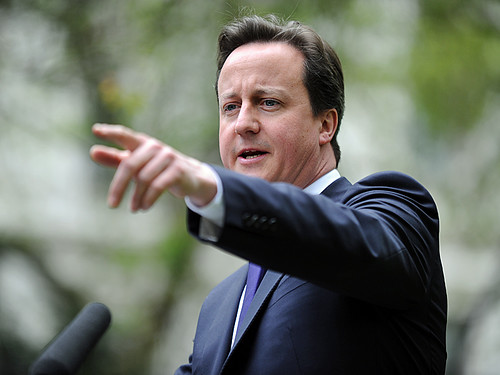
At the last EU summit, it was olive oil. At this summit, the burning issue that UK prime minister David Cameron wanted to discuss at his post-summit press conference was even more insidious – an EU-funded colouring book.

The multilingual children's exercise book produced by the European Parliament, first reported by the Telegraph earlier this week, is called ‘Mr and Mrs MEP and their helpers'. It contains exercises centred around a day in the life of two MEPs. Cameron distributed 30 copies of the children's book to the other EU leaders at the summit, saying something had to be done to reign in this reckless EU spending.

"[The other leaders] were shocked,” he told journalists after the summit. “First of all they thought it was a hoax done by the Telegraph and I had to convince them that it was a genuine, scandalous waste of money, and pretty sexist at that as well, because Mrs MEP stops at six o clock to go shopping and Mr MEP goes on until 6:40."

The colouring book is, admittedly, pretty awful. Its layout more closely resembles an IKEA manual than children's exercises, and its depiction of Parliamentary life makes it easy fodder for mockery.

Thursday, 23 May 2013

UKIP voters demand referendum...on Eurovision

As the EU referendum debate has heated up in Britain over the past several months, the UK-based polling agency YouGov has conducted periodic surveys asking the voting public whether they want an in-out referendum, and how they would vote in it.

In this week's survey, they threw an additional query into the mix – asking the same question but replacing the ‘European Union' with the ‘Eurovision Song Contest'. The result is rather revealing.
The survey shows that if a referendum on Eurovision were held, the UK's voters would vote to leave the song contest, with only 29% voting to remain in it. Among UK Independence Party (UKIP) voters, only 13% would vote to remain in the contest.

32% of the survey's respondants said they want the government to hold an in-out referendum on Eurovision (44% said they were opposed, while 24% said they weren't sure). The majority of UKIP voters with an opinion said they want the UK to hold such a referendum.

Monday, 30 January 2012

What’s wrong with a transfer union?

The eurocrisis has introduced a plethora of strange words into our everyday vocabulary: ‘Contagion’, ‘technocrats’, ‘moral hazard’, ‘austerity’ and of course the derisive description, ‘transfer union’. This last term is used by those in Northern Europe who warn that bailing out the economies of Southern Europe will lead to a European Union where money steadily flows from rich states to poor states and the North loses out. Many argue that, in fact, this is what the EU has always been.

Such feelings are at the core of the German public’s resistance to the Greek bail-outs – emotions that have turned what is normally one of Europe’s most pro-EU countries into a relatively more eurosceptic place these days. “Why should we work hard just to see our money flow to lazy people in the south?” some Germans are asking.

Their resentment is fueled by charts like the interactive diagram below, found in the Guardian newspaper’s new ‘Europa’ section (a truly fantastic project with five other papers that I’m very excited about). It shows which countries are net ‘payers’ into the EU, and which are net ‘receivers’. The statistics are familiar and often brought up when people talk about the European Union – the biggest recipients of EU funds are in Southern and Eastern Europe while the biggest contributors are in Northern Europe.

Thursday, 8 December 2011

Cameron's choice tonight: will UK be inside or outside the room?

The degree to which the Left has become irrelevant in Europe was in evidence today as the European People’s Party (EPP), the EU grouping of Europe’s centre-right conservative parties, met in Marseille. The annual meeting of centre-right leaders, which coincidentally is this year a day before the final European Council, has toda become a first round in the treaty change talks. US Treasury Secretary Timothy Geithner has been there meeting with Europe's Conservative leaders, helping them to devise a strategy to save the Euro. Every leader who is important in this process was there today.

But it is not only the Left that is noticeable in their absence today in Marseille. Despite being a centre-right conservative leader, David Cameron is not there either. That’s because in 2009 Cameron took the decision to take his Tory party out of the EPP group and create a new, europsceptic grouping called ‘European Conservatives and Reformists’. That group is essentially just the British Conservatives, with a few hard right parties from Eastern Europe thrown in for good measure.

That decision, which was the fulfilment of a promise he made to the Eurosceptic wing of the Tory party in 2005 in order to be appointed party leader, may well be weighing heavily on the British leader’s mind today. He has already been locked out of the discussions amongst Eurozone leaders to devise a strategy to end the euro crisis. Now he is also locked out of the pre-summit meeting today in Marseille where so much of the strategy is being formulated. The later is a self-inflicted wound, and must be particularly hard to take considering it’s hard to see how creating a new EU group has benefitted the Tories in any way.

Tuesday, 15 November 2011

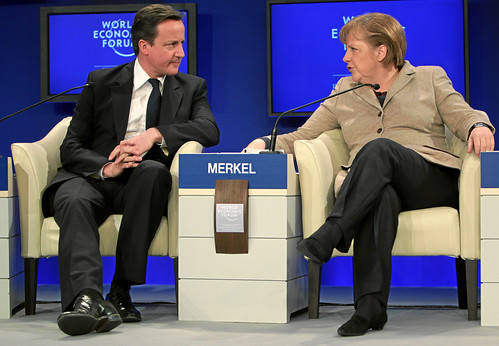
Angela and Dave fight it out over EU's future

It’s the fundamental question facing the EU today: should the union integrate, or disintegrate? In two duelling speeches yesterday the British prime minister and the German chancellor took polar opposite positions on the answer.

David Cameron’s speech, delivered just hours after Angela Merkel delivered a speech to her conservative CDU party conference calling for further European integration, appeared to be a direct response to the German chancellor. Describing himself as a Eurosceptic, Cameron said the EU had overreached in its ambitions and that the euro crisis is "an opportunity, in Britain's case, for powers to ebb back instead of flow away and for the European Union to focus on what really matters".

Merkel’s speech hours earlier had delivered the opposite message. Telling the audience that Europe faced its greatest challenge since the second world war, she said, “The task of our generation is to complete economic and monetary union and build political union in Europe step by step…that does not mean less Europe, it means more Europe.”

Considering the influence of the UK in Europe compared with the influence of Germany, it was a bit like a pygmy picking a fight with a giant. Cameron’s argument may find a sympathetic audience with the British press, but among national governments – even those in his ‘Northern bloc’ – the idea that the crisis is an opportunity to pull Europe apart is not very alluring. But whether or not the UK actually has the influence to sell Europe on the idea of downgrading the EU to merely a free trade zone, the fact is this may happen anyway. But few outside Britain would describe this as a desirable outcome.

Wednesday, 26 October 2011

US-EU trade war looming over airline emissions

This week the US House of Representatives passed a bill that would ban US airlines from participating in the EU's emissions cap-and-trade scheme. It is just the opening shot in what is likely to be a nasty trade war between the two blocs over the coming months. The winner will determine whether 72 million tonnes of CO2 are emitted into the Earth's atmosphere over the next eight years.

While international climate talks have stalled the EU has pushed ahead with its own unilateral action on climate change, the keystone of which is the Emissions Trading Scheme (ETS). Under the scheme industries with heavy emissions are capped on the amount of greenhouse gases they can produce, and if they want to emit more they must buy credits from others who are using less than their cap. The scheme is already up and running, but starting in January airlines will be included. The decision to include airlines in the scheme was taken back in 2008.

This will mean all airlines that fly in or out of the EU must purchase carbon permits. The plan has not met with significant resistance from the European airline industry, but it has met ferocious resistance from American, Indian and Chinese airlines. US Airlines have challenged the law at the European Court of Justice, but the court has already indicated it will rule against them. So the airlines have now turned to the US Congress, and they have found a receptive ear.

Monday, 24 October 2011

UK sidelined as Cameron faces attack from Sarko and his own MPs

David Cameron's quest for influence at this week's Eurozone crisis meetings is meeting headwinds, to say the least. First French president Nicolas Sarkozy tells him to 'shut up' at yesterday's summit, and now he is facing a rebellion his back-bench Eurosceptic MPs.

Tonight the rebels will try to force a vote in the parliament to set a public referendum in the UK on its EU membership. Cameron opposes such a referendum and has instructed his party to vote against it, as have the leaders of his coalition partners the Liberal Democrats and the opposition Labour. But 70 Conservative MPs are expected to defy him and vote for a referendum.

Of course, the measure has no hope of passing. But commentators and the markets,will be focused on the message that the rebellion will send at this precarious and sensitive time. British foreign secretary William Hague, who is himself quite eurosceptic, told the BBC that the vote being forced by the back-benchers is "the wrong question at the wrong time" and has likened it to "a piece of graffiti". The vote will "create additional economic uncertainty in this country at a difficult economic time," he said.

Cameron has imposed a 'three-line whip' on his party to vote against the measure, which is the most serious whip a party can issue. Any MPs who disobey will be expected to resign from government jobs. Cameron has said the preceding Labour Party should have held a public referendum on the ratification of the Lisbon Treaty, and he has pledged to hold a referendum on any future treaty changes. But he says an 'in-out' referendum would be counter-productive. This is likely because he knows such a referendum could easily yield an 'out' result, plunging the UK into a diplomatic and economic crisis.

Thursday, 29 September 2011

What would the world look like without the EU?

They used to say that when America sneezes, Europe catches a cold. That’s certainly what they (and I) were saying during the 2008 economic crisis, when misadventures on Wall Street and the subsequent collapse of Lehman Brothers created a disaster that quickly spread to Europe. How the tables have turned. Now the US is waiting helplessly to see if Europe can avoid a disaster that would eclipse Lehman Brothers in scale and could throw the US back into recession.

It’s a testament to just how important Europe has become to the global economy that it is now Europe’s sneeze that can give the world a cold. The EU is now a larger market than the United States, and over the past twenty years it has literally become the world’s regulator. Is it conceivable that this entire project could now collapse?

This is the question that is now being asked in the United States. When I was home last weekend I was asked by friends, “Is the EU going to fall apart?” Trying to show a bit of false confidence, I assured them that it is not. Germany is in the end going to suck it up and do what needs to be done to save the euro, I insisted, because the alternative is complete economic meltdown. The vote for the increased bailout fund today in the German parliament seems to go some way in justifying that optimism. The truth is that Europe’s problems are not insurmountable.

Thursday, 14 July 2011

Will NotW shock force rethink of British press accuracy?

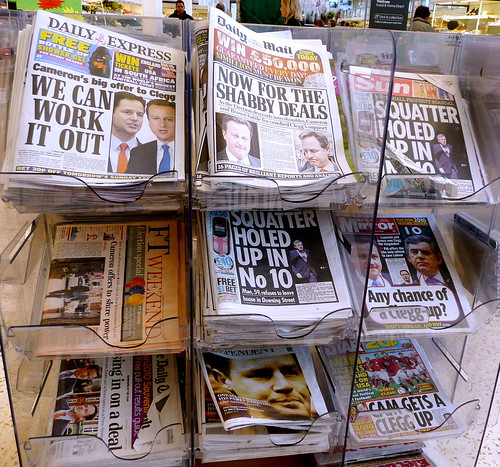
Another day, another euromyth batted about by the British tabloids. Today's little page seven gem, repeated in several papers including the Express and the Telegraph, is that Brussels is planning to force all sports players to wear the EU flag on their uniforms. And like most of the euromyths the British press peddles, this is complete nonsense.

Of course this little piece of news can't hope to compete with the big story this week, the News of the World hacking scandal and the implosion of the Rupert Murdoch media empire in Britain. Commentators are saying that this scandal will erode the public's confidence in the British media. I can't help but think – looking at stories like this EU unform nonsense – that that's probably not such a bad thing. But will this scandal really force the British public to be more sceptical toward the claims made by their printed press, particularly regarding the EU?

As I wrote about in a related post today, the current scandal is not centred around the accuracy of British journalists but rather the methodology used by them in gathering news. The allegations being made may be shocking and sleazy, but not one of them involve false reporting. Will there be a connection, in the public perception, between Murdoch's manipulation of the British political class and his manipulation of the British public? Will people start to think about how their own attitude toward things, for instance the EU, is shaped by the stories they read in the tabloid press? And will they stop being so credulous when reading these things? As I read the comments on this Daily Express article from today, I'm inclined to think little in this respect is going to change.

Friday, 15 April 2011

Angry birds: Are 'True Finns' about to stage a revolution?

Those who have been tracing the recent rise of the European far right will have their eyes trained on Finland this Sunday, as that country holds a national election. According to recent opinion polls the Finnish nationalist party the "True Finns" could ride a wave of populist fervor to unprecedented electoral success on Sunday.

A Gallup poll last month put the True Finns in second place at 18.3% of the vote, just behind the ruling centre-right National Coalition Party. Led by MEP Timo Soini, the party has all the ingredients of today's far right in Europe: anti-immigration, anti-EU and pro-nationalism. They also display all the anomalies of today's far right: pro social welfare (but for ethnic Finns only), relatively pro gay rights, and working hard to project a respectable, PR-friendly image.

It is the same formula that has led to success for the Sweden Democrats in neighboring Sweden, the Danish People's Party in Denmark, the Freedom Party in the Netherlands, the National Front in France and the British National Party in the UK. And in the same way as all of these other countries, the main parties of Finland have been working to co-opt much of the far right's message in order to blunt their electoral impact.

Wednesday, 12 January 2011

UK throws a spanner into EU integration

British prime minister David Cameron survived a potential party revolt last night after successfully guiding his "European Union Bill" through a key vote in parliament. The bill, which honours a campaign promise to require every EU Treaty change be put to a public referendum in Britain, has been derided by the Conservative Party's hardcore Eurosceptic wing as being a soft touch.

The hardcore Eurosceptics are furious that the bill would make an exception for "minor" treaty changes, such as the upcoming establishment of a permanent financial rescue mechanism to aid faltering Eurozone states. The Tory leadership has insisted any designation of a treaty change as "minor" would be open to challenge by citizens, but the Eurosceptics counter that the final decision would be made by a judge and therefor the bill is not really "putting power back in the hands of the people" as Cameron claims. The rebel MPs say that what Cameron promised during the campaign was to submit every change, no matter how small, to public vote. They are alleging that the bill has been watered-down to appease the pro-European Liberal Democrats, who the Conservatives are now in coalition with.

But in a showdown vote last night the Eurosceptic rebels were only able to convince 39 coalition MPs to vote against the bill. The opposition Labour Party also voted against it, though they weren't exactly profiles in euro-defending courage in doing it - saying only that it was a 'distraction' from more pressing issues. The bill sailed through this stage of the process and looks set for passage.

Today the British media are heralding a victory for Cameron over the hardcore Eurosceptics who were unable to intimidate the prime minister into enacting a harsher bill. So hooray hoorah, on to the next subject. Brussels must be elated to have been spared this harsh retribution, right?

Friday, 29 October 2010

EU just wants a little love

Let's face it, these days the EU is just not very popular with the European public. Gone are the heady days in the early 2000's when there was boundless and perhaps unrealistic ambition in Brussels for what the EU could accomplish. Today, as the financial crisis bites and people's confidence in the common market has been damaged, one of the EU's biggest problems is how to win the love of its public.

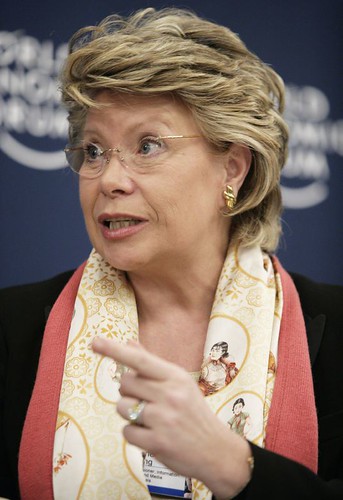
This week Justice and Citizenship Commissioner Vivane Reding and Internal Market Commissioner Michel Barnier unveiled a new bundle of consumer protection mesures, and the main message seemed to be, "Please, love us!" But Reding seems determined that this raft of new rules, coupled with the introduction of a new 'Single Market Act', will be accompanied by an assertive communication campaign that will try to make sure EU citizens know that these new benefits and protections are coming from Brussels.

Thursday, 5 November 2009

France: ‘Autistic’ Tories will Castrate UK

One could argue that there’s perhaps no better vote-getter for the Tories than having the French call them names, but the rather un-PC reaction from the continent to David Cameron’s speech yesterday deserves more that just a bemused reaction in Britain. It’s a reflection of how deeply concerned the continent is about a future Tory government.

I was at a conference in Copenhagen on Tuesday when the news broke that Czech President Vaclav Klaus had finally signed the Lisbon Treaty, following a Czech court ruling that the treaty did not violate Czech sovereignty. As soon as someone announced the news the room broke into applause – which is significant because this was an industry conference, not a gathering of EU policy-makers.

The capitulation by the Czech president meant that UK conservative leader David Cameron would have to abandon his crusade to put the treaty to a public referendum in the UK. He had made a “cast-iron” guarantee that the Tories would offer the British public a referendum on the document if the Tories were elected, but he had never addressed what he would do if the treaty went into effect before the Tories came into power. On Wednesday Cameron hastily arranged a speech acknowledging the obvious: now that the treaty has been ratified it is no longer a treaty, but EU law – making a referendum at this point essentially meaningless. At the same time he said he would work to "unravel" much of the treaty through negotiations over the coming years and would seek new "opt-outs" for Britain from EU policy.

In fact, a ‘no’ vote on the treaty would at this point mean a ‘no’ vote to the EU, and the implication of such a result would be that Britain must exit the union – something Cameron knows would be a disaster for the UK. His decision to abandon his plans for a referendum is less an active policy choice that an acknowledgement of reality.


The reaction to Cameron’s speech in the British press has been strangely schizophrenic. The right-leaning papers have focused on Cameron’s “capitulation to Europe” and a supposed “abandonment” of the Eurosceptic wing of the party. The Telegraph ran this headline yesterday: “David Cameron tells Eurosceptics: get over it,” followed by an interpretation that Cameron has rejected the Tory Eurosceptics by putting Europe low on the agenda. They point to the resignation of the two most rabidly anti-Europe MEPs, Daniel Hannon and Roger Helmer, from their front-bench positions in protest over Cameron’s decision.

On the other hand the left-leaning papers have focused on the nonsensical nature of Cameron’s speech yesterday, highlighting the fact that Cameron is still being antagonistic toward Europe yet he is not being clear in exactly what he wants from it. They point out that the UK already has many of the opt-outs Cameron said he would ask for in the coming years, including not being part of the Charter of Fundamental Rights (Brown already negotiated a UK opt-out to that part of the treaty). And they have recounted the baffled reaction of many leaders on the continent to the content of Cameron’s speech. Cameron’s promise to renegotiate employment law is almost laughably absurd, the continental politicians said, considering there is almost no chance Britain's European partners would approve an opt-out as it would be seen as giving the UK an unfair advantage in attracting foreign investment. And his promise that “never again” would a treaty pass without a public referendum in Britain is an empty gesture considering the Commission has already said it will not attempt any further institutional reform for at least a decade and probably much longer.

But it was the furious reaction from the French government to Cameron’s speech which the left-leaning papers focused on the most. In a stunning abandonment of diplomatic niceties, France’s Europe Minister Pierre Lellouche came out with a remarkable condemnation of the Tories, saying he was conveying French President Nicolas Sarkozy’s “sadness and regret” over the path Cameron has chosen to take. Lellouche told the Guardian:

"It's pathetic. It's just very sad to see Britain, so important in Europe, just cutting itself out from the rest and disappearing from the radar map …. This is a culture of opposition…I have told William Hague: go away for two to three years, in your political economic situation you're going to be all by your self and you'll come back. Go ahead and do it. That is my message to them … You want to be marginalised? Well, you go for it. But it's a waste of time for all of us.”
The minister’s comments reflect the depth of the anger felt by Europe’s Conservative parties at Cameron’s decision to take the Tories out of the main centre-right European party, the European People’s Party, to form a new “anti-federalist” party in alliance with hard-right parties from Eastern Europe. Lellouche said Cameron’s decision had “castrated” British influence in the parliament, and his continued antagonism toward the EU – saying the same thing over and over but not expressing any coherent question or demand – seemed like “a very bizarre sense of autism”.

The comments were particularly surprising considering that Lellouche is one of the most Anglophile members of Sarkozy’s government. It should be kept in mind that these unusually harsh diplomatic words are not coming from socialist governments on the continent, they are coming from fellow conservatives.

Despite the very different coverage of the issues from the different British papers, it is actually really heartening to see Europe being discussed so much in the British media this week. Though Cameron seems to be trying his best to get rid of Europe as a campaign issue, it would probably be the best thing for the UK if Europe were made a central part of next year’s campaign. Labour certainly has every interest in bringing it up as much as possible, considering it has historically been an issue that has caused civil wars within the Conservative Party, and Labour will be eager to exploit lingering fears and doubts the public has about the Tories’ ability to govern.

But more importantly, having Europe as a major issue of the campaign could mean that Britain will finally get the frank, honest Europe discussion it has never had. If the Tories want to unravel the European project then they need to present to the British public what their alternative vision is for the UK to be a relevant part of the 21st century. So far the discussion of the EU in the UK has focused on silly euromyths about the length of vegetables rather than a real education on what the EU does and that its purpose is to make Europe a relevant, strong global player in the 21st century. That discussion has never been had here because most politicians dance around the central truth regarding the necessity of Britain’s EU membership: the UK is no longer a world power and it faces a future of marginalisation and irrelevance if it tries to go it alone. As Lellouche said Wednesday:

"It is a time of tumultuous waters all around us. Wars, terrorism, proliferation, Afghanistan, energy with Russia, massive immigration, economic crisis. It is time when the destiny of Europe is being defined – whether or not we will exist as a third of the world's GDP capable of fighting it out on climate, on trade, on every … issue on the surface of the Earth. We need to be united, otherwise we will be wiped out and marginalised. None of us can do it alone. Whether you're big or small, the lesson is the same. And [Britain's] risk is one of marginalisation. Irrelevance."
It remains to be seen whether similiarly outraged words will be publicly expressed from Europe’s other conservative governments in Germany, Italy, Sweden and Denmark – but such views have already been expressed privately by Conservatives from all corners of Europe. Angela Merkel is reportedly refusing to even meet with Cameron, and joint policy groups between Germany’s CDU and the Tories have been cancelled.

If the Tories are elected next spring it would mean that all three major EU countries will have Conservative governments. Yet far from being an ideologically unified block that could plow through badly-needed reforms in Europe’s social model, there will be a huge chasm between the continent and Britain as a result of Cameron’s decisions.

Tuesday, 27 October 2009

Miliband: UK Must Drop the 'Hubris and Nostalgia'

UK Foreign Secretary David Miliband delivered a stunningly pro-European speech yesterday, laying out a plea for the UK to stop being “lost in hubris, nostalgia or xenophobia” and instead become a leader within the EU.

It was probably the most pro-Europe speech from a British politician in two decades, and was a dramatic departure from New Labour’s characteristic avoidance of the Europe issue. It was an almost shockingly honest levelling with the British public – thee hallmark of a politician on the way out (He’s probably already accepted the fact that Labour will lose the UK general election next year). Today the British press was speculating over whether the speech was an audition for the newly created position of EU Foreign Minister, for which Miliband’s name has been circulating as an idea should Tony Blair not be nominated as the new President of the European Council.

Miliband made a clear case for why it is in the UK’s national interest to be part of a strong EU. It is a given that the 21st century will be dominated by two superpowers: China and the United States. Miliband stressed that the UK would be lost and forgotten in this new world if it tried to go it alone, but a strong EU would be an important, equal competitor/partner with these two. Speaking in London, he said:

“The choice for Europe is simple. Get our act together and make the EU a leader on the world stage, or become spectators in a G2 world shaped by the US and China. I think the choice for the UK is also simply stated: we can lead a strong European foreign policy or – lost in hubris, nostalgia or xenophobia – watch our influence in the world wane.”

There was no talk of “red lines” or the ‘us-versus-them’ rhetoric that has dominated the Europe discussion in the UK. There was also no glorification of the largely imaginary “special relationship” between the UK and US as an alternative to European integration, in fact there was an acknowledgement that the current US administration would prefer the UK to be more cooperative with its EU partners.

Miliband also called out the Tories on the false promise they have been offering the British public - that it is possible for the UK to ‘go it alone’ without the EU and still be prosperous. Miliband implied that Tory leader David Cameron knows full well that a British ‘divorce’ from the EU is not only unwise, it is also realistically impossible.

"The truth is that there is a deception here at the heart of [the Conservative’s] policy – a deception of the country that you can hate Europe as it exists today and remain central to European policy making,"

A Tough Sell

Some of the British press reaction today to Miliband’s speech has been hostile. It is, after all, a tough pill for the Brits to swallow. I don’t begrudge the British for being resistant to the idea of giving up some national sovereignty. It’s natural for any area or group to want to be completely independent – especially since the advent of the nation state in the 19th century. The question is whether complete independence is feasible or productive. In theory, I would love the idea of having an independent New England, my home region in the US. I don’t feel much of an affinity with vast swathes of America, especially the South, and I instinctively like the idea of New England not having to be linked with them, instead being allowed to set up its own national laws. But I also recognize that there are practical benefits to being part of a large union, and that New England would not be a very relevant or wealthy power all by itself.

What the British public don’t seem to realise is that this isn’t a choice – it’s a necessity. It’s not an option for Britain to maintain its current standing in the world alone – it currently punches too far above its weight now as a result of being a former great power, but it will lose its relevance (including the inevitable loss of its seat on the UN Security Council) in a century dominated by the US and China. At the same time, relying on the so-called “special relationship” (a term I’ve never heard used in the US) is no longer an option either. Barack Obama has signalled that the US no longer sees the UK as a significant partner separate from Europe, and he would actually prefer that the UK work fully as part of the EU and stop obsessing over its relationship with the US.

And as The Independent’s Mary Dejevsky notes today, the “special relationship” was always a one-way ‘vassal state’ arrangement, and it no longer makes sense for either party in the 21st century. “Identifying our national interests so closely with those of the United States placed us in the demeaning position of having to change our foreign policy whenever the US elected a new administration, even though our own government was the same,” she writes.

If the UK wants to be a relevant, important country going forward it has only one option – to be a big player in a cohesive, strong EU. As foreign secretary, David Miliband understands this. Yet he has been the only Foreign Secretary in living memory with the courage to say it.
Of course Miliband’s words would be more encouraging were he not about to be ousted from power by British voters next year. If polling data is to believe the Brits will vote in a new government that is the most Eurosceptic of any since the UK joined the EU. As Dejevsky notes, Cameron is swimming against the tide of history, his only European allies on the margins.

Still, there is reason to believe that Cameron’s anti-Europe rhetoric is only a show, a cheap populist pantomime in order to win votes before settling into a more real politik stance once he gets into office. Who knows, the future could follow the old ‘Only Nixon could go to China’ rule and Cameron could end up being far more cooperative with Europe than Labour was. I attended a policy talk in Brussels back in March where economist Simon Titley was actually predicting that it would be the Tories who will introduce the euro in the UK.

Perhaps this is just wishful thinking on the continent. The fact is nobody knows what Cameron will do in regards to Europe, but if his actions match his campaigning rhetoric then the UK is in trouble. New Labour may not have been very courageous or honest with its Europe stance so far, but as the saying goes, perhaps its better the devil you know.

Monday, 5 October 2009

Ireland Rejects British Influence

As news breaks that the UK will soon be shut out of a new G4 group of major economies and could lose its seat on the board of the IMF, the bizarre reaction to the Irish referendum by much of the British press continues to look more and more out of touch with the realities of the modern world.

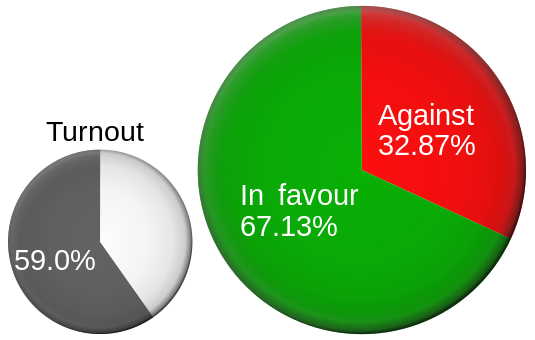
Europe-wide ratification of the Lisbon Treaty is imminent following Ireland’s massive endorsement of the EU reform agreement with a ‘yes’ vote of 67%. It looks as if Czech President Vaclav Klaus has lost his nerve and is ready to end his grandstanding talk of refusing to sign the ratification passed by the Czech parliament – a move which would have been constitutionally questionable anyway. So barring any unforeseen complications, it looks like this long effort to reform the EU to something more appropriate for its current size has been completed.

If the British media is to be believed, after rejecting the treaty in the first referendum in June 2008 Ireland voted yes this time around out of fear. Terrified by their vulnerability in the global economic downturn, the British narrative goes, the Irish have allowed themselves to be bullied into accepting dominance by Brussels, having lost confidence in their own ability to govern themselves. Under this narrative, the Irish made a courageous choice in the 2008 referendum when the treaty was, as the British press frequently puts it, “resoundingly defeated” (never mind the fact that the 2008 ‘no’ vote actually just squeaked by with 53%). Apparently in 2008 a slight majority indicated massive popular will by courageous people against an oppressive super-state, but in 2009 a large majority is the illegitimate result of misguided voters swayed by fear and intimidation. The Irish, it would seem, are only right when they agree with the British.

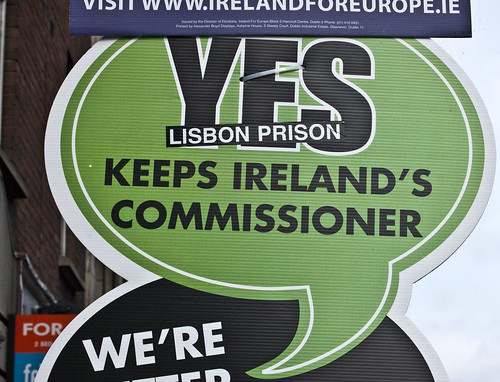
What is never mentioned in the British press is that after the June 2008 result Ireland has been given a basket of concessions and guarantees – the most significant being that the proposal to shrink the size of the European Commission from 27 commissioners to a more manageable size of around 20 has been abandoned. Under existing treaties each country is guaranteed a commissioner in the EC – even though commissioners are not supposed to represent national interests but rather fulfil a specific role of expertise such as trade, environment or energy. The large number of new member states that have joined in the past 10 years has meant there is now an excessive number of commissioners, with new remits for them being invented such as “Commissioner for Information Society and Media” and “Commissioner for Multilingualism”.

However even though it is supposed to be irrelevant which countries these commissioners come from that does not always prove true in practice, and the Lisbon solution to rotate a certain number of Commission seats between the small member states had caused some concern. There was a lot of misinformation spread in the 2008 ‘no’ campaign in Ireland, but this issue was one of the verifiable legitimate concerns that the ‘no’ campaign had – fearing the treaty would lessen the influence of small states in the EU’s executive body. So they won this concession, there will remain 27 commissioners.

While it is true that the actual text of the treaty has not changed (doing so would have required re-ratification by all 27 states and would have held up passage by another five years) the Irish have been given binding guarantees that these changes will be inserted at the time of the next Europe-wide ratification issue, likely the accession of Iceland and Croatia.

The British press also doesn’t mention that this time around there was a much more extensive education campaign on what is actually contained in the treaty – a response to the fact that the exit polling in the 2008 referendum revealed that the most frequently cited reason for voting ‘no’ was a lack of information on what the treaty is. Turnout this time around was also about 10% higher than before.

The British roots of the ‘no’ campaign were also more exposed this time around, making the claim that a ‘no’ vote was a vote for the spirit of dead Irish republicans seem laughable. As the Guardian pointed out in an article last week before the vote, the ‘no’ campaign was full of Brits who flew over to urge a rejection of the treaty, led by Tory lobbyists and Rupert Murdoch’s newspapers. All this prompted fears that a ‘no’ vote would result in what Irish Labour leader Eamon Gilmore called a “two-speed Europe” where there would be “a mainland Europe and the British Isles, where we fall under the influence of Britain." So much for a ‘no’ vote honouring the dead Republicans who fought against the British.

The Tories’ Eurochaos

The ‘yes’ vote was exceedingly bad timing for British Conservative leader David Cameron, as it means the Conservative Party conference this week will be dominated by the ‘Europe issue’, a quagmire that continues to cause rifts between different factions of the party. Cameron had promised to hold a referendum on the treaty in the UK if it remained unpassed by the time they (most likely) come into power next April. However now it looks like the treaty’s changes will be adopted by the EU by the end of the year – and the British parliament already ratified the treaty.

The Eurosceptic wing of the Conservative party is demanding that Cameron hold a referendum on the treaty anyway, asking the public whether Britain should retroactively pull out of a treaty it already signed and which has already gone into effect. The problem is this would not only be illegal under international law, it would also be impossible. If Cameron were to hold such a referendum and the result is ‘no’ (which is the position he has advocated), there is no longer a ‘treaty’ to vote on, the treaty has become the EU. So at that stage, a ‘no’ vote on the Treaty would be a ‘no’ vote on the EU, and the British would have to secede from the union.

This is not an issue Cameron wants to put to a referendum, as the risks of a ‘no’ vote would be too great. Britain pulling out of the EU, as I’ve written about before, would mean it would have to completely renegotiate almost all of its international treaties in trade, labour and markets. It would very likely cause an immediate collapse in the pound, and investors would flee the UK like rats fleeing a sinking ship.

So Cameron has an uncomfortable reality to deal with this week. Trying to throw a bone to the Eurosceptic wing, he has hinted ahead of the conference that the Tories will launch a “public consultation” instead of a referendum, with the aim of moving significant powers away from Brussels and back to Westminster. Party insiders are saying he will announce this week an intention to “repatriate” powers involving social powers, employment and justice to a national level. Of course what he effectively would be asking for are more UK opt-outs, which would be almost impossible to attain retroactively, requiring the approval of all 27 member states. Many of those member states would surely question why the UK deserves special treatment, and would laugh any Tory who demanded such a concession out of the room. Considering Cameron has already enraged the French and German conservative governments by leaving the mainstream centre-right EPP grouping in the European Parliament to form a new alliance with the Eastern European hard right, he has few friends in Brussels or other Western European capitals these days.
UK Shut Out of World Bodies

All of this Tory talk seems particularly incongruous with reality considering that just this weekend it emerged that, following the death of the G8, the US is planning to form a new G4 group of the world’s leading economies that will not include the UK. The new group would be composed of the US, China, Japan and the Eurozone. The Eurozone, remember, does not include the UK because it does not use the Euro currency. Alistair Darling has reportedly been begging for the new group to instead include all of the EU rather than the Eurozone, but US officials have reportedly rebuffed this request saying that the member needs to be able to control a unified monetary policy. The news comes at the same time that Britain is fighting to maintain its seat on the board of the International Monetary Fund.

It was amusing to see the Daily Mail try to spin this as Gordon Brown’s fault, rather than the fault of the isolationist impulse the Daily Mail and papers like it have championed over the past two decades. The fact that it is inevitable that the UK by itself will not be able to justify its seat on these international bodies in the 21st century seems to be lost on them. The paper declines to mention the fact that were the UK on the euro, it would have a seat on this new G4 body and could maintain a board seat in the IMF. Nor does it mention that France and Italy are also in the same boat now that the G8 is being dissolved, yet they will have a major place in the G4 and IMF because they are part of the Eurozone. The comments below the story would be hilarious if they weren’t so jaw-droppingly ignorant, with each commenter deciding that this news is somehow evidence that the UK should leave the EU. Come again?

It will be interesting to see how the ‘Europe issue’ is handled at this week’s Conservative Party conference. Considering Cameron’s populist tendencies, he could probably just get up on the podium and say ‘Europe’ and have the whole hall boo and jeer in order to have a successful day. But Cameron’s crowd-pleasing rhetoric on Europe is on a collision coarse with reality. His recent defection from the EPP is probably but a first instance of this.

Hopefully, Europe can now put this treaty nonsense behind it and focus on more important things, getting on to the real work of guiding the continent through the economic recovery and leading the world in the effort to combat climate change. That is, if the Tories can let a sleeping dog lie.

Tuesday, 8 September 2009

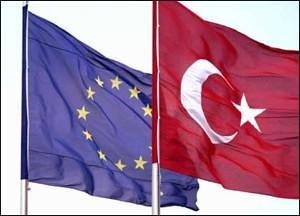
Should Turkey Join the EU?

Yesterday’s much-anticipated report from a high-level commission blasting Brussels for its handling of the Turkey accession issue was predictable in many ways. It was perhaps even a little tiresome in the way it relied so heavily on the oft-repeated claim that racism and xenophobia are what drive opposition to Turkey’s membership. But even more predictable still was the very different way the British and continental media covered the report.

The Independent Commission on Turkey’s denunciation of Brussels’ foot-dragging was a headline-generator in the British media. Yet it received scant attention on the continent - even in France, the country which took the most punches in the document. Google news English finds 30 stories about the report, while Google News French finds only three working links (one of which is actually a blog). France24, Le Monde, and Le Figaro all seem to have ignored the news. Perhaps not surprising considering the continental powers are opposed to Turkey’s membership, while the UK is in favour. Those national media outlets on the continent that did cover it took a very different angle than their British counterparts, proving much more sceptical of the report’s conclusions.

The commission condemns the EU for delaying accession talks with Turkey, saying it is violating its previous promises that Turkey will eventually become a member while many (perhaps most) in Brussels have no intention of ever seeing this become a reality, preferring to string Turkey along in order to make it friendly to EU interests and more inclined to push through pro-Western reforms at home. The report accuses national political leaders (read: Sarkozy) for coming out strongly against Turkey’s membership in order to exploit domestic concerns about immigration, job security and Islam. It even goes so far as to say that this contradiction between what the EU had previously publicly avowed in the 1990’s and what its national leaders are saying today “put in question EU credibility, reliability and the principle…that agreements are to be honoured.”

To an outsider it might seem bizarre that the traditionally euroskeptic UK would be the one pushing most vocally for Turkey to enter the EU. Indeed, in the British media the issue is often presented as a no-brainer. Of course Turkey should enter the EU, people here seem to think. Any efforts to keep them out, according to the Brits, are just due to continental (read: French) racism and Islamophobia.

So it isn’t surprising that I find most people here are a bit confused about the debate, and some of the larger issues involved. So, I thought I’d make a little Q&A based on some of the questions someone was asking me last night. Whether or not Turkey should join is a very complex issue that essentially goes to the heart of the larger question about what the EU should be – a federal union or a free trade zone. Countries have therefore split on Turkey’s accession based on their feelings about European federalism – the idea that the EU should have supranational power in areas outside of trade. The fact is that the day Turkey joins the EU is the day the dream of a federal Europe is over. A federal Europe is simply not possible in a union with Turkey as a member.

Questions? Shoot.

Is Turkey part of Europe?


A very small part of Turkey (about 5%) is geographically within what has historically been considered Europe. Of course, the issue gets a little tricky because unlike its ocean border to the west, Europe’s eastern border is not as clearly defined (owing to the fact that geologically speaking it is more accurately part of a larger Eurasian continent). But the traditional border has been understood to run from the Mediterranean and Aegean, through the Dardanelles and the Bosporus straight, across the Black Sea, and North along the Ural mountains in Russia. This makes Turkey and Russia the only two countries straddling the two continents of Europe and Asia. However the 10% of Turkey that lies in Europe is relatively sparsely populated because it is not very hospitable terrain.

Some argue that because the Ottoman Empire (Turkey’s progenitor) at one time controlled all of the Balkans up to Vienna, it is culturally part of Europe. However this is a tenuous claim because if such logic were applied across the board the states of North Africa should also be invited to join, as their progenitors once controlled Spain. Historically speaking it would have been a tough sell to convince the Austrian emperor (or anyone else in 15th century Europe for that matter) that the Ottomans were “European”. The successful defence of Vienna which halted the Ottoman advance into Western Europe gave the city the nickname as the ‘savior of Europe’ at the time. Their motivations may have been racist or religionist, but there can be no doubt that during the Ottoman Empire’s many centuries of existence, few in Europe would have considered the Turks to be “European”.

Additionally, the Ottomans never took much of an interest in actively governing their Balkan or Greek territories, preferring to leave the actual administration to local rulers. They were much more preoccupied with their Middle Eastern and North African territories, which constituted the majority of the empire.

As a secular nation, isn’t Turkey more linked to Europe than to the Middle East?

It is true that the Turkish state founded by Ataturk is rabidly secular, but unlike in Europe, that secularism has had to be enforced through repression and authoritarianism. To this day religious practice is heavily restricted in Turkish public life by law. Ataturk and his successors have considered this necessary because there is a significant amount of the country that is fervently religious, which the ruling class (mainly the military) fears. The rural population is growing increasingly religious with time, following the revival of Islam that has occurred across the Middle East in the past two decades. The recent success of the openly Islamic AKP party demonstrated how much more powerful Islam is becoming as a political force in the country. The fact that secularism has always hung by a thread in Turkey and has had to be guarded by authoritarian means reflects the fact that Turkish secularism does not even resemble the secularism of Europe, which has arisen naturally among the population and not been enforced by the state.

Turkey is the only stable Muslim democracy in the Middle East. Wouldn’t it integrate seamlessly into the EU?

To hear the proponents of Turkey’s accession talk, you would think Turkey was some kind of earthly paradise of humanism and democracy. But while it is true that Turkey is a democracy, it is anything but stable, particularly at the moment. The country is still involved in two ongoing conflicts, one against Kurdish separatists in the East and the other in the Turkish occupation zone of Cyprus to the west, both still unresolved issues. And just this week Turkey took the first move to establish diplomatic ties with its neighbour Armenia for the first time. That tension is unlikely to be resolved any time soon because Turkey still refuses to acknowledge the genocide of ethnic Armenians that took place during World War I.

Turkey doesn’t just have instability in its foreign relations. Its domestic politics are teetering on a wire at the moment as well. With the Islamist AKP taking civilian power in 2007, there is a constant risk of the army staging a coup to preserve Turkey’s secularist code. In the mean time the country maintains one of the Western World’s most authoritarian regimes in the area of human rights. Press freedom is still severely limited in Turkey, where it is still a crime to insult “Turkishness”. Just yesterday Turkey decided it would be the only country in Europe to refuse to sign a resolution in support of a jailed reporter in Kazakhstan, because it contained a provision which stated that journalists, “should be free to report on all issues of interest to the public, including commentary on how the state is run.” Turkey of course couldn’t sign it, because it can technically be a crime in Turkey to criticize how the state is run.

But the EU is taking in Eastern European countries that also have corruption and human rights problems, but who happen to be Christian. Isn’t this hypocrisy?


It is true that the EU took on the countries of Romania and Bulgaria in 2007 despite complicated corruption problems, with an eye to providing support and guidance to those countries to help them transition to being transparent and stable democracies. This has been referred to as the “transformative” strategy of EU enlargement and has been very controversial as an idea in and of itself, especially now that the appetite for enlargement has waned. But though Sarkozy and other opponents of Turkish entry have said that enlargement should stop for now, they have held the door open for Croatia, Serbia, Bosnia, Macedonia and Albania (a Muslim country, by the way) to join eventually. Obviously, these are countries with some fairly significant, and recent, problems.

But there is one key difference between all of these post-communist countries and Turkey, and it’s not just that they are Christian or all indisputably in Europe. They also all have very small populations. They are therefore more easily manageable for an EU that is taking on a “transformative” role. Additionally, these countries’ entry would not make a big demographic difference to the EU.

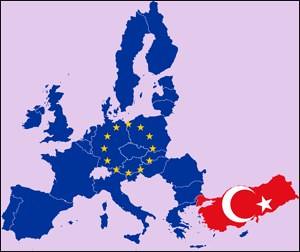
Turkey, on the other hand, has a population of 75 million, larger than either Britain or France. If it entered the EU it would become the second biggest member of the block. And given that Turkey’s population is expected to reach 85 million or more by 2020, by the time it could feasibly enter it would probably be the largest member and have the largest voting block in all decisions of the European Parliament.

So this isn’t just a question of saying, “Oh well, it’s Europe-ish, they respect human rights ok I guess, sure let them in, why not?” Turkey’s entry would fundamentally change the nature of the union itself, leading to the bizarre situation where the most powerful country in the EU has only 5% of its territory actually in Europe! There’s no way the rest of the EU member states would accept that scenario in a federal Europe, therefore Turkey’s entry into the EU would mean a federal EU is an impossibility, and it would have to be scaled back to be just a free trade zone like NAFTA. Of course, British Euroskeptics would like nothing more than to see this happen.

So when I see the British media go on and on about how Germany and France’s objection to Turkish entry is motivated by racism and Islamophobia, I’m left rather perplexed. If the Independent Commission on Turkey was being a bit more intellectually honest, they really should have pinned more of the blame for the EU’s Turkey double-speak on the British, who are really the ones stringing the Turks along. Using Turkish entry as a backhanded way of changing the EU is hardly a fair thing to do to Turkey, considering that they are promising them membership in a union that would cease to exist as a result of their very entry.

The commission is right about one thing – Brussels needs to stop stringing Turkey along and give them a firm yes or no. But it is wrong in concluding that the recent vocal objection to Turkey’s entry is some kind of populist political ploy by national leaders. It is a legitimate concern and goes to the very heart of what the EU is meant to be. And in that way, this debate really had very little to do with Turkey and much more to do with the conflict between federalists and euroskeptics. And until that conflict is resolved, it is likely Turkey will continue to be unfairly strung along.