Showing posts with label Eurovision. Show all posts

Sunday, 20 August 2017

Eurovision imperialism?

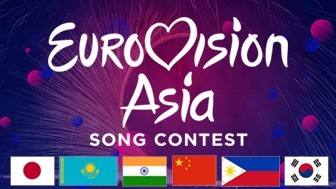
Eurovision Asia is coming. Get ready for the battle of the song contests, as the European Broadcasting Union tries to head off global upstarts.

The Eurovision Song Contest has come a long way since it was established as a small project between Western European countries in 1956. 

Since the contest was extended to post-Communist countries in the 1990s, it has grown to become the most-watched non-sporting live television event in the world. Last year it attracted 204 million viewers, achieving an audience share of 36.3% across the markets in which it aired. That means that 1/3 of the people watching television on that night were watching Eurovision. That's more people than watch the Oscars or the Superbowl. In fact, it's only beaten by the World Cup.

Compare this to the 1990s, when the struggling song contest was weighed down by a French-imposed rule that countries could only sing in their national language and with a live orchestra. Viewing figures averaged around 50 million.

All of this has opened the question of what the contest should do with the increasing global success of its brand. This week, the European Broadcasting Union, the association of broadcasters that organizes the conference, announced the launch of Eurovision Asia. It will use the Eurovision format but for Asia Pacific countries. The official website was launched on Friday - EurovisionAsia.tv

Monday, 15 May 2017

In Eurovision, as in politics, the people wanted an outsider

At a time when the public is voting for political leaders who say they are from 'outside the system', Portugal's surprise Eurovision win shows entertainment is not immune to this trend.

When Salvador Sobral took the microphone to accept his victory in the Eurovision Song Contest in Kiev on Saturday night, it went a little differently than people might have expected.

Such speeches are usually filled with breathless platitudes, with artists thanking the fans and talking about how great the song contest is. But Sobral is not your usual Eurovision winner. He used the occasion to rail against "disposable" pop music in general - taking a few cryptic swipes at the song contest he had just won. His was "a victory for music and for people who make music that actually means something."

Given the political events of the past year, it all gave me a sense of deja vu.

Tuesday, 9 May 2017

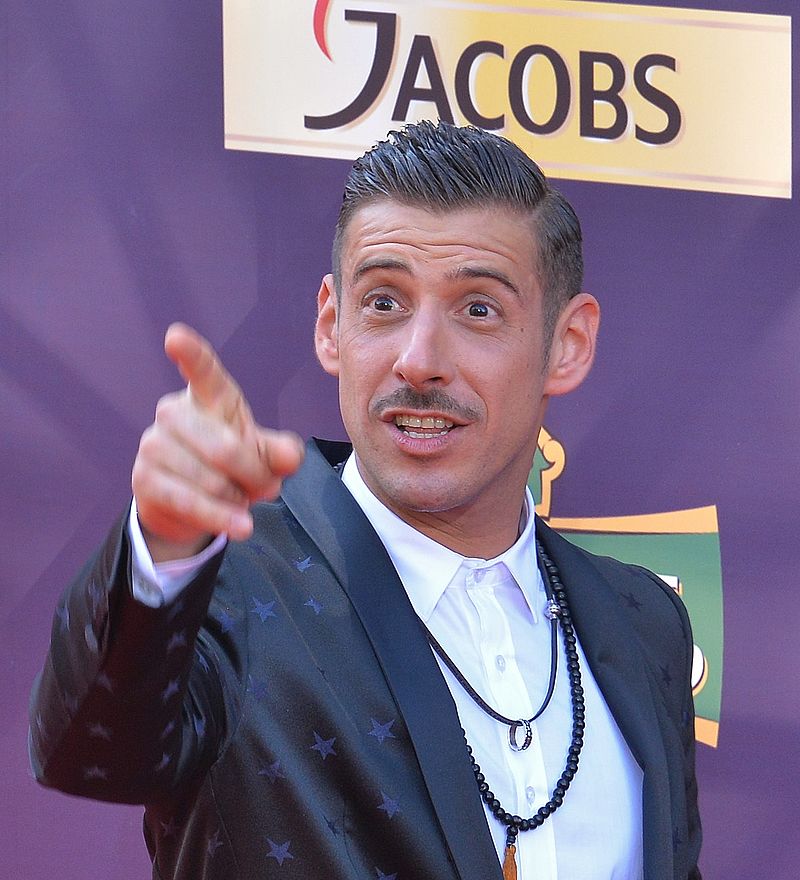
Italy should win Eurovision 2017, but it won't

Bookies think Francesco Gabbani is the man to bring Eurovision back to Rome for the first time since Italy won with a song about the EU in 1990. But language and performance issues present high hurdles.

With the defeat of far-right nationalist Marine Le Pen in Sunday's French election, Europe breathed a sigh of relief. It's no time to relax just yet, but at least for the rest of the week the continent can turn to more fun diversions. And on that note - Sunday also marked the start of Eurovision week.

Of course, the Eurovision Song Contest isn't the same politics-free distraction it once was. This year's competition is in Kiev, following Ukraine's shock win last year with an unabashedly anti-Russian song. After a viciously clever trap set my Moscow, Russia has pulled out of the 2017 contest. Their absence will be keenly felt this week.

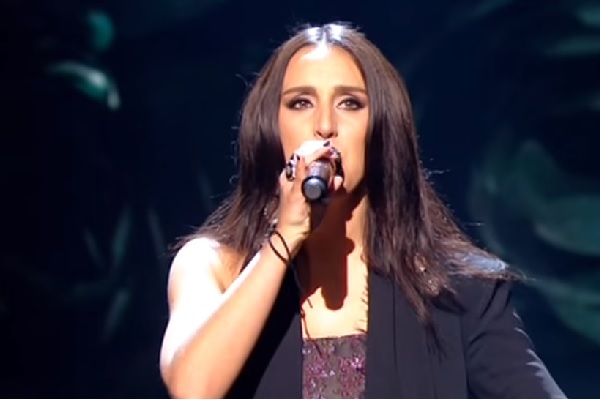
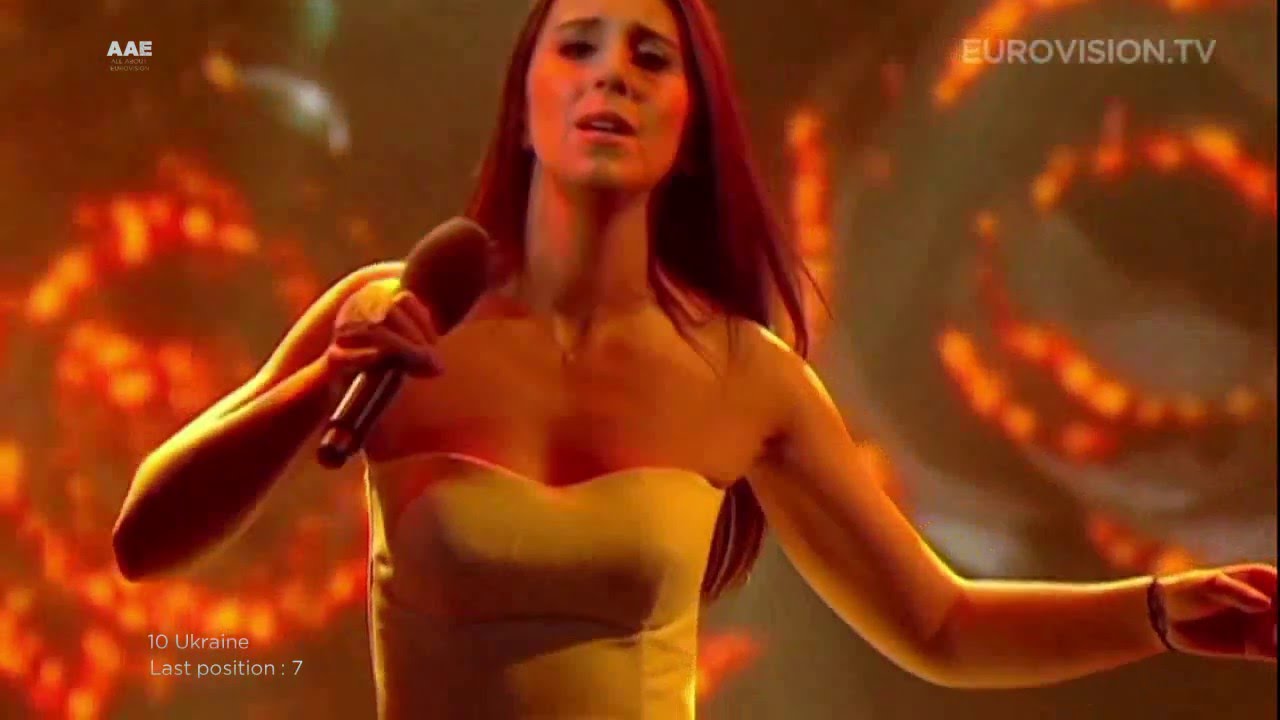
Every year, countries try to emulate the previous year's winner. 2017 has been no exception. To match Jamala's haunting winning song about the Soviet genocide and deportation of Crimean Tatars, we have a whole crop of dark, brooding songs this year about serious subjects. But none match the emotional intensity of Jamala's performance last year.

Friday, 14 April 2017

It's official - Russia has pulled out of Eurovision

For the first time since the country entered the song contest in 1994, Russia will not broadcast the event. Will they ever come back? Or will they launch their own 'illiberal' Eurovision alternative?

After weeks of protracted negotiations, the organiser of the Eurovision Song Contest announced the news everyone expected: Russia will not participate in this year's competition.

The big question now becomes - will they ever come back?

Eurovision is hugely popular in Russia, and the loss of this significant audience is a big blow to the European Broadcasting Union, the coalition of national broadcasters that stages the contest. What is terrifying for the EBU is the prospect that Russia will now permanently pull out of the contest. 

Russian politicians have been calling for it to do so for years, ever since a bearded drag queen named Conchita Wurst won for Austria in 2014. One Russian MP said the contest had become 'a celebration of perversion', and said Moscow should revive the old Cold War alternative, Intervision, as a family-friendly alternative.

Wednesday, 22 March 2017

Russia just won the Eurovision propaganda war

Ukraine’s decision to ban Russia's Eurovision contestant from entering the country makes Kiev look like the bad guy. Once again, Moscow has outmaneuvered its enemies.

Eurovision, the annual contest in which European nations compete against one another to produce the best song, has been no stranger to political controversies over its 60 years. But nothing compares to what is now unfolding in Kiev.

This year, the song contest has become entangled in today's most controversial and beguiling geopolitical conflict - Russia's 2014 invasion and annexation of Crimea.

The stage was set last May, when Ukrainian contestant Jamala scored a shock win in the 2016 contest with a song about Crimea. It wasn't explicitly about the current conflict. Instead, it was an emotionally intense song about the Soviet Union's mass deportations of Crimean Tatars to Siberia in 1944.

Sunday, 15 May 2016

Will Russia quit Eurovision next year?

A song about Russian-orchestrated genocide in Crimea has won Eurovision. This is more serious than you think.

In 2014, Russia was the unnamed enemy at the Eurovision Song Contest.

Ostensibly, the competition had nothing to do with Moscow. The shock winner was Conchita Wurst, a bearded drag queen from Austria who sang a song about overcoming adversity. All well and good. But the context behind the win was that Russian politicians and media had waged a campaign to discredit her - as a degenerate, and a symbol of a weak, effeminate West.

It backfired.

Austria won in 2014 - largely because of public voting from former Soviet satellite states. The juries of music experts - which count for 50% of the vote - voted overwhelmingly against her in Eastern Europe. But the public in Eastern Europe (the other 50% of the vote) voted for her. Because in the weeks before the concert, she had come to represent an anti-Russian stance (whether she meant to or not).

Monday, 9 May 2016

Ukraine's unabashedly anti-Russian Eurovision song

As tensions between Russia and the West continue, Ukraine fields an entry about the Soviet Union's horrific mass deportations in Crimea. How did it get past the censors?

In 2009, as the war between Georgia and Russia raged on, Georgian public broadcaster GPB tried to pull a fast one on the Eurovision censors.

They fielded a song called "We Don't Wanna Put In", a disco anthem ostensibly about not wanting to stop dancing. The Eurovision organisers weren't having it. Songs with political themes are not allowed in the contest.

The title of the song, and it's main chorus, did not grammatically make sense in English. Though this could be said about a lot of Eurovision entries, this one was clearly meant to be "We don't want a Putin". 

Friday, 6 May 2016

English has taken over Eurovision

Only three out of the 42 entries in this year's Eurovision Song Contest will not be sung in English - a new record. And maybe that's not a bad thing.

When the Eurovision Song Contest began in 1956, organisers had not thought to specify any policy for what language the acts could sing in. It was just assumed that each country would sing in their own language.

That changed in 1965, when Sweden showed up to the contest with an entry in English. France was not amused. They convinced the Geneva-based European Broadcasting Union, which runs the contest, to impose a rule requiring each country's entry to be in an official language of that country. Otherwise, they argued, English would erode the contest's cultural legitimacy.

Sunday, 24 May 2015

Why I love Eurovision

Having only discovered the song contest in 2007, I don't have the same preconceptions as Europeans.

I headed back to Brussels after a great weekend in Vienna for the Eurovision Song Contest Final. It was my fourth time attending the show and this time was undoubtedly the best.


Vienna went all out, decking out the whole city and setting up not one, but two Euroclubs for fans. The organisation was smooth (more than I can say for Copenhagen and Dusseldorf). I was there as press and was very lucky to be given a VIP ticket, so I had an amazing view. Maybe that explains my effusive praise for Vienna's hosting, but it really was objectively very good. A shame that they were rewarded by the public with nul points! Austria really didn't deserve that.

Thursday, 21 May 2015

I'm settling in Schöneberg

After some flirtation with the East, I've decided that my first home in Berlin will be in the West.

It's been an intense few days of apartment-hunting here in Berlin. By this afternoon I had it narrowed-down to two places - a two-month sublet in Prenzlauerberg, or a 7-month lease in Kreuzberg.


Neither apartment really thrilled me. The one in Prenzlauerberg was a bit short for the lease period, and it felt very far away. While walking around the neighbourhood, I couldn't shake the feeling that it was the Berlin equivalent of Park Slope in Brooklyn. There were a tonne of children, everywhere. It apparently has the highest concentration of children of any location in Germany. It was nice, but didn't really excite me.

Thursday, 23 May 2013

UKIP voters demand referendum...on Eurovision

As the EU referendum debate has heated up in Britain over the past several months, the UK-based polling agency YouGov has conducted periodic surveys asking the voting public whether they want an in-out referendum, and how they would vote in it.

In this week's survey, they threw an additional query into the mix – asking the same question but replacing the ‘European Union' with the ‘Eurovision Song Contest'. The result is rather revealing.
The survey shows that if a referendum on Eurovision were held, the UK's voters would vote to leave the song contest, with only 29% voting to remain in it. Among UK Independence Party (UKIP) voters, only 13% would vote to remain in the contest.

32% of the survey's respondants said they want the government to hold an in-out referendum on Eurovision (44% said they were opposed, while 24% said they weren't sure). The majority of UKIP voters with an opinion said they want the UK to hold such a referendum.

Monday, 20 May 2013

Is Merkel to blame for Germany's Eurovision loss?

German commentators were wringing their hands on Sunday over the country’s disappointing finish at the Eurovision final Saturday night. The country came 21st out of the 26 countries performing, despite fielding well-known dance act Cascada with a radio-friendly song which the German media had predicted could possibly win.

Others in Germany had, before the final, predicted the opposite – that the high level of anti-German feeling in Europe today over the austerity regimes imposed by Angela Merkel would make it impossible for Germany to win even if they fielded the greatest song eversung by mankind.

Out of the 39 countries voting, 34 refused to give Germany any points at all. Austria, Switzerland, Israel and Albania were the only ones to award the country points, along with bailed-out Spain - which came as a surprise (but could be accounted for by the large amount of German pensioners living in Spain for retirement). Germany received a humiliating score of just 18 points, compared to 281 points for Denmark's winning entry.

The coordinator for Germany’s ARD TV network told German media on Sunday, "There's obviously a political situation to keep in mind - I don't want to say 'this was 18 points for Angela Merkel', but we all have to be aware that it wasn't just Cascada up there on stage, but all of Germany."

Monday, 3 September 2012

A long-distance relationship

There are many clichés used to describe Iceland’s position in the middle of the Atlantic. Torn between Europe and North America – quite literally sitting on the fault line separating the two continents geologically – the country’s location is the most frequently used metaphor. This has been particularly true now that the country is in the process of EU accession.

While in Iceland over the past four days – a stopover on my way back to Brussels from a visit home to New York – the question of EU accession was very much on my mind. In fact I made it a point to ask every Icelander I met how they plan to vote in the coming referendum (what can I say, I’m tons of fun at a party). I planned to write some kind of blog entry on the way back reflecting people’s opinions and concerns, and here I am on the plane writing it.

It’s tempting to start trying to explain Iceland’s reluctance to embrace Europe with an anecdote about geography, since it is so far the European mainland. I could describe the intense sense of isolation I felt while out in the uninhabited lava fields away from Reykjavik. Or I could muse about the feeling of being torn in two directions which I felt while standing in the gorge separating the two continents at Pingvellier Park.

Friday, 18 May 2012

Eurovision under attack…by Iran


Azerbaijan’s close historical and ethnic relationship with Iran is causing discomfort in the lead-up to the Eurovision Song Contest final next weekend, hosted in Baku. Last week angry Iranian demonstrators, probably government-organised, surrounded the Azerbaijani consulate in Tabriz condemning the country for hosting a ‘gay contest’. 

This week a Eurovision news website was attacked by Azeri hackers in protest of Eurovision, which they said was a “gay pride event”. It is not yet known whether these were Azeris in Azerbaijan or Iran - but the later is more likely.

The contest organisers have appeared unsure of how to respond to the protests. Eurovision is, after all, not actually a “gay event” as the Iranians have claimed. But it is true that it has a large gay following, and there has been concern about the safety of the many gay fans who will be converging on Baku this week for the show.

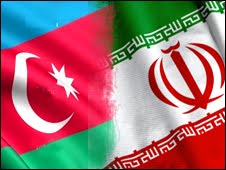
Azerbaijan, as is evident from its flag, is a Muslim country. But given that the former Soviet Socialist Republic is largely secular, it has been a matter of speculation whether this would cause problems for gay fans (homosexuality was decriminalised in the country in 2000, in order to join the Council of Europe). Turkey, another Muslim but nominally secular country, hosted the contest in 2004 without incident.

But interestingly, much of the religious-based resistance to the hosting of the conference has come from neighbouring Iran, where the majority (3/4) of the Azerbaijani people live. Iran’s population is 30% Azerbaijani.  

Thursday, 8 March 2012

Eurovision controversy starts early as Armenia pulls out

As predicted, this is going to be one tumultuous year for Eurovision, the yearly singing competition where European countries compete with original songs (for Americans, it's a bit like American Idol and Miss America combined). News this week that Armenia has pulled out of the competition after Azerbaijan's president described Armenians as the country's "main enemies" has noticably rattled the competition's organisers.

The song contest, which has been held since 1956, is hosted each year by the country which one the previous year. Last year the contest was won by Azerbaijan, the Muslim former Soviet republic in the Caucasus on the border with Iran. The definition of 'Europe' has been stretched over the past decades to encorporate new countries such as Turkey, Israel and even one year Morocco.

But this year's contest in Baku is going to be an awkward one, given that Azerbaijan is still in an active conflict with its neighbor Armenia, which also participates in Eurovision and takes it very seriously. Having the warring countries both participating in Eurovision has caused problems in the past. In 2009 a number of Azerbaijanis who had voted for Armenia's entry Anush and Inga (pictured below) during the contest that year were reportedly summoned for questioning by the Ministry of National Security.

Friday, 6 January 2012

Azerbaijan could make this an awkward year for Eurovision

It’s a new year, and of course this week everyone’s minds are on one thing – Eurovision 2012! Ok maybe not, but an interesting article in Der Speigel this week details the way in which Azerbaijan is already engaged in a public relations push ahead of their turn to host the world’s largest non-sporting television event in May of this year.

Azerbaijan will host the contest because they won last year. But there are concerns that this could be one the most problematic year in the show’s 56-year history because of the human rights record and military conflicts of the host country. Seemingly aware of this less-than-stellar reputation, the Azerbaijanis have reportedly stepped up a charm offensive in the core members of the European Broadcasting Union – Germany, France, Spain, Italy and the UK. Of course this is all part of a larger charm offensive by the oil-rich country, particularly as the Nabuco Pipeline project moves forward.

But could this year’s contest highlight the awkward relationship between the oil-hungry West and this autocratic regime? Or, as many argue, will an international event like this help to bring Azerbaijan more into line with the West and with Democratic principles? I suspect it may be the former. Even as Azerbaijan pursues its charm offensive, there are reports circulating that they are evicting Baku residents in order to build the 25,000-seat arena that will house the show this year.

Sunday, 15 May 2011

Eurovision leaves Europe

After two years in Western Europe, Eurovision will return to the East next year – as far East as it could possibly go. Azerbaijan was the surprise winner of the Eurovision Song Contest Saturday night, meaning next year the contest will be held in the Caspian Sea coast city of Baku. It is located just 150km (93 miles) from the Iranian border.

It will be an awkward host city given that the country is in an ongoing conflict with its neighbour Armenia which has sometimes spilled over into the contest, most notably in 2009 when people in Azerbaijan who had voted for Armenia were interrogated by the police. Azerbaijan was almost banned from the contest as a result, but the European Broadcasting Union decided to only give them a fine.

Many people were left scratching their heads Saturday night asking, "Erm, where is Azerbaijan again?". Depending on which definition you use, this will be just the third time that the Eurovision Song Contest will not be hosted outside Europe, following the contests in Israel in 1979 and 1999. The border between Europe and Asia is generally taken to be the Caucasus Mountains, which Baku is technically just South of. It will be the first time the ESC will go to a region with several active military conflicts - the Caucasus is home to disputed territories and ongoing military conflicts in Chechnya, South Ossetia and Nagorno-Karabakh just to name a few. It will be the second time an ESC will be held in a Muslim country, following the final in Istanbul in 2004. That contest, incidentally, was hosted in the European side of that city, west of the Bosphorus Strait.

Wednesday, 11 May 2011

Lost in translation?

Portugal's Eurovision performance last night at the first semi-final in Dusseldorf raised more than a few eyebrows. In the midst of what many see as a German-imposed austerity drive forced on Portugal after they had to take a €78 billion bailout from the EU and IMF, their Eurovision entry performed a song dressed as protestors and chanting slogans, right in the belly of the beast. It was a bit of an awkward moment, especially considering political messages are supposed to be banned from the Eurovision Song Contest.


According to the group, the song was apparently supposed to be a sort of celebration of Portugal despite all of its bad news. Entitled "A Luta é Alegria" (The Struggle is Joy), it calls on the Portuguese to not give in to feelings of despair or rage at the restrictions being imposed on them. The message, I imagine, was intended to be like the old expression 'keep calm and carry on' used by the British during World War II. "There’s no point in tightening the belt, there’s no point in complaining," they sang. "There’s no point in frowning and rage is pointless, it won’t help you. Many people wish to silence you. Many people want you to feel resentful. Many people want to sell you the air itself."

Tuesday, 3 May 2011

From Jedward to Dana: the best and worst of Eurovision 2011

It may be that there was no contest more appropriate for reality star twins John and Edward than Eurovision. The Irish duo, who became famous in the UK after enjoying inexplicable success on the TV singing competition X Factor, will be competing for Ireland in this year's Eurovision Song Contest next week. They are just one act in a year marked by astonishing comebacks, pleas to stop climate change and even – most intriguing of all – France's entry singing entirely in a language other than French!

Much like the Sanjaya phenomenon on American Idol in the US, the public support for 'Jedward', as they came to be dubbed by the British press (and they are now competing under that name in Eurovision), seemed to be driven by Simon Cowell's clear distaste for them. The identical twins are undoubtedly horrible dancers and singers, but their hammy gimmick act won the hearts of the British public. But can they win the hearts of Europe? The UK is most likely to vote for them, and there will be some in continental Europe already familiar with them from watching British X-Factor. The song is actually quite catchy, but in order to win they would need to majorly polish their dance moves and I'm not sure I see that happening. Still, they've got something. But their main gimmick is going to be seriously undercut by the fact that Slovakia's entry this year also features identical twins. Here's the video of the Jedward song which, for some reason, was shot at the Eiffel Tower in Paris (trying to woo those continental votes?)


Sunday, 30 May 2010

Germany reclaims Eurovision for the big 4

Another year, another Eurovision. Last night was actually my 4th since I moved to Europe. I think I'm going to start counting my years here based on the number of Eurovisions I've watched.

This year's entries performed in Oslo were ok, but not as good as the very solid entries of last year's competition in Moscow. Still, I thought the winning entry from Germany was very good and deserved to win. It's a catchy tune and it sounds very modern. It's very much in the Brit pop mold, and the German singer even adopts a sort of faux-British accent for it. But it was cool that Germany won, it's the first time they've won as a united Germany. West Germany last won the competition in 1982 with Ein Bisschen Frieden.