Like in Norway and Switzerland, British elites will have to accept an arrangement they know is bad in order to indulge the illusions of a slight majority of voters.
The political class was stunned. After a nationwide in/out referendum on EU membership, expected to yield an 'in' result because the entirety of the political and business establishment supported it, people awoke to the news that people had voted out, by 52%. A yearning for national sovereignty had won the day.
This wasn't 24 June 2016. It was 29 November 1994, the day after Norway's referendum on whether to join the European Union. 52% voted for Norway to be outside the EU, while 47% voted to be in it - an almost exact mirror of the UK result 22 years later. The result was a political shock that sent reverberations through the government and business establishment.
What happened in Norway in the ensuing years was a lesson in how politicians must sometimes pull their citizens along begrudgingly, or even unwittingly. Because even though EU membership had been rejected, Norway effectively ended up becoming an EU pseudo-member - under terms much worse than if it had become a member state. The same fate awaited Iceland and Switzerland.
Showing posts with label Iceland. Show all posts
Tuesday, 22 August 2017
Sunday, 12 June 2016
After divorce, UK and EU unlikely to be 'friends with benefits'
The EEA was not built for a country the size of Britain. To think that the EU will allow it to easily join is folly.
This week the EU's most powerful finance minister, Germany's Wolfgang Schäuble, will say in an exclusive interview to be published by Der Spiegel that the UK should not be given special access to the EU common market, à la Norway, if it quits the bloc.
"In is in, out is out," he will say in the interview, which was seen and previewed by The Guardian. “That won’t work, it would require the country to abide by the rules of a club from which it currently wants to withdraw. If the majority in Britain opts for Brexit, that would be a decision against the single market."
This week the EU's most powerful finance minister, Germany's Wolfgang Schäuble, will say in an exclusive interview to be published by Der Spiegel that the UK should not be given special access to the EU common market, à la Norway, if it quits the bloc.
"In is in, out is out," he will say in the interview, which was seen and previewed by The Guardian. “That won’t work, it would require the country to abide by the rules of a club from which it currently wants to withdraw. If the majority in Britain opts for Brexit, that would be a decision against the single market."
Sunday, 1 May 2016
Norway is the Puerto Rico of Europe
Puerto Rico has to obey laws made in Washington, but has no say in shaping them. Sound familiar?
Over the past two years, Puerto Ricans have been reeling from a government debt crisis that is throwing the island into near chaos. But for their fellow American citizens, it has gone largely unnoticed.
The incomparable John Oliver did a segment about the crisis last week, and like a lot of Americans I found myself watching it with a sense of embarrassment. I also hadn't heard anything about the crisis before.
Continental Americans have a disconnected relationship with the American territory to their south. Many do not know that it is part of the United States, and even those that do know often forget.
Over the past two years, Puerto Ricans have been reeling from a government debt crisis that is throwing the island into near chaos. But for their fellow American citizens, it has gone largely unnoticed.
The incomparable John Oliver did a segment about the crisis last week, and like a lot of Americans I found myself watching it with a sense of embarrassment. I also hadn't heard anything about the crisis before.
Continental Americans have a disconnected relationship with the American territory to their south. Many do not know that it is part of the United States, and even those that do know often forget.
Monday, 3 September 2012
A long-distance relationship
There are many clichés used to describe Iceland’s position in the middle of the Atlantic. Torn between Europe and North America – quite literally sitting on the fault line separating the two continents geologically – the country’s location is the most frequently used metaphor. This has been particularly true now that the country is in the process of EU accession.
While in Iceland over the past four days – a stopover on my way back to Brussels from a visit home to New York – the question of EU accession was very much on my mind. In fact I made it a point to ask every Icelander I met how they plan to vote in the coming referendum (what can I say, I’m tons of fun at a party). I planned to write some kind of blog entry on the way back reflecting people’s opinions and concerns, and here I am on the plane writing it.
It’s tempting to start trying to explain Iceland’s reluctance to embrace Europe with an anecdote about geography, since it is so far the European mainland. I could describe the intense sense of isolation I felt while out in the uninhabited lava fields away from Reykjavik. Or I could muse about the feeling of being torn in two directions which I felt while standing in the gorge separating the two continents at Pingvellier Park.
While in Iceland over the past four days – a stopover on my way back to Brussels from a visit home to New York – the question of EU accession was very much on my mind. In fact I made it a point to ask every Icelander I met how they plan to vote in the coming referendum (what can I say, I’m tons of fun at a party). I planned to write some kind of blog entry on the way back reflecting people’s opinions and concerns, and here I am on the plane writing it.
It’s tempting to start trying to explain Iceland’s reluctance to embrace Europe with an anecdote about geography, since it is so far the European mainland. I could describe the intense sense of isolation I felt while out in the uninhabited lava fields away from Reykjavik. Or I could muse about the feeling of being torn in two directions which I felt while standing in the gorge separating the two continents at Pingvellier Park.
Monday, 23 January 2012
Croatians vote to join EU
Amidst all the bad news, the EU can feel at least a bit reassured following the strong endorsement given by Croatians this weekend to their country joining the European Union. Though you'd be forgiven for getting the impression from the English-speaking media that the EU is now a toxic project that few want to be associated with, 67% of Croatians voted on Sunday to join the union.
An accession agreement was already signed by the country's government in December, and they are set to become the 28th member state at the end of this year. But the accession required a public referendum to go through. There were some rumblings of concern last year that the eurozone crisis could deliver a surprise no from the Croatian people. Brussels received a pleasant surprise last night when news came that the referendum had not only passed, it had passed by a large majority.
The vote comes a year after Estonia's decision to join the euro currency. Both decisions show that even in the midst of the eurozone crisis, the European project continues to move forward - not backward. Of course, both of these things were planned and in motion before the eurozone crisis hit. The real test may come next year when the people of Iceland vote on whether to move from their status as a pseudo-member-state in the EEA to a full member state of the EU. Opinion polls are already showing that referendum could have a hard time passing, particularly as the Icelandic economy recovers from their crisis as the eurozone slips further into its much larger crisis.
An accession agreement was already signed by the country's government in December, and they are set to become the 28th member state at the end of this year. But the accession required a public referendum to go through. There were some rumblings of concern last year that the eurozone crisis could deliver a surprise no from the Croatian people. Brussels received a pleasant surprise last night when news came that the referendum had not only passed, it had passed by a large majority.
The vote comes a year after Estonia's decision to join the euro currency. Both decisions show that even in the midst of the eurozone crisis, the European project continues to move forward - not backward. Of course, both of these things were planned and in motion before the eurozone crisis hit. The real test may come next year when the people of Iceland vote on whether to move from their status as a pseudo-member-state in the EEA to a full member state of the EU. Opinion polls are already showing that referendum could have a hard time passing, particularly as the Icelandic economy recovers from their crisis as the eurozone slips further into its much larger crisis.
Wednesday, 9 February 2011
Switzerland buries its head in the sand
Switzerland's foreign minister was in Brussels yesterday for some awkward discussions with EU leaders, and despite the beaming smiles following her meetings it was clear that by this point Brussels and Bern are operating on two different wavelengths.
The visit was arranged following a serious souring in relations between Switzerland and the EU after a resolution from EU foreign ministers in December warned that the relationship between the two had become incoherent and unwieldy. While Switzerland is not a member of the EU, it is a sort of "pseudo-member" and is allowed to participate in the EU single market thanks to a series of bilateral agreements. These 120 agreements were negotiated in two rounds in 1999 and 2004. In exchange for allowing Switzerland the benefits of access to the common market, the EU expects certain things in return - such as the right for any EU citizen to live and work in Switzerland (and vice versa). But in return, the EU position is that if Switzerland violates any of these accords, all 120 of them will be torn up.
So far this arrangement has suited the Swiss just fine - probably because most Swiss citizens are unaware of the extent of the accords and think their country remains completely independent and separate from the EU. But Brussels has grown frustrated with the unwieldy and complicated arrangement, and now they are saying Switzerland needs to move over to a more defined relationship as exists in the other pseudo-EU countries - Norway, Iceland and Liechtenstein.
The visit was arranged following a serious souring in relations between Switzerland and the EU after a resolution from EU foreign ministers in December warned that the relationship between the two had become incoherent and unwieldy. While Switzerland is not a member of the EU, it is a sort of "pseudo-member" and is allowed to participate in the EU single market thanks to a series of bilateral agreements. These 120 agreements were negotiated in two rounds in 1999 and 2004. In exchange for allowing Switzerland the benefits of access to the common market, the EU expects certain things in return - such as the right for any EU citizen to live and work in Switzerland (and vice versa). But in return, the EU position is that if Switzerland violates any of these accords, all 120 of them will be torn up.
So far this arrangement has suited the Swiss just fine - probably because most Swiss citizens are unaware of the extent of the accords and think their country remains completely independent and separate from the EU. But Brussels has grown frustrated with the unwieldy and complicated arrangement, and now they are saying Switzerland needs to move over to a more defined relationship as exists in the other pseudo-EU countries - Norway, Iceland and Liechtenstein.
Thursday, 20 January 2011
Is David Cameron forming an Anti-European Union?
Nicolas Sarkozy's plans for a "Mediterranean Union" may be floundering, but at the other end of Europe British Prime Minister David Cameron is just getting started with plans to form a 'Northern European Union.'
The leaders of Britain, Sweden, Denmark, Norway, Finland, Iceland, Latvia, Lithuania and Estonia are all meeting in London today to discuss the potential for a grouping which Cameron is calling an "alliance of common interests". He wants to boost trade between the UK and the Nordic and Baltic countries, but also to increase the flow of ideas. These include ideas on technology and economic and social policy, areas in which Northern Europe has similarities and expertise that are not necessarily shared by many countries in other parts of Europe.
Cameron insinuated as much yesterday when he said a northern grouping could become an "avant garde" for economic growth in Europe. And of course, Northern European countries have deep historical ties as most were ruled by Denmark at one time or another. And before the EU came along the Nordics had their own attempted intergovernmental union, the Nordic Council.
The leaders of Britain, Sweden, Denmark, Norway, Finland, Iceland, Latvia, Lithuania and Estonia are all meeting in London today to discuss the potential for a grouping which Cameron is calling an "alliance of common interests". He wants to boost trade between the UK and the Nordic and Baltic countries, but also to increase the flow of ideas. These include ideas on technology and economic and social policy, areas in which Northern Europe has similarities and expertise that are not necessarily shared by many countries in other parts of Europe.
Cameron insinuated as much yesterday when he said a northern grouping could become an "avant garde" for economic growth in Europe. And of course, Northern European countries have deep historical ties as most were ruled by Denmark at one time or another. And before the EU came along the Nordics had their own attempted intergovernmental union, the Nordic Council.
Monday, 19 April 2010
Europe versus the volcano
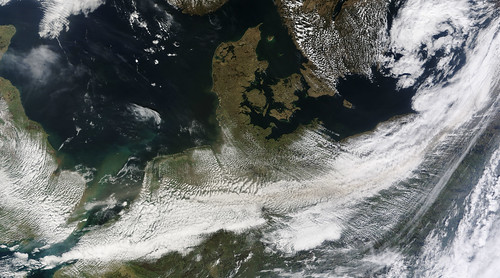
As you're jetting around the world this week, Americans, think of us poor souls in Europe, trapped in our respective cities. We're now in the 5th day of the flight ban caused by the giant ash cloud covering Europe, and many are the stories of the "ash refugees" spread across not just Europe, but the entire world. I have a colleague trapped in Norway, my father's stuck in the US, and I have friends stuck in Southern France, Spain, Ireland, Bangkok, you name it.The stories of people making long and bizarre treks across Europe via ground transport have been numerous. Saturday night I went to a friend's going-away party in Antwerp, and people there were full with stories about how they had made last-minute arrangements to get to Belgium by train after their flights were canceled.
Thursday, 7 January 2010
Iceland to vote on becoming pariah state
After seeing his house surrounded by a torch-wielding mob, Iceland’s president yesterday stunned the world by vetoing a parliament bill committing the country to paying back the €3.8 billion of British and Dutch citizens’ money it lost. The bold move triggered a shock wave of recrimination across the world: the country’s debt was instantly downgraded to junk status, the IMF hinted it may withhold the $2.1 billion it loaned the country in November and the UK threatened to veto Iceland’s bid to join the EU. So now who’s going to make the incredibly difficult and complicated decision on whether or not to pay back the ‘other people’s money’ Iceland lost? Joe Q. Public, that’s who. The issue will now go to a public referendum on 20 February.
Monday, 20 July 2009
Iceland and the enlargement debate
Iceland’s senate narrowly voted to begin talks for the island nation to join the EU on Thursday, and already there are those in Brussels saying the accession could be fast-tracked so quickly that Iceland would be a member by the end of next year. But with the current anti-expansion mood in Brussels, Iceland’s bid could raise uncomfortable divisions and a fundamental question for the anti-expansionists: in the heated debate over whether to take on new members states, does Iceland really count?There’s plenty of reasons to argue that Iceland is almost irrelevant to the expansion argument. As a member of the European Economic Area (along with Norway, Liechtenstein and pseudo-member Switzerland), is it already beholden to most EU legislation and has been for some time. The EEA countries and Switzerland have worked out an arrangement with the EU where they are effectively members but are not restricted in certain areas in which they don’t want to be regulated. For Switzerland and Liechtenstein that issue has been banking secrecy (among others). For Norway the issue has been their offshore oil. And for Iceland the issue has been fishing. The trade-off is they then don’t get any representation in EU lawmaking, meaning they end up being governed by laws they had no hand in shaping. All of these countries are members of the EU’s borderless Schengen Zone (but confusingly EU member states Ireland and the UK are not).
Wednesday, 21 January 2009
Rioting in Iceland
When there's rioting in Iceland, you know we're in trouble. The small Scandinavian country in the middle of the Atlantic isn't usually associated with domestic strife, but rather high quality of life and abundant natural resources. But yesterday thousands of people took to the streets to protest the government's handling of the economy, which has plunged in recent months as a result of the larger global turmoil. Gross national product is down two-thirds, there has been a 45 percent rise in unemployment and the country is defaulting on loan repayments. In October the country's financial system collapsed and its currency plunged under the weight of billions of dollars in foreign debt taken on by its banks.
These weren't just mild demonstrations. Riot police had to fight with a large number of violent protesters outside the country's parliament. Pepper spray was fired at the protesters and 30 arrests were made.
Coming on the heels of the riots in Greece last month, many in Europe are becoming increasingly worried that the economic turmoil could lead to violent clashes between disaffected people and their governments across the continent. Eastern Europe is seen as particularly vulnerable to such violence, with some even predicting a "spring of discontent" in the region to be around the corner.
Eastern Europe has been hit hard by the financial crisis, especially Bulgaria, Romania and the Baltic states - all recent EU entrants. As the Guardian recently reported, incidents have been steadily increasing. Last week police in Vilnius, Lithuania had to tear-gas a crowd of demonstrators protesting tax rises and benefit cuts designed to save the state from bankruptcy. Sofia, Bulgaria has also seen recent widespread violence in which 150 people were arrested. Riga, Latvia has seen street battles as well.
These Eastern European economies are increasingly experiencing unexpected turmoil after years of posting double-digit growth. Their anger will likely be compounded by the fact that they were expecting that growth to continue, particularly after they joined the EU. The post-cold war governments are still new and relatively weak, and could be unprepared to deal with widespread unrest. And the increasing hostility isn't just being directed at the governments. Attacks on minorities are also becoming increasingly common, particularly against Roma (gypsy) communities. Recently 700 members of the far-right Workers' Party in the Czech Republic fought with police when they were prevented from marching on a Roma area.
Of course Iceland is just about as far as you can get from Eastern Europe without leaving the continent. If the global economic turmoil can cause rioting in a country with one of the highest quality of life ratings in the world, could rioting be far behind in the major Western economies? And even if it isn't, how will the major economies of Western Europe respond to growing political unrest to their east, in countries with which they are now united? Clearly the EU has an obligation to help Eastern Europe through the financial turmoil, but if the situation becomes fundamentally dangerous, can the EU do anything to stem the violence without a proper policing military force?
The "spring of discontent" will be an anxious time for Europe.
These weren't just mild demonstrations. Riot police had to fight with a large number of violent protesters outside the country's parliament. Pepper spray was fired at the protesters and 30 arrests were made.
Coming on the heels of the riots in Greece last month, many in Europe are becoming increasingly worried that the economic turmoil could lead to violent clashes between disaffected people and their governments across the continent. Eastern Europe is seen as particularly vulnerable to such violence, with some even predicting a "spring of discontent" in the region to be around the corner.
Eastern Europe has been hit hard by the financial crisis, especially Bulgaria, Romania and the Baltic states - all recent EU entrants. As the Guardian recently reported, incidents have been steadily increasing. Last week police in Vilnius, Lithuania had to tear-gas a crowd of demonstrators protesting tax rises and benefit cuts designed to save the state from bankruptcy. Sofia, Bulgaria has also seen recent widespread violence in which 150 people were arrested. Riga, Latvia has seen street battles as well.
These Eastern European economies are increasingly experiencing unexpected turmoil after years of posting double-digit growth. Their anger will likely be compounded by the fact that they were expecting that growth to continue, particularly after they joined the EU. The post-cold war governments are still new and relatively weak, and could be unprepared to deal with widespread unrest. And the increasing hostility isn't just being directed at the governments. Attacks on minorities are also becoming increasingly common, particularly against Roma (gypsy) communities. Recently 700 members of the far-right Workers' Party in the Czech Republic fought with police when they were prevented from marching on a Roma area.
Of course Iceland is just about as far as you can get from Eastern Europe without leaving the continent. If the global economic turmoil can cause rioting in a country with one of the highest quality of life ratings in the world, could rioting be far behind in the major Western economies? And even if it isn't, how will the major economies of Western Europe respond to growing political unrest to their east, in countries with which they are now united? Clearly the EU has an obligation to help Eastern Europe through the financial turmoil, but if the situation becomes fundamentally dangerous, can the EU do anything to stem the violence without a proper policing military force?
The "spring of discontent" will be an anxious time for Europe.
Subscribe to:
Posts (Atom)

.jpg)