A tell-all Facebook post by a former journalist at The Times has gone viral this weekend, exposing a truth that most in the EU press corps already know.
On Friday Martin Fletcher, a former foreign correspondent for Britain's The Times newspaper, posted some explosive allegations on Facebook.
"For 25 years our press has fed the British public a diet of distorted, mendacious and relentlessly hostile stories about the EU," he wrote. "And the journalist who set the tone was Boris Johnson."
Fletcher describes how, in 1999, he arrived in Brussels as The Times' Brussels correspondent, shortly after Boris Johnson's stint covering the EU capital for The Telegraph. Johnson later went on to become the Mayor of London and the main politician backing a British secession from the European Union. If there is a vote for Brexit on Thursday, Johnson is likely to be the next UK prime minister.
Showing posts with label European media. Show all posts
Monday, 20 June 2016
Thursday, 19 May 2011
US focus on French sex attitudes echoes Lewinsky saga
Something is very wrong with France, if we are to believe the Anglophone media commentary this week. The arrest of Dominique Strauss-Kahn, the head of the International Monetary Fund and contender for the French presidency, has provoked some soul-searching in France about whether the media was right to have kept quiet about his history of unwanted sexual advances toward women. This soul-searching has been reported on with fascination by the American and British media. But for many in France, the Anglo-Saxon attention to their national trauma is bordering on smugness.
Back in the late 1990's, the French were quite vocal in their confusion and disgust with the impeachment proceedings against US President Bill Clinton. France has long had an expectation that politician's private lives are just that – private – and should have no relevance to their office. 'What kind of a society would impeach their president because he had an affair?' they asked. In fact the period during the Monica Lewinsky saga was probably the only one in which the French openly talked about their history of philandering presidents – from Mitterand to Chirac – if only to demonstrate how different their society was to America. If their politicians were oversexed "séducteurs" it was none of their business. Indeed, sometimes it was celebrated as a good thing, a sign of a healthy libido.
But what goes around comes around, and it seems that now it’s the Americans' turn to look derisively across the Atlantic, shake their heads and say, 'if only they were more like us.'
Back in the late 1990's, the French were quite vocal in their confusion and disgust with the impeachment proceedings against US President Bill Clinton. France has long had an expectation that politician's private lives are just that – private – and should have no relevance to their office. 'What kind of a society would impeach their president because he had an affair?' they asked. In fact the period during the Monica Lewinsky saga was probably the only one in which the French openly talked about their history of philandering presidents – from Mitterand to Chirac – if only to demonstrate how different their society was to America. If their politicians were oversexed "séducteurs" it was none of their business. Indeed, sometimes it was celebrated as a good thing, a sign of a healthy libido.
But what goes around comes around, and it seems that now it’s the Americans' turn to look derisively across the Atlantic, shake their heads and say, 'if only they were more like us.'
Friday, 6 May 2011
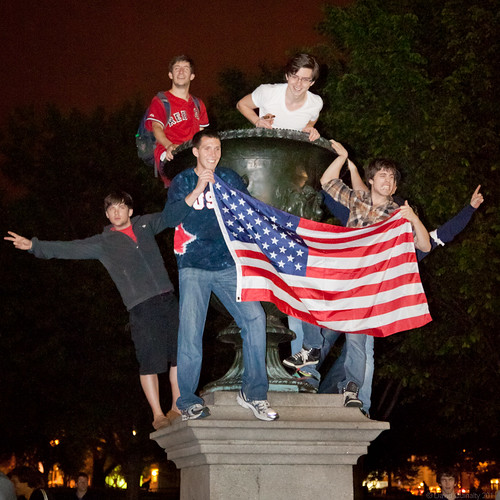
Europe uncomfortable with US Bin Laden celebrations
I've had a rather surreal experience this week watching reaction to the news that Osama Bin Laden was killed by American forces. On Monday morning I woke up and opened Facebook (before anything else, naturally), and saw a string of cryptic statuses chanting things like "USA! USA!" or "I'm so proud to be American today". But for whatever reason none of them said what had actually happened. So I had to open up Google News to learn what had inspired these rather unlikely chants from my "liberal elitist" friends in New York City.
The news was, of course, that Osama Bin Laden had been killed. The announcement by President Obama Sunday night prompted sudden exuberant celebrations in cities across America, the biggest outside the White House and in Times Square. It was reminiscent of the Victory Day celebrations at the end of World War II, a cathartic celebration unleashing a decade of angst Americans had felt since the 9/11 attacks. I found the magnitude of the celebrations a little surprising, but perhaps I had underestimated the effect that America's inability to capture Osama Bin Laden has had on the US psyche. A profound sense of anxiety and humiliation seems to have been lifted from Americans' minds with this killing. And both the left and right are jubilant over it. The American media seems to have regarded these celebrations as a universal good, heralding the way they have brought left and right together and united Americans in the same way that they were united after 9/11. The question does not seem to be asked whether Americans can be 'unified' in a counter-productive instinct.
Monday, 28 February 2011
UK ends ban on TV product placement
Starting today television viewers in the UK are going to start noticing a lot more Coke cans, Sony TVs and Motorola phones in their favourite television programmes – as the ban on product placement is officially lifted in the UK. But it won't be the anything-goes system now prevalent in America - product placement for a wide variety of products including unhealthy foods will still not be allowed and viewers will be alerted by a 'P' logo on their screen when they are watching a show with product placement.
The change in policy follows years of lobbying from Britain's private broadcasters, who said they needed the revenue from product placement to ensure their long-term survival. Product placement has been allowed in the European Union since the Broadcasting Directive was passed in 2007. At that time, most EU states that had bans ended them. But the UK opted to maintain their ban, with Labour's Culture Secretary Andy Burnham saying at the time that the UK needed to "maintain levels of trust between audiences and broadcasters, and protect the standards of broadcasting for which Britain is known worldwide."
Tuesday, 8 February 2011
Hungary caves in to EU pressure on media law
After a month of skirmishes between Budapest and Brussels over the new Hungarian government's controversial media law, it looks like the country's defiant prime minister Viktor Orban might be ready to throw in the towel.
Yesterday the country's communication minister announced that the government had agreed to change the wording of the law following concerns from the European Commission that it restricts press freedom. The minister didn't specify what the change in wording would be, but he told the BBC it will be submitted on Thursday and that Budapest and Brussels are "very, very close" to resolving the issue.
The media law took effect at the start of this year, on the same day that Hungary assumed the rotating EU presidency. The law will create a new agency called the Media Council that will monitor news reports for "balance" and "human dignity". Offending news outlets who are found to have not been "balanced" would face large fines and possible deaccreditation in the country. The law would require all journalists, even video bloggers, to be accredited by the state. The word "balanced" had particularly alarmed the commission because the Media Council was to be packed with people from Orban's governing conservative party, Fidesz. So it is likely that this is one of the words that will be changed in the new text.
Yesterday the country's communication minister announced that the government had agreed to change the wording of the law following concerns from the European Commission that it restricts press freedom. The minister didn't specify what the change in wording would be, but he told the BBC it will be submitted on Thursday and that Budapest and Brussels are "very, very close" to resolving the issue.
The media law took effect at the start of this year, on the same day that Hungary assumed the rotating EU presidency. The law will create a new agency called the Media Council that will monitor news reports for "balance" and "human dignity". Offending news outlets who are found to have not been "balanced" would face large fines and possible deaccreditation in the country. The law would require all journalists, even video bloggers, to be accredited by the state. The word "balanced" had particularly alarmed the commission because the Media Council was to be packed with people from Orban's governing conservative party, Fidesz. So it is likely that this is one of the words that will be changed in the new text.
Thursday, 3 February 2011
Brussels gets a press club
Are press clubs - those storied oak-paneled dens where an elite cadre of journalists meet to smoke cigars and swap gossip - a relic of the past? I found myself wondering this last night at the launch party for the new 'Brussels Press Club' here in the EU Quarter.
For years, long-time Brussels journalists have bemoaned the fact that Brussels has no press club for the many international journalists based here. Though other world capitals like Washington, London or Paris have famous press clubs that have been around for over 100 years, Brussels had nothing. But now the International Press Association (API) has been able to get the backing of the Brussels regional government to establish a club, located just next to the European Council and European Commission headquarters.
Wednesday, 19 January 2011
Hungary refuses to budge as EU condemns media crackdown
Hungary has come out swinging in defence of its new media law which critics say curtails press freedom and seeks to stifle dissent. The country's new combative conservative prime minister Victor Orban delivered an icy rebuke today to the European Parliament assembled in Strasbourg, following two weeks in which MEPs and national governments have been strongly critical of the new law.
Even before he started his address, several MEPs covered their mouths with gags and held large banners that read 'censorship'. But Orban warned the assembled EU lawmakers that they were insulting the Hungarian people. "We lived under a dictatorship for 40 years," he chided. "I will not stand for you contesting the democratic aspirations of Hungarians."
Orban has maintained that the media law contains similar measures to what has technically existed (but has not been enforced) in many Western European countries for decades. He says the liberal media laws set up as the country transitioned to democracy after the collapse of communism were far too loose, allowing the press to say anything they want with impugnity. His new government has had to take action to rectify the problem, he says.
Even before he started his address, several MEPs covered their mouths with gags and held large banners that read 'censorship'. But Orban warned the assembled EU lawmakers that they were insulting the Hungarian people. "We lived under a dictatorship for 40 years," he chided. "I will not stand for you contesting the democratic aspirations of Hungarians."
Orban has maintained that the media law contains similar measures to what has technically existed (but has not been enforced) in many Western European countries for decades. He says the liberal media laws set up as the country transitioned to democracy after the collapse of communism were far too loose, allowing the press to say anything they want with impugnity. His new government has had to take action to rectify the problem, he says.
Friday, 29 October 2010
EU just wants a little love
Let's face it, these days the EU is just not very popular with the European public. Gone are the heady days in the early 2000's when there was boundless and perhaps unrealistic ambition in Brussels for what the EU could accomplish. Today, as the financial crisis bites and people's confidence in the common market has been damaged, one of the EU's biggest problems is how to win the love of its public.
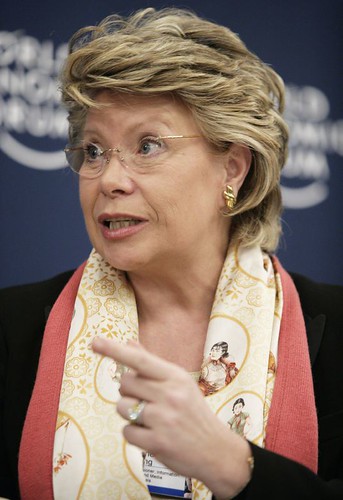
This week Justice and Citizenship Commissioner Vivane Reding and Internal Market Commissioner Michel Barnier unveiled a new bundle of consumer protection mesures, and the main message seemed to be, "Please, love us!" But Reding seems determined that this raft of new rules, coupled with the introduction of a new 'Single Market Act', will be accompanied by an assertive communication campaign that will try to make sure EU citizens know that these new benefits and protections are coming from Brussels.
Wednesday, 14 July 2010
Belgium and France in race to ban the burqa
Who will emerge victorious? Belgium and France are currently falling over each other racing to be the first country in Europe to ban full face coverings. Whoever wins the race, both bans are guaranteed to eventually become law. The bans are illustrative not just of the conflict between Europeans and Muslim immigrants, but also of the ideological divide that separates continental Europe from the Anglo-Saxon world.
Both European and the Americans/British may dislike the burqa, but when it comes to how to deal with it, the English Channel and the Atlantic present a wide gulf. On the continent I don't know one person who thinks the ban is a bad idea. Yet I don't know a single American or British person who doesn't think it is a semi-fascistic disgrace.
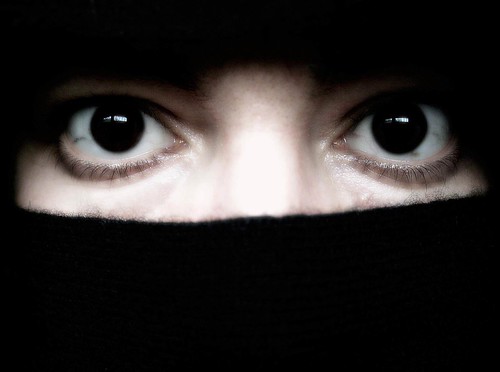
Yesterday French MPs voted 335 to one in favour of legislation to ban face coverings in public areas. The ban does not specifically mention the Islamic burqa, a full-body garment that covers the entire face except a small slit for the eyes. Rather, it forbids anyone to cover their face in a public place. This would include costume masks or ski masks. A police officer would first ask a person to remove their face covering, and if they refuse, they can be fined €150.
Though the ban doesn’t specifically target Muslims, many Islamic groups and human rights activists are saying its main intent seems to be to send a hostile message to Muslims. They have accused French President Nicolas Sakozy of purposefully exacerbating tensions for electoral purposes. Though only a small minority of French Muslims would be affected by the ban (police figures say fewer than 2,000 of France's 2 million Muslims wear the burqa), Muslim groups have said they think the law stigmatizes all Muslims.
Both European and the Americans/British may dislike the burqa, but when it comes to how to deal with it, the English Channel and the Atlantic present a wide gulf. On the continent I don't know one person who thinks the ban is a bad idea. Yet I don't know a single American or British person who doesn't think it is a semi-fascistic disgrace.
Yesterday French MPs voted 335 to one in favour of legislation to ban face coverings in public areas. The ban does not specifically mention the Islamic burqa, a full-body garment that covers the entire face except a small slit for the eyes. Rather, it forbids anyone to cover their face in a public place. This would include costume masks or ski masks. A police officer would first ask a person to remove their face covering, and if they refuse, they can be fined €150.
Though the ban doesn’t specifically target Muslims, many Islamic groups and human rights activists are saying its main intent seems to be to send a hostile message to Muslims. They have accused French President Nicolas Sakozy of purposefully exacerbating tensions for electoral purposes. Though only a small minority of French Muslims would be affected by the ban (police figures say fewer than 2,000 of France's 2 million Muslims wear the burqa), Muslim groups have said they think the law stigmatizes all Muslims.
Tuesday, 8 June 2010
Israel: in concept and in reality
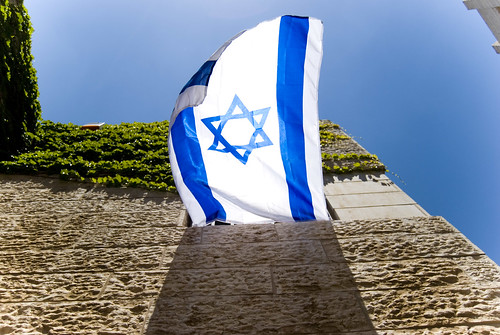
As Israel’s raid of a protest ship trying to break the blockade of Gaza unfolded last week, it was interesting to watch how the coverage differed between the United States and Europe. Monday morning I watched as the European headlines scrolled across my RSS feed reader, and then starting at about 13:00 I saw the headlines come in from the main US media outlets. It was as if they were reporting on two different events. The difference in media coverage has been particularly interesting to watch as I am about to head to Israel tomorrow to see the situation for myself. It wasn’t so much surprising as it was illustrative. During my four years living in Europe I’ve seen firsthand how different the European media’s coverage of the Israeli-Palestinian conflict is from the American media’s portrayal. They’re two sides of a coin, and the truth is probably somewhere in the middle. It’s rare to see any criticism of Israel in American media or from American politicians, whether from the left or from the right. The main emphasis is usually on the Israeli need for security. In Europe, the main emphasis tends to be on the occupation, and the security concerns of Israel aren’t addressed as frequently.
Thursday, 18 March 2010
The case of the disappearing Brussels journos
Take a good look at the Brussels press corps, because in a few years it may have disappeared into thin air. That's at least the concern running through the EU capital at the moment, as the number of accredited journalists in the city plummets.Today I stopped by an extraordinary meeting of the International Press Association (API) that was called together to specifically address this question. I had come by because my company is dealing with a separate issue, the harassment of journalists working in the International Press Centre by the Belgian authorities. As it turns out though, these two issues are probably not unrelated.
In 2005 there were 1,300 accredited reporters in Brussels, more than the Washington press corps (a fact the EU was very proud of at the same time). Today, according to a blog this week by the Economist, the number is just 752. Well, 753 as of yesterday, when I received my accreditation. In the past year alone, almost 200 journalists have left Brussels.
The API meeting was called to approve a resolution demanding immediate action from the EU to stop the hemorrhaging of Brussels journalists. A noble aim to be sure. But during the meeting I couldn't help but feel perplexed by the remedies that API is demanding.
Wednesday, 6 January 2010
Mr Bean – EU President
Today the euroblogosphere was receiving more attention than it’s used to, thanks to a surprising visit from Mr. Bean on the EU presidency’s web site. But now it’s turned into a war of words between bloggers – who insist they saw the image – and Spain – which insists no such image ever appeared. I myself didn’t become aware of the story until late this afternoon, after an entire day of being frustrated by attempts to open the Spanish EU presidency’s web site and having them time out. Spain took over the rotating EU presidency from Sweden on 1 January*, and I had to write a story about their platform but couldn’t access their documents. As soon as I opened my twitter account I could see why. Everyone in Brussels was tweeting about ‘Beangate’, commenting both on the hack itself and the enormous amount of media attention it was receiving.
Monday, 21 December 2009
Europeans and Americans see Copenhagen through different eyes
So, was Copenhagen a failure or not? It would appear the answer depends on which side of the Atlantic you’re on when you ask the question.
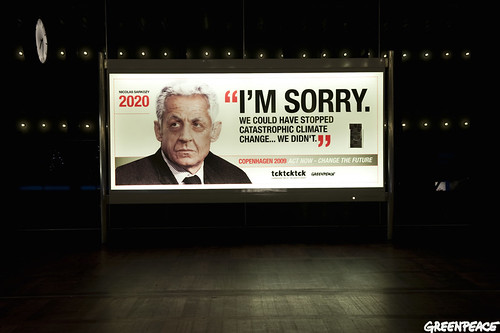
The Copenhagen Accord, finalised after hours of intensive negotiations, theoretically recognises a goal of limiting global warming to two degrees Celsius, but contains no targets to achieve that. There are no specific emission reduction actions by developing countries and no specific commitments on long term financing for mitigation and adaptation efforts. Not only is it non-binding, the agreement wasn’t even adopted by all UN countries. Instead it has just been 'noted', which means that countries recognise its existence but don’t necessarily agree with it.
European NGOs and governments were united in their condemnation of the Copenhagen climate summit’s result this weekend, which failed to include any kind of binding agreement and was only able to muster an optional “accord”. Though the language the political leaders were using was obviously more diplomatic than that being used by the climate activists (Greenpeace’s director called Copenhagen a “crime scene”), the basic message is still the same: the summit failed. Swedish prime minister Frederik Reinfeldt, still holding the EU presidency, said the agreement, “will not solve the climate pressures, the climate threat to mankind.” Commission president Jose Manuel Barroso said, "The level of ambition is not what we were hoping for." The British leadership has been railing against the Chinese all weekend, pointing the finger of blame squarely in their court. Brown said that they were, "clinging to their version of what an international organisation should not do,” and British environment minister Ed Milliband delivered the extraordinary charge today that the Chinese hijacked the summit. If there is a mainstream European publication that did not use the word ‘failure’ today to describe the summit, I am not aware of it.
The Copenhagen Accord, finalised after hours of intensive negotiations, theoretically recognises a goal of limiting global warming to two degrees Celsius, but contains no targets to achieve that. There are no specific emission reduction actions by developing countries and no specific commitments on long term financing for mitigation and adaptation efforts. Not only is it non-binding, the agreement wasn’t even adopted by all UN countries. Instead it has just been 'noted', which means that countries recognise its existence but don’t necessarily agree with it.
European NGOs and governments were united in their condemnation of the Copenhagen climate summit’s result this weekend, which failed to include any kind of binding agreement and was only able to muster an optional “accord”. Though the language the political leaders were using was obviously more diplomatic than that being used by the climate activists (Greenpeace’s director called Copenhagen a “crime scene”), the basic message is still the same: the summit failed. Swedish prime minister Frederik Reinfeldt, still holding the EU presidency, said the agreement, “will not solve the climate pressures, the climate threat to mankind.” Commission president Jose Manuel Barroso said, "The level of ambition is not what we were hoping for." The British leadership has been railing against the Chinese all weekend, pointing the finger of blame squarely in their court. Brown said that they were, "clinging to their version of what an international organisation should not do,” and British environment minister Ed Milliband delivered the extraordinary charge today that the Chinese hijacked the summit. If there is a mainstream European publication that did not use the word ‘failure’ today to describe the summit, I am not aware of it.
Tuesday, 12 May 2009
Welcome to the New World of Eurovision
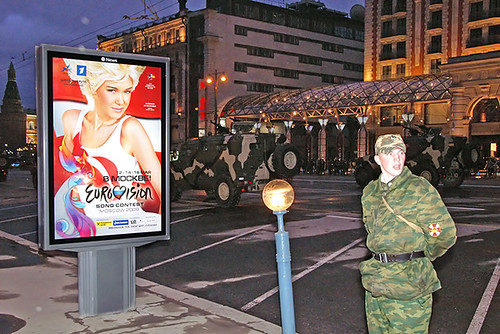
After a dramatic year of threatened boycotts, banned songs and host storm-offs, Eurovision 2009 in Moscow is at long last upon us. With a new voting format and a politically sensitive location, this Saturday’s finals could prove to be one of the more interesting in a long while.Last year’s finals in Belgrade were the last straw for many who had grown frustrated with tribal voting patterns that seemed to have completely shut out Western Europe from ever possibly winning the phone-in public voting final round. The Slavic countries of Eastern Europe have tended to vote for each other since they entered the song contest after the end of the Cold War, and for some this pattern explained why Russia’s sub-par entry-on-ice from Dima Bilan handily won last year (though admittedly none of the 2008 entries were very good). Long-time British Eurovision host Terry Wogan – a veritable institution for Eurovision in the UK - was so exasperated last year with the voting pattern that he quit his hosting job live on air!
The system’s critics alleged that the voting had turned completely political rather than recognizing “talent” (talent being a subjective word when it comes to Eurovision!). Its defenders argued that if Western Europe wanted to be competitive in the song contest again, it needed to field real entries rather than joke acts that seemed to deliberately mock the contest, such as Ireland’s singing puppet last year and Britain’s Scooch in 2007.Fearing an eventual withdrawal of the founding Western European countries from the contest (which France, Germany, Spain and the UK do pay for after all), Eurovision has changed the voting format this year to be 50% from a public vote and 50% from a panel of music industry experts in each country. So, for instance, the winner of the UK’s vote package will be decided by a combination of the results of the public phone-in vote and the decision of a British music industry panel who are charged with disregarding the nationality of the acts and looking only at talent. We won’t know until Saturday whether these panels will also fall into patterns of national prejudice, but people seem to be confident that they won’t. This year the odds-makers have picked Norway as the favourite to win, with Alexander Rybak’s folksy song “Fairy tale”.
“We Don’t Want a Putin”
Of course last year’s voting patterns aren’t the only controversial aspect of this year’s contest in Moscow. Ongoing tensions between Russia and the west have made this year’s location uncomfortable to say the least. After Russia’s invasion of Georgian-occupied territory in August, several estates including Latvia, Estonia and Poland announced they would boycott the Moscow Eurovision. Since then they seem to have softened their stance, as they are all now taking part. Georgia was also supposed to take part, but their entry was deemed too political and was banned by the European Broadcasting Union, which runs the show. The song that won the Georgian finals, “We Don’t Wanna Put In” by Stephane & 3G, seemed to deliberately parody a popular pop song in Russia by The Putin Girls called “We Want a Man Like Putin” (no joke, watch it it’s hilarious). The Georgia song also contained the thinly veiled lyrics “We don’t wanna put in, the negative move, it's killing the groove” in the chorus. The ban on the song is the first time the EBU has ever blocked an entry to the song contest for political reasons. But it was clear the organisation was worried about offending this year’s host, especially when Putin himself may be in the audience.Of course the publicity the song has received from the controversy is probably more valuable than actually appearing on Eurovision. The song is bizarrely number two in the UK's Music Week pop chart at the moment. It’s also getting radio play across Europe.
The Songs
It looks like Russia’s Channel One is pulling out all the stops for the Moscow show, which kicked off last night at Moscow's Manezh Exhibition Centre. Reportedly it’s going to be the most expensive show in Eurovision’s history, though the actual budget won’t be revealed until after. Comparisons are obviously being made to the over-the-top Beijing Olympics in China, another international showcase event by an emerging BRIC power.As previously mentioned, the hands-down favourite this year with the bookies is Norway, but Greece, Turkey and Ukraine are considered to have a good shot as well. Much of the talent this year is made up of female ballad singers, and there is (sadly) little of the tongue-in-cheek camp of the past two contests. The UK’s entry, “My Time” is a light theatrical ballad penned by Andrew Lloyd Webber and sung by previously unknown Jade Ewan (though UK entrants are almost always previously unknown, and almost always still unknown afterwards!).
However on the continent they often field entrants who are already famous singers. France’s entry Patricia Kaas is a well-known Gallic chanteuse who has sold millions of records. Malta’s entry Chiara is a sensation in her home country and this will be her third try for the Eurovision crown (she narrowly lost to Israeli transsexual Dana International in 1998).
Beyond the ballad belters there are also a number of orchestral folksy entries. Front-runner Norway will have a set or violins, Estonia is featuring a six-piece female string group, and Slovenia even has a string quarter with barely any vocals. Sweden and Bulgaria are both featuring operatic singers.After receiving much criticism for its puppet entry last year (it didn’t help that Dustin the Turkey puppet was featured as a mascot for the ‘no’ vote in the Irish referendum on the EU Reform Treaty),
Ireland has gone with a more serious entry this year with a girl rock band – who I saw perform at a Eurovision preview party in London a few weeks back and loved. Perhaps this year’s entrant is reflective of Ireland’s newly humble attitude toward Europe?
Sadly there’s only a few high camp entries in this year’s lineup. Turkey's entry “Dum Tek Tek” has been the most commercially popular, as it’s scantily-clad dancers were deemed “too sexy for TV” by Turkey’s authorities. Spain’s Soraya and Ukraine’s Svetlana Loboda will both feature scantily clad go-go boys (Ukraine’s was also at the preview – it was a little raunchy!). Strangely it is last year’s host Serbia that is providing the only comic entry, with an accordion-backed funny tale about materialism called Cipela.The semi finals will be held tonight and Thursday, and the final will be held Saturday night, all at 8pm CET. The show airs in most every country in Europe on the national broadcaster, but sadly not in North America. But never fear, you can watch the show live on the Eurovision 2009 web page!
Thursday, 5 March 2009
The Reports of Their Death are Greatly Exagerated
Is the established media dead, or are they stronger than ever? This is the question we've been grappling with over the past two days here at the Digital News Affairs conference in Brussels. The conference is a yearly cross-media, cross-platform look at the technologies shaping the media industry, and I've been here covering the event for CafeBabel. As with most conferences focusing on the media these days, the conversation has tended to be dominated by the big question: what is going to happen to the 'established media' now that the Internet has completely changed the game?Such conversations took place just about every day back in journalism school at Medill in Chicago, and the level of chatter hasn't abated. But something significant has changed since then, and that is that the vast majority of the established media has caught up to the technological advances, and where they've entered they've entered in a big way. But will this be enough to keep them relevant? Various panelists over the past two days have staked their position on either side of the debate, and I've noticed that their position tends to reflect which side of the aisle they're coming from, established or start-up.
The conference opened with a panel of a few start-ups taking a look at how the economic downturn combined with the current technological revolution has turned the traditional media business upside down. Unsurprisingly this panel, composed of representatives from Google, Rue 89 and Demotix, seemed to conclude that traditional media models were dinosaurs and would be quickly eclipsed by young start-ups. In short, the web 2.0 revolution has created an equal playing field where news can be provided by anyone, anywhere over the web. The brands of the established media would not, some panelists concluded, protect them from being eclipsed by younger, more flexible start-ups. Users don't care who's providing the news any more, they argued, they just care how quickly and creatively they get it.
Contrast that with the the afternoon panel, appropriately titled "The Established Media React." Chaired by Ben Hammersley of Wired magazine, the panel was composed of folks from Deutsche Welte, Sky News, De Standaard, the Wall Street Journal and the BBC, who all vociferously defended their position. I have to say, between the representatives of the "new media" and the representatives of the "old media," I've found the established players to be far more convincing. Peter Vandermeersch of Der Standaard, the largest daily paper in Flanders, pointed out that despite all the predictions of the death of the traditional media his paper has actually been doing increasingly well over the past several years. "Newspapers are alive and kicking," he insisted. "Are we good enough now? No. But who is best equipped to deliver content, three geeks in their garage with no brands, no funds, and no customers, or us, the established media?"
Just to show how much things have changed, the established media panel opened with this amusing video from a local San Francisco news broadcast in 1981.
Although it sounds quite funny to us now, this reporter definitely gets points for being prescient!
As each panelist spoke, their company's web site was displayed behind them. Two things particularly stood out about them: For one thing, as Livestation's Matteo Berlucchi pointed out, you couldn't tell from any of them whether they were coming from a broadcaster or a publisher, suggesting that to users the original function of the company is irrelevant. And two, they were all highly sophisticated and aesthetically impressive. As much as the established media are lambasted by the new media as being old dinosaurs that haven't caught up with modern ways of presenting information, a quick look at the main players' web sites shows that to not be the case. The New York Times, BBC, CNN, The Guardian; they all have an impressive and extensive web presence. So clearly the established media, in the Anglo-Saxon world at least, has adapted and entered the new media space in a big way.
I spoke with Ben Hammersley after the panel, and he seemed to have reached much the same conclusion. While there is still a lot of cluelessness on the part of the established media, he said, the fact is that when they did set up an Internet presence they went all in. And with the extensive resources, audience and branding that they have, no-name start-ups can't hope to compete. Essentially, according to this line of thinking, what we've been looking at over the past five years was simply a lag. The established media is made up of big companies, and big companies move slow. But though giants may move slowly, when they make a move it has a big impact. And when an institution like the BBC masterfully sets up a great web site, 5 geeks in their garage aren't going to be able to touch them.
It was interesting timing for me to be hearing this line of argument, as earlier this week I learned that the start-up news web site I was contracting for in the fall has folded. I won't name the site but it was a user-generated news site, where anybody could post stories they had either observed themselves or read. The idea was that after witnessing news events first-hand, regular citizens could take photos and rush to this particular start-up web site to report what they had seen. When it did work, such as during the Mumbai terrorist attacks, it worked well and attracted a good deal of mainstream media attention. But the honest fact was that 95 percent of the time it didn't work. Most of the user-generated content was either crazy rambling or pure cut-and-paste jobs that added no unique content to a news story that was already out there. Trust me I know, my job was to read the posts as they came in all morning! The experience of contracting for them engendered in me a pretty strong scepticism about all this talk of an egalitarian Internet and valuable user-generated content. The fact is that most user-generated amateur news content is going to be just that: amateur.
I'm now listening to the final panel of the day, a question-and-answer session for people in the media business, and Michael Rosenblum is getting the crowd all fired-up with a rant about how all news outlets should fire half their staff and give everyone remaining a laptop and tell them to do everything on their own. I'm told he does this every year, and while he does have a point that the established media could stand to get rid of a lot of their infrastructure, I fundamentally disagree with his conclusion that newsrooms should get rid of edit bays, reporters, and any kind of specialized professional and instead pay people on an individual basis to produce content on their laptops. His implication, for broadcast at least, seems to be that producing good broadcast journalism is so easy a monkey could do it. Having worked as a broadcast journalist and as a video editor I can assert that this is absolute nonsense. Producing quality broadcast journalism (and in particular editing broadcast journalism) is a specific skill that not everyone can do well, and requires specific training.So is the established media dying a slow death? Opinion at this conference seems to be divided on the subject. But I'm finding myself far more convinced by those that think that the extensive wealth, reputation and reach of the established players cannot be underestimated.
Thursday, 12 February 2009
Pretty Blonde Spies
Today I attended my first midday briefing press conference at the European Commission. I had watched some of them on the live satellite feed before, but never had the opportunity to attend one in person. I've actually been to a lot of events and meetings in the European Quarter this week, and the coolest part is how each of the chambers is so high tech (like the hemicycle of the European Parliament building, pictured right). In the Commission's press briefing room for example, each seat has headsets for listening to the translators, who all have separate booths lining the outside of the room. Each seat also has a microphone which you can use to ask a question to the spokesperson, and when its your turn your seat lights up. The future is here!The subject which took up the most time at today's briefing was particularly relevant for me. Yesterday the EC circulated a memo to staff telling them to beware of spies seeking to infiltrate the European Commission, which is the EU's executive branch. The note warned to be wary of non-EU nationals, and reminded them that spies could come in any form, even a "pretty trainee with long legs and blonde hair."
Despite the memo writer's obvious talent for amusing self-parody, what has caused some controversy is that it mentioned journalists in the list of people to be wary of; a list that also included lobbyists, IT experts and private agencies. At today's press conference, a reporter named Lorenzo who represents the International Press Association voiced the association's displeasure that journalists, who have a mandate to discover hidden information, would be included on this list. He demanded to know why the EC was telling their staff to be wary of journalists because they were seeking information.The spokesman and the reporter seemed to have a good relationship so it wasn't a tense exchange, but it was clear the reporter was not happy about the memo. The commissioner insisted that the memo wasn't criticizing journalists for seeking information, but rather EC workers for possibly giving out classified information too freely. He then pointed out that recently the current commission relaxed decades-old limitations on who in the EC could speak with the media. Apparently before these rules were relaxed only official spokespeople of the EC could speak with members of the media. The spokesman said this was unprecedented for most national parliaments, but I know that's not the case in Washington or London (any member of congress or parliament can speak with the media whenever they like) so I think that was a bit of hyperbole on his part.
He also mentioned that the EC's accreditation process was one of the most liberal in the world and does not involve security checks. So far this hasn't been my experience, as I am in the process of trying to get accredited and am finding it quite difficult. I have to first become a member of a journalists' union, so I just hastily applied for membership in the NUJ, which comes with a cost of 15 pounds a month. Then I have to show that I have been a working journalist, with pay stubs and published articles, for the past two years. Then I also need to bring letters of reference from employers. Getting my press accreditation in Washington did involve a quick security check, but it was far less cumbersome than this process in whole.
So it was an interesting first day. The midday briefings take place just down the street from my French course and happen just after my class ends, so I'm going to try to pop in at least three times a week to see if anything interesting comes up. Who knows, maybe I'll even ask a question one of these days. It will be worth it just to be able to use that little microphone!
Monday, 26 January 2009
Sarko to Save Newspapers
French President Nicolas Sarkozy is riding to the rescue on his white horse again, this time the damsel in distress is the struggling French newspaper industry. Considering that newspapers are struggling across the world, particularly in the United States, Sarko's plan to give free daily newspapers to all French 18-year-olds will certainly be watched closely by media analysts around the globe. But in this latest quest, in hindsight is the gallant Sir. Sarko going to more closely resemble Prince Valiant, or Don Quijote?After a three-month investigation of the problems facing the French press, Sarko promised the following: tax breaks for delivery services, a doubling of the advertising it does in print and online newspapers, an increase in the public subsidies to newspapers to around €500 million, and giving all 18-year-olds a free subscription of the newspaper of their choice for a year.
Across the pond in the US much ink has been spilled about the imminent demise of the American newspaper. Paper after paper across the country has been folding, and big media conglomerates such as Tribune Corp. are going bankrupt. Even the New York Times, the most respected paper in the US, has been forced to take out a mortgage on its new Manhattan headquarters and start advertising on its front page. As far as I know the newpaper industry in the US doesn't receive any government assistance of any kind. So is the French social model of bailing out newspapers something that the US should consider?
It seems there is plenty of evidence to suggest no, but only hindsight will say for sure. In 30 years we may look back on the French decision to give 18-year-olds free newspapers as being akin to the government giving people free telegraphs in the 1920's after the invention of the phone.
There is increasing concern that the French newspaper bail-outs will discourage the industry from making any meaningful reform. The websites of French newspapers are notoriously bad, and if the papers don't start feeling the pain they might not have any motivation to improve them (although some of the aid is contingent on the papers investing in their online departments). The bail-out also doesn't address some of the fundamental cost problems in the French newspaper industry, including the high cost of producing the papers as a result of powerful labor unions in printing and distribution. Sarko will also not change the existing regulations that make cross-ownership across media nearly impossible, which has discouraged foreign media companies from investing in French papers.Obviously I'm not an 18-year-old, but I would have little use for a free daily paper from my government. I'll freely admit that I have only subscribed to a newspaper once in my life, and that was in Chicago during journalism grad school when we were made to do so. The reason has never been economic, as subscription prices are very low. Rather, the idea of getting all my news from one source, that I would sit down and pour over at the kitchen table, is about as foreign to me as the eight-track. I get my news from different sources all over the world online, with RSS feeds, Google News, etc. During a commute I listen to podcasts on my ipod or read the latest headlines on my phone. And really, I move around too much to make a newspaper subscription very practical!
But on the other hand one need only look at the countries that are not having a problem in the newspaper industry to think that perhaps governments shouldn't just toss newspapers to the wolves. One thing France and the US have in common is a high respect for the printed press, and a comparatively low number of tabloid papers. On the other hand, in the UK and Germany there is considerably less respect for the printed press and an extremely high proportion of newspapers are tabloids. And guess which countries have the most newspaper sales? According to the World Association of Newspapers, circulation of paid-for dailies in France is only about half the level in Germany or the UK.
Clearly, the only clear commercial way that companies have found to make newspapers profitable in this day and age is to go the tabloid direction. Without government help, this is what newspapers in France and the US will likely have to do. Government bail-outs for the newspaper industry may be an uncomfortable proposition, but it may be better than the alternative: a nation with a collapsed fourth estate and no reliable source from which the public can get information.
Friday, 24 October 2008
Austria's Far-Right Gay Secret: History Repeating?
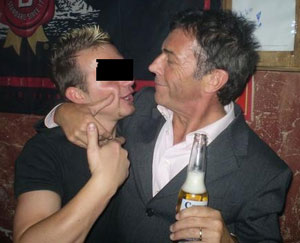
What has followed has been some hesitation from European media about whether it is appropriate to cover the sexuality of Haider, who is married with two children, as a news story. The issue has been further complicated by the fact that his sexuality was hardly inconsequential in the details of his death. He died in a car crash driving home drunk from a gay bar he had been at with his lover. But before Petzner's televised admission, that detail was left out of all press reports in Austria. It's not hard to see why, when the reality of Haider's personal life are so inconsistent with the public image of the party he led - the far-right Alliance for Austria's Future (BZÖ). After his admission, Petzner was fired from his position as leader of the BZÖ. He had already attracted attention at Haider's funeral after television cameras caught him loudly weeping more than Haider's wife and two daughters combined. Petzner said in his interview that Haider's family was aware of their relationship.
The revelation has put the party into full damage-control mode, fearing that the news will scare off the core conservative voters in Southern Austria that make up the group's voters. The hugely popular Haider had recently led the party to great success, ushering in a victory scoring 8 percent in last month's general election. Now that this news might throw the party into disarray, there has been speculation it may merge with the populist Freedom Party (FPÖ). That merger would create the second-strongest political party in Austria.So, the revelation about Haider's sexuality is hardly inconsequential. But still, Austrian media outlets have remained extremely hesitant to cover it. In fact, it was Germany's Bild newspaper that forced the details surrounding the circumstances of Haider's death into some of the Austrian press. Austria is one of the most conservative countries in Western Europe (many would say the most conservative) and has a particularly bad reputation for gay rights (though it does not have a form of civil partnership). The rest of the European media is full of criticism today for Austria's press, questioning why the country's media seemed to show such deference to the far-right leader in not reporting his homosexuality, which seemed to blatantly contradict the policy goals of his party. However the Austrian media has defended itself by pointing out that though the party's official platform demonized gays, Haider himself was never heard to utter any criticism of homosexuality amidst his attacks on foreigners and his praise for Nazis.
I can't help but wonder what effect all of this will have on the public perception of Austria in the rest of Europe, already badly damaged by the recent string of bizarre imprisonment cases, most notably the horrific tale of Josef Fritzel. That last case was also notable for the shocking way in which people 'looked the other way.'Fascist leaders who lived secret gay lives while publicly condemning gay people to death is a familiar theme in Europe's history. As Austria slides further and further to the right, revelations such as these are bound to make people pretty uncomfortable, especially due to its almost creepy historical parallels.
Friday, 4 July 2008
Betancourt's rescue: the view from Europe
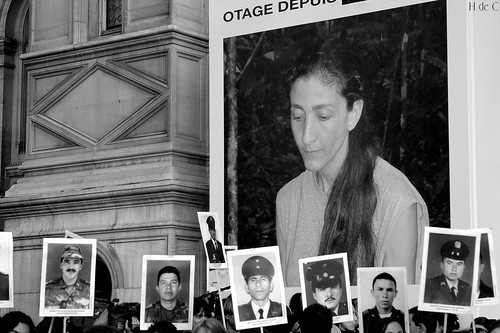
The reaction to the dramatic rescue of Colombian hostage Ingrid Betancourt and 14 others this week has received some unusual coverage in the European press, quite different from that in the US. If one didn’t know the back story behind this situation they might think the coverage downright bizarre.Betancourt is due to arrive in Paris at any moment to greet French President Nicolas Sarkozy. The meeting is largely required by political necessity, as Sarkozy and his predecessors had made the release of Betancourt one of France’s top diplomatic priorities, and Sarkozy has been working tirelessly for a diplomatic solution between the Colombian government and FARC, the leftist guerilla militia that took her hostage. Betancourt is a dual French and Colombian citizen.But the pleasantries that will be exchanged at the Elysee Palace tonight mask an embarrassing reality for France: in the end it was not France’s tireless diplomatic efforts that rescued Betancourt but a US-backed military operation in which France had no involvement whatsoever. That has to be a tough pill for the country to swallow.
The Colombian government, a US-backed rightist regime that has fiery relations with leftist governments in neighboring countries, was never a natural partner for France to be working with in the first place. But given that Betancourt - a former Colombian presidential candidate for an ecological party - is a French citizen, France felt a duty to find a solution to her captivity. But France’s tactic was chiefly diplomatic, trying to negotiate a settlement between FARC, which has historically been backed by the Leftist governments in Venezuela and Ecuador, and the Columbian government, treating FARC as a political group rather than a terrorist organization and putting faith in Venezuelan president Hugo Chavez to act as a mediator with them. Instead, the United States (which had three citizens as hostages alongside Betancourt) swooped in and coordinated a military rescue with Colombia's president Álvaro Uribe in an operation that even had Israeli operational assistance.
Tuesday, 8 January 2008
Obamania: the view from Europe
It’s been interesting to watch the European coverage of Barack Obama’s mammoth victory in Iowa over the past few days. Beyond the fact that it is such big news here, what has been notable is what the European press is emphasizing in their coverage.
Had the Iowa caucus passed without any extraordinary result, say with a Hillary and Mitt win, it still would have been a major focus here. After all, US presidential elections are followed worldwide with great attention, and this is particularly true in Europe. With the US being the world’s lone superpower, it’s just a bizarre quirk of history that the decisions made by a few thousand people in Iowa every four years have a dramatic effect on the entire globe. Yet the European coverage of the primary season has switched into hyperactive gear this year not only because the continent is so eager for new leadership in the US, but also because of the surprise ascendancy of two previous unknowns in the first contest.
Of course, the fact that Huckabee and Obama won the Iowa caucuses wasn’t a huge surprise to many living in the US, as this result was largely expected weeks before the vote (though the margin of the victories was a surprise). But here in the UK, for instance, nobody knew who Huckabee was until Thursday and only the most current events-savvy Brits knew much about Obama. In fact the presumption here has been that Hillary Clinton was guaranteed to be the next US president.
Had the Iowa caucus passed without any extraordinary result, say with a Hillary and Mitt win, it still would have been a major focus here. After all, US presidential elections are followed worldwide with great attention, and this is particularly true in Europe. With the US being the world’s lone superpower, it’s just a bizarre quirk of history that the decisions made by a few thousand people in Iowa every four years have a dramatic effect on the entire globe. Yet the European coverage of the primary season has switched into hyperactive gear this year not only because the continent is so eager for new leadership in the US, but also because of the surprise ascendancy of two previous unknowns in the first contest.Of course, the fact that Huckabee and Obama won the Iowa caucuses wasn’t a huge surprise to many living in the US, as this result was largely expected weeks before the vote (though the margin of the victories was a surprise). But here in the UK, for instance, nobody knew who Huckabee was until Thursday and only the most current events-savvy Brits knew much about Obama. In fact the presumption here has been that Hillary Clinton was guaranteed to be the next US president.
Subscribe to:
Posts (Atom)