One of the big flaws of this blog is that I have a tendancy to forget to write updates after I write about an upcoming event, so I thought I’d just give a quick update on the Eurovision results. Yes it is a little silly that this is my third entry about Eurovision in a week, but indulge me for a moment! I admit I’m unjustifiably fascinated by it.
As expected Norway came away the winner, but what was perhaps not expected was the huge margin by which they won (the largest in Eurovision history). In a distant second came fellow Scandinavian country Iceland with a lovely slow song called “Is it True,” and in third place was, inexplicably, Azerbaijan (huh??).
Western Europe can be pleased that it’s once again in the running, but lest people start to object that it seems to be only the Nordics that still have a shot from the West, take a look at the next few rankings. The UK came in an impressive 5th place, a far cry from the low scores it had the last few years. With Andrew Lloyd Webber penning this year's entry, it shows that a little effort can pay off. And France came in 8th, pretty good considering its entry was one of the only songs not in English and was decidedly Gallic and un-Eurovisiony in nature (Patricia Kaas definitely brought a touch of class to the proceedings!)
Some of the contest’s lowest scorers did much to show that the new voting system has ended the Eastern Europe dominance. Much to my dismay, Ukraine came in a dismal 12th (I favoured it because I met Svetlana in London awhile back but if I’m honest it wasn’t of the highest musical calibre – but what a show!). The Czech Republic was the only country to score the dreaded nul points, proving that even their Slavic heritage and Eastern geography couldn’t save them from the discerning eye of the new judging panels. Latvia, which had decidedly the worst entry in the whole competition, somehow managed to get 7 points.
So it would appear the new voting system worked. Norway should certainly put on a good show next year. Hell, maybe I’ll even see if I can get tickets. I’ve still never been to Norway. As for how the show was for the UK without broadcasting legend Terry Wogan, I couldn’t tell you. I was watching the show at a party and couldn’t hear any of Graham Norton’s narration, anyone catch it?
As regards the fears of violence on the Moscow streets over a gay rights protest, it appears nothing got out of hand, though the police were predictably heavy-handed. It appears they also made arrests of the Orthodox and skinhead counter-demonstraters as well though.
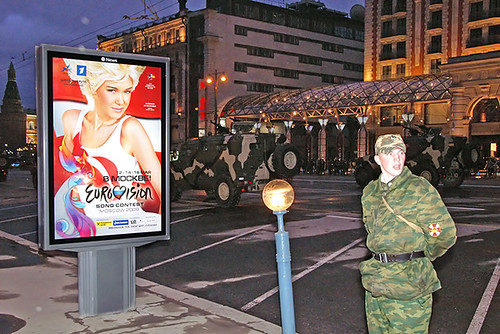
After a dramatic year of threatened boycotts, banned songs and host storm-offs, Eurovision 2009 in Moscow is at long last upon us. With a new voting format and a politically sensitive location, this Saturday’s finals could prove to be one of the more interesting in a long while.
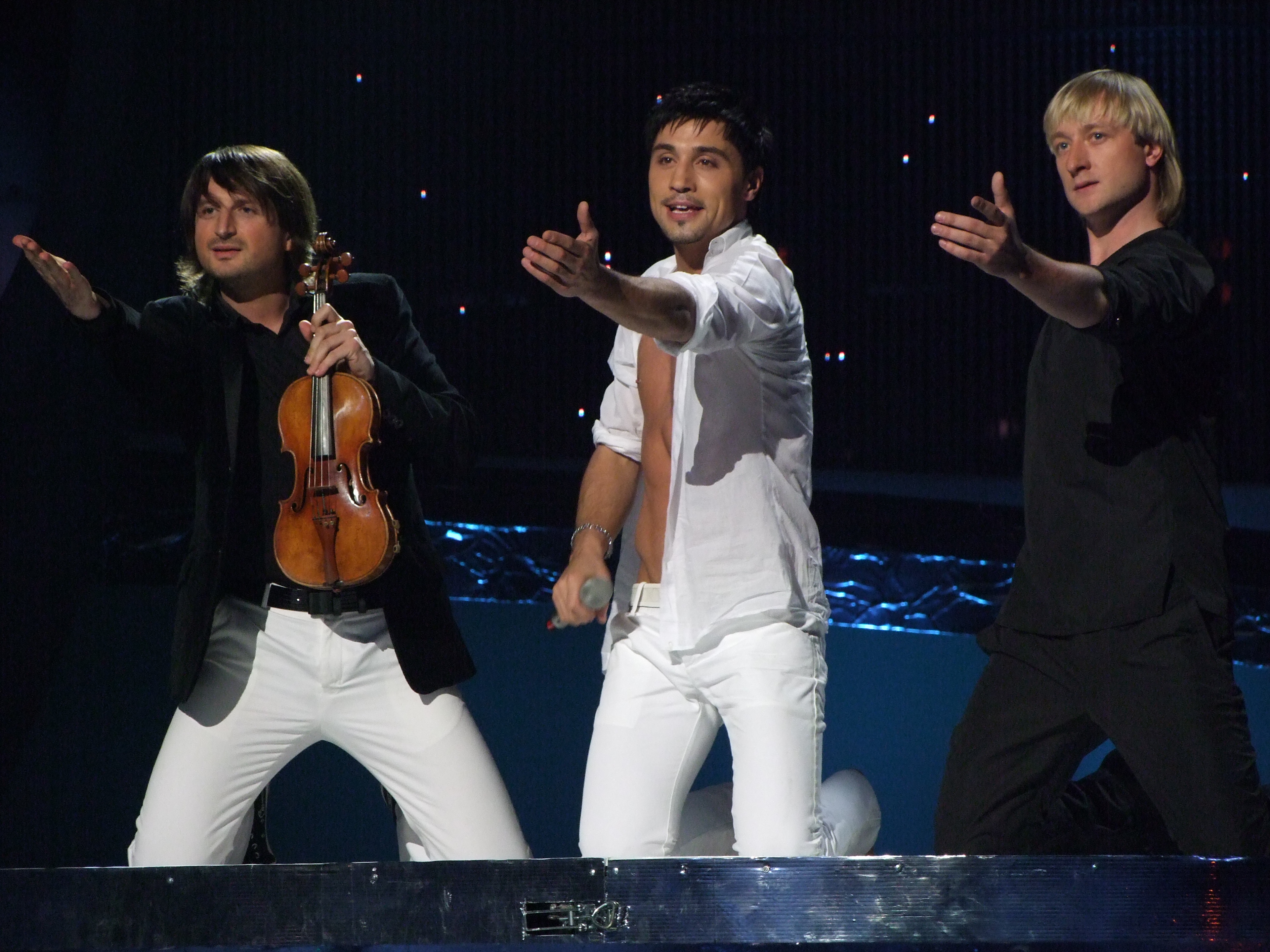
Last year’s finals in Belgrade were the last straw for many who had grown frustrated with tribal voting patterns that seemed to have completely shut out Western Europe from ever possibly winning the phone-in public voting final round. The Slavic countries of Eastern Europe have tended to vote for each other since they entered the song contest after the end of the Cold War, and for some this pattern explained why Russia’s sub-par entry-on-ice from Dima Bilan handily won last year (though admittedly none of the 2008 entries were very good). Long-time British Eurovision host Terry Wogan – a veritable institution for Eurovision in the UK - was so exasperated last year with the voting pattern that he quit his hosting job live on air!
The system’s critics alleged that the voting had turned completely political rather than recognizing “talent” (talent being a subjective word when it comes to Eurovision!). Its defenders argued that if Western Europe wanted to be competitive in the song contest again, it needed to field real entries rather than joke acts that seemed to deliberately mock the contest, such as Ireland’s singing puppet last year and Britain’s Scooch in 2007.
Fearing an eventual withdrawal of the founding Western European countries from the contest (which France, Germany, Spain and the UK do pay for after all), Eurovision has changed the voting format this year to be 50% from a public vote and 50% from a panel of music industry experts in each country. So, for instance, the winner of the UK’s vote package will be decided by a combination of the results of the public phone-in vote and the decision of a British music industry panel who are charged with disregarding the nationality of the acts and looking only at talent. We won’t know until Saturday whether these panels will also fall into patterns of national prejudice, but people seem to be confident that they won’t. This year the odds-makers have picked Norway as the favourite to win, with Alexander Rybak’s folksy song “Fairy tale”.
“We Don’t Want a Putin”
Of course last year’s voting patterns aren’t the only controversial aspect of this year’s contest in Moscow. Ongoing tensions between Russia and the west have made this year’s location uncomfortable to say the least. After Russia’s invasion of Georgian-occupied territory in August, several estates including Latvia, Estonia and Poland announced they would boycott the Moscow Eurovision. Since then they seem to have softened their stance, as they are all now taking part. Georgia was also supposed to take part, but their entry was deemed too political and was banned by the European Broadcasting Union, which runs the show. The song that won the Georgian finals, “We Don’t Wanna Put In” by Stephane & 3G, seemed to deliberately parody a popular pop song in Russia by The Putin Girls called “We Want a Man Like Putin” (no joke, watch it it’s hilarious). The Georgia song also contained the thinly veiled lyrics “We don’t wanna put in, the negative move, it's killing the groove” in the chorus. The ban on the song is the first time the EBU has ever blocked an entry to the song contest for political reasons. But it was clear the organisation was worried about offending this year’s host, especially when Putin himself may be in the audience.
Of course the publicity the song has received from the controversy is probably more valuable than actually appearing on Eurovision. The song is bizarrely number two in the UK's Music Week pop chart at the moment. It’s also getting radio play across Europe.
The Songs
It looks like Russia’s Channel One is pulling out all the stops for the Moscow show, which kicked off last night at Moscow's Manezh Exhibition Centre. Reportedly it’s going to be the most expensive show in Eurovision’s history, though the actual budget won’t be revealed until after. Comparisons are obviously being made to the over-the-top Beijing Olympics in China, another international showcase event by an emerging BRIC power.
As previously mentioned, the hands-down favourite this year with the bookies is Norway, but Greece, Turkey and Ukraine are considered to have a good shot as well. Much of the talent this year is made up of female ballad singers, and there is (sadly) little of the tongue-in-cheek camp of the past two contests. The UK’s entry, “My Time” is a light theatrical ballad penned by Andrew Lloyd Webber and sung by previously unknown Jade Ewan (though UK entrants are almost always previously unknown, and almost always still unknown afterwards!).
However on the continent they often field entrants who are already famous singers. France’s entry Patricia Kaas is a well-known Gallic chanteuse who has sold millions of records. Malta’s entry Chiara is a sensation in her home country and this will be her third try for the Eurovision crown (she narrowly lost to Israeli transsexual Dana International in 1998).
Beyond the ballad belters there are also a number of orchestral folksy entries. Front-runner Norway will have a set or violins, Estonia is featuring a six-piece female string group, and Slovenia even has a string quarter with barely any vocals. Sweden and Bulgaria are both featuring operatic singers.
After receiving much criticism for its puppet entry last year (it didn’t help that Dustin the Turkey puppet was featured as a mascot for the ‘no’ vote in the Irish referendum on the EU Reform Treaty),
Ireland has gone with a more serious entry this year with a girl rock band – who I saw perform at a Eurovision preview party in London a few weeks back and loved. Perhaps this year’s entrant is reflective of Ireland’s newly humble attitude toward Europe?
Sadly there’s only a few high camp entries in this year’s lineup. Turkey's entry “Dum Tek Tek” has been the most commercially popular, as it’s scantily-clad dancers were deemed “too sexy for TV” by Turkey’s authorities. Spain’s Soraya and Ukraine’s Svetlana Loboda will both feature scantily clad go-go boys (Ukraine’s was also at the preview – it was a little raunchy!). Strangely it is last year’s host Serbia that is providing the only comic entry, with an accordion-backed funny tale about materialism called Cipela.
The semi finals will be held tonight and Thursday, and the final will be held Saturday night, all at 8pm CET. The show airs in most every country in Europe on the national broadcaster, but sadly not in North America. But never fear, you can watch the show live on the Eurovision 2009 web page!
As yet another Eurovision comes and goes, the next day analysis here in the UK is as predictable as the sequins, feathers and glitter that accompany the song contest each year. Once again there is collective hand wringing over what the contest has become, and questioning over whether the UK should continue funding it. But as standard as all of the British complaining over the contest has become, there was a new starkness to the exasperation of perennial British host Terry Wogan this year when Russia emerged the winner, as he muttered at the end of the program, "Western participants have to decide whether they want to do this again.” For my American readers, perhaps a little explanation is in order. Eurovision is a yearly song contest which has been held in Europe since 1956. Each country selects a song to represent them, and they all battle it out in the grand finale, with people all over Europe phoning in their votes to determine the winner. The contestants could be already famous in their given countries or they could be previously unheard of. Some famous past winners of the competition include Abba and Celine Dion.
 One of the big flaws of this blog is that I have a tendancy to forget to write updates after I write about an upcoming event, so I thought I’d just give a quick update on the Eurovision results. Yes it is a little silly that this is my third entry about Eurovision in a week, but indulge me for a moment! I admit I’m unjustifiably fascinated by it.
 So it would appear the new voting system worked. Norway should certainly put on a good show next year. Hell, maybe I’ll even see if I can get tickets. I’ve still never been to Norway. As for how the show was for the UK without broadcasting legend Terry Wogan, I couldn’t tell you. I was watching the show at a party and couldn’t hear any of Graham Norton’s narration, anyone catch it?