Showing posts with label euro. Show all posts

Tuesday, 23 February 2016

Argentina: Europe on the other side of the world

After three months of travelling, I’ve decided – I’m not giving up on Europe. 

I’m currently halfway across the Atlantic, flying from Argentina back to Brussels after a three-month journey across North and South America. I have to say, it feels good to be going ‘home’. 

This is the longest I’ve been away from Europe since I moved to London ten years ago. It was a nice opportunity to clear my head, to spend some time with my family and to experience a new part of the world. I’ve used the peace and quiet to work on my book about nationalist education and the European project, which I’m happy to report is now nearing completion. 

It is perhaps fitting that I ended my trip in Argentina, a country many describe as the most ‘European’ place in the Americas. In fact, as I was travelling south through Latin America I kept hearing, “Oh, you’re going to Buenos Aires? But maybe it won’t be so interesting for you, since you live in Europe. It’s the same thing.” 

Sunday, 11 October 2015

In Berlin, it's better to have a Belgian bank account than a German one

While banks in Germany rake in ATM fees from customers of other German banks, EU law forbids them from charging citizens of other EU countries.

It's a 'Brussels week' for me this week, I'm in town to shoot a few videos and moderate some conferences. As the Autumn draws on, I'm finding myself here more often than I'm in Berlin. But this is fine, since I have apartments in both cities. 

Strictly speaking, when I'm in Brussels I am "home". This is still my primary address - my Belgian phone is still my primary number, and I still use a Belgian bank account for all transactions. And actually, this last fact has made my life in Berlin easier.

Thursday, 29 September 2011

What would the world look like without the EU?

They used to say that when America sneezes, Europe catches a cold. That’s certainly what they (and I) were saying during the 2008 economic crisis, when misadventures on Wall Street and the subsequent collapse of Lehman Brothers created a disaster that quickly spread to Europe. How the tables have turned. Now the US is waiting helplessly to see if Europe can avoid a disaster that would eclipse Lehman Brothers in scale and could throw the US back into recession.

It’s a testament to just how important Europe has become to the global economy that it is now Europe’s sneeze that can give the world a cold. The EU is now a larger market than the United States, and over the past twenty years it has literally become the world’s regulator. Is it conceivable that this entire project could now collapse?

This is the question that is now being asked in the United States. When I was home last weekend I was asked by friends, “Is the EU going to fall apart?” Trying to show a bit of false confidence, I assured them that it is not. Germany is in the end going to suck it up and do what needs to be done to save the euro, I insisted, because the alternative is complete economic meltdown. The vote for the increased bailout fund today in the German parliament seems to go some way in justifying that optimism. The truth is that Europe’s problems are not insurmountable.

Thursday, 11 August 2011

Switzerland considers pegging to the euro

With the world's main currencies in crisis, the historically stable Swiss Franc has exploded in value over the past year. This has had a disastrous effect on the Swiss economy, as its exports and tourism industries struggle under the effects of a drastically overvalued franc.

This was in clear evidence earlier this month when I took a trip on the Glacier Express train across the Swiss Alps with my father. Ordinarily this scenic tourist train would be packed in August, having sold out months in advanced. But our train was nearly empty. When we finished our journey in Zermatt, home of the Matterhorn, the city was dead quiet. It looked like three-quarters of the rooms in our hotel were vacant.

It makes sense. After all, who can afford a vacation in Switzerland these days? It was already an incredibly expensive country, and the current exchange rate close to one euro to one franc (three years ago it was 60 cents to one franc) makes it unaffordable for most tourists from France, Germany and Italy. When my father moved from the US to Zurich in 2006 the exchange rate was 80 US cents to one franc. Today it's $1.37 to one franc. Given that a value meal at McDonalds costs 15 francs ($20), it's a difficult place to be if you don't make a Swiss salary.

Monday, 8 August 2011

Europe's choice: anger voters, or drop the euro

The Eurozone's finance chiefs took the extraordinary decision last night to "actively" buy up Italian and Spanish bonds, in a last-ditch attempt to try to stop the market freefall that is spiralling out of control. Following the downgrading of the United State's credit rating for the first time in history over the weekend, everyone is waiting this morning with baited breath to see whether the good news of the European bond buy-up will be enough to outweigh the bad news of the American downgrade.

The decision to have the European Central Bank buy up Italian and Spanish bonds is a huge step toward  fiscal union in Europe, and it did not come easily. Last week it looked like Europe's leaders were intending to reject any such move when they announced Thursday that they would buy only Irish and Portuguese bonds. This was effectively pointless because both of these countries are already getting EU bail-outs, and the markets took it as a sign that the ECB would not buy the Italian and Spanish bonds. This caused a panic, the bond yields of those countries plummeted even faster than they were earlier in the week.

The heart of the problem is this: the markets are demanding that the EU rapidly establish stronger fiscal union so that individual states don't collapse under the debt crisis and bring the common currency down with them. Essentially, the European Central Bank needs to take on the debt of the struggling economies. But European leaders are resisting doing so because the public mood for further European integration is so low right now. 

Monday, 27 June 2011

US getting worried and impatient over euro crisis

The Greek parliament is voting this week on the drastic austerity measures that have been ordered by the EU as a condition for the country receiving the rest of its bailout money. As Washington watches the situation unfold with unease, US officials are voicing an increasing amount of frustration that European leaders do not seem to have the situation under control. And the officials know that if the euro collapses, it could easily take the US economy down with it.

As Quatremer noted today, the euro has become such a powerful currency (now the second reserve currency of the world) that if it runs into trouble it would have a devastating impact not just in continental Europe but throughout the world.

Back in the 1970's when the US took the decision to take the dollar off the gold standard, the situation was watched intensely by the rest of the world. As the US treasury secretary noted at the time, "the dollar is our currency but your problem." Now, with the euro being used by a common market larger than America's, the opposite could be said to America. And the increasing grumblings suggest that American officials don't like being at the whim of decisions being taken across the Atlantic.

Monday, 20 June 2011

EU issues Greece an ultimatum - could it backfire?

Last night Eurozone finance ministers got tough with Greece, deciding to withhold payment of €12 billion in emergency loans until the Greek Parliament enacts drastic austerity measures. The move is intended to intimidate the opposition forces (which includes the majority of the Greek public) into accepting the cuts, as the Greek prime minister faces a confidence vote in parliament this week.

But given the enormous disaster that would likely befall the Eurozone if Greece leaves the currency union, is this a threat the EU can afford to make? There is a real risk that this latest move could backfire. Massive protests continue in Athens today as people stand in front of the parliament chanting "we won't pay". Inside the building, Socialist prime minister George Papandreou is holding a confidence vote to reaffirm his mandate before he attempts to push these austerity measures through the parliament.

Now facing defection from his own party's members and extreme pressure from public opinion, Papandreou's confidence vote will be a rollercoaster ride over the next few days. There is a chance that this latest move from the finance ministers will further enrage Greek public opinion, where there is already an impression that the EU, at the insistence of Germany, is dictating draconian measures in an anti-democratic way. A perceived insult like this could put public optinion in Greece over the edge and cause even more Socialists to withdraw from the parliament. If Papandreaou's government falls it could mean a default on Greece's debt and, most chillingly, a withdrawal from the Euro. These events could spiral out of control and cause a meltdown of the European economy, and maybe even the world economy. Given that reality, is this really a threat the finance ministers can afford to make?

Thursday, 24 March 2011

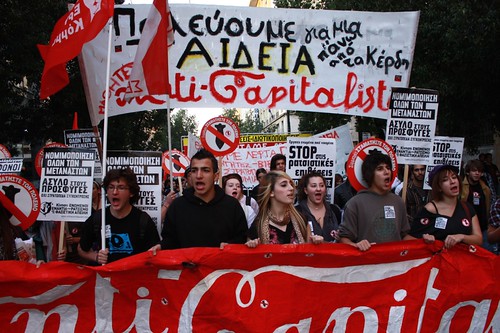
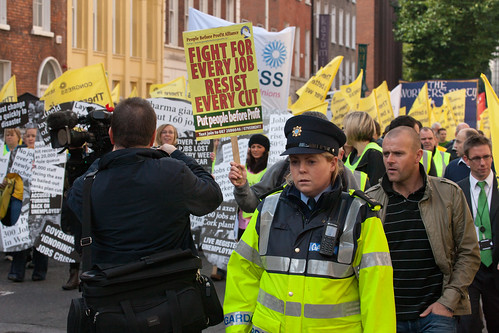
Anti-austerity protests shut down EU Quarter

As one of the last remaining Socialist governments in Europe collapses today, the left is taking to the streets in Brussels in what seems like a last-ditch effort to stop the massive austerity cuts to government spending taking place across Europe.

This morning I had the arduous task of trying to make my way to work through the massive union demonstrations by the European Trade Union Confederation that have closed off the EU Quarter. While some parts of the protests seemed relatively peaceful and good-natured, I could already observe danger signs. The security forces are wearing body armour, riot gear and gas masks. Youths with bandanas around their faces were everywhere, particularly on the side streets. Many of the older demonstrators are already intoxicated. I saw eggs being pelted at the windows of buildings on Rue de la Loi. Firecrackers were exploding all over the place (my suitcase got hit by one in fact!). My friend tells me a window in her office was smashed by a rock. It's going to be a fun day…

Thursday, 3 March 2011

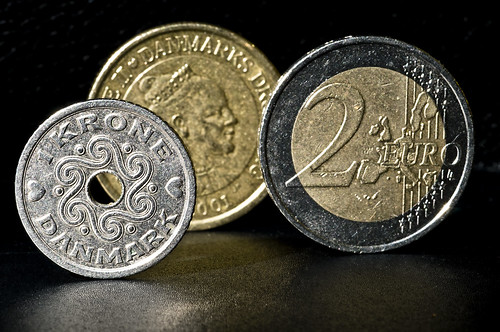
Denmark may join the euro before the summer

It might seem counter-intuitive given the ongoing tremors within Europe's common currency, but believe it or not Denmark is considering holding a referendum on joining the euro in the next few months. Though Danes rejected joining the common currency in 2000, the country's prime minister said yesterday that they may give it another shot. And poll numbers indicate that this time it could succeed.

All EU countries are required to join the euro eventually, but Denmark and the UK have an opt-out from this requirement. But, as is the case with so many EU opt-outs, Denmark is actually a pseudo-member of the eurozone. Because Denmark is in the European Exchange Rate Mechanism, its currency is pegged to the euro. So essentially, Denmark is already on the euro, it just uses different pieces of paper. But because it doesn't technically use the euro, it can't take part in eurozone decisions. And now that Angela Merkel and Nicolas Sarkozy are pushing for the creation of Eurozone decision-making body, the situation has become quite undesirable for Denmark. It will be affected by the decisions made in this new body, but it won't be able to join it. And that is why, despite the eurozone trouble, this might be exactly the right time for Denmark to join the euro.

Wednesday, 5 January 2011

Belgium's 'invisible' EU presidency comes to an end

As the clock struck midnight last Friday, it wasn't just 2010 that was coming to an end. Here in Brussels, the new year also meant the end of Belgium's six-month period at the helm of the EU, as the country handed over the baton to Hungary. It was an interesting period for the rotating presidency, held for the entire six months by a country with no government. Yet despite the domestic political chaos, the presidency actually seemed to run fairly smoothly - or at least there weren't any noticable disasters. In fact if you weren't looking for it, you might have missed the Belgian presidency alltogether. It was a low-key, almost invisible affair.

Perhaps this was exactly the type of presidency that the EU needed at this time. After all, the Lisbon Treaty's creation of the new posts of President of the European Council and High Representative for Foreign Affairs was meant to downgrade the role of the rotating presidency to that of just a coordinator. Spain was the first country to take over the presidency after the treaty's adoption 13 months ago, and for those first six months of 2010 there seemed to be some confusion about the rotating presidency's new role. The Spanish foreign minister got in hot water a few times for appearing to speak for EU states when that role is meant to now be held by the new EU foreign affairs chief Catherine Ashton. And Spanish Prime Minister Jose Luis Zapatero, effectively the last Socialist leader left in power in Europe, seemed to be pushing for high-profile agenda items in a way that overlapped with the role of the new European Council president Herman Van Rompuy.

Contrast this with Yves Leterme, who is temporarily holding the Belgium prime minister position as a caretaker while the country continues to struggle forming a government. Leterme was pretty much invisable during the entirety of the Belgian presidency. At the European Councils he was happy to hand the reigns over to Van Rompuy, who as luck would have it is not only a fellow Belgian but also a member of Leterme's own political party. And I'm not even aware of the name of the Belgian caretaker foreign minister, I never heard from him or her at all last year. Given that the caretaker government is not authorised to propose new policy, perhaps this is unsurprising.

Tuesday, 14 December 2010

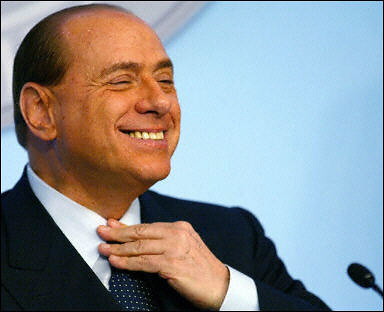
Berlusconi, the Italian asbestos – hey, at least he isn't gay!

Incredible, he's done it again! Despite all logical odds, Italian prime minister Silvio Berlusconi has again narrowly escaped defeat like some kind of reality-defying illusionist. But this is Italy, and perhaps logical odds were never the right indicators to use here. After all this is a country where the prime minister can cling to power even after he's been caught lying to a police station to release from jail an underage Moroccan erotic dancer he’s having relations with. This is a country where half of the administration can be forced to resign after corruption scandals, and yet the leader himself is still left standing triumphantly.

How can one explain this bizarre land south of the Alps? As has often been noted, few other developed countries would tolerate this kind of extreme behavior from their elected leader. In the past this blog has been routinely wrong in predicting Berlusconi’s imminent defeat. I just couldn’t believe that someone could hold on to power after these kinds of revelations were out there. Last year, during the prime ministers scandal-plagued divorce from his wife, allegations of sex with minors, hiring prostitutes and lavish orgies at Silvio's Sardinian villa were everywhere - and the prime minister didn't even bother denying them.

This is why when these revelations about the Moroccan belly dancer (pictured below) came out in October - and Berlusconi issued his subsequent defense of, “Yes I’m passionate about beautiful girls, but it’s better than being gay,” - I didn’t even bother writing about it. Yes, the fact that he got his Moroccan Lolita released from jail by telling a police station she was the Egyptian president’s daughter might have seemed like surely the final step too far. But I had been burned too many times by prematurely predicting Berlusconi's demise.

Monday, 22 November 2010

Ireland in crisis

Today was a dramatic day in Dublin. First came the news that the government was giving in and accepting an EU bail-out, prompting angry demonstrators to swarm government buildings in protest of the decision. But as the day went on Ireland’s financial crisis morphed into a political one. The Green Party, a junior partner in the governing coalition, announced it was pulling its support - prompting a collapse of the government and a general election. The Irish government now appears to be in complete meltdown.

Since last week Ireland has been under pressure from the EU to accept the bail-out as it became clear that Ireland’s banks were in so much trouble that the Irish government was going to be unable to borrow money. Brussels was afraid this insolvency would spread to the other vulnerable so-called “PIGS” countries, causing the euro currency to collapse. If such a crisis were to spread to Spain, the eurozone's fourth largest economy, it could spell the end of the euro and as a consequence, some leaders have suggested, the end of the EU. After spending a week denying that they would take the money, today the Irish government accepted a rescue package worth up to €90 billion ($124bn).

So why the initial resistance, and why the protests today? Surely Ireland getting money is a good thing for Ireland right? Well the rescue package comes with a lot of strings attached, and they will be painful strings for the Irish population. In exchange for the aid, Ireland must make €4.5 billion in public spending cuts and €1.5 billion in tax increases. Overall, the country will have to save €15 billion by 2014. This will undoubtedly cause an increase to the unemployment rate, aleady high at nearly 15%. Essentially, it doesn’t matter who the Irish public elects in the general election that will likely be called in January (after the bail-out has been approved by the current parliament). The country will be governed by the International Monetary Fund and the European Central Bank for the next three years.

Friday, 12 November 2010

Is direct democracy preventing a solution to the euro problem?

Angela Merkel may have won her battle for a change to eurozone rules last month, but as lawyers grapple with exactly how to make those treaty changes, the devil is proving to be in the details. The greatest irony of the whole situation may be that it is the eurosceptic populations of Northern Europe - who have been the most unfairly hurt by the euro currency crisis - that are proving the biggest block to making changes with real teeth that would stop Southern European states from from again abusing the rules of the common currency.

Ever since the German chancellor reluctantly agreed to bail out the collapsed Greek economy and create a permanent mechanism for similar crises in the future, she has insisted that EU treaty changes are needed to prevent the bail-out being challenged in Germany's constitutional court. So she has called for treaty changes explicitly allowing such bail-outs and also measures to punish eurozone states who abuse the bloc's rules as Greece did. The later element would have the objective of preventing the need for another such-bail-out in the future. The changes are needed urgently, she says, because that future may be of the not-too-distant variety considering the recent economic news coming out of Ireland and Spain.

Friday, 29 October 2010

Everybody wins in Brussels?

The European leaders are exiting the Just Lips building now, and they are all smiles. To hear them tell it, everybody got what they wanted out of yesteray's horse-trading in the Autumn European Council. Merkel and Sarkozy got their eurozone treaty changes and David Cameron got his budget freeze. The British media sure seems to have swallowed Downing Street's line that Cameron was "successfull" in convincing 10 other member states to back him on his call for a cap at 2.9% for an EU budget increase. Hooray hurrah!

Er, but wait a minute...wasn't it a complete budget freeze that Cameron was asking for? The British media seem to have forgotten that between yesterday and today. In fact, Cameron's freeze proposal was roundly rejected by member states yesterday, so he then fell back to a position of wanting to keep the budget increase to the commission's proposed 2.9%. To claim that this was a "victory" for Cameron is pretty absurd, considering a 2.9% increase was the stated position of most member states going into the meeting. The 6% increase requested by the European Parliament was never a realistic figure - every year they request more than they expect to get in order to increase their bargaining position with the council. Yes, member states agreed not to negotiate to any figure above 2.9%, which will surely displease the parliament, but the other 10 member states certainly didn't need much "convincing" from Cameron to agree to this position.

Thursday, 28 October 2010

A day of deal-making in Brussels

As European leaders meet in Brussels today everyone seems to have something to sell. David Cameron and new Dutch prime minister Mark Rutte have stepped off their trains this morning with demands for an EU budget freeze for 2011. Angela Merkel and Nicolas Sarkozy arrived this morning having formed a pact between them a few days ago to jointly demand treaty changes allowing the EU to sanction eurozone countries who misbehave. And representatives of the European Parliament will be on hand to demand the introduction of direct EU taxation that would go directly to Brussels. It will be an intense day of horse-trading as each block tries to get what they want.

The British and Dutch conservatives want to freeze next year's budget at 2010 levels, opposing the 6% increase approved by the parliament last week. They say it would be obscene to increase the EU budget, which is financed by member states, at a time when national governments are pursuing drastic budget-cutting measures. Members of the European Parliament (MEPs), on the other hand, point out that a 6% increase is significantly lower than what they usually call for. But they say they would be willing to consider a freeze if the member states agree to new forms of direct EU taxation on things like aviation, financial trading and carbon credits. Right now the EU is entirely funded by member state governments.

Monday, 10 May 2010

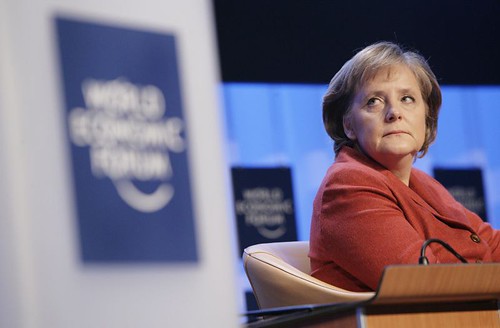
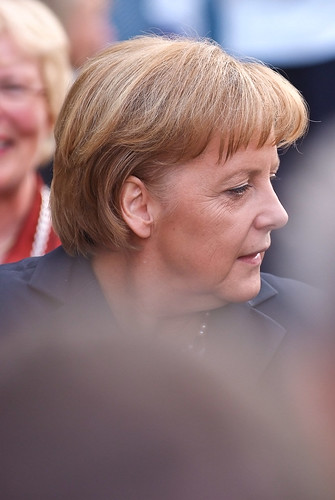
Angie’s anguish

Poor Angela Merkel. You do have to sympathize with the conservative German chancellor, trapped between a rock and a hard place. The dire situation in Greece requires her to commit tons of German money to keep the crisis from spreading throughout the eurozone. But a bail-out of this Meditteranean nation that has behaved so badly is enormously distasteful to the German public.

It’s a bit like the fable of the grasshopper and the ant. Germany has held down wages and been frugal in its spending, while Greece has been profligate and irresponsible, spending far more than they had while at the same time not bothering to collect taxes appropriately. For the average German, it’s enfuriating that the squirell will now have to bail out the racoon.

But perhaps the more appropriate literary counterpart for Angie is Hamlet. Her foot-dragging and indecision during this crisis has been blamed by many for making the crisis get far worse. In the end she had to relent - so the delay accomplished nothing but exacerbated the problem. This weekend EU finance ministers agreed to establish a €962bn emergency crisis fund. It’s designed to stop the financial market turmoil as the situation in Greece deteriorates, reassuring jittery investors that the problem will be solved. Yet many are concerned that this fund is too late, and should have been agreed weeks ago before the situation got out of hand. Back then, it was Merkel who was the lone EU leader standing in the way. She knew the German people would punish her for agreeing to a bail-out.

Friday, 26 March 2010

To IMF or not to IMF?

You were lucky yesterday if you caught a glimpse of Angela Merkel running around Brussels like a mad woman. The German chancellor was the center of attention during the spring summit of EU national leaders, as all of Europe looked to her to come to the rescue of Greece, and by extension, the Euro currency.

Merkel was going it alone in her unyielding objection to a bail-out for debt-ridden Greece, and she dug in her heels firmly. After much negotiation she relented and agreed to a bail-out, but on one condition – the American-controlled International Monetary Fund would have to be involved. European leaders are leaving Brussels today with a bailout plan in place, but only as an “emergency measure” to be triggered if Greece goes completely broke and cannot get any more credit.

Though it's stabilised the situation for the moment, the solution devised seems to have truly pleased no one. The euro rebounded from its long decline today in response to the news, but the markets did not reflect much confidence in the measure. Merkel is under tremendous pressure. The idea of a bail-out is extraordinarily unpopular in Germany, where many point out that such a bail-out is specifically forbiddon by the Maastricht Treaty. Many in Germany are saying that a core part of the eurozone agreement was that one state would never have to bail out another in the currency union. That, say some analysts, is why Merkel insisted on involving the IMF. Making the bail-out appear like an international effort will shield her from legal challenges that will surely be launched at home on the basis of the fund's violation of the Maastricht Treaty.

Friday, 13 March 2009

Could the Tories Bring the Euro to Britain?

Last night I attended a gathering of economists and politicians at The Center discussing the current situation vis-à-vis Britain and the Euro. Had such an event been held a year ago, you probably would have been lucky to get three people to show up. After all, the debate about Britain joining the Euro had been dead in the water for years. But things are looking very differently recently after the unprecedented collapse in the value of the pound, and the assembled speakers at the session had some surprising things to say about what may be around the corner for Britain.

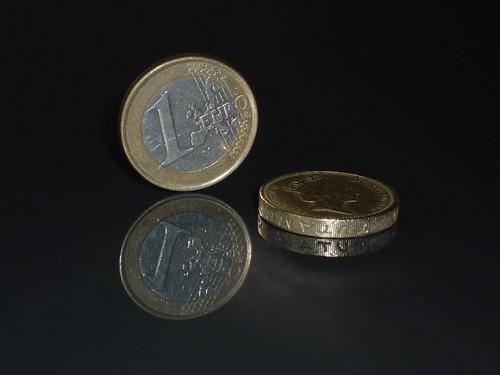
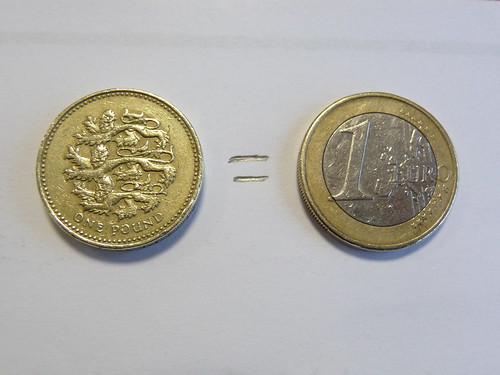
The pound has lost 30 percent of its value since last summer, the most dramatic drop in the currency's history. It's fallen from $2.00 to one pound in July to $1.39 to one pound today. The pound fell to just €1.02 recently, when it was €1.33 at the beginning of last year. So the situation for the sterling is bleak.

So now a debate which was once thought to be done and dusted is beginning to resurface, although not yet out in the open in Britain. Speaking at the session, former British MEP John Stevens observed, "It's much easier to talk about Britain and the euro outside than inside." Indeed Stevens, who just wrote a report concluding that the best monetary option for Britain is to join the euro, said that his report has received much more attention in the rest of the world than it has in the UK. In Britain, the currency problem remains the issue that dare not speak its name. Opinion polls have consistently shown that a majority of the public opposes joining the euro, and no politician in today's Britain is willing to take a principled stand on an unpopular issue. Both Labour and the Conservatives know that reawakening the euro debate could easily have the effect of spooking British consumers even further. "If the public hears talk about joining the euro, there will be mass fear that Britain is really in trouble," Stevens said, perhaps only half joking. A country's currency has much to do with its national pride, and having to give up the pound would be a massive blow to Britain's self-esteem.

Yet the country may get to a point where it has few other options. Last night's panelists seemed to agree there is a good possibility the pound may have much further to fall, and a full-on run could cause it to be worth drastically less than the euro. Stevens noted that if the UK were to start negotiations for joining the currency now they would be coming from a position of strength. "We wouldn't be coming just as supplicants, we would be bringing something to the table," he noted. "Britain joining the euro would position it as the world currency." At the same time, it would demonstrate to currency speculators that the pound is a safe currecy. On the other hand, waiting until the bottom has truly fallen out from the pound to begin negotiations would be a very weak position indeed.

But how to sell the idea politically? A representative from the British Chambers of Commerce asked how the organisation could make small-and-medium-sized enterprises come around to the idea. Stevens pointed out that SMEs actually benefit disproportionately from a common currency. Large businesses have mechanisms to get around currency barriers which small businesses do not. Studies have shown that SMEs within the Eurozone have been some of the greatest beneficiaries of the common currency, Stevens said.

But does any political party in Britain have the political will to sell the public on an unpopular issue like this? Simon Titley, a consultant who also worked on the report, said the reticence to do so may be a result of the systemic over-dependence on polls in modern British politics. Public opinion polls may show that a majority of the British are opposed to joining the euro, he said, but those same polls also show that they also don't care very much about the issue either. It's what pollsters call a 'soft issue,' something which people are willing to express an opinion on but actually isn't very important to them. "It's not an issue that would decide an election," he said. "Politicians that are in favour of the euro need to come out of the closet and stop caring what Rupert Murdoch's newspapers will say about them."

So what's likely to happen? All the panelists seemed to think that the next government of the UK will likely be the Tories under David Cameron, who just this week has signaled his intention to leave the main centre-right Europarty in the European Parliament to form a fringe Eurosceptic party, a move many have seen as making the Tories into an isolationist party. However, Titley had an interesting prediction for what may be in store for the a Conservative government. "I think a likely scenario is that a UK Tory government will adopt the euro, under the whole 'Nixon going to China' idea," he said. "Sometimes an idea seems so far to the left that only a right-wing government could do it."

These certainly have been unpredictable times, so I would say even the conservatives bringing the UK into the Eurozone wouldn't surprise me these days!

Friday, 23 January 2009

One Letter and Six Months

Following the rioting in Iceland this week resulting from the country's economic collapse, the cruel joke making the rounds in Europe right now is that Ireland, its Atlantic island neighbor, is just one letter and six months away from being Iceland itself.

Once hailed as the "Celtic Tiger" for its economic power performance after joining the EU, Ireland today finds itself in bad economic straights. Yesterday the government announced that it would nationalize Anglo Irish Bank, the country's third largest lender. The government is also considering reducing the pay of public sector workers as it scrambles to find money anywhere, a decision which could lead to massive and possibly violent demonstrations in Dublin. In six months, Ireland could be in the same situation as Iceland.

Of course there is one key difference between the two: Ireland is on the Euro, Iceland is not. Many economists are saying that the fact that Ireland is in the euro zone is the only thing that has enabled the country's economy to stay afloat during these trying times. Though the economy is in big trouble, investors still consider the country safe because it is part of the euro zone, and its credit rating has not been downgraded.

This fact has seemed to make a few Euroskeptics across the Irish sea more than a little defensive. The British pound has virtually collapsed over the past six months, dropping today to its lowest level against the dollar in 23 years. It's fallen from $2.00 to one pound in July to $1.34 to one pound today. And the pound has lost 20 percent of its value against the euro in the same time, with the two currencies now almost equal in value. Today the UK also officially entered a recession, with commentators noting that the fact that 3/4 of the UK's economy is dependent on the services industry (the most harshly affected industry in the current global crisis) means that the country will likely be the hardest hit of any during the global downturn. And without the stability of being part of a larger currency block, it is thought the UK may have to go crawling to the International Monetary Fund begging for money, because it won't be able to finance the massive level of debt it is taking on with its currency so devalued.

This might explain the peculiarly hostile questioning the Irish finance minister received on the UK program Newsnight last night about whether it had been "too early" for the country to join the euro zone. The presenter insisted that the country's "hands are tied" by the Eurozone since it will be unable to set its own interest rates in response to the crisis (interest rates for the euro zone are set centrally by the European Central Bank in Frankfurt). The minister, Brian Lenihan, seemed hardly able to disguise his bemusement at the absurd question, pointing out that before Ireland joined the Euro its currency was pegged to the pound, and since the country has never freely floated its currency it has never been able control its own currency measures anyway. That shut the presenter up. But Lenihan must have taken a bit of satisfaction in then being able to tell the lecturing presenter that the Euro, "is the currency of our trade with many of our European partners. With the United Kingdom of course, we are at some disadvantage now because we're far stronger than sterling." Oh snap! "Small countries which have their own currencies tend to be speculated against," he continued. "We don't want to put our country in that position, so we linked to a stronger currency." Lenihan had cause for the comparison. Although the Irish economy is hurting, in the long run it may be in better shape than the UK ecnomy.

A New UK Euro Debate?

The prospect of the UK joining the Euro has long been dead in the water, but the current situation might revive the idea, particularly now that the pro-Europe Tory politician Ken Clarke has been brought back to the front benches. Rather than defending the British pound, however, British Euroskeptics seem to have fired an opening salvo by attacking the decisions of other countries to join. An opinion piece by Ruth Lea in today's Telegraph calls the euro zone "dysfunctional" and says the 'one size fits all' interest rate policy has been a disaster for smaller economies like Spain, Italy and Greece. She even blames the recent downgrading of Spain's credit rating on the Euro, seeming to suggest the Southern European economies will imminently drop out of the zone in order to devalue their own currencies out of the crisis.

But in reality, the Fitch ratings agency has kept Spain's credit rating as triple A because it's on the Euro. As the Wall Street Journal Europe pointed out today, Fitch affirmed Madrid's triple-A rating partly because "Spain's membership of the euro area supports its rating, as it eliminates the risk of a currency crisis." The Journal also points out that being part of the euro zone has kept these Southern European economies' budget deficits lower than 3 percent of GDP (or at least made them try to do so), making many euro zone countries now in a better position to absorb their rising deficits. Futher, the idea that these countries would suddenly leave the zone doesn't make sense. Aside from the enormous cost involved in converting the bills and the national debts back to the old currency, such a move would lead to massive wage inflation. And the concerns about national defaults would still exist to the same degree, only now the counties wouldn't have the security of being in thre euro zone to protect their credit rating. Perhaps it is just euroskeptic wishful thinking to think the euro zone is about to fall apart.

Celtic Tiger Laid Low

Many have been speculating on what effect the new economic reality in Ireland will have on the re-vote to be held in the country on the ratification of the EU Reform Treaty. Last night Lenihan seemed pretty confident that the crisis has made the Irish realize how much they have benefited from membership in the EU and adoption of the Euro. One of the explanations analysts had given for the no vote last year was that, although Ireland had historically been very pro-Europe, its economic success over the past decade had given the Irish the confidence to spurn the EU, thinking they could go it alone if they needed to. The recent months have certainly been humbling for the tiny country, and perhaps they will be thinking differently this time around when they enter the voting booths. That's the hope in Brussels at least.

Saturday, 15 November 2008

The Imminent Collapse of the Pound?

Gordon Brown is in Washington this weekend, along with the other leaders of the G20 countries, attempting to come up with a solution to the global economic crisis. The ambitions for the group are huge, with suggestions of a global stimulus package and perhaps the creation of a global financial regulatory body. And it is the first time that the leaders of the G8 countries have met to discuss the current crisis with the growing economies like India, China and Brazil, which analysts say will be crucial in jolting the world out of the financial mess its in. But despite the big plans, everyone knows that at this weekend's meeting little is likely to be committed because of one very important absence from the conference: Barack Obama. With the Bush Administration leaving office in two months, countries see little point in making firm commitments now when everything could change come January.

Just now the summit has released a declaration of intent, with key points saying that each country has committed to financial stimulus, with each using government money to prop up the economy. It's also come out with pretty damning language about what got us into this mess, laying the blame on the door of the US and the lack of macroeconomic regulation.

But with little concrete policy news coming out of the meeting, the media in the UK has focused today largely on some side comments made by prime minister Brown on the sidelines. The comments were a response to something said by the Tory shadow chancellor George Osbourne in the Times newspaper today. Osbourne told the Times that Brown's stimulus plans could cause a "proper sterling collapse, a run on the pound." From Washington Brown lashed out at the comments as "irresponsible," suggesting that talk like that could become a self-fulfilling prophecy.

Osbourne's rant was the first time a senior UK politician has suggested that the country may be just weeks away from a currency collapse similar to what happened in the early 1990's. The pound has lost more than a quarter of its value in four months, dropping from over $2.00 in July to less than $1.50 today. It has also plunged against the Euro, declining by 20 percent just in the last month, particularly in the last week. A Euro is now worth a shocking £1.16. If the currency continues falling at this rate it could be worth less than a euro by the end of the year. With an economy that has become almost completely reliant on financial services, currency speculators seem to have concluded that the UK is going to be disproportionately affected by the economic crisis.

As someone who lives in continental Europe but whose savings and salary are in pounds, this is obviously not good for me. In fact the timing of my little jaunt over to the continent apparently couldn't have been worse. Considering I'll be moving to Zurich at the end of this month (the pound-franc exchange is also not good), it's really hitting home how volatile working across borders can be, especially in times of economic turmoil such as these.

It is clear that Osbourne and many other Tories are hoping that a currency collapse could damage Labour in the same way that the Tories were hurt by the sterling crisis in 1992. But as someone who's livelihood depends on that not happening, I share Brown's annoyance at Osbourne's seeming attempt to use the economic crisis to score political points.