Showing posts with label EPP. Show all posts

Tuesday, 5 July 2011

Tory Euro-MPs defy Cameron on climate change

British Conservatives in the European Parliament rebelled against the climate change policy of their party leader today and cast the deciding votes against a resolution calling for the EU to increase its commitment to reduce greenhouse gas emissions by 2020.

By a margin of ten votes, the parliament voted today to remove the call for the EU to up its commitment in UN negotiations from 20% to 30% from a resolution, prompting the resolution's collapse. Conservative British Prime Minister David Cameron could have swung the vote the other way if he had been able to convince even just a few of his 26 euro-MPs to support the call for 30%. But he was unable to do so, despite considerable effort. Cameron has made action on climate policy a cornerstone of his political platform and he took the lead among EU leaders in calling for the increased commitment.

Last week Cameron sent his energy minister to Brussels to tell the euro-MPs to vote for the measure, but they refused. It's an uncomfortable setback for the British leader and an indication of just how little control he has over his rebellious motley crew in Brussels. They are, as one London-based Tory told me, "completely beyond London's control". The political wild west in which Tory euro-MPs operate has caused problems for Cameron in the past, particularly when their actions seem to clash with the progressive social agenda Cameron has adopted in order to bring the party back into the British mainstream. He has been criticised in the past for allowing Tory euro-MPs to vote against pro gay rights resolutions in the European Parliament.

But the British Conservatives weren't the only ones bucking their party leadership on this issue. The centre-right leaders of Germany and France have also called for the EU to raise its commitment to 30%. But Merkel and Sarkozy's party members in Brussels also defied their party leaders' positions and voted with the centre-right grouping in the parliament to block the resolution. The seeming incongruity will be an awkward reality for those leaders as well. But neither of them have made the environment such a core issue of their political appeal like David Cameron has. And he is being heavily criticised by the left-leaning British press today as a result.

Friday, 4 March 2011

While the right leads in Helsinki, the left is sidelined in Athens

Europe's two main political groupings – the center-right European People's Party (EPP) and the center-left Party of European Socialists (PES) – are today holding dueling summits in Helsinki and Athens, respectively. The simultaneous timing of the two-day events, a bit like the party conferences in the UK or US – is highly unusual. But they are coinciding because they are both meant to get each side singing from the same hymn sheet at next Friday's incredibly important European Council summit. And given Europe's current political reality, the choice of a Northern capital for the right's meeting and a Southern capital for the left's meeting seems entirely appropriate.

But despite the fact that these are nominally meetings of Europe's two main political groups, the reality is that the Helsinki summit will effectively be a meeting of those running Europe while Athens will be an ignored meeting of those sitting on the sidelines. Because the European left has been pushed to Europe's geographic fringes and marginalized by the debt crisis, the Athens meeting will be a meeting of politicians "in opposition". In Helsinki, German chancellor Angela Merkel will lead a meeting of representatives of the governments of 17 of the 27 EU member states. At the Socialist conference in Athens only five governments will be represented.

In addition to national leaders like Merkel, Berlusconi and Ireland's incoming prime minister Enda Kenny, European Commission President Jose Manuel Barroso and European Council President Herman Van Rompuy– both from the EPP – are also in Helsinki. The president of the European Parliament, EPP politician Jerzy Buzek, may come tomorrow. They will be discussing the Eurozone Competitiveness Pact drawn up by Merkel and Sarkozy as well as the debt relief fund. They will also discuss a united European response to the events in North Africa. In effect it will be a sort of mini European Council summit.

What will they talk about in Athens? Who knows. Who cares? Whatever is on the agenda, it will have little consequence for the direction of EU policy.

Wednesday, 2 June 2010

The European left: an endangered species?

At the moment, Europe is a conservative-dominated continent. The anecdotal evidence that Europeans have been veering to the right at this time of economic crisis has been evident for some time, especially in last year’s European Parliament elections where voters handed a strong majority to the conservative EPP. But the string of centre-right victories over the past few months has demonstrated clearly that the European public is gravitating toward conservative ideologies as their own economic situations become more uncertain. And looking at the geographic location of the few centre-left governments left in Europe, once can see that Europe’s Social Democrats are really in trouble.

This weekend Czechs went to the polls to select a new government. They faced a stark choice between the centre-left Social Democrats who promised during the campaign to increase spending and social benefits, and the centre-right Civic Democratic Party (ODS) who pledged to make drastic budget cuts and reduce the deficit. It is a battle economists have been waging as well. As most countries emerge from recession, is it better to maintain state spending to fuel the recovery or to make drastic cuts to tackle the large deficits and public debt?

Monday, 17 May 2010

Cameron's "euro-realist" first moves

Brussels received some encouraging news from across the channel today when we learned newly-elected UK Prime Minister David Cameron has dropped Mark Francois, the fiery eurosceptic who served as his shadow Europe Minister in opposition, in favour of a more centrist politician. The news is being received here today as a welcome sign that the Tories’ coalition with the Liberal Democrats will have a real and tangible effect on their stance toward the EU.

David Lidington, the man appointed to the Europe Minister post instead, is being described as a “euro-realist” by some of the more moderate members of the Conservative Party. He was, for instance an advisor to former Conservative prime minister John Major in the 1990s when he guided through passage of the Maastricht Treaty, the most significant milestone in the EU’s development.

Thursday, 13 May 2010

So who are these "liberals" anyway?

I've had a lot of Americans ask me this week "what the hell is a Liberal Democrat?" The UK election has received some coverage across the pond over the past weeks, and I've been watching with interest how the American media has been covering it. Some have chosen to leave any mention of the Liberal Democrats out for fear of confusing people. Others (Fox News notably) have described them as being "another liberal party" with Labour.

The confusion seems to be the result of the fact that "liberal" has different meanings in America and Europe. In the US "liberal" means someone on the left who believes in a combination of social liberalism, public welfare and a mixed economy. The American right wing has been relatively successful in giving the word "liberal" a negative connotation since the 1980's, hence the rise of the word "progressive".

But in Europe "liberal" is associated with classical liberalism, which is someone committed to the ideal of limited government, individual liberty and free markets. The difference has to do with the fact that the term, which originated in 19th century England, was never adopted in the US until the 1930's when FDR coined it to describe his New Deal policies. European liberals can be thought of more as "Libertarians" in the American context. Think Bill Maher.

Thursday, 15 April 2010

The UK election and the EU – a stark choice

It’s really an incredible thing to witness – British elections apparently don’t slowly emerge and gather pace, but instead arrive with a loud thud. Last week Prime Minister Gordon Brown called an election, and on Monday the Queen ceremoniously dissolved parliament. Almost on cue, my Facebook feed suddenly lit up with status messages from Brits asking who they should vote for.

It’s strange, because it’s been known for months that the election would be at some point in May. it’s literally the last moment at which Gordon Brown could have called an election since the last one was 5 years ago. But I guess it isn’t ok to start thinking about how you will vote until the Queen tells you to!

This will be the first UK election I will have observed since moving there. The process is extremely different from that in the US. Once the parliament is dissolved, MPs have just a few weeks to rush home to their constituencies to campaign. On 6 May the Brits will go to the polls, and whichever party gets the most votes will be able to appoint the prime minister. But one part of this year’s election will be very American. For the first time ever, the leaders from the three main parties will take place in an American-style TV debate. The first one will air tonight.

Monday, 30 November 2009

Zapatero: the left’s last hope?

Spain’s rather shy, gentle prime minister Jose Luis Zapatero has never been one to seek out the limelight. But with the EU’s top jobs now all handed out, Zapatero has become the lone Socialist voice at the top level of the EU. In fact, the Spanish prime minister may be the last hope of relevance for European Democratic Socialism in the coming decade. Given his personality, this is likely a position he does not relish.

In the last week the European Council has chosen the first people to occupy the much anticipated President and Foreign Policy High Representative positions, and European Commission president Jose Manuel Barroso has unveiled the faces and portfolios of the new commissioners. Looking at the line-up one thing is clear: the next five years will see an EU dominated by the centre-right.

The Commission presidency, which will likely remain the most powerful position following the council’s decision to go with a low-profile presidency pick, is still occupied by the centre-right former Portuguese prime minister Barroso. Former Belgian prime minister Herman Van Rompuy, chosen as the first Council President (or “EU president” if you like), is also a Conservative. Baroness Ashton of the British Labour party was chosen to be the first foreign minister, but though she is technically in the Socialist camp, New Labour hardly fits comfortably in that grouping and she will be significantly to the right of most Western European Socialist parties. Even if she weren’t, she has already signalled she intends to maintain a low profile.

With the commission announcement on Friday it was clear that the most important positions had all gone to people from conservative parties. Centre-right Frenchman Michel Barnier got the all-important Internal Market position, for which Nicolas Sarkozy could barely contain his glee over the weekend. Denmark’s centre-right Connie Hedegaard got the newly-created Climate Change assignment, while Centre-right German Gunther Oettinger got the very important Energy post. Conservatives took the Industry, Development, Regional Policy, Health, Budget and Agriculture posts. So what did the Socialists and Liberals get? Something called “Digital Agenda”, Enlargement, Research and Innovation and Maritime Affairs to name a few. Nothing too flashy. It seems to me the only very important DG the Socialists got is Competition. That went to Joaquin Almunia, Zapatero’s colleague in Spain.

Following the pan-European conservative victory in the June European Parliament elections, which made the centre-right the largest party in parliament, that body also has a conservative president in Jerzy Buzek of Poland. This means the presidents of all three branches of EU government – the Commission, the Council and the Parliament – are all from the centre-right.

Wanted: a Sarkozy for the left

Contrary to what had been widely reported in the English-language press (I myself was guilty of the misunderstanding as well), the new Council presidency is not replacing the rotating council presidency that is held by a country. Here’s where it gets a little confusing. The European Council is actually made up of many different councils, each focusing on a different subject area. So for instance, there is a council of finance ministers that meets periodically with the finance ministers from each member state. Likewise for environment, agriculture or trade. Those meetings will still be chaired by the country holding the rotating EU presidency. And starting January 1st, that country will be Spain.

However the European Council of national leaders, when all the prime ministers/presidents meet, will no longer be chaired by the rotating country presidency. That all-important group will be chaired by Mr. Van Rompuy. This will take much of the pomp and ceremony out of the rotating presidency, but will leave it intact with practical power. Of course the question remains, how much power will it have? That detail will largely be settled over the coming months by Messieurs Von Rompuy and Zapatero.

It will be a critically important power struggle waged by two low-key, soft-spoken men. The Lisbon Treaty theoretically gives both men significant powers. Van Rompuy can call special summits of EU leaders, draw up the agenda of the meetings, decide on whether to hold a vote and decide if people outside the EU can attend the meetings. However Zapatero will be running the day-to-day running of the council, and the power over the details could end up eclipsing the power over the big picture. In addition the monthly general affairs council, which is extremely powerful, will still be chaired by Spain.

Zapatero has made statements in the past that he does not intend to role over and allow the rotating presidency to be sidelined. There may be ever-increasing pressure from his Socialist colleagues elsewhere in Europe for Zapatero to assert himself even further, considering he and Almunia appear to be the lone continental Socialists in positions of power anywhere in Brussels.
Of course all of this reflects the will of the voters, who have consistently elected conservatives to office in national elections over the past few years with the exception of Iberia and Greece.

Following UK election in April where the Conservatives will likely win, all three of the main EU countries will be under Conservative governments. In this kind of environment, does Zapatero stand a chance of maintaining a place at the table for European socialists? He’s hardly proved himself to be much of an internationalist in the past. Speaking only Spanish, he has largely relegated himself to focusing on Spain’s domestic issues rather than pushing for a Socialist agenda on the European stage. In this way he is almost the polar opposite of his zealous conservative counterpart Nicolas Sarkozy in neighbouring France.

Perhaps Zapatero could defy all expectations and emerge from his shell to become a sort of “Sarkozy of the left”. As the saying goes, cometh the hour cometh the man. Is this the mild-mannered Spanish leader’s time to shine?

Tuesday, 23 June 2009

Tories Form “Anti-EU” EU Party

Well he’s gone ahead and done it. David Cameron has made good on his leadership contest pledge four years ago to leave the mainstream centre-right party in the European Parliament and form a new anti-federalist minority party, the “European Conservatives and Reformists” group. Considering the big impact this will have on the UK’s influence in the EU, I’ve been shocked (and frankly a bit disgusted) by the barely perceptible amount of coverage yesterday’s announcement received in the British media.

The new block will be the fourth largest in the parliament, which sounds big until you realize that the parliament is made up of three main blocks (the conservatives, the socialists, and the liberals) and then a whole lot of side parties. Really, it’s a bit like bragging that the Democratic Unionist party is the fourth largest block in the British House of Commons, both in terms of size and influence. Ideologically it would be more like the 7th largest Commons party Sinn Fein actually, considering the Tory MEPs apparently don’t think their constituents should be part of the EU in the same way Sinn Fein doesn’t believe their constituents should be part of the UK.

The Tories’ allies in the party are a ragtag group of mostly Eastern European far-right parties including Poland’s PIS and the Czech Republic’s ODS, but the Tories are the overwhelming majority in the party (they needed to join with MEPs from at least 8 member states to form a Brussels party, and they met the bare minimum). Leaving the EPP, which is currently the largest party in the parliament and is also the party of the Commission President (the most powerful position in the EU), will mean a huge loss of power for the UK in shaping EU policy. Tory MEPs will lose all of the committee seats they had held by virtue of being part of the largest bloc, and as members of a small party they will be unlikely to be chosen as rapporteurs – the people who escort legislation through the parliament and shape the changes the parliament will make. This defection, along with the increased seats for the UK Independence Party and the two new seats for the BNP, means the UK will effectively not be using 30 of its 72 seats.

I nearly spit out my drink last night when I saw the way Channel 4 News mentioned the official formation of the party. It was literally the last item in their quick news roundup, a 10 second sentence tossed in as a seeming afterthought. It was the same on the BBC, and this is after the British media basically completely ignored the issue during the run-up to the Parliament election. Newsnight was the only show I saw that gave the issue more than passing lip service, and that was only in a roughly two minute interview with a correspondent in Brussels.

To the extent that today’s papers have covered the development at all, they’ve tended to focus on salacious details about the unsavoury characters the Tories have chosen to align themselves with, Both the Daily Mail and the Guardian devoted most of their articles to this aspect, rather than on the loss of influence for the UK in Brussels. The Financial Times was the only paper I saw that focused on the loss-of-influence angle, quoting Labour party officials as saying the Tories have ‘moved to extremism in allying with the extreme right’. The FT quotes foreign secretary David Miliband as saying Cameron has throw away influence in Europe "in favour of ideological isolationism".

What’s Next for the ECR?

So what was the point of this move? It’s hard to tell what productive purpose this could possibly serve other than scoring political points back home, tapping into the ever-popular Europhobia in Britain. The stated reasoning is that the EPP was too federalist in its attitude, and the Tories wanted to form a new party to oppose moves that would give Brussels any more power, and advance moves that would give power back to the individual member states. That’s all well and good except for the fact that the parliament has very little to do with such issues. The parliament doesn’t make legislation, it merely approves it. It is in the Commission, the EU’s executive branch, where law is made. And it is in the Commission where any decisions about the makeup, membership or structure of the EU are taken. So there’s really very little a minority party could hope to achieve in the parliament in terms of “opposing federalism”.

The Tories argue, however, that losing British influence in the short term is worth the sacrifice if in the long term they can eventually form a viable, strong anti-federalist party that could put the kibosh on Commission attempts to further integrate and harmonize EU law. While this could be true, with the way the parliament works their little party would have to grow exponentially in order to have that kind of influence, and with their lack of interest in Europe it’s hard to see the Tories grabbing the bull by the horns for that project. It’s strange that a national party that is not very interested in Europe and indeed quite internally divided by the subject would choose to take on this quite ambitious project of “reforming” the EU.

And perhaps therein lies the problem with British euroscepticism. So much of what the UK does to resist EU federalism are empty gestures, symbolic grumblings of discontent that do nothing to advance British interests and instead shut the Brits out of influence in Brussels. They are quite simply cutting off their nose to spite their face.

It will be interesting to observe where this drama goes from here, though after months of following this subject I suspect this is the end of the story rather than the beginning. The Tories are unlikely to take much of an interest in this new party they’ve formed, and it will probably sit in the back of the parliament somewhere in stagnation, all but forgotten by the rest of Brussels. A few of the Tory MEPs will probably stop showing up to vote at all now that their position in the parliament has been so substantially weakened.

Who knows, I could be wrong. The far-right fascist parties that were given seats across Europe have given indications that they would like to join, which would not only increase the size of the party but also spice it up a bit. But the Tories are almost certain not to let them in - and why would they, when they already got their requisite number of foreign MEPs from eight countries? I suspect the end goal here was really just to form a party, not for the party to actually accomplish anything.

Wednesday, 10 June 2009

Euroelection: BNP Overshadows the Real Story

Europe’s centre-left is licking its wounds this week after the European Parliament vote, and nowhere is the pain being felt more acutely than by Labour in Britain. But perhaps the larger significance of the poll results for this island nation, which the British media have so far failed to pick up on, is the fact that the British will not be using 60% of their potential voting power in the new European Parliament.

Anti-EU parties did enormously well in Britain’s European Parliament vote. The UK Independence Party, which believes that Britain should secede from the EU, got 16.5% of the vote, beating Labour and coming in second with 13 seats. With the far-right British National Party – which also wants to exit the EU – gaining two seats, Britain will be sending 15 MEPs to represent them in the European Parliament who don’t believe the institution should exist at all. And of course “sending” is perhaps a misleading term here, since all 15 of these MEPs are unlikely to ever show up in Brussels to cast a vote, preferring to remain in Britain in protest.

Yesterday I was at a sustainability conference in London’s Docklands, and was listening to an opening speech given by Tory MEP Caroline Jackson, who represents Britain’s Southwest region. She said she was dismayed that British voters had chosen to waste 15 of their seats in parliament. Those 15 seats which will remain conspicuously empty for the next five years, as the British people have elected them in based on an issue that has absolutely nothing to do with the European Parliament, which decides neither which countries are in the EU nor the makeup and structure of the union.

Jackson went on to point out that with the departure of the Tories from the main centre-right group European People’s Party (EPP), the reality was that the UK has now effectively relinquished 30 out of its 72 seats.

Fulfilling a pledge he made back when he was campaigning for the Conservative Party’s leadership, David Cameron is taking the Tories out of the EPP, the largest block in the European Parliament with all the continent’s centre-right parties – including those of Angela Merkel and Nicolas Sarkozy – saying that the block is too federalist. He is instead trying to form a new Eurosceptic party, finding strange far-right allies from Eastern Europe to join him. Jackson, who has decided to leave the parliament after this term, could barely conceal her disdain as she listed these parties, which include the Czech Republic’s ODS (which she pronounced o-di-ous) and Poland’s PIS (which she refrained from making into a word). “Rather unfortunate acronyms” she observed dryly.

“It’s a sad moment for me, as a Conservative, to find that the Conservatives have put themselves in this bottom group, leading effectively nowhere,” she said. She isn’t alone in this observation. Many Tory MEPs have pointed out that this decision will put the Conservatives on the fringes of Europe, with no influence in the parliament and shut out of decision-making. If they had stayed in the EPP, the Conservatives would have been one of the largest parties in the EP’s largest block. It would have been a powerful position in an increasingly powerful body within the EU, which now controls the majority of British policy in the areas of environment, agriculture and trade.


As it stands, the second-largest country in the EU will have just 42 real usable seats in the European parliament (minus 30 wasted seats), compared to Germany’s 99 effective seats and France’s 68 (minus their 4 wasted seats from fringe parties). While the rest of mainstream Europe is fully engaged in the EU as it works to solve problems that cannot be solved nationally - such as climate change, terrorism and the financial crisis – Britain will have taken its toys and gone home. They’ll remain part of the EU, governed by its laws, but refusing to actively take part in shaping its policy.
The Tories are now going to lose most of their ranking seats on the parliament's committees. Representatives of British industry and NGOs will now have few MEP to go to to influence EU policy in Britain's favour. Essentially, the UK has cut off its nose to spite its face. Many in Brussels are scratching their heads at what could motivate what they see as an idiotic, irresponsible decision.

Far-Right Ascendance in Britain

However the fact remains that a vast swathe of the British people have yet to be convinced that the EU serves any purpose, and they see no reason why the UK can’t single-handedly solve these large problems all on its own. And there is a growing segment of the country that believes the “British race” would also be better off on its own.

The British Media hasn’t taken much notice of the diminished influence the UK now has in the parliament. They’ve instead focused on the fact that the British National Party, the far-right group that doesn’t allow non-whites as members and espouses the ideas of Adolph Hitler, won two MEP seats. The victories, which were won in the North of England, have caused alarm and revulsion across the UK. When notorious BNP leader Nick Griffin tried to hold an impromptu victory press conference outside the houses of Parliament yesterday he was confronted by a group of anti-fascist protestors who pelted him with eggs. The anti-fascist group says they will trail the far-right leader wherever he goes to remind the public of his extreme racist views, but the reality is such protests will probably bring him more attention than having the seat will.


Of course Britain won’t be the first EU country sending far-right MEPs to Brussels. Jean-Marie Le Pen’s Front National has long been sending elected members to the body, and there are far-right MEPs from Eastern Europe that have called for the mass deportation of Roma (gypsies). But this is the first time that Britain, the mother of all Democracies, has sent a fascist representative to Europe. In fact, this is the first high office that the BNP has been elected to (so far they’ve only managed to get seats on local town councils), and without a doubt it gives them some legitimacy (if not any actual power since they’re unlikely to ever make a trip to Brussels to cast a vote, lest they mix with the foreigns).

Such a win for the BNP does great damage to the nation’s psyche because it challenges many of the narratives the British people have for themselves. Most British people forget that there was significant fascist movement here during the 1930’s that in the end was unable to wrest power. The sad reality is that this win means the BNP is now a bit player in British Politics that isn’t going away, but they are unlikely to become a significance force with anywhere near the reach of Oswald Mosley’s fascists of the ‘30s.

The British people’s attitude about the irrelevance of the European Parliament has enabled two fascists to sneak into their representation in Brussels. In the long-run, the more important consequence of that will be the European disengagement and isolationism that one day Britain may look back on and regret if it finds itself alone and irrelevant in the 21st century. “And all we were talking about was the bloody BNP,” they may remark with a larf.

Tuesday, 9 June 2009

Europe Goes Conservative in Crisis

If you heard a soft whimpering sound Sunday night, it was likely the sad echoes of Europe's left sobbing into their beers. All across the continent, with only the exception of Greece and Slovakia, Europe's Democratic Socialists were dealt crushing blows in the European Parliament election, whether they were the ruling party or the opposition.

Considering this result has come at a time when a majority of Europeans want to see more state action in the economy and people are reeling with anger against "fat cat capitalists", the result has left Europe's socialists scratching their heads, wondering what to do next. Though there is a mood of public anger across the EU, the ruling conservative governments in Germany, France, Italy and Poland didn't see their parties punished at the polls, in fact some of them even gained seats. On the other hand, the governing socialists in Spain, Hungary and Britain all took a drubbing at the polls. The Party of European Socialists (the block of various centre-left parties in the European Parliament that includes Britain's Labour, France's Socialists and Germany's Social Democrats) lost 20 seats.

I watched the election results while in Berlin this weekend, and I can tell you that even though the Social Democrats knew they weren't going to do great, the sheer margin between them and Angela Merkel's Christian Democrats was highly depressing for them, since it now seems certain she will no longer need to ally with them after the general election in Germany in the Fall. Sarkozy's UMP also easily defeated his socialist rivals, gaining 13 seats to put the UMP representation in the European parliament over the French socialist contingent for the first time ever. In Britain Labour received its lowest vote in the history of any UK country-wide election, coming in with a shocking 15.7%. The dismal results may even have the effect of forcing Gordon Brown to call an election, which would almost certainly lead to Labour being ousted from power.

So does this mean Europeans are turning to traditional conservative economic theory to guide them out of the current crisis? Not a chance, say most analysts. The poll result is being attributed more to the chaotic and fractured state Europe's socialists find themselves in today than any kind of ideological shift for the continent. As the Socialists have been in chaos, Europe's centre-right has hijacked the traditional tenants of socialism, co-opting the ideas of the left. Sarkozy suddenly went from being "Sarko l'Americain" to Sarko the French champion against unrestrained Anglo-Saxon-style capitalism. It would seem that Europe is now asking, what is Socialism in Europe in 2009? What is it the socialists represent?

So the coming months will see the socialists regrouping, in each country, and figuring out who they are and what they represent. It's clear they have lost control of the narrative, and they have lost credibility with much of the public. Socialist floor leader
Martin Schultz was probably right Sunday night when he called the result "a very sad evening for social democracy in Europe."

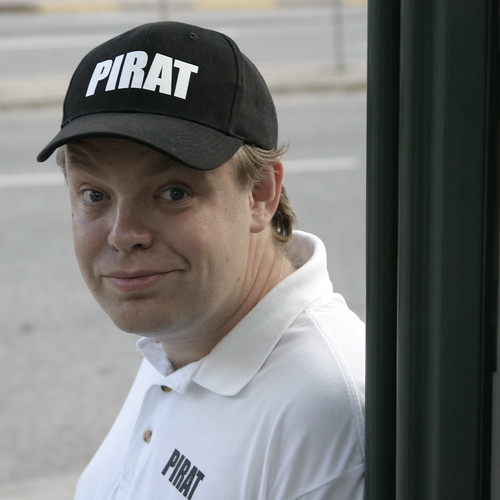
*Of course the election was also a big victory for extreem parties, particularly the far-right. But I'll write more on that tomorrow. Oh and yes, the Swedish Pirate Party did win a seat. Arrr, matey!