
The country went to the polls last Sunday to vote for a new government, and as predicted the result was inconclusive. But surprisingly, the election delivered more certainty than had been expected. There was a clear winner in both French-speaking Wallonia and Dutch-speaking Flanders. There was a large (though not surprising) victory for the Socialists in Wallonia, and a shock victory for the New Flemish Alliance (N-VA), a nationalist party, in Flanders. Because the parties did so well in each of their regions, there is now a realistic prospect that the two could form a coalition by September, with the Socialist MP Elio di Rupo to be appointed prime minister. Significantly, he would become Belgium’s first Wallonian prime minister in decades.
(Incidentally, di Kupo is also one of Wallonia’s many ‘Italo-Belgians’, the descendants of Italians who immigrated to Belgium in the middle of the 20th century to work in the Wallonian mines. Italians remain the second largest immigrant group in Belgium today, after Moroccans.)
 But despite the encouraging prospect of a relatively quick government formation, all is not rosy in the land of the Belgians. The N-VA’s astonishingly strong performance in the election, attracting the vote of one out of every three Flemings, is not a good sign for those who want Belgium to remain a united country. The N-VA, like their counterparts the SNP in Scotland, want independence for their region. Their short-term objective is to make Belgium a completely federal entity, with all powers delegated to the three regions (Flanders, Wallonia and Brussels) including taxation and immigration. The federal Belgian government, they say, should only be in charge of a few scattered areas such as foreign policy. N-VA’s rotund leader Bart De Wever (why are nationalist leaders always overweight?) will be a fierce advocate for this goal.
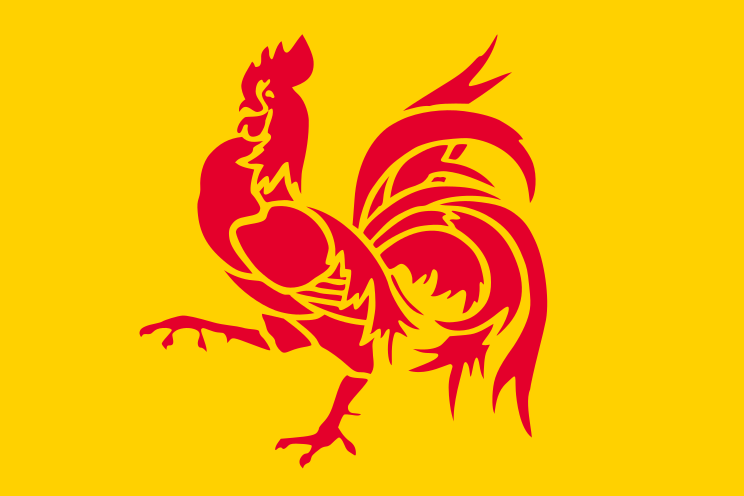 The Walloons are terrified by this prospect. Wallonia is drastically poorer than its wealthy northern neighbor – with an unemployment rate that hovers around 30%. If taxation is not spread out evenly throughout the country, many Walloons fear the region will not be able to support itself. But if the Walloon Socialists enter into a coalition with the N-VA, and at this point it’s hard to see how they can avoid it, they will have to agree to drastically redraw the structure of the Belgian government. This could lead to the biggest devolution of powers in Belgium since the early 1970’s, making Belgium a country in name only. It is a prospect that strikes fear into the hearts of Wallonians.
EU presidency
Forming a government by September would be good, but it still doesn’t solve the problem that Belgium is set to take over the six-month rotating EU presidency next week. The current caretaker government led by temporary prime minister Yves Leterme will take up the reigns, but as a caretaker government they are not allowed to propose any policy and will be effectively impotent. Lucky for them, not much happens in the EU over July and August, so the fact that the presidency will be rudderless for these two months may not do so much damage. And in the mean time, the new European Council president Herman Van Rompuy, a Flemish former Belgian prime minister, can pick up the slack.
 But if no government is formed by September the situation could get very messy. Belgium may be inclined to cede much authority to the new “EU president” Van Rompuy, but the new position was not designed to be leading ministerial discussions. It is only meant to lead the European Council of EU prime ministers and presidents.
Adding to the confusion, some of the ministerial chairs are headed by representatives from the regional Belgian governments – which are functioning and not under a caretaker. So for instance, if the council of transport ministers is headed by the Wallonian regional transport minister, that person could theoretically make policy proposals since the Wallonian regional government is functioning. Confused yet?
In any event, even if they Belgians can come up with a coalition by September, they will have lost a valuable two months of their presidency and will be stung by early impressions of a failed, chaotic presidency. If the country ends up having no government for the duration of its presidency period, it may ignite a period of naval-gazing in Belgium where they ask if staying together as a country is worth this seemingly endless carousel of collapsing governments.

1 comment:
Awesome video! Nice music choice for the second half :-P
Post a Comment