In a great irony, there is likely to be an increase in immigration from Europe over the next two years as people hope to be grandfathered in to a future visa regime.
Many of my friends who are non-English EU citizens living in London (a category I myself used to be in) have asked me today what's going to happen to them.
They live and work in the UK on the basis of their EU passport. What happens when the UK pulls out of the EU, and freedom of movement across the channel comes to an end? Are they going to be immediately deported?
I've reassured them that most likely some kind of arrangement will be made for those EU citizens who have been living in the UK a long time. They're not all going to be immediately deported. But some of them might. I think it is likely that in two years, EU immigrants already in the country are going to have to apply for permission to remain, on the basis of the existing tiered visa regime.
Here are the different possibilities:
Showing posts with label visas. Show all posts
Friday, 24 June 2016
Monday, 18 April 2011
Tensions flare at French-Italian border
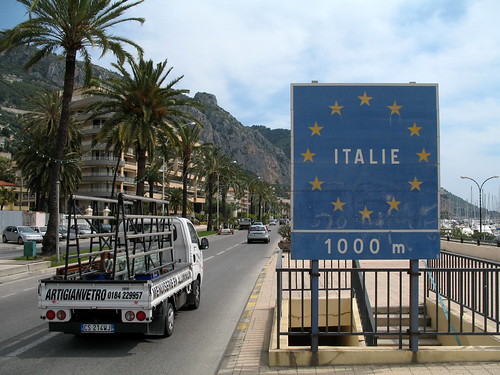
France and Italy are locked in a war of words today after France stopped several trains from crossing the border between the two countries over the weekend. France, suspecting that Italy was trying to dump North African immigrants into the country, stopped the trains at the old border station between Ventimiglia and Menton, 20km east of Nice. Now, each country is accusing the other of violating the rules of the EU's passport-free Schengen Zone.
Since the pan-Arab uprising began in January in Tunisia, Italy has been sounding the alarm bell about an increase in migrants trying to cross the Mediterranean to escape the chaos in North Africa. The tiny Italian island of Lampedusa, just off the Tunisian coast, has been inundated with refugees washing up on its shores in makeshift boats. There are now more migrants housed in a refugee camp on the island than there are residents.
Italy has asked the EU for assistance in dealing with the migrants, most specifically through deployment of the EU's Frontex border patrol force. They have also asked other member states to contribute financially to the effort, saying that Italy can't afford to patrol the EU's borders all on its own. Because the Schengen Zone is a passport-free area, most of the migrants crossing into Italy are just trying to get into the EU. Once they get into Italy they can go to France, Sweden or Germany without facing a border check.
Since the pan-Arab uprising began in January in Tunisia, Italy has been sounding the alarm bell about an increase in migrants trying to cross the Mediterranean to escape the chaos in North Africa. The tiny Italian island of Lampedusa, just off the Tunisian coast, has been inundated with refugees washing up on its shores in makeshift boats. There are now more migrants housed in a refugee camp on the island than there are residents.
Italy has asked the EU for assistance in dealing with the migrants, most specifically through deployment of the EU's Frontex border patrol force. They have also asked other member states to contribute financially to the effort, saying that Italy can't afford to patrol the EU's borders all on its own. Because the Schengen Zone is a passport-free area, most of the migrants crossing into Italy are just trying to get into the EU. Once they get into Italy they can go to France, Sweden or Germany without facing a border check.
Monday, 27 September 2010
US introduces entrance fee for European visitors
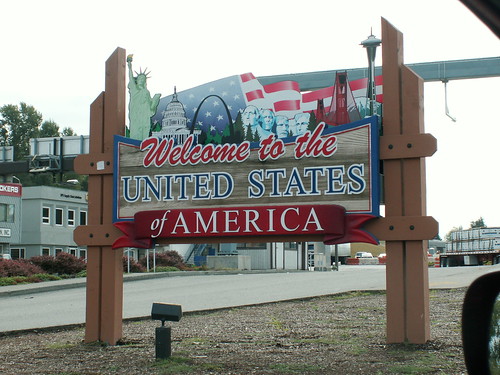
If you are European and wish to visit the United States, starting this month you will have to pay a $14-per-person entry fee for the privilege. The unilateral move by the US has come as quite a shock to the EU, especially since neither Brussels nor individual member states were consulted about it. And European leaders are in equal parts furious and bemused that the fee is ostensibly a “tourism promotion” tax on visitors. Now, the EU is considering a retaliatory measure charging Americans to enter Europe if the US refuses to scrap the fee.
Such a fee levied to visitors from countries that do not require a tourist visa is historically unheard of, and it appears to be a new concept the US is trying to introduce. But it’s an idea that members of the European Parliament meeting in Strasbourg last week were not receptive to, to say the least. Using strikingly strong language, MEPs expressed fury over this new “Electronic Travel Authorisation System” (ESTA), which they say amounts in effect to a unilateral visa.
Thursday, 14 February 2008
Brussels doesn't like to be ignored
Brussels is baring some teeth this week, as it becomes increasingly assertive in the face of US efforts to negotiate with different EU countries separately in areas now handled by Brussels.
This week’s spat is over a new set of security requirements the US wants to impose on European countries designed to keep track of who is entering and leaving the country. The US is demanding in-flight security officers aboard transatlantic flights, an electronic travel authorization system, and an accord to share further data on air passengers and lost and stolen passports.
The European Commission today shot the proposal down saying it was "unacceptable" and went "too far". But what they seem to be most angry about is that the US didn’t consult them and instead attempted to circumvent Brussels, taking their demands to the individual EU capitals. Jonathan Fauli, the head of the Commission’s Home Affairs department, told reporters yesterday,
This week’s spat is over a new set of security requirements the US wants to impose on European countries designed to keep track of who is entering and leaving the country. The US is demanding in-flight security officers aboard transatlantic flights, an electronic travel authorization system, and an accord to share further data on air passengers and lost and stolen passports.
The European Commission today shot the proposal down saying it was "unacceptable" and went "too far". But what they seem to be most angry about is that the US didn’t consult them and instead attempted to circumvent Brussels, taking their demands to the individual EU capitals. Jonathan Fauli, the head of the Commission’s Home Affairs department, told reporters yesterday,
"We don't negotiate matters which are dealt with in Washington with the state of California - that would be disrespectful and we expect the US to be similarly respectful of our law and system here. The USA knows perfectly well that there some things you come to Brussels to talk about.”
Friday, 21 December 2007
Today Eastern Europe wakes to no borders
It’s official. As of this morning you can now drive from the Russian border in Estonia to the Atlantic beaches of Portugal, across 24 countries, without passing through a single border crossing. As of midnight, the 2004 EU entrants are now part of the Schengen Zone, the border-free area that allows you to pass through European countries as easily as if you were going from Indiana to Illinois.
Considering the post-cold war implications of this day (all but one of the 2004 entrants are former Warsaw Pact countries), the scenes last night were dripping with symbolism. As Canada’s Global Mail reports, at the border of Germany and Poland the guards spent yesterday removing kilometres of tall steel fence, leaving unmarked and unguarded fields between them. Fireworks lit up the border bridge between Poland and Germany in Frankfurt on Oder early this morning. On the road between Vienna and Bratislava, Austrian and Slovakian leaders met to saw through border-crossing barriers. And in Estonia, the government put its border-inspection stations up for auction. Perhaps nowhere was the scene more striking than on the Czech-Slovak border, as the countries were split apart just in 1993 and now find themselves without a border between them once again.
Considering the post-cold war implications of this day (all but one of the 2004 entrants are former Warsaw Pact countries), the scenes last night were dripping with symbolism. As Canada’s Global Mail reports, at the border of Germany and Poland the guards spent yesterday removing kilometres of tall steel fence, leaving unmarked and unguarded fields between them. Fireworks lit up the border bridge between Poland and Germany in Frankfurt on Oder early this morning. On the road between Vienna and Bratislava, Austrian and Slovakian leaders met to saw through border-crossing barriers. And in Estonia, the government put its border-inspection stations up for auction. Perhaps nowhere was the scene more striking than on the Czech-Slovak border, as the countries were split apart just in 1993 and now find themselves without a border between them once again.Thursday, 25 October 2007
Forget green, go blue!
The EU unveiled its plans for the union-wide “blue card” yesterday. It’s meant to be modeled on, as well as a competitor to, the US green card. Though the card appears to be a logical solution to the problem of hiring skilled labor, it appears to do little to solve the growing problem of illegal immigration in Europe.
The blue card will be like the American green card in that it will be based on a points system that takes into account job skills, language proficiency and the presence of family in the country already. For example someone with an MBA who speaks English and German would have a better chance of getting one of these cards than someone who doesn’t speak any European language and has no family in the EU.The measure comes at a time when EU countries are facing a severe skills shortage, particularly in the areas of engineering, healthcare and IT. With the EU population aging rapidly, there is an urgent need to bring new immigrants onto the continent. But the way this has been done so far is considered by many to have been not only ineffective, but detrimental to the societies involved.
Subscribe to:
Posts (Atom)