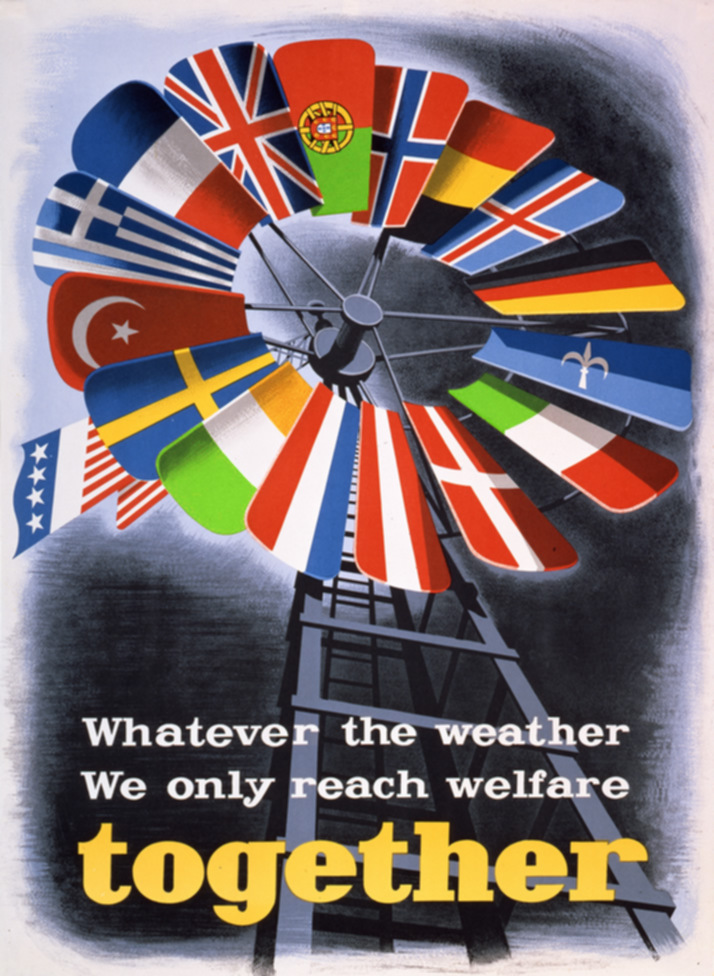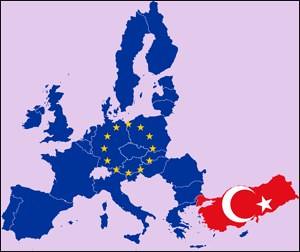
Is Turkey part of Europe? This question was at the back of my mind during a week-long visit to Istanbul over the Eastern break. Far from being an academic geographical consideration, the question has big implications for both the future of Turkey and the European Union. At least, that's what were told.
Turkey is a candidate country to join the EU, having started accession talks in 2005. Most of the countries of continental Europe are against Turkey joining, particularly France. But the UK, backed by the United States, is forcefully pushing for Turkey's membership in the union. Nicolas Sarkozy insists that Turkey is not geographically or culturally part of Europe and does not belong in the EU. David Cameron says that it is Islamophobia that is keeping Turkey out, and that the EU should not be an 'all-Christian club'. The argument for accession stresses that Turkey's largest city as well as 3% of its territory is in Europe, and that historically Turkey (as the Ottoman Empire) ruled over many countries now in the EU including Greece, Cyprus, Bulgaria, Romania and Hungary.
Showing posts with label Middle East. Show all posts
Thursday, 28 April 2011
Tuesday, 22 March 2011
Europe leads on Libya, but divisions persist
We are only in day four of the Libya War, but it doesn't seem to have taken long for confusion to settle in over where we go next and who is in charge. As the aerial bombardment tapers off and the skies clear into a no-fly zone over the Libyan desert, questions are now being asked that are not only causing disunity within the European Union but also between Europe and the United States."In most of the foreign policy issues we've talked about for decades, the US has been the lead player," conservative New York Times columnist David Brooks noted on PBS Newshour a few days ago. "Here we're clearly not the lead player, it's the UK and France and we're following along on the caboose. Now we feel like the UK often feels, as the secondary player. So the question is how much is the president really supporting this and how much is he being dragged along?"
So far the Obama administration has seemed disinterested in the Libya situation, and this wasn't helped by the fact that at the time military action was launched the US president was on a trip to South America and had to give comments on the war's launch from a shared podium in Brazil. Over the past few days US politicians haven't even made an effort to try to convince the American public that this war is in America's strategic interest.
Thursday, 10 March 2011
Can the EU rebuild the Arab world like the US rebuilt Europe?
Spanish prime minister Jose Luis Rodriguez Zapatero has called on the West to create a new 'Marshall Plan for Arab states' in response to the current unrest. Such a plan, modeled on the wildly successful scheme launched by the United States in 1947 to rebuild war-ravaged Europe, would be designed to give new Arab governments the financial support they need to build stable democracies. More implicitly, it would provide a bulwark against Islamism in the same way that the Marshall Plan successfully provided a bulwark against Communism in Western Europe.
Europe is still still haunted by its failure to do anything to prevent the chaos that unfolded in its own backyard in the 1990s during the Balkan Wars. The calls for quick decisive action are coming from every corner. Most politicians now acknowledge that financial support is going to be needed, but there is disagreement about who should supply it. These thorny issues will be discussed tomorrow at a special summit of EU leaders in Brussels to discuss the crisis in Libya.
At the European Union level, there has now been begrudging admittance that the union's approach to its Southern neighbours has until this point been a misguided failure. Valuing stability and protection of Israel above all else has led to the European Union and the United States ploughing billions of dollars into despotic regimes over the past decades, earning them the enmity of the Arab street. For the EU, most of this aid was distributed through the European Neighbourhood Policy (ENP), which gives financial and political assistance to the EU's neighbours.
€2.8bn in assistance has already been pledged to the Middle East and North Africa over the next three years through the ENP. Now that it is clear that a much larger amount than this is going to be needed to support budding Democracy movements, there are questions over whether the ENP is the best tool to use. Southern European countries have long complained that the ENP was always more focused on the EU's Eastern neighbours than those to the South. Why not give the Southern Mediterranean its own new, dedicated assistance vehicle?
Tuesday, 1 February 2011
Better the devil you know
Both Europe and the United States have been put in an awkward position this month by the unfolding political revolt in Egypt. On one hand, they want to be consistent in encouraging democratic values and they don't want to be seen to be propping up dictatorships. On the other hand, they are terrified of the instability that could be set off by a political meltdown in the Middle East's most populous country. This is not helped by the fact that the Muslim Brotherhood is the second most powerful political force in Egypt after the regime of president-for-life Hosni Mubarak.
As the saying goes, better the devil you know than the devil you don't. Thus, the statements coming out of Brussels and Washington this week have been tepid and non-committal, stressing the need for stability over any ideological talk of overthrowing tyrants. The west is no great fan of Mubarak, but his semi-dictatorial rule has kept Egypt's strong Islamist movement in check and kept the country at peace with Israel. If he goes, there's no telling who might replace him.
The EU has come under particular criticism, as political violence has unfolded around the Mediterranean, for its slow reaction to events in its own backyard. This has been a particular embarrassment for the EU because its new diplomatic arm, the EEAS, was supposed to make Europe more decisive and reactive to foreign policy issues. And yet as one riot after the other has unfolded across the Mediterranean over the past weeks, the EU has been very restrained in its reaction.
As the saying goes, better the devil you know than the devil you don't. Thus, the statements coming out of Brussels and Washington this week have been tepid and non-committal, stressing the need for stability over any ideological talk of overthrowing tyrants. The west is no great fan of Mubarak, but his semi-dictatorial rule has kept Egypt's strong Islamist movement in check and kept the country at peace with Israel. If he goes, there's no telling who might replace him.
The EU has come under particular criticism, as political violence has unfolded around the Mediterranean, for its slow reaction to events in its own backyard. This has been a particular embarrassment for the EU because its new diplomatic arm, the EEAS, was supposed to make Europe more decisive and reactive to foreign policy issues. And yet as one riot after the other has unfolded across the Mediterranean over the past weeks, the EU has been very restrained in its reaction.
Friday, 14 January 2011
Chaos around the Mediterranean
The explosion of violence this week in Tunisia, the smallest and most affluent country of North Africa, is just the latest unrest to affect the shores of the Mediterranean Sea. From East to West and North to South, the region seems to be on the brink of becoming a hot zone for political crisis.
Rolling riots have broken out against Tunisia's authoritarian president, and the government has cracked down on the protests in such a violent way that the country appears to be headed for political collapse. Across the sea, the government of Lebanon collapsed on Wednesday, and the situation threatens to descend into violence as the various factions vie for control.
Not too far away in Greece, the country is still reeling from massive protests against the government's austerity cuts that have been forced by the debt crisis that has plunged the country into political and financial chaos. And at the western end of the sea, Spain continues to face protests over its own austerity cuts in response to its debt crisis, and the country hangs by a thread as it desperately tries to avoid financial collapse.
Rolling riots have broken out against Tunisia's authoritarian president, and the government has cracked down on the protests in such a violent way that the country appears to be headed for political collapse. Across the sea, the government of Lebanon collapsed on Wednesday, and the situation threatens to descend into violence as the various factions vie for control.
Not too far away in Greece, the country is still reeling from massive protests against the government's austerity cuts that have been forced by the debt crisis that has plunged the country into political and financial chaos. And at the western end of the sea, Spain continues to face protests over its own austerity cuts in response to its debt crisis, and the country hangs by a thread as it desperately tries to avoid financial collapse.
Friday, 18 June 2010
Diversions and divisions in Israel
I had actually just begun my journey through the Dead Sea area, having rented a car in Tel Aviv and driven down intending to visit the ancient fortress of Masada, the Ein Gedi nature preserve and the main Dead Sea spa. I was driving through the West Bank when I reached the sea, and as soon as I saw it I couldn’t contain my excitement. I parked the car at the first spot I could enter the water and rushed in with reckless abandon. So when I realized my horrible error I was literally in the middle of nowhere, with no phone for miles, in the middle of the disputed West Bank territory, in searing 40 degree weather. It was not a good situation!
Monday, 14 July 2008
Club Med: Levant Becomes the Focus
Though French president Nicolas Sarkozy's ambitious original plans for a Mediterranean Union have been dramatically scaled down, the group still had its first meeting yesterday in Paris.
Sarkozy was practically beaming after the meeting, calling his idea for the Mediterranean Union an “extraordinary concept,” and heralding the fact that the meeting was able to get Arab leaders and the Israeli leader in the same room. While it's still debatable what impact this new union will actually have, and whether it can really accomplish any of the goals it has set out, it was interesting to see where the media focus on the event seemed to fall.
From the time Sarkozy first suggested the concept during the French presidential campaign last year, the language was always about a union between the “North” and “South” Mediterranean, with seeming focus being on North Africa, the majority of which was formerly held by the French. But the media coverage of yesterday’s event was largely focused on the Levant. The Syrian and Lebanese leaders, both in attendance, said yesterday that the two countries might establish diplomatic relations for the first time in their history. And the Israeli leader said a peace deal with the Palestinians had never been closer. There was also a theoretical statement by the leaders saying they would like to keep the region “free of weapons of mass destruction.” Here's the coverage from ITN:
But there were also significant initiatives announced at the meeting that had nothing to do with the Middle East peace process, including a high-speed rail network from Casablanca to Istanbul, a plan to make the Mediterranean the cleanest sea in the world by 2020 and the development of a common emergency response force to deal with natural disasters in the region. For now though, it was the diplomatic aspects of the meeting that attracted most of the media attention.
Interestingly, with all the talk of the MidEast peace process and further governmental and economic ties, there was no talk about Democracy, or the lack of it, in the Middle East and North Africa. Perhaps such lecturing would have been counter-productive to the larger goal of bridging gaps between the North and South Mediterranean, but it was an interesting omission nonetheless.
Sarkozy was practically beaming after the meeting, calling his idea for the Mediterranean Union an “extraordinary concept,” and heralding the fact that the meeting was able to get Arab leaders and the Israeli leader in the same room. While it's still debatable what impact this new union will actually have, and whether it can really accomplish any of the goals it has set out, it was interesting to see where the media focus on the event seemed to fall.
From the time Sarkozy first suggested the concept during the French presidential campaign last year, the language was always about a union between the “North” and “South” Mediterranean, with seeming focus being on North Africa, the majority of which was formerly held by the French. But the media coverage of yesterday’s event was largely focused on the Levant. The Syrian and Lebanese leaders, both in attendance, said yesterday that the two countries might establish diplomatic relations for the first time in their history. And the Israeli leader said a peace deal with the Palestinians had never been closer. There was also a theoretical statement by the leaders saying they would like to keep the region “free of weapons of mass destruction.” Here's the coverage from ITN:
But there were also significant initiatives announced at the meeting that had nothing to do with the Middle East peace process, including a high-speed rail network from Casablanca to Istanbul, a plan to make the Mediterranean the cleanest sea in the world by 2020 and the development of a common emergency response force to deal with natural disasters in the region. For now though, it was the diplomatic aspects of the meeting that attracted most of the media attention.
Interestingly, with all the talk of the MidEast peace process and further governmental and economic ties, there was no talk about Democracy, or the lack of it, in the Middle East and North Africa. Perhaps such lecturing would have been counter-productive to the larger goal of bridging gaps between the North and South Mediterranean, but it was an interesting omission nonetheless.
Thursday, 1 November 2007
Why are we bound by borders?
A Turkish friend of mine just sent me this map which I find extremely interesting. He was pointing to the AFJ-designed hypothetical creation as an example of “US arrogance,” but I think it makes for an interesting study as the crisis with the PKK pushes Turkey further and further toward an invasion of Iraq.
The map is a redrawing of the national borders of the Middle East based on ethnic and religious lines. It accompanied this 2006 article in the Armed Forces Journal about what a fair Middle East would look like. Apparently the map has been circulating around Turkey without the accompanying article (I had to do some super sleuthing to even find the article) and is being presented as actual plans of the US military to redraw the Middle East. This assumption, of course, is not only wrong but idiotic, considering that much of this redrawing would be not in American interest and the US is actively resisting such a redrawing by clumsily trying to hold together the nonsensical, European-drawn borders of Iraq. A group in Turkey even announced a competition to redraw the US map in retaliation. Check them out here, they’re absolutely absurd. Isn’t the fact that no Turk was able to draw new borders for the US that make any sense evidence against their own point? The US is a culturally and linguistically homogenous nation, and the ethnic and religious divisions that exist are spread out. None of these entries even takes into account the political differences that might actually be astute (like the infamous “Jesusland and United States of Canada” map that came out after the 2004 election).
The map is a redrawing of the national borders of the Middle East based on ethnic and religious lines. It accompanied this 2006 article in the Armed Forces Journal about what a fair Middle East would look like. Apparently the map has been circulating around Turkey without the accompanying article (I had to do some super sleuthing to even find the article) and is being presented as actual plans of the US military to redraw the Middle East. This assumption, of course, is not only wrong but idiotic, considering that much of this redrawing would be not in American interest and the US is actively resisting such a redrawing by clumsily trying to hold together the nonsensical, European-drawn borders of Iraq. A group in Turkey even announced a competition to redraw the US map in retaliation. Check them out here, they’re absolutely absurd. Isn’t the fact that no Turk was able to draw new borders for the US that make any sense evidence against their own point? The US is a culturally and linguistically homogenous nation, and the ethnic and religious divisions that exist are spread out. None of these entries even takes into account the political differences that might actually be astute (like the infamous “Jesusland and United States of Canada” map that came out after the 2004 election).Wednesday, 26 September 2007
Coin controversy
There’s been a lot of noise made over these new euro coins over the past couple days, with people advocating for Turkey’s entrance into the EU horrified that EU finance ministers had adopted a design for the new Euro coins that leaves Turkey off the map.The coins are for the new members states of Slovenia, Malta and Cyprus, and feature a map of Europe that doesn’t feature Turkey. Those who support Turkey’s accession to the EU are furious, saying it reflects a bias against the potential future member state. And the English-language press has picked up the story and portrayed it as a deliberate slight against Turkey.
Thursday, 16 November 2006
A European approach to Middle East peace
News came today that Spain is leading the charge for a new Europe-focused middle east peace plan. Prime Minister Zapatero has announced that Spain, France and Italy are going to launch a new Middle East peace initiative without the United States.
The three countries are going to put the plan to the European Council summit in December. The idea could go hand-in-hand with Tony Blair’s emphasis on solving the Palestinian crisis. So what would a European approach to solving the crisis that leaves out the US mean for the crisis? Well for one thing such an approach is certain to be significantly less sympathetic to Israel. As long as Israel thinks it can act with impunity, it will be hard to resolve the situation. Israel will continue to react disproportionately to the violence, escalating the situation further.
Considering how preoccupied the Bush Administration is with Iraq and how little interest it has shown in Palestine, perhaps they would even welcome the help. Perhaps this is the best time for Europe to step in and take charge.
The three countries are going to put the plan to the European Council summit in December. The idea could go hand-in-hand with Tony Blair’s emphasis on solving the Palestinian crisis. So what would a European approach to solving the crisis that leaves out the US mean for the crisis? Well for one thing such an approach is certain to be significantly less sympathetic to Israel. As long as Israel thinks it can act with impunity, it will be hard to resolve the situation. Israel will continue to react disproportionately to the violence, escalating the situation further.
Considering how preoccupied the Bush Administration is with Iraq and how little interest it has shown in Palestine, perhaps they would even welcome the help. Perhaps this is the best time for Europe to step in and take charge.
Wednesday, 26 July 2006
US continues support of Lebanon war
The Rome summit on the future of the Middle East has wrapped up, and it was a bit of a fiasco. Condoleezza Rice is trying to sell Arab nations on her theory of “creative chaos,” in which the blood being shed in the middle east is somehow for the greater good. This is a preposterous claim and everyone knows it, including Rice. But it is the only way to buy more time for Israel to achieve it’s objective.
One problem: its objective is impossible.
Israel has set it’s goal as the eradication of Hezbollah. Even in the best circumstances this goal is impossible to meet, and these have not been the best circumstances. Israel has been caught off guard by the ferocity of Hezbollah’s defense, and especially by their ability to fire rockets deep into Israeli territory. Their “surgical strikes” have seemed to be anything but. So far Israel has killed more than 400 Lebanese, of which only 12 are known to have been members of Hezbollah. All the while the group continues to fire rockets into Israel, showing it has barely been scratched.
One problem: its objective is impossible.
Israel has set it’s goal as the eradication of Hezbollah. Even in the best circumstances this goal is impossible to meet, and these have not been the best circumstances. Israel has been caught off guard by the ferocity of Hezbollah’s defense, and especially by their ability to fire rockets deep into Israeli territory. Their “surgical strikes” have seemed to be anything but. So far Israel has killed more than 400 Lebanese, of which only 12 are known to have been members of Hezbollah. All the while the group continues to fire rockets into Israel, showing it has barely been scratched.
Wednesday, 19 July 2006
Turkey invading Iraq?
As if things in the Middle East weren't bad enough, today it was revealed that Turkey may take a page from the Israeli playbook and invade Northern Iraq, one of the disaster scenarios that was posited before the war began.
The North of Iraq, which is predominantly Kurdish and controlled as an autonomous zone, has been the most stable and nonviolent part of the country since the occupation. This has mainly been because Kurds are sitting back and watching Sunni and Shia Arabs kill each other, hoping that if they wait it out eventually the country will break apart and an independent Kurdestan will be formed.
It would not be in their interest right now to attack American or Iraqi troops (neither of which can be found in great number in the North anyway). But it is in their interest to antagonize Turkey, because many Kurds hope that an independent Kurdestan will also include the Kurdish areas of Turkey and Iran.
Subscribe to:
Posts (Atom)