Showing posts with label US Military. Show all posts

Thursday, 19 July 2018

An Americaless NATO: should they be pushed before they jump?

Donald Trump threatened to pull the United States out of NATO at last week's summit in Brussels. Perhaps European leaders should call his bluff. A European Treaty Organisation may be the only logical way forward.


As Donald Trump stood beside Vladimir Putin on Monday and stated that he believes the Russian president over his own intelligence agencies, you could feel a collective shudder pass across Europe.

"If Trump isn't even willing to side with his own intelligence agencies over Russia right now, why would anyone think he would side with us?” one Latvian friend sent me in a text. “NATO is finished. And if NATO is finished, Latvia is finished."

There has been much speculation since Monday over why Trump would defy his own intelligence, his own party and even his own advisors in refusing to acknowledge that Russia interfered in the 2016 US election. But whatever the reason, Trump’s summit with Putin, immediately following his aggressive attacks on NATO during his visit to Brussels, have left many Europeans with only one conclusion: we’re on our own now.

Wednesday, 27 December 2017

Thursday, 9 March 2017

Life after the coup

Educated city-dwelling elites in Thailand despised their democratically-elected leader, and many welcomed the country’s 2014 military coup. Are there lessons here for America?

In the centre of Bangkok, at a large roundabout, stands what is perhaps the most ironic monument in Thailand today.

The Democracy Monument, built in 1939 to celebrate the 1932 Siamese revolution which established a constitutional monarchy, attracts few tourists. It is much less of a landmark than its counterpart the Victory Monument not far away, which commemorates the 1941 Thai victory over the French.

As I stand alone below the four solid spikes of the edifice, I see cars and motorbikes wiz by without a glance. Perhaps they are too uncomfortable to look. Thailand has not had a democracy for two years. And if you ask Bangkokians, they’re just fine with that.

Friday, 30 December 2016

Could the US have a military coup?

The military is the only American institution left with public trust, and that trust is enormous. As a new era dawns, the previously unthinkable is on the table.

Each year, I come home to the United States for an extended break over the Christmas holiday. Ordinarily it’s a time to relax, recharge, and spend some quality time with family. But this year a dark cloud is hanging over my visit.

I’m from the New York area, so it’s no surprise that people here are still feeling a sense of shell shock about November’s election result. But this isn’t the same disappointment people felt during the George W era. This isn’t about politics. There is a palpable sense of anxiety and fear in the air. Nobody knows what’s coming next.

There is a sense that everything people thought they knew about their own country has suddenly evaporated. More than one person has described the feeling as being one of a “living nightmare” that they still expect to wake up from. Someone else told me that the sudden shock of having the world you thought you knew come tumbling to the ground gave him “the same feeling as on September 11th”.

Wednesday, 21 September 2011

DADT repeal: US joins the Western world

Yesterday America's infamous Don't Ask, Don't Tell ban on gays in the military was officially repealed. It was a hard-fought battle for the Democratic Party, and the Obama administration was keen to publicize the fulfillment of one of the president's key campaign promises. It wasn't easy, and the past three years have been met with opposition and setbacks.

The level of jubilation from Democrats was incredible, but understandable considering how long they have fought to end this ban. But looking at the situation in a global context, the excitement over a rather small policy change might seem strange. After all, until Tuesday the United States was the only country in the developed world that still had a ban on gays serving in the military.

Barring gays from military service is illegal under European law, and no such ban exists in any EU state - even in ultra-Catholic Poland or Italy. In fact the only country in all of Europe to have a ban on gays in the military is Serbia. In Latin America, the only countries to have bans on gays in the military are Cuba and Venezuela. As can be seen in the map above, the divide between gay bans (in red) and no gay bans (in blue and gray) mirrors the divide between the developed and developing world. Gay service bans are common in Africa and the Middle East.

Friday, 17 June 2011

US tells Europe 'we won't protect you forever'

Defence departments across Europe are bristling this week following the stern tongue-lashing delivered by outgoing US Defense Secretary Bob Gates last Friday. In a speech here in Brussels Gates lashed out at European nations for their weak military spending and their lack of troop commitments to the North American Treaty Organisation (NATO).

It was the clearest signal yet that the days of this military alliance, set up to defend Western Europe during the cold war, may be numbered. Gates implied the alliance may come to an end unless European countries agree to restructure it into an equal partnership rather than a US-led military fiefdom. Oddly enough, it is America that wants to see an end to the current state of US military dominance in Europe, and it is the Europeans who are resisting this.
"For the better part of six decades there has been relatively little doubt or debate in the United States about the value and necessity of the transatlantic alliance," he told the NATO dignitaries. "For most of the Cold War US governments could justify defense investments and costly forward bases that made up roughly 50 percent of all NATO military spending.  But some two decades after the collapse of the Berlin Wall, the US share of NATO defense spending has now risen to more than 75%"

Tuesday, 22 March 2011

Europe leads on Libya, but divisions persist

We are only in day four of the Libya War, but it doesn't seem to have taken long for confusion to settle in over where we go next and who is in charge. As the aerial bombardment tapers off and the skies clear into a no-fly zone over the Libyan desert, questions are now being asked that are not only causing disunity within the European Union but also between Europe and the United States.

"In most of the foreign policy issues we've talked about for decades, the US has been the lead player," conservative New York Times columnist David Brooks noted on PBS Newshour a few days ago. "Here we're clearly not the lead player, it's the UK and France and we're following along on the caboose. Now we feel like the UK often feels, as the secondary player. So the question is how much is the president really supporting this and how much is he being dragged along?"

So far the Obama administration has seemed disinterested in the Libya situation, and this wasn't helped by the fact that at the time military action was launched the US president was on a trip to South America and had to give comments on the war's launch from a shared podium in Brazil. Over the past few days US politicians haven't even made an effort to try to convince the American public that this war is in America's strategic interest.

Thursday, 17 September 2009

Obama Throws the Russians a Bone

In a major foreign policy move, President Obama announced today he is abandoning the Bush Administration's missile defence system plan for Eastern Europe. The plan, which would have seen long-range missiles installed in Poland and a radar system in the Czech Republic, had infuriated Russia, who saw it as a direct threat. The Bush administration had always insisted it was not meant to threaten Russia but rather to defend Europe from rogue states like Iran, but this seemed dubious to the Russians considering that the missiles themselves would have been pointed at Russia, been far more powerful than needed to take out the small-arms capability of Iran, and were to be placed just a few miles away from Russia’s border.

Obama said today that after a thorough review of the program he had decided that a more “cost-effective" system using land- and sea-based interceptors would be better suited to Iran's short- and medium-range missile threat. Though the administration stressed that this decision is “not about Russia”, the reality is that it largely is, and that’s not necessarily a bad thing. While it is true that the system Bush planned to install seemed geared more for the Cold War than for the realities of modern dangers, it is also true that it was proving to be a huge obstacle in US-Russian relations. Considering that those relations are in desperate need of improvement in order to have a peaceful world, dismantling this plan could be good for America’s security in more ways than one.

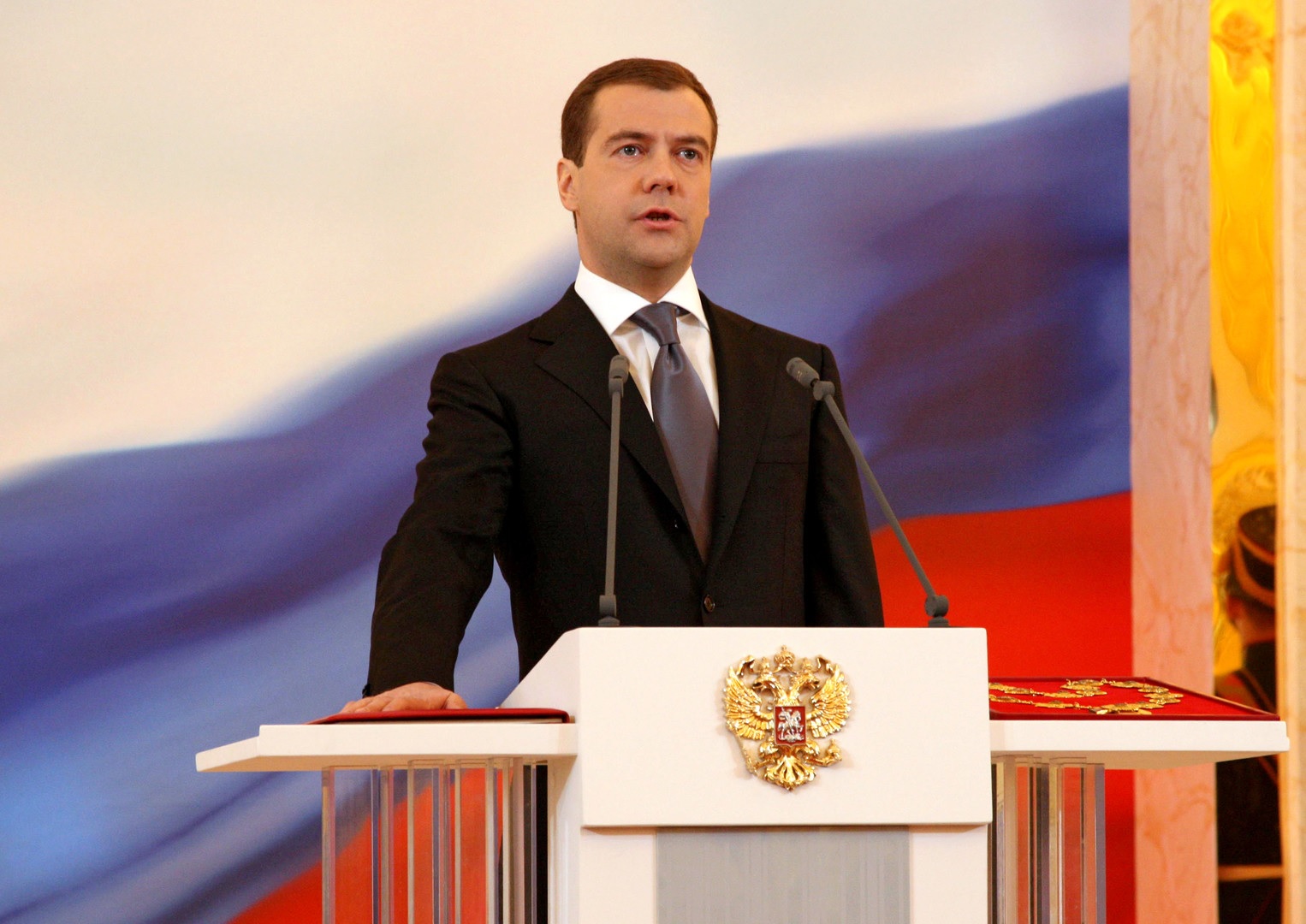
Shortly after Obama was elected Russia had made a bold move showing that they were serious about their objections to the missile system. President Dmitry Medvedev delivered a speech the day after the historic election saying that if the missile shield were installed Russia would install short-range missiles just off the Polish border in its territory of Kaliningrad, in response to the US "provocation." All indications were that they were serious about this threat, and the resulting tit-for-tat could have resulted in a missile defence arms race that no one wants to see.

Reaction from the American right was predictable, decrying Obama for “selling out” American allies (the narrative for the right seems to be that he is a lilly-livered coward abroad while being some kind of Hitler like tyrant at home). But reaction from the international community, and from Russia in particular, reflected a collective sigh of relief. Russia's ambassador to NATO called it a “breakthrough" for US-Russian relations, saying that with this obstacle removed the two countries could move ahead with talks about reducing their nuclear weapons stockpiles. NATO Secretary-General Anders Fogh Rasmussen said it was "a positive step", reflecting the fact that few in Europe were excited about this system which was ostensibly meant to protect them. The missile defence system, after all, was going to outside the scope of NATO and completely US-controlled.

And the conservative governments of Poland and the Czech Republic who had agreed these deals with the Bush Administration, although surely disappointed, were muted in their reaction. The Czech public on the other hand have expressed elation today, as the plan was very unpopular there. The Poles were more mixed in how they felt about the plan, but my Polish friend tells me the media reaction there so far hasn't been too dramatic.

So was this a big concession to Russia? As the title suggests, it was a 'bone', an easy gesture to make considering it wasn't in US defense interest to have it anyway. Essentially no one, including the US military, thought the missile defense system made any sense except the American and Polish right-wing. Iran does not have the capability to deploy or make long-range missiles, and it's never been proven that these systems being installed actually work. As Joe Cirincione told MSNBC last night, the Bush Administration was installing "a technology that doesn't work against a threat that doesn't exist".

Of course the missile defence system has just been one aspect of American foreign policy that Russia has seen as a provocation by the US. They've also seen US invitations to the nations of the caucasus and Central Asia to join NATO as an anti-Russian provocation. It's doubtful Obama will recognise the "Soviet sphere of influence" Russia is trying to claim, nor will he rule out the possibility of these nations joining. But he is unlikely to persue the NATO-expanding policy with the same irresponsible gusto that the Bush Administration did. That gusto was largely to blame for the Georgian War, an entirely avoidable conflict brought on by Georgia misinterpreting Bush's neocon rhetoric for actual promises of future military assistance.

So it seems as if everyone is happy with this announcement except the American Neo Conservatives. And as the never-confirmed limited-term ex-UN ambassador John Bolton makes the rounds today describing this as “a concession to the Russians with absolutely nothing in return” (I’ve never seen anyone get so much media exposure for themselves out of such a limited public career) you have to wonder what decade he’s living in. Altering this plan will result in a more cooperative Russia and probably in the long run a more logical defence capability for the United States.

Wednesday, 28 May 2008

Eight months of uncertainty

With the amount of worldwide press coverage that the US election has been getting, it’s easy to forget that there are still eight months left in George W. Bush’s presidency. Amid all of the excitement over Clinton, Obama and McCain, the unpleasant reality is that over the next 2/3 of a year the world is going to be living with the most handicapped lame duck US presidency in living memory. It’s something that the global community, and Europe in particular, should be feeling more than a little anxious about.

Lame duck’ periods are of course a repeating phenomenon in the United States, happening every time a president approaches the end of their term (if they are not running for reelection). During this period media attention shifts away from the current president and the administration is unable to propose any new initiatives. Diplomats are able to speak with less authority because they may be replaced in a matter of months, and the White House may not bother filling vacancies and instead wait for the new administration to make appointments. Because people know that everything is about to change in a matter of months, very little gets done during this period. It’s an impractical system, but it’s something that the US has come to live with.

However this year is different. Normally these periods last a few months, not the year and a half that has happened this cycle. And the widespread scorn for this outgoing administration is at unprecedented levels. Never in the past century has the US seen a presidency so delegitimized with so many months left in it. Bush’s disapproval rating, at 70 percent, is now higher than for any president in US history. It is even higher than Richard Nixon’s post-Watergate numbers immediately before his resignation (66 percent).

Monday, 3 December 2007

Europe gets its own GPS

After much hand-wringing and negotiation, the EU has finally agreed on a framework to go ahead with the ‘Galileo’ program, a $5 billion satellite navigation system which it says will give it “strategic independence” from the US.

Friday in Brussels ministers announced that work on the system, which is designed to rival the US-owned Global Positioning System (GPS), will finally begin after five years of delay. The announcement caught some off guard because many had assumed the project was dead on arrival. According to the ministers, the system will be operational by 2013.

The decision is important for a few reasons. The fact that GPS, which is the only satellite navigation system now available to consumers, businesses, militaries or governments, is controlled by the US government meant that the US can deny other country’s access to it at any time. As the world’s militaries have become more and more reliant upon global positioning, the potential problems of this system being owned and run by the US military have become glaringly obvious.

Wednesday, 19 July 2006

Turkey invading Iraq?

As if things in the Middle East weren't bad enough, today it was revealed that Turkey may take a page from the Israeli playbook and invade Northern Iraq, one of the disaster scenarios that was posited before the war began.

The North of Iraq, which is predominantly Kurdish and controlled as an autonomous zone, has been the most stable and nonviolent part of the country since the occupation. This has mainly been because Kurds are sitting back and watching Sunni and Shia Arabs kill each other, hoping that if they wait it out eventually the country will break apart and an independent Kurdestan will be formed.

It would not be in their interest right now to attack American or Iraqi troops (neither of which can be found in great number in the North anyway). But it is in their interest to antagonize Turkey, because many Kurds hope that an independent Kurdestan will also include the Kurdish areas of Turkey and Iran.