Showing posts with label EU Army. Show all posts

Thursday, 19 July 2018

An Americaless NATO: should they be pushed before they jump?

Donald Trump threatened to pull the United States out of NATO at last week's summit in Brussels. Perhaps European leaders should call his bluff. A European Treaty Organisation may be the only logical way forward.


As Donald Trump stood beside Vladimir Putin on Monday and stated that he believes the Russian president over his own intelligence agencies, you could feel a collective shudder pass across Europe.

"If Trump isn't even willing to side with his own intelligence agencies over Russia right now, why would anyone think he would side with us?” one Latvian friend sent me in a text. “NATO is finished. And if NATO is finished, Latvia is finished."

There has been much speculation since Monday over why Trump would defy his own intelligence, his own party and even his own advisors in refusing to acknowledge that Russia interfered in the 2016 US election. But whatever the reason, Trump’s summit with Putin, immediately following his aggressive attacks on NATO during his visit to Brussels, have left many Europeans with only one conclusion: we’re on our own now.

Tuesday, 15 November 2016

Obama passes the torch to Merkel

For the past 70 years the US President has been known as the 'leader of the free world'. Tomorrow Barack Obama arrives in Berlin to hand that title to the German chancellor.

Barack Obama's European farewell tour, which is kicking off in Athens today, was meant to be a triumphant farewell to a continent where he remains enormously popular.

Instead, the trip has become a crisis tour. The US president must urgently reassure the European public that the continent is not about to be plunged into war by a Donald Trump presidency, and that American moral leadership remains intact. In his private meetings, however, he will have to acknowledge that he cannot assure any such thing. He will have to urgently plan with European leaders for how to peacefully transition to a post-Trump world.

The most important of these meetings will come tomorrow in Berlin, when he meets with the reluctant new leader of Western liberal democracy - Angela Merkel.

Thursday, 3 November 2016

As America votes, Europe holds its breath

Once again, Europeans wait while 300 million people on another continent determine their future. Why do they accept this state of affairs?

If you think things are tense in the United States right now, you should try it here in Central and Eastern Europe. 

People are incredibly anxious about what might happen on 8 November. There are the obvious concerns - a volatile and unpredictable man being given access to America's nuclear arsenal after a victory sending global markets into freefall. In an age when America is still the bedrock of the global military and economic order, such an earthquake would send shockwaves throughout the world.

These are the worries of the whole globe right now. But in Europe, they have additional reason to fear. No area of the world is more dependent on the United States for its peace and prosperity than Europe. And it is this dependence that makes the media's coverage of US presidential elections here so breathless. In many ways, Europeans devote more attention to the American election than they do their own.

Sunday, 18 September 2016

Europe's Trump remedy

France and Germany this week launched a proposal for common EU military defence. If Europeans are worried about developments in the US election, they should be open to the idea.

Here in Europe, reactions to the election fiasco taking place across the Atlantic vacillate between bemusement and panic. "He can't really win, can he?" is a question I am asked almost daily.

On Friday, the question was asked by my hairdresser, a Turkish-German woman who lives in the Wedding area of Berlin. There was a real look of fear in her eyes.

US presidential elections have for the past half century been watched closely by the rest of the world - particularly after 1990. As the world's sole superpower (for now), the US government takes decisions that directly impact the entire globe.

Nowhere is that more true than in Western Europe, where people have been living under American suzerainty since the end of the Second World War. In some parts of Europe, particularly the UK, people follow US elections closer than they do their own. It is an item of endless fascination, and the most mundane developments in the campaign make the front pages of European newspapers.

Friday, 17 June 2011

US tells Europe 'we won't protect you forever'

Defence departments across Europe are bristling this week following the stern tongue-lashing delivered by outgoing US Defense Secretary Bob Gates last Friday. In a speech here in Brussels Gates lashed out at European nations for their weak military spending and their lack of troop commitments to the North American Treaty Organisation (NATO).

It was the clearest signal yet that the days of this military alliance, set up to defend Western Europe during the cold war, may be numbered. Gates implied the alliance may come to an end unless European countries agree to restructure it into an equal partnership rather than a US-led military fiefdom. Oddly enough, it is America that wants to see an end to the current state of US military dominance in Europe, and it is the Europeans who are resisting this.
"For the better part of six decades there has been relatively little doubt or debate in the United States about the value and necessity of the transatlantic alliance," he told the NATO dignitaries. "For most of the Cold War US governments could justify defense investments and costly forward bases that made up roughly 50 percent of all NATO military spending.  But some two decades after the collapse of the Berlin Wall, the US share of NATO defense spending has now risen to more than 75%"

Wednesday, 3 November 2010

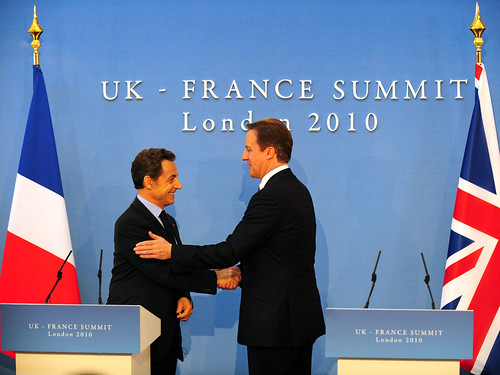
Could a Franco-British military be the start of an EU army?

Today’s agreement for military cooperation between the UK and France may or may not be as “historic” as the media is claiming today – but it all seems to depend on which side of the channel you’re on. In the UK, political leaders have been keen to stress the “pragmatic” nature of the relationship between the two countries who are both pursuing austerity measures and looking for cuts wherever they can. The suggestion from Prime Minister David Cameron almost seems to be that this is a temporary arrangement. Meanwhile Nicolas Sarkozy and other French leaders are telling their newspapers that this is a “moment of history” and the start of a “long-term relationship” that essentially commits the two to work together for 50 years.

So who’s right? The answer is that it will be very dependent on what type of relationship the UK and France have over the next 50 years. After all, military agreements like this have been signed between the two countries before which came to nothing. Most famously, a more general agreement was made between Tony Blair and Jacques Chirac before their dramatic falling out over the Iraq War put an end to all that. So who’s to say that this agreement won’t also be scrapped as soon as the two countries differ again on foreign policy?

Wednesday, 20 August 2008

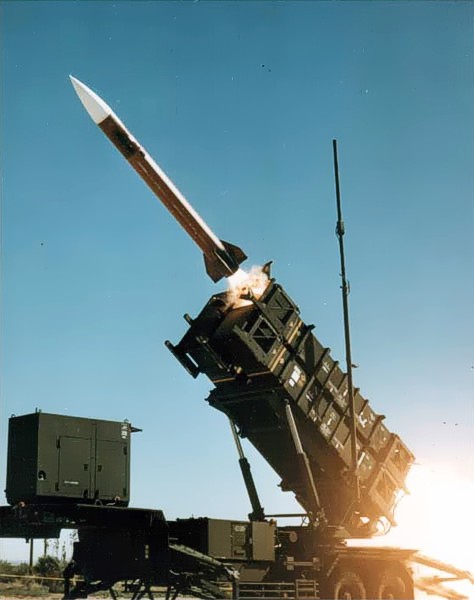
US gets its missiles in Poland

It’s official, the United States will install missiles in Poland pointed at Russia. The historic and highly controversial deal was signed in Warsaw this afternoon by Condoleezza Rice, ushering in a new era in Russo-Western relations.

The decision by Poland to allow the US to build its missile base there, and a mirror decision by the Czech Republic to build a twin radar facility in that country, seemingly couldn’t come at a worse time for relations between Russia and the West. Set as it is with the backdrop of the Georgia conflict, the timing is likely to enrage Russia even further.

The US insists the missiles are not directed at Russia but are rather for Europe’s protection from rogue states such as Iran. But there is no denying that the missiles are within easy striking distance of Russia, right at its doorstep. As part of the deal, the Americans will get a permanent garrison of US troops along with an agreement that the US will give Poland complete protection in the event of any conflict. All of this is outside the framework of NATO. Russia is obviously far from pleased that this is happening in its former satellite state. After all, they point out, the US didn't tolerate Russia putting missiles in Cuba. Why should the Russians tolerate this?

Thursday, 14 August 2008

Ring Around the Russia

Things seem to be getting worse before they get better in Georgia. At the moment, according to Georgia, there is a 100-vehicle tank convoy heading again toward the capital, and Russia now controls 1/3 of the country. The Sarkozy-brokered EU cease fire agreement doesn't appear to be working.

As the world tries to figure out what to do about this mess, I was struck by something in John McCain's editorial, entitled, We Are all Georgians, in the Wall Street Journal today. McCain's editorial was strongly worded and stark, and there's speculation tonight that President Bush's decision to send Secretary of State Condoleeza Rise to Tblisi was driven by not being a desire to not be overshadowed by McCain. Meanwhile Obama seems to be nowhere to be found.

McCain's editorial is almost like a little trip down memory lane, presenting a renewed us-versus-them approach when it comes to Russia. But most interestingly, it seems to display a complete misunderstanding of current geopolitics. Either that or he's being deliberately disingenuous.

Monday, 31 March 2008

Could the Bucharest NATO summit give birth to an EU army?

When it comes to great expectations, few summits could be said to be generating as much anticipation recently as the NATO summit in Bucharest this week. Besides hammering out a plan to rescue the military fiasco in Afghanistan, it is set to enlarge and restructure the alliance in a way that will fundamentally change it.

The Balkans are at the heart of this restructuring. With Kosovo having declared its independence in February, the nation is waiting with baited breath to see how NATO, which has been occupying the breakaway republic for eight years, will handle the situation. Some current members are insisting that stability in the region can only come from accelerating the membership of the region’s countries in NATO. Bulgaria, Greece, Romania and Turkey are already members, and Albania, Croatia and Macedonia may be invited to join at the summit.

However many EU countries are insisting it should be Europe itself that solves the crisis. The EU is working out a plan to create an EU police force to protect and stabilize the new country, allowing NATO to leave. With up to 1,800 police, judges and prosecutors it would be the largest such mission ever undertaken by the bloc. Whether or not this happens will depend on what occurs at the Bucharest summit.

Tuesday, 12 February 2008

France to Europe: grow up

French president Nicolas Sarkozy may be considering returning French forces to NATO military command, but comments yesterday by the French defence minister reveal that the country might want something in return: the go-ahead from the Americans to build an EU army.

France has for years floated the idea to build up an EU army with a military headquarters, but it has met resistance from both Washington and its European allies. Washington has regarded the efforts as a threat to NATO unity and as an unnecessary duplication of NATO’s functions. At the same time, European nations have refused to increase their defence budgets in order to develop a European standing army.

French president Charles De Gaulle pulled the French military out of NATO (the North Atlantic Treaty Organisation) 40 years ago over concern about American domination of the alliance. The system, set up primarily for the defense of Europe from the Soviet Union after World War II, has historically been considered by many as an American military protectorate over Europe. In April a conference in Bucharest, Romania is scheduled to work out a major overhaul of the alliance, largely in reaction to its difficulties in Afghanistan but also to deal with its proposed enlargement to Eastern European and Caucasus nations bordering Russia. The conference could also bring a commitment by Sarkozy to hand French troops back over to the alliance.