
Friday, 15 September 2017
One speed or two? Juncker challenges Macron's EU vision

Sunday, 10 September 2017
Should Germans stop speaking English in Berlin?
Saturday, 9 September 2017
Juncker's Wallonia bypass could save Brexit
Next week the Commission is expected to outline a plan in which governments will no longer have veto power over most EU trade deals. It could be a game-changer for the Brexit negotiations.
 One year ago, as Canadian Prime Minister Justin Trudeau prepared to board a plane tp Brussels to sign a landmark free trade deal with the European Union, he had a bone to pick with some fellow Francophones 4km to the south of the EU capital.
The deal was done and all 28 EU national governments had agreed to it. But the tiny region of Wallonia, the French-speaking, politically far-left Southern part of Belgium, was threatening to wield a veto. A region of 3.5 million people was about to unilaterally kill the trade deal agreed by the other 509 million.
The premier of Wallonia asked Trudeau to cancel the visit, saying it would be a "provocation" to do so while Wallonia had not yet given its assent. The Canadian PM cancelled his flight, but he was not pleased. "If, in a week or two, we see that Europe is unable to sign a progressive trade agreement with a country like Canada, well then with whom will Europe do business in the years to come?" he asked.
Friday, 1 September 2017
Fake Brexit: Is Britain heading for pseudo-independence from the EU?
Sunday, 27 August 2017
Who will be Merkel's dance partner?
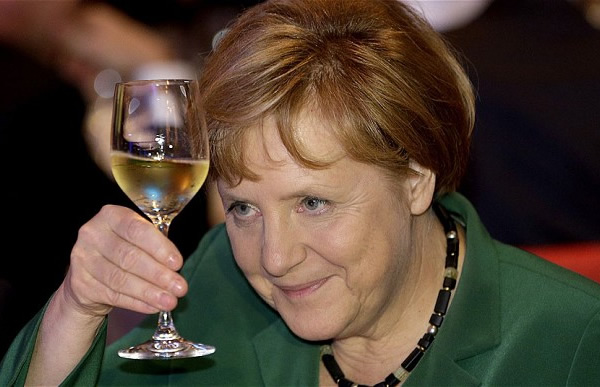
Compared to some of its neighbors, Germany isn’t known for having elections with edge-of-your-seat excitement. Particularly in the past decade, as Angela Merkel’s conservative CDU/CSU bloc has dominated politics, federal elections haven’t had much in the way of surprises.
But this year was supposed to be different. People expected a real contest between two credible candidates on September 24. That didn’t pan out.
Merkel has now been in power for twelve years, and she is running for a historic fourth term that could make her, along with Helmut Kohl, the longest-serving chancellor in modern German history. But many of her decisions have proved unpopular, particularly her controversial move to welcome Syrian refugees fleeing that country’s civil war in August 2015. It was thought that voters were ready for change.
Thursday, 24 August 2017
Estonian issues: Charlottesville, collective memory and technology
As Estonia takes over the EU presidency, we talk on this week's podcast about two issues central to the Baltic country - technology and historical memory.
Subscribe to:
Posts (Atom)