Showing posts with label voting system. Show all posts

Thursday, 16 August 2012

One car, one vote

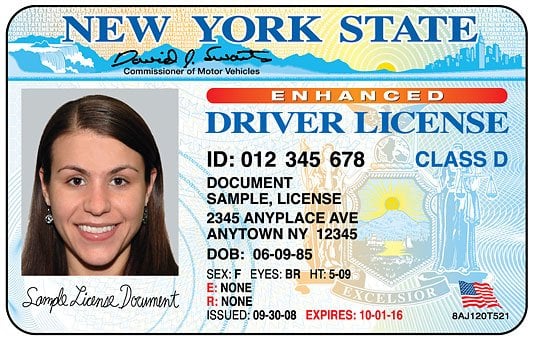
The US presidential campaign switched into high gear this week with Mitt Romney’s selection of Wisconsin congressman Paul Ryan as a running mate. But with a raft of voter ID laws now going into effect in crucial swing states across the country, it’s looking increasingly likely that the result in November could be shaped more by who is allowed to vote than by who is on the ticket. Thanks to these new laws, if an American doesn’t drive, he or she may not get to vote.

Until 2003, no state in America required voters to show a photo ID in order to vote. For Europeans this may seem strange, since showing your national ID is often a requirement here for things as simple as using a solarium. But English-speaking countries tend to not have national IDs. For some reason I’ve never understood, there’s just some deep-rooted Anglo-Saxon distrust of them.

In the United States, this leaves drivers licenses as the only government-issued photo identification most people have. Because such a large proportion of adult Americans (85%) have a drivers license, this has more or less worked out. Many people obtain a drivers license even if they do not routinely drive, in order to have a photo ID.

But that leaves 10% of eligible American voters who do not have a drivers license or any other form of photo ID, according to NYU's Brennen Center for Social Justice. This group is overwhelmingly made up of African-Americans, Hispanics and college students. And these three groups are statistically the most likely to vote Democratic.

Thursday, 5 May 2011

Today Britain votes on how to vote

Today's the big day in the UK – the nation goes to the polls for a referendum on whether the country's voting system should be changed from a US-style first-past-the-post method to something closert to a European-style proportional system.

Polls going into the voting today indicate that the likely result will be a 'no', which would be a crushing blow for the Liberal Democrats who made this referendum their central demand for entering into a governing coalition with the Conservatives. Then again, so much about this referendum depends on who actually turns out, and voter interest in this referendum is incredibly low. No matter how people have been responding to the pollsters, it may only be the people who are enthusiastic about switching to a new system that turn out today.

Wednesday, 29 July 2009

Euroelection - Who Voted, and Why

If you’re a Eurobarometre-trolling dork like I am, you may have noticed this fantastic set of polling numbers published this morning looking at why people did and did not vote in last month’s EU elections. A couple of news outlets today are headlining these results with a conclusion about voter apathy, but I actually think that’s probably the least interesting observation you could make about these numbers. “European voters are apathetic” – not exactly mind-blowing news.

Overall turnout in the EU this year came to 43%, continuing the trend of a decrease each cycle since elections began – but interestingly – the drop this year (from 45.5% in 2004) was less than in the past. And it should be noted that although people here go on and on about how low the parliament election’s voter turnout is, it still hasn’t sunk as low as the typical US midterm election (usually less than 40%). And considering that the midterm votes elect the entire US House of Representatives and 1/3 of the senate, let’s face it, they’re a hell of a lot more important than the EU parliament elections. But since there’s no US presidential race accompanying them, the lack of personality politics keeps many American at home. That can certainly be said for the EU Parliament elections. There’s only so much interest you’re ever going to be able to drum up for rather boring representative democracy.

Far more interesting than the overall turnout, I thought, was the profile of who voted. The survey, done shortly after the election, showed that men were more likely to vote than women, highly educated people were more likely to vote than people with a low level of education, and a smaller proportion of unemployed and working class people voted than that of senior management.

Why did people vote? Interestingly, the numbers show that party identification is playing an increasingly less significant role in voting patterns as Europeans become more and more disillusioned with the political class. Only 43% of respondents said they felt close or very close to a single political party (just 22% in the UK).

The majority of people who voted said they did so out of a feeling of duty of obligation rather than because they an ambition for change. 47% said they voted because it is their “duty as a citizen”, while 40% said they did it because they always vote. Only 19% said they thought they could make things change, and just 13% said they voted because they feel like a European or an EU citizen. Though at the same time, only 11% said they voted in order to express their disagreement with the EU.

I also found the section on which issues were important to ther voters interesting.Economic growth and unemployment were the two most important issues to people, while the role of the EU in the international scene ranked fairly low. The more educated a person was, the more importance they placed on the EU's role in the international scene as an issue.

Predictably, the UK had one of the lowest turnouts in June - but not the lowest. That honour went to Slovakia, for the second election in a row (do Slovakians not know how to operate a voting box?). Many of the new entrants of Eastern Europe had the lowest turnout actually, with Poland, the Czech Republic and Hungary all coming around the UK's 34% turnout. Also predictably, Luxembourg and Belgium had the highest turnout with around 90% (um, that's just weird...). Malta, Italy and Denmark all also had high turnouts.

***Addendum***

Thanks Enoka for pointing out that Belgium and Luxembourg have mandatory voting, that explains the high turnout. Actually that makes the fact that Belgium ranked fairly low for voter interest in the election pretty interesting. It was second to last for people reporting they had had exposure to the election campaign. Not exactly the most glowing argument for compulsory voting.

Thursday, 5 July 2007

Pesky Poland

I had an interesting conversation with a Polish person I met last night, and it shed a bit of light into the Polish character and why the country has been such a thorn in Brussels' side over the past few weeks.

To recap, the big news in Europe over the last month has been the meetings over the new treaty being hammered out to replace the EU constitution, which died when it was voted down by referendums in France and The Netherlands two years ago. There were two member states that were the biggest obstacles to progress in the talks. The first was, predictably, the UK, which has been the most historically uncooperative member and wanted all sorts of special exemptions from the treaty for itself. But the second was Poland, a new member state that was admitted just three years ago.

Poland is currently run by a pair of eccentric, very conservative twins. They caused quite a stir at the meetings by demanding that the EU adopt a voting system in which each country gets an amount of votes proportional to the square root of the population, rather that proportional to the actual population. This would give smaller countries more voting power and bigger ones less, and would essentially give Poland (population 38 million) the same voting power as Germany (population 82 million). The twins were intractable on this, and although all the other members states warned them that this type of hard-headed obstinacy doesn’t work in the EU and they should use softer diplomacy, in the end I guess they were wrong because the twins won and got no permanent decision on the voting system for at least another seven years, even though all 26 other members were opposed to this. The twins are now claiming that there was an “oral agreement” for further concessions to Poland and they want to redo the deal that was finally worked out.