Friday, 9 September 2011

War of words between PIGS and FANGs

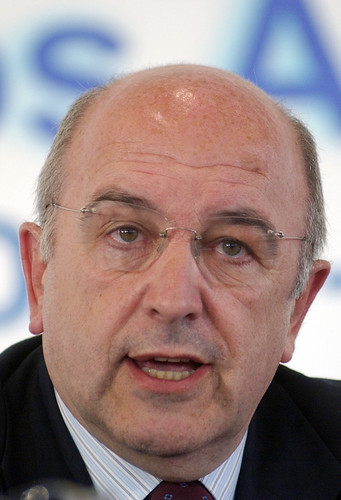
The European Commissioner from Spain delivered a surprising attack yesterday on the Northern European countries pushing Southern Europe to adopt painful austerity measures. The comments follow a controversial proposal from the Dutch prime minister earlier this week which called for EU member states struggling with debt to be put under the 'guardianship' of the European Commission, surrendering their ability to make their own financial decisions.

"There are member states, in particular some of the most powerful -- Germany, Netherlands, Finland, Austria -- who feel that they don't have this kind of problem," Almunia told a group of business executives in New York. "[They believe] they don't need to make an additional effort to compensate the lack of resources of the countries who have the most difficulties to reduce imbalances."

The rhetoric was then ratcheted up to an even more dramatic level today when the European Commissioner from Germany told the tabloid Bild that if indebted (read: Southern) EU countries refuse to comply with new rules on debts and deficits, their flags should be flown at half mast outside institutional buildings. Mourning the loss of fiscal prudence, perhaps?

Thursday, 8 September 2011

Could Strasbourg battle pit country against country?

The long-running battle between the European Parliament and France over where the institution's permanent seat should be located has reached boiling point in recent months, following the parliament's vote in March to combine two of its mandated Strasbourg sessions into one. The fight has now been taken to the European Court of Justice, and following a call from Dutch parliamentarians today, the war could for the first time pit member state against member state.

The official headquarters of the European Parliament, as mandated by the EU treaties, is Strasbourg, France. The EU treaties require the parliament to meet there twelve times a year. But for well over a decade the working offices of the parliament have been in Brussels, where the other EU institutions are based (they surreptitiously built a giant parliament building there by telling France it was going to be a "conference center"). So once a month the entire European Parliament is made to make a five hour trek from Brussels to Strasbourg to hold three-day sessions. It would be like the US Congress uprooting itself once a month to hold sessions in Pittsburgh, Pennsylvania.

The majority of members of the European Parliament (MEPs) hate the monthly "traveling circus". A 2007 survey by Liberal MEP Alexander Nuno Alvaro showed that 89% of MEPs want to end the Strasbourg sessions. MEPs have tried to force the issue several times, but changing the treaties to end the Strasbourg requirement would need the unanimous approval of all member states – and France has always promised to veto such a move. They are insistent that one of the EU capitals should remain in France – even if no actual work is done there and it is merely a place where things already agreed are rubber-stamped.

Wednesday, 7 September 2011

Germany backs bailouts – for now

The markets are breathing a sigh of relief today after Germany's constitutional court ruled that it is legal and in line with the EU treaties for the country to be bailing out its struggling Eurozone neighbors. But the jubilation may be short-lived, because in its ruling the court sewed a minefield of potential future obstacles that will have to be dealt with in the coming months.

The ruling was in response to a lawsuit from Eurosceptic German citizens who said the bail-outs of Portugal, Ireland and Greece to stem the European debt crisis are unconstitutional because the German parliament should have control over taxpayer money, rather than the European Central Bank. The court rejected that argument, saying Germany's participation did not amount to an excessive burden on the country's budget, nor did it constitute a significant transfer of power away from Berlin.

Germany is by far the largest contributor to the bailout funds. If the judges had sided with the challengers in this ruling today it would cast Germany's ability to participate in those bailouts into question, which in turn would have thrown the markets into turmoil. Instead, the announcement this morning sent European stocks shooting up. Amongst the German public, who are growing weary of what many perceive as Germans being on the hook for the profligate spending of their Southern neighbors.

Tuesday, 6 September 2011

EU still terrified of treaty change

During today's midday briefing a European Commission spokesperson emphatically insisted that any tightening of economic integration in the Eurozone will not require treaty change. Reporters in the room didn't seem to be buying it. It's not hard to see why, after the president of the European Central Bank said yesterday that such a change would require such a treaty change.

It's an uncomfortable situation for the EU, which only recently was able to pass the long-stalled Lisbon Treaty after a painful and embarrassing six year saga. There is now a consensus that the only way to save the euro from the contagion of the debt crisis is to establish a tighter economic union between the countries that use the currency, essentially establishing a single finance ministry instead of having separate economic policies for the different states.

But there is fear that doing so will require yet another treaty change, and Brussels is worried that another round of treaty change approval by member states would be a disaster. There is still uncertainty over whether such changes would meet the threshold for UK Prime Minister David Cameron's 'cast-iron guarantee' to hold a public referendum on every treaty change. Because of the widespread antipathy toward the EU in Britain, it is guaranteed that any referendum on an EU question would fail – even if it is on a question that doesn't directly concern Britain, such as the eurozone (the UK does not use the euro and would therefore keep its own finance ministry).

Monday, 5 September 2011

Conservative Party may disband in Scotland

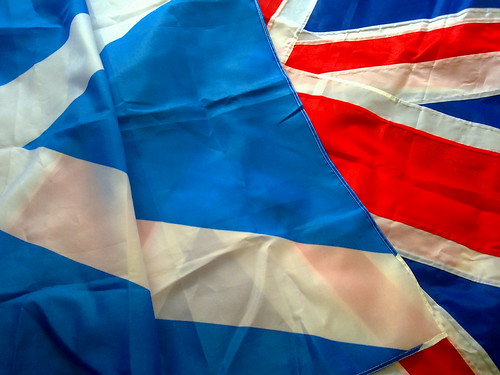
In an attempt to shed its image as an 'English party', members of the Conservative Party in Scotland are considering splintering off from the Tories and forming a new Scottish centre-right party. The move, which would not be the result of any policy disagreement with the Tory leadership but rather for identification issues, reflects just how strong regionalism has become in Europe in recent years.

The change is being proposed by Murdo Frasier, a candidate in the current race for a new leader of the Conservatives in Scotland. The Tories have been pretty much banished from power by Scottish voters for over a decade now, ever since a massive defeat in 1997. They currently hold only 15 of the 129 seats in the Scottish Parliament and only one of Scotland's 59 seats in the British Parliament. Since 2007 the largest party in the Scottish Parliament has been the Scottish National Party, which wants to seceed from the UK.

Frasier has centred his leadership campaign around a promise to break this trend by dissolving the party, which he says has become a "toxic brand" in Scotland because people see it as representing the interests of Westminster over Edinburgh. The new party would likely not even have the words "conservative" or "tory" in its name.

Friday, 2 September 2011

Berlusconi: Italy is a "shitty country"

He's survived sex scandals, corruption investigations and insurrections – but can Italian prime minister Silvio Berlusconi survive in his post even after insulting the country he rules? Considering the shocking vulgarities he has been caught using while referring to Italy in a secret recording, this may be too much for even the Teflon Prime Minister to fend off.

The recording, made in July but released this week, catches Berlusconi saying he wished he could leave Italy – saying it is a "shitty country" that "sickened" him. The recording was made by Italian police, who were investigating allegations that Berlusconi was paying a man to corroborate his story that he was unaware the women supplied to him for his infamous "bunga bunga parties" were prostitutes.

The transcript of the recorded conversation came to light after police arrested a wealthy Rome businessman and his wife in a raid at dawn on Thursday, charging them with blackmailing Berlusconi. They allegedly demanded payment from Berlusconi in order to keep quiet about arranging the prostitutes for him. Berlusconi has admitted paying them but says he wasn't blackmailed and did it voluntarily.