The combination of balkanised authorities and a marginalised North African population has made Brussels a natural terrorism hub.
I’m here in Brussels this week, doing a few TV spots and moderating some conferences. As soon as I arrived at the airport last night, I could sense the tension in the city as a result of this weekend's terrorist attack in Paris.
As I rode the nearly empty tram to my Brussels apartment, a group of young North African men got on the tram, engaged in a heated argument amongst themselves about the recent attacks (they were debating whether or not it was justified). I stopped into my local kebab joint and found another discussion between the Moroccan owners and a white Belgian customer, about how the authorities should respond. Outside, sirens wailed as police searched the city for one of the attackers believed to be on the loose in the city.
The father of the protestant reformation has been used as a propaganda tool by many governments over the years, but today he attracts considerably less attention.
Today I took a day trip to Wittenberg, where the protestant reformation began in 1517 after the theologian Martin Luther nailed his 95 theses to the church door. That act of rebellion kicked off a Europe-wide revolt against the corruption in the Catholic church that would eventually lead to the wars of religion in the 16th century, killing thousands upon thousands of people. During all this time, Wittenberg became the center of reformation effort, known as the "Protestant Rome".
Can Germans convince other Europeans to feel as strongly about data privacy as they do? A new documentary tries to make the case.
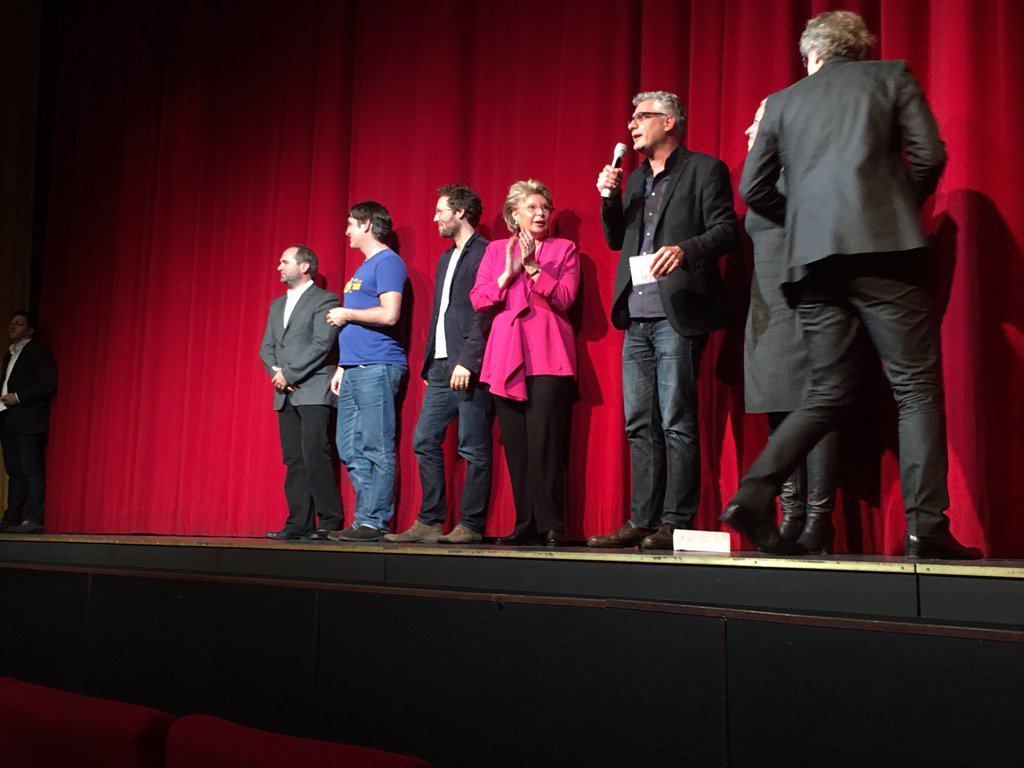
Last night I attended the Berlin premier of Democracy, a documentary about the European Union's proposed data privacy regulation. The director, David Bernet, has been following the main actors involved in the legislation since it was first proposed in January 2012.
The film strives to be a call-to-arms for Europe as a whole, drawing attention to the threat posed by data surveillance and the current make-or-break moment for this legislation which would put controls on snooping. It opens and closes with shots of the Parthenon in Athens, with an ominous-looking government helicopter flying overhead. The not-so-subtle message: all democracy is under threat from unrestrained data surveillance.
But despite the pan-European scenes, the film seems to be coming from a very German perspective on these issues. And as somewhat of a privacy-sceptic, I came away feeling that while film told me what is happening with the legislation, it didn't tell me why I should support it.
A new study finds Slovenes, Estonians and Poles all have greater English proficiency than Germans.
One of the biggest adjustments for me moving from Brussels to Berlin has been linguistic. For one thing, I moved from a city where I speak the language (French) to one where I don't (German).
But I'll admit it - even though I speak French I preferred to do most things in my native language when possible. In Brussels, this was most of the time. I only spoke French when I absolutely had to, either for work (a lot of French lawmakers don't speak English or are not allowed to), for dealing with Belgian administration, or socially if I was with a group of all Francophones (that didn't happen very often).
Due to a mixture of geographic and lifestyle factors, Berlin doesn't have much of a 'rush hour' to speak of.
I have a genuine question for Berliners - is there anything resembling a rush hour in this city? Perhaps it's the area in which I reside or the nature of my work, but after four months of living here I have yet to see any difference in traffic patterns or public transport ridership during the traditional commuting times of the day.
Maybe it just seems comparatively inactive because I'm coming from Brussels, which sees bumper-to-bumper gridlock throughout the city from 7h to 10h and 16h to 19h. I've noticed that it's only gotten worse since they closed Boulevard Anspach, the main thoroughfare in central Brussels, to pedestrianise it. During my Brussels weeks these past months I've seen traffic at an absolute standstill. I'm heading to Belgium tomorrow for another Brussels week, and I expect to spend much of the week sitting in traffic.
My 'Brussels weeks' feel a bit like coming back to my home village.
I’m on the train back to Berlin after a week in Brussels. Given that I’m now four months in with this dual-city life, I was naturally getting a lot of questions during this ‘Brussels week’ about how it’s going.
So far so good, has been my response. The two cities are so remarkably different so it’s nice to shake things up every two weeks. The train has served me well as a sort of ‘mobile office’, and so far it hasn't felt too disruptive.