Though just recently the European Central Bank said smugly that Europe would never see the kind of bailouts currently going on in the US, as many as predicted it now seems clear Europe will not be immune from the crisis. Yesterday brought the news that Belgian-Dutch group Fortis is being nationalized by the Benelux nations and British mortgage lender Bradford & Bingley is being nationalized by the UK government.
Though the UK was the first country to see a big bank bailout with the nationalization of Northern Rock, since the US institutions such as Lehman Brothers and AIG started started dropping like flies, Europe's banks had held firm. But no longer. Fortis is the first major continal European bank to falter.
Now analysts are saying the next phase of bank bailouts are likely to be seen in Europe. Joseph Kraft, head of Japan capital markets at Dresdner Kleinwort, told Reuters today,"It's definitely moving towards Europe. It's the beginning of the end and a necessary step, so we should see more institutions nationalised, absorbed or going into default."
At the same time it appears the US congress has been able to work out a deal with which they can approve the $700 billion bailout plan for the struggling banks.
Monday, 29 September 2008

Friday, 26 September 2008
Global Economic Crisis: France to the Rescue?
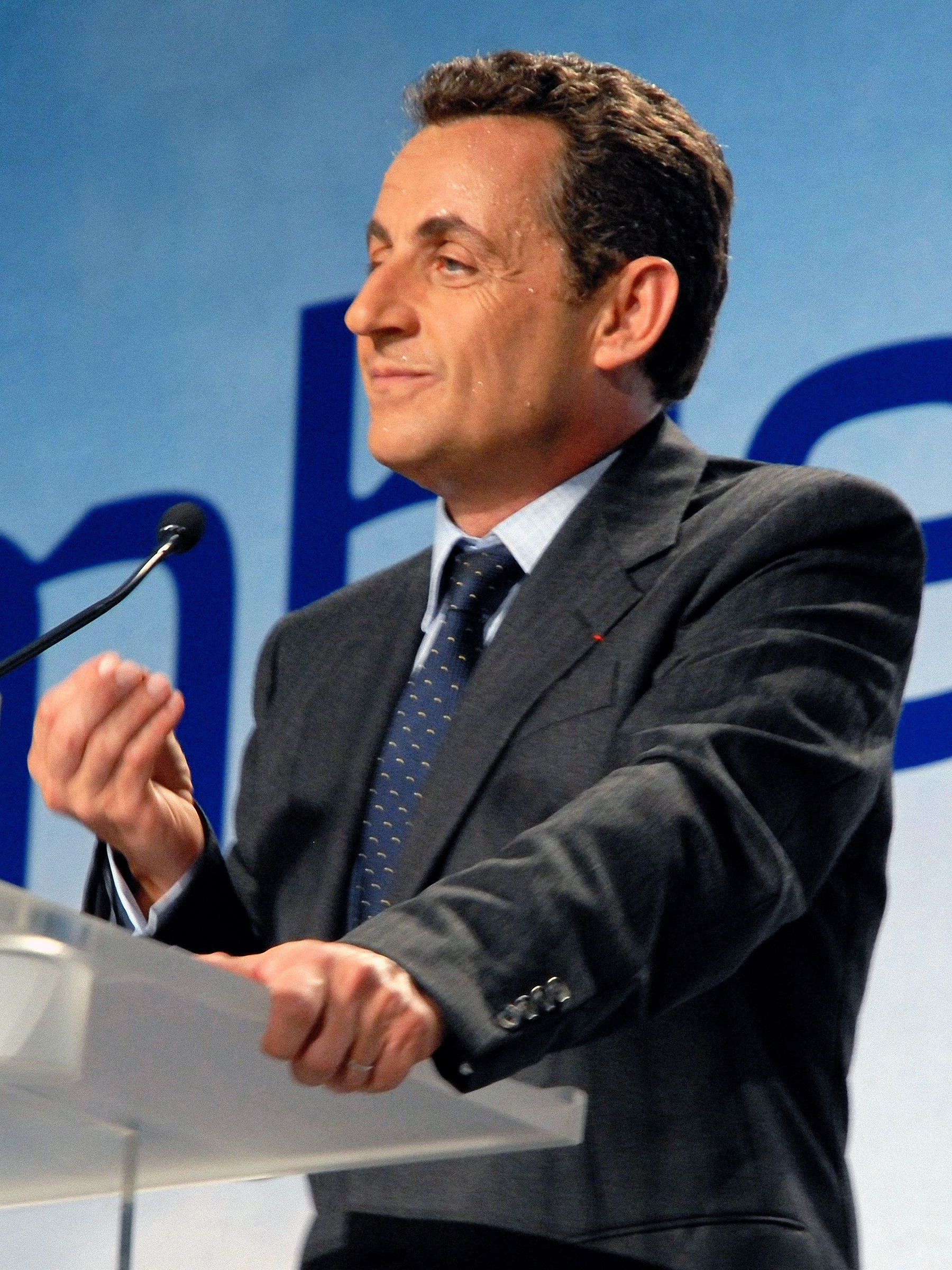 Over the past week I have been wondering if the current global economic meltdown, caused in part by the lack of US regulation over the financial services industry over the past decade, would have an impact on the way Europe's political winds are currently blowing. Judging from French president Nicolas Sarkozy's speech in Toulon yesterday, it would appear that for its part at least, the French right does not intend to scale back its ambitious plans for liberalizing reforms in France. But at the same time, Sarkozy intends to use the example of the crisis to sell to the Anglo-Saxon world a more Gallic system of economic regulation. The jist of his speech, it would seem, is that he wants to bring France's economy more toward liberalization and to bring the UK/North American economy more toward regulation, and perhaps the two can meet in the middle.
 The past few years in Europe have seen a fundamental shift toward the right, as Europeans grow anxious about generous social welfare programs that now seem unable to sustain themselves over the long term. First, Angela Merkel's Christian Democrat party wrested power from the socialists in Germany through a coalition goverment. Then Nicolas Sarkozy handily beat the socialist candidate Segolene Royal in the French presidential election last year. Italy's brief period with a leftist prime minister came to an abrupt end earlier this year with the return of Silvio Berlusconi. And in the UK, Conservative leader David Cameron seems likely to lead the Tories to a victory over Labour whenever the next election is called. The only big outlyer is Spain, where socialist prime minister Jose Luis Rodriguez Zapatero ousted the conservative government a few years ago and is still standing strong.
Both Merkel and Sarkozy have made reforming the country's social models a priority - undertaking a liberalization program for the economy. Sarkozy's has been the most aggressive. So with the near collapse of the credit market in the US exposing flaws in the free-market capitalsm that has prevailed in the Anglo-Saxon world over the past decade, I've wondered whether the ascendancy of the European right might be finished.
But Sarkozy seems to be quickly repositioning himself in the face of the crisis. The man the French left has dubbed "Sarko l'Americain" lambasted the US-inspired lack of regulation in the last few years yesterday, saying that the extreem free-market deregulation undertaken by the Bush adminsitration, "was a folly whose price is being paid today."
In his speech yesterday he warned Europe that it cannot escape shock waves from the US financial crisis and that to protect its future, it must take the initiative in rewriting worldwide banking rules to end the "folly" of an under-regulated system he said is now "finished."He said that at the EU's next meeting he would, as the current holder of the European presidency, propose swift action for the EU to tighten controls over European banks. And he said that the world's major parties should gather at a special summit before the end of the year and develop an entire new monetary and financial framework to replace the U.S.-dominated Bretton Woods system set up in 1944.
 So, I wouldn't count the European center-right out yet. After all, their opposition, European socialism, is largely adrift ideologically these days. If the European center-right can position itself as the political movement that can look out for Europe's interests during this crisis and strongarm the US into increasing regulation, it could end up even stronger from this crisis than it started. I have yet to see any reassuring plan of action from Europe's socialists.
Wednesday, 24 September 2008
Guns in Finland
Yesterday's school shooting in Finland are interesting to look at from an American perspective, considering that the United States has an extensive recent history with school shootings and gun control is such a controversial issue in the US. Finland provides an interesting illustration, when compared to its European neighbors, of the possible links between the availability of guns and the frequency of gun crime.
In the US, gun control advocates often point to Europe as an example of an area where it is much harder to get a gun, and conversely there is much less gun crime. This is generally true, in the UK for instance even the police don't carry guns - and I saw first hand how rare and serious crimes involving guns are when I saw the police response to my getting mugged in January.
But there is one major exception to the restrive gun laws in Europe, and that is Finland. In Finland it is actually quite easy to get a gun, and owning one is very popular. There are 1.6 million firearms in private hands in Finland, and the minimum age for owning one is only 15. Only the US and Yemen have higher civilian gun ownership.
Now after yesterday's shooting, which closely followed another horrific school shooting in Finland in the past year, the country's prime minister has called for gun laws to be tightened. Matti Vanhanen said today that Finland should consider banning private handguns.
"In terms of handguns that can easily be carried about, we have to think about whether they should be available for private people," Vanhanen said. "In my opinion, they belong on shooting ranges."
 Eleven students died in yesterday's shooting, and nine died in a similiar shooting in the town of Tuusula. Both of the gunmen had valid licenses for owning a gun, and both were young men who had posted videos on youtube with their weapons before the shooting. After last year's attack the Finnish government said it would consider changing the gun ownership laws, but no change was ever made.
School shootings haven't been very common in Europe, but they have occured. Outside of Finland there have been only two major ones. There was one in Scotland in 1996 that preceded the Columbine shootings, and another one in Germany in 2002. Though Finland has had several school shootings, gun crime in the country is relatively rare (although crime in general in Finland is rare). According to goverment figures, 14 percent of homicides in Finland involve a firearm.
Like the United States, Finland has a long and deep connection with hunting and personal gun ownership. But unlike the United States, there is no way of interpreting Finland's constitution as guaranteeing the right to gun ownership, and there is no powerful gun lobby. It could be that having these two shootings so close to one another could be the catalyst.
In the US, gun control advocates often point to Europe as an example of an area where it is much harder to get a gun, and conversely there is much less gun crime. This is generally true, in the UK for instance even the police don't carry guns - and I saw first hand how rare and serious crimes involving guns are when I saw the police response to my getting mugged in January.
But there is one major exception to the restrive gun laws in Europe, and that is Finland. In Finland it is actually quite easy to get a gun, and owning one is very popular. There are 1.6 million firearms in private hands in Finland, and the minimum age for owning one is only 15. Only the US and Yemen have higher civilian gun ownership.
Now after yesterday's shooting, which closely followed another horrific school shooting in Finland in the past year, the country's prime minister has called for gun laws to be tightened. Matti Vanhanen said today that Finland should consider banning private handguns.
"In terms of handguns that can easily be carried about, we have to think about whether they should be available for private people," Vanhanen said. "In my opinion, they belong on shooting ranges."
Eleven students died in yesterday's shooting, and nine died in a similiar shooting in the town of Tuusula. Both of the gunmen had valid licenses for owning a gun, and both were young men who had posted videos on youtube with their weapons before the shooting. After last year's attack the Finnish government said it would consider changing the gun ownership laws, but no change was ever made.School shootings haven't been very common in Europe, but they have occured. Outside of Finland there have been only two major ones. There was one in Scotland in 1996 that preceded the Columbine shootings, and another one in Germany in 2002. Though Finland has had several school shootings, gun crime in the country is relatively rare (although crime in general in Finland is rare). According to goverment figures, 14 percent of homicides in Finland involve a firearm.
Like the United States, Finland has a long and deep connection with hunting and personal gun ownership. But unlike the United States, there is no way of interpreting Finland's constitution as guaranteeing the right to gun ownership, and there is no powerful gun lobby. It could be that having these two shootings so close to one another could be the catalyst.
Labour Standing By Their Man
 As Gordon Brown flies across the Atlantic to the US this morning to discuss the economic crisis with other world leaders at the UN, it's safe to say he's had some recent experiences speaking to a panicked audience. In fact it's hard to say which group is more terrified at the moment; the world's leaders watching the US financial system teeter toward collapse, or the Labour party faithful watching their party blunder toward impending disaster.
Just yesterday Brown delivered a much-anticipated speech to the Labour Party Conference in Manchester, following months of party turmoil which have seen his approval ratings plummit. The party conferences in the UK are roughly the equivalent of the US party conventions, except that they happen every year at the same time regardless of whether an election is coming up or not.
His speech has been generally well-received by the British media, which has called it a "rallying" speech by a "New Brown" that was a "impassioned defense" of his precarious leadership. The speech also followed a clear effort to crack down on defectors within his cabinet - including the apparent submission of foreign secretary David Milliband, who was thought to be considering challenging Brown for the leadership, but earlier this week definitively shot down those rumours.
 However, yesterday's good press for Brown may be overshadowed by the news today that Ruth Kelly, the Transport Secretary, is going to resign from Brown's government. This likely means that she couldn't give Brown the full confidence that he is now requiring from his cabinet. So Kelly has jumped from what she probably sees as a sinking ship. Who's next?
Current polling says Labour is destined for defeat at the next election, with Brown as much as 20 points behind the leader of the Conservative Party, David Cameron. However because the UK has a parliamentary system of government, Brown can call that election any time before June 2010.
So can the "new Brown" save Labour? Depends who you ask. Many in the British media seem to think that all the new Brown has to do to instill confidence in the British public is act vaguely like a human being.
Reuters wrote, "Today New Brown skipped on to the stage, cracked funny gags and had not one, but two kisses on the lips for his wife Sarah as the lengthy standing ovation reverberated around the hall."
I have to say from an American perspective it was amusing to see the British press describe the atmosphere at the conference as "a little bit Baptist church, a little bit Butlins — maybe even a little bit Blair." Were we watching the same conference? Here's a video of Brown's speech and the applause that greeted him - sustained certainly, but not the thundering rapture that some of the British press seems to be describing. Watch the beginning of the clip to see Ruth Kelly struggle to make a smile when she sees the camera's on her. She's probably thinking, 'get me the F out of here!'
Yet Brown's speech did seem to take advantage of the way the wind is blowing at the moment by emphasising traditional Labour values like social welfare and increased regulation. The main theme seemed to be that in these uncertain times, the British people need a leader - and a party - which will protect the most vulnerable people in society during this crisis. Though the British press is describing Brown's effort toward enthusiasm and humanity as being "Blairite," the content of the speech was anything but. Though Tony Blair invented "New Labour" at the same time that Bill Clinton was inventing the "New Democrats" in the US (both pulling their parties to the right in order to make them electable), Brown's speech seemed to be pulling Labour back toward the left. At a time like this, that probably makes perfect sense.
In Brown's words there was also a stern warning for those in the party who have the knives out for him. The markets and the population, he reminded them, would not react well if there was perceived instability in the UK government at this time. "The British people would not forgive us if at this time we looked inwards to the affairs of just our party when our duty is the interest of the whole country," he said to the crowd. For now, the stern warning seems to have worked. They may be nervous about Brown's leadership, but the Labour faithful seem to have concluded that the alternative turmoil could spell disaster not only for the party, but for the country as a whole. So, for now at least, they're sticking with their man.
Friday, 19 September 2008
The Blame Game
As the global financial system falls apart around our ears, a few things have stuck out to me in the way that politicians in the US are reacting to the crisis. One has been the incredibly bizarre words coming out of John McCain's mouth in response to this disastrous week. Suddenly he's lambasting a "culture of unrestrained greed" on Wall Street and urging greater oversight. This is from a senator who has been one of the biggest champions of unbridled free-market capitalism throughout his decades in the senate. Has the world gone topsy-turvey? This may be what a paniced American population wants to hear right now, but it is clearly not the way John McCain truly views how the economy should be run.
I mean who would have thought they'd see the day that Hank Paulson, who is as aggressively free market as you can get, would be leading the kind of bailouts we're seeing today. He has to, the government doesn't have a choice in these circumstances. But it's truly bizarre to see John McCain blasting "unrestrained greed" on Wall Street as causing the current crisis when he and his party have led the charge to unrestrain that greed over the past ten years.
Beyond that, I think there is something culturally interesting about the language both candidates are using about the crisis, language which shows that no matter which candidate is elected in November, the US is unlikely to address the fundamental problem it faces any time soon.
Big Bad "Washington"
Both candidates are blaming the crisis on purely conceptual factors like "Wall Street Greed." It is symptomatic of the way the entire campaign has been phrased. The many problems America currently faces are the fault of "Washington," "terrorism," "lobbyists," "oil companies," you name it. In fact if you listen to American politicians, the one group that doesn't share any blame for the country's problems is the American people themselves.
But this argument is not only illogical, it's also unproductive. The dirtiest word during this election campaign has probably been "Washington." This is nothing new. Each election since Nixon has been presented to the American public in this way: Washington is broken and we need an 'outsider' or a 'maverick' to change it. It's how Reagan, Clinton and Bush were all elected. But this year the anti-Washington rhetoric seems to have hit new heights. And yet, what is Washington? Washington is a creation of the people, full of democratically elected politicians who the American public put there. Washington is, therefor, a reflection of the US population. So if there's something wrong with Washington, then there's something wrong with the US public.
The current economic troubles have been presented in the same way, as if it's all conceptual factors that are affecting the blameless American people. Nowhere was this more evident than when John McCain made the bonehead mistake of repeating his "the fundamentals of the economy are strong" line in Florida Monday morning on the day of the Lehman Brothers collapse. Rapidly going into damage control mode, he quickly shifted his wording later in the day to say that the 'fundamentals' he was referring to was the 'hard-working American worker.' Beyond being a laughable backtrack, it reflects the fundamental problem with the way American politicians are dealing with this cris. They're not being straight with the American people, because they won't tell them that it is the people who are to blame.
Debt Addiction
The American economy has been fundamentally operating on borrowed money for decades now. From the most microeconomic level (Americans now have a negative rate of average savings) to the most macroeconomic (the national debt is at a record high level), America is addicted to spending money it does not have to fund an opulant lifestyle. And it isn't just consumer debt like credit cards that has saddled the American people and the American economy. People took out mortgages that they couldn't possibly pay back, thereby spurring the mortgage crisis. People took out student loans that they knew they wouldn't be able to pay back for 30 years (I'm one of them). A combination of a lack of government oversight and assistance and Americans own culture of greed and vanity has pushed the country into a system where it lives far beyonds it means.
The average family debt in America is around $30,000, and that's not even including mortgages and student debt. The average college graduate from a private university leaves school with $60,000 in debt (Me? I had $120,000 in debt by the time I finished grad school). And how does Americans' -0.2 percent rate of savings compare our rapidly emerging superpower rival? In China, the average savings rate is 20 percent.
Jimmy Carter was the last president to touch this issue with a ten foot pole, in a speech he gave shortly before he lost the election to Ronald Reagan. The speech, widely called the "malaise" speech because it seemed defeatist, is widely credited with losing the reelection for Carter, who was defeated by Ronald Reagan who promised the American people "morning in America" with an endless luxurious lifestyle. Reagan then plunged the nation into an unprecedented level of peacetime national debt.
America has a problem. It is addicted to spending money, and resources, it does not have. The only solution to this problem is for Americans to stop spending what they don't have. But no politician is willing to say that. Instead, everyone in government is blaming the ethereal concepts of "Washington" and "Wall Street." And while much of this crisis can be blamed on the deregulation that a Republican congress has championed over the past 15 years (and that New Democrats rubber-stamped), most of it can be blamed on Americans' spend today, worry about it tomorrow lifestyle. The only real solution, for people, government and business, is to live within our means.
But per usual, when something goes wrong with the United States, it is never the fault of its citizenry. When a hijacking disaster came to its shores, it was blamed on the ethereal concept of "terrorism" rather than American foreign policy or the isolationism of its citizenry. When George W. Bush was elected - twice - it was somehow the fault of some larger "Washington" system rather than the fault of the voters themselves. And now, with the financial crisis, once again we see that Americans are refusing to look in the mirror and take responsibility for their own culture and their own lifestyle.
Self-Efacing Europe
I can tell you that this contrasts sharply with how Europeans view their own problems. When I speak with Europeans about the problems plaguing Europe, and the inability of the continent to address those problems, they throw their hands up in the air and give a morose explanation about how Europeans have petty rivalries and nationalism that make them unable to cooperate, or how they are are rendered complacent by their generous social welfare systems, or how the people of Europe lack any significant ambition or direction. They don't blame their concepts on etherial concepts, but rather themselves. They could never be as sucesful as America, so many of them say to me, because Europeans don't have the same drive for success.
In the end, I'd say Americans could do with a lot less self confidence and Europeans could do with a lot more. Americans inability to take personal responsibilty and tendency to blame vague concepts for their woes has gotten them into a quagmire in which they are unable to come up with real solutions to their problems. Europeans' lack of self confidence and their acceptance of a storyline that paints them as lazy and complacent makes it difficult to achieve any new success.
Maybe America has some extra swagger it could loan to Europe for awhile.
I mean who would have thought they'd see the day that Hank Paulson, who is as aggressively free market as you can get, would be leading the kind of bailouts we're seeing today. He has to, the government doesn't have a choice in these circumstances. But it's truly bizarre to see John McCain blasting "unrestrained greed" on Wall Street as causing the current crisis when he and his party have led the charge to unrestrain that greed over the past ten years.
Beyond that, I think there is something culturally interesting about the language both candidates are using about the crisis, language which shows that no matter which candidate is elected in November, the US is unlikely to address the fundamental problem it faces any time soon.
Big Bad "Washington"
Both candidates are blaming the crisis on purely conceptual factors like "Wall Street Greed." It is symptomatic of the way the entire campaign has been phrased. The many problems America currently faces are the fault of "Washington," "terrorism," "lobbyists," "oil companies," you name it. In fact if you listen to American politicians, the one group that doesn't share any blame for the country's problems is the American people themselves.
But this argument is not only illogical, it's also unproductive. The dirtiest word during this election campaign has probably been "Washington." This is nothing new. Each election since Nixon has been presented to the American public in this way: Washington is broken and we need an 'outsider' or a 'maverick' to change it. It's how Reagan, Clinton and Bush were all elected. But this year the anti-Washington rhetoric seems to have hit new heights. And yet, what is Washington? Washington is a creation of the people, full of democratically elected politicians who the American public put there. Washington is, therefor, a reflection of the US population. So if there's something wrong with Washington, then there's something wrong with the US public.
The current economic troubles have been presented in the same way, as if it's all conceptual factors that are affecting the blameless American people. Nowhere was this more evident than when John McCain made the bonehead mistake of repeating his "the fundamentals of the economy are strong" line in Florida Monday morning on the day of the Lehman Brothers collapse. Rapidly going into damage control mode, he quickly shifted his wording later in the day to say that the 'fundamentals' he was referring to was the 'hard-working American worker.' Beyond being a laughable backtrack, it reflects the fundamental problem with the way American politicians are dealing with this cris. They're not being straight with the American people, because they won't tell them that it is the people who are to blame.
Debt Addiction
The American economy has been fundamentally operating on borrowed money for decades now. From the most microeconomic level (Americans now have a negative rate of average savings) to the most macroeconomic (the national debt is at a record high level), America is addicted to spending money it does not have to fund an opulant lifestyle. And it isn't just consumer debt like credit cards that has saddled the American people and the American economy. People took out mortgages that they couldn't possibly pay back, thereby spurring the mortgage crisis. People took out student loans that they knew they wouldn't be able to pay back for 30 years (I'm one of them). A combination of a lack of government oversight and assistance and Americans own culture of greed and vanity has pushed the country into a system where it lives far beyonds it means.
The average family debt in America is around $30,000, and that's not even including mortgages and student debt. The average college graduate from a private university leaves school with $60,000 in debt (Me? I had $120,000 in debt by the time I finished grad school). And how does Americans' -0.2 percent rate of savings compare our rapidly emerging superpower rival? In China, the average savings rate is 20 percent.
Jimmy Carter was the last president to touch this issue with a ten foot pole, in a speech he gave shortly before he lost the election to Ronald Reagan. The speech, widely called the "malaise" speech because it seemed defeatist, is widely credited with losing the reelection for Carter, who was defeated by Ronald Reagan who promised the American people "morning in America" with an endless luxurious lifestyle. Reagan then plunged the nation into an unprecedented level of peacetime national debt.
America has a problem. It is addicted to spending money, and resources, it does not have. The only solution to this problem is for Americans to stop spending what they don't have. But no politician is willing to say that. Instead, everyone in government is blaming the ethereal concepts of "Washington" and "Wall Street." And while much of this crisis can be blamed on the deregulation that a Republican congress has championed over the past 15 years (and that New Democrats rubber-stamped), most of it can be blamed on Americans' spend today, worry about it tomorrow lifestyle. The only real solution, for people, government and business, is to live within our means.
But per usual, when something goes wrong with the United States, it is never the fault of its citizenry. When a hijacking disaster came to its shores, it was blamed on the ethereal concept of "terrorism" rather than American foreign policy or the isolationism of its citizenry. When George W. Bush was elected - twice - it was somehow the fault of some larger "Washington" system rather than the fault of the voters themselves. And now, with the financial crisis, once again we see that Americans are refusing to look in the mirror and take responsibility for their own culture and their own lifestyle.
Self-Efacing Europe
I can tell you that this contrasts sharply with how Europeans view their own problems. When I speak with Europeans about the problems plaguing Europe, and the inability of the continent to address those problems, they throw their hands up in the air and give a morose explanation about how Europeans have petty rivalries and nationalism that make them unable to cooperate, or how they are are rendered complacent by their generous social welfare systems, or how the people of Europe lack any significant ambition or direction. They don't blame their concepts on etherial concepts, but rather themselves. They could never be as sucesful as America, so many of them say to me, because Europeans don't have the same drive for success.
In the end, I'd say Americans could do with a lot less self confidence and Europeans could do with a lot more. Americans inability to take personal responsibilty and tendency to blame vague concepts for their woes has gotten them into a quagmire in which they are unable to come up with real solutions to their problems. Europeans' lack of self confidence and their acceptance of a storyline that paints them as lazy and complacent makes it difficult to achieve any new success.
Maybe America has some extra swagger it could loan to Europe for awhile.
Thursday, 18 September 2008
Getting Settled in Paris
 I'm doing my freelance writing shift at a sidewalk cafe in St. Germain des Pres at the moment, a move necessitated by the internet being out at my apartment this morning. My French really isn't good enough to call the provider and find out what's going on, so I'm hoping the situation resolves itself on its own! But as long as I'm here, watching the pedestrians stroll along the cobblestoned Rue de Buci, I figured it would be a good time to write an entry about my first few weeks in Paris, and share some photos I've taken.
I've now been here about three weeks, and I'm slowly adjusting to the "work-at-home" lifestyle. I have a freelancing shift I do for a news web site in the morning, and then in the afternoons I have French class every day for four hours (2 hours of phoenetics, two hours of grammar).
 The schedule has kept me much busier than I thought I would be, as evidenced by my lack of blog posts recently. Obviously the events of this week in the world's financial markets have inspired some ideas, and there's an entry I want to write about the root cause of the crisis, but I just simply haven't had the time. Why aren't I writing it now? Well I'm at a cafe nursing my capuccino, and it seems more appropriate to write about life in Paris!
 So far I've actually found everyone here to be really friendly and nice, which is completely different from my previous visits here when I was visiting. Perhaps it's because I'm speaking French with people, although for more complicated interactions that has been difficult. It really is just a shockingly beautiful city. I've been utilizing the city's 'velib' service, in which you can check out bikes from stations posted around the city and return them anywhere else. The first half hour is free, and it's just a euro for each half hour after that.
 This past Sunday I rode my bike around the city a bit, first visiting the Palais Garnier, the grand opera house at the center of Paris. It was really stunniny, I'm hoping to see an opera there before I leave. Afterwards I rode the bike to La Defense, the business district outside the city that is similiar to London's Canary Wharf. The tendency in Europe over the past 30 years has been to impose height restrictions for buildings in the city centers and establish skyscraper zones in specific districts outside the city. It was interesting to be in La Defense on a weekend, as it was almost completely deserted and I was able to ride the bike all around the walkways, platforms and planks. It's much bigger than Canary Wharf, and some of the buildings are really quite interesting. I went behind L'Arc de La Defense, a huge arch-shaped building that mirrors L'Arc de Triomphe miles away.
  >That's where the construction for La Defense stops abruptly, because there's a massive (and chaotic) cemetary there. Bizarrely, there's this long wooden plank that extends out over the cemetary. it looks as if it should be over a beautiful waterfront, and I rode my bike down it assuming that at the end there would be a stairway to go down to the cemetary/construction zone. But there was nothing, just a big plankway overlooking graves and piles of asphalt. Perhaps they're planning to put something in this area later? Afterwards I rode my bike through the Bois de Bologna, a gigantic park on the outskirts of the city just outside the ring road. It was rather uninspiring, as my guidebook predicted. But apparently they're planning to give it a big revamp soon.
 Class has been ok, but not ideal. To my dismay the other students turned out to be mostly American college kids, all either 19 or 20. There are some other "older students," but not many, and none of them are anywhere near my age. It would appear the students in the program are either 19 or 40, but nowhere in between! There's a significant contingent of Latin American college students as well, but the Americans make up the overwhelming (and loudest) majority. I don't have a problem with their being American per se, or the fact that they're young. But they're clearly in this course for a very different reason than us old folks. Theyre on their semester abroad, and the course is being paid for by mom and dad.
  For that reason most of them are not taking the classes very seriously, and seem to be more focused on where they're travelling to every weekend than with how their French is progressing. Don't get me wrong, I was one of them once too! I mean, my study abroad semester in Prague was academically challenging (it's known as the most academic of NYU's study abroad programs), but I definitly didn't take my Czech language course very seriously as a 21 year old spending a semester in Europe and jetting off on fabulous trips every weekend. But I'm not in that situation any more. It's very important for my career that I have a proficient level of French by the end of this course, and I resent it when the American college students speak in English during the class and don't do the homework, because it's wasting my time. Maybe I'm just becoming a cranky old man.
 My verdict on the city so far is that it's beatiful, very fun, but I don't think I would live here long term. It may be large and cosmopolitan, but it just isn't an 'international' city on the model of London or New York. It actually feels quite provincial. Most everyone I meet here is French, and most of them have never lived outside the country. In fact, I've met two people who have never even left the country! I can't imagine meeting any such person in London. Paris is just very French, in a way that London is definitly not British! London may belong to the world, but Paris belongs to the French, and they make that very clear!
I have some friends from London scheduled to come visit over the next few weeks, so hopefully the Eurotunnel mess won't mess up their plans. Other than that I hope to take some weekend train trips over the next few weeks. I hope to visit Lille, Normandy and Brittany in particular.
Subscribe to:
Posts (Atom)