Once again, Europeans wait while 300 million people on another continent determine their future. Why do they accept this state of affairs?
If you think things are tense in the United States right now, you should try it here in Central and Eastern Europe.
People are incredibly anxious about what might happen on 8 November. There are the obvious concerns - a volatile and unpredictable man being given access to America's nuclear arsenal after a victory sending global markets into freefall. In an age when America is still the bedrock of the global military and economic order, such an earthquake would send shockwaves throughout the world.
These are the worries of the whole globe right now. But in Europe, they have additional reason to fear. No area of the world is more dependent on the United States for its peace and prosperity than Europe. And it is this dependence that makes the media's coverage of US presidential elections here so breathless. In many ways, Europeans devote more attention to the American election than they do their own.
Today's vote in Wallonia against an EU-Canada free trade deal makes it painfully clear - Europeans will not approve any arrangement that lets Britain have its cake and eat it too.
Over the past weeks, people in the UK have been engaged in a tortured debate - should we have a "hard Brexit" or a "soft Brexit"?
A hard Brexit, viewed by most people (even the Brexiteers) as the worst outcome, would mean that the UK cuts economic ties with Europe, and continues to trade with the EU only on WTO terms. In other words, the UK is left with the same relationship with the EU enjoyed by Morocco.
A 'soft Brexit' would mean the UK retains market access while formally leaving the EU. This would occur either by the UK joining the EEA (à la Norway and Iceland) or negotiating bilateral treaties (à la Switzerland). Either of the latter two options would involve compromise. Crucially, the EU has made clear that the UK can't have either of these "soft Brexit" scenarios without maintaining freedom of movement (the ability for EU citizens to live and work in any EU country).
British people are going to have to get used to their new most-hated-nation status. As an American in Europe, I can give some tips on how to endure it.
"I hate America, but I love Americans". It's a line I've heard so many times in the past decade of living in Europe that I barely notice it any more.
I got it particularly often when I first moved to Europe in 2006. It was just three years since the launch of the Iraq War, which the vast majority of Europeans opposed. George W. Bush, immensely unpopular in Europe, was still the president. I had to face down a lot of hostility toward the country I came from.
But usually, after an energetic rant against the crimes of America, the person speaking to me would finish by saying something like, "but I love Americans. They're so creative, so full of energy. I love their TV and movies. I just don't understand how these same people can vote for leaders like this."
After Brexit, many British expats are considering never returning to a home that now feels alien to them.
I'm in Brussels this week, and have spent much of it catching up. I was away all summer, and though I was here briefly for work in early September, this is the first time I've been able to see a lot of my friends since that fateful day on 22 June.
Belgium may be experiencing a sunny Indian summer at the moment, but somehow the city still feels dark. There is a palpable fear about where the world is going. Post-Brexit, and possibly pre-Trump, we find ourselves in a moment of extraordinary unease. In my entire life, I've never felt such an overwhelming air of pessimism and fear all around me. It seems as if everyone has lost hope.
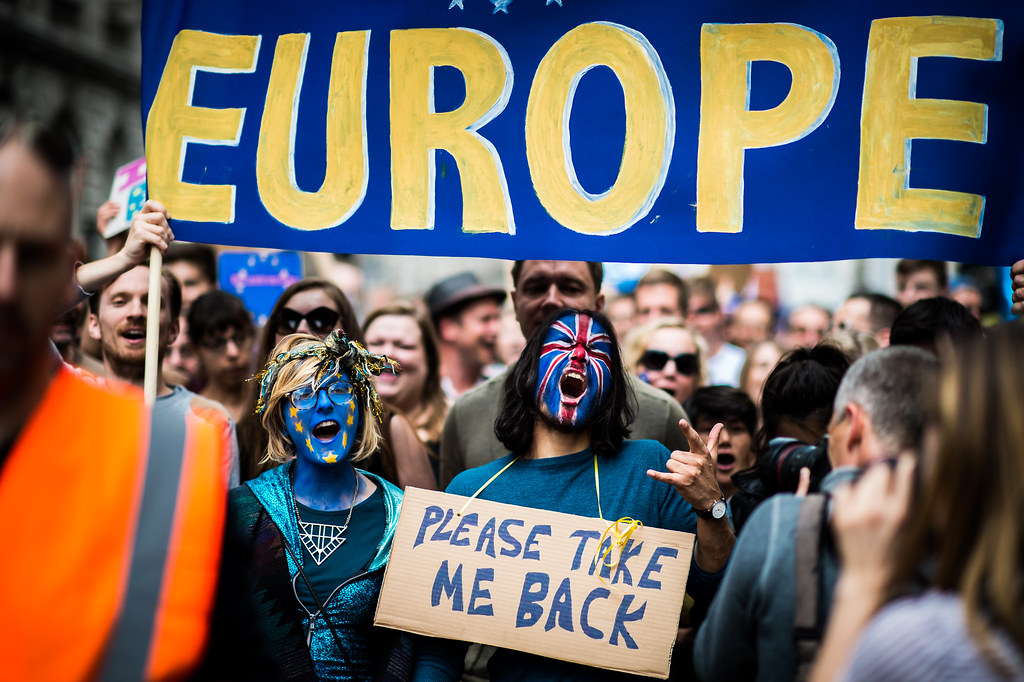
Nobody seems to be feeling this more acutely right now than Brits in Brussels. They've dedicated much of their lives to the idea that they were part of a grand project - citizens of a unifying Europe. Suddenly, half of their countrymen have pulled the rug out from under them, upending their entire lives. You are no longer a European citizen, they have been told. Come home at once.
Huge gains for an anti-immigrant party in East Berlin reflect the East-West divide in Europe as a whole.
Yesterday, German Chancellor Angela Merkel waited nervously in her unassuming Berlin residence while the voters in Germany's capital city determined her fate.
The vote taking place outside her door technically had nothing to do with her. It was a local election for the Berlin Parliament (landtag), not the national one (bundestag). Berlin and two other German cities (Hamburg and Bremen) are, for historical reasons, also federal states.
But the result would have a direct effect on Merkel's chancellorship because it came hot on the heels of her centre-right CDU party's humiliating defeat in her home state of Mecklenburg-Pomerania. The CDU came in third, behind the centre-left SPD and, alarmingly, the new nationalist party Alternative for Germany (AfD).
France and Germany this week launched a proposal for common EU military defence. If Europeans are worried about developments in the US election, they should be open to the idea.
Here in Europe, reactions to the election fiasco taking place across the Atlantic vacillate between bemusement and panic. "He can't really win, can he?" is a question I am asked almost daily.
On Friday, the question was asked by my hairdresser, a Turkish-German woman who lives in the Wedding area of Berlin. There was a real look of fear in her eyes.
US presidential elections have for the past half century been watched closely by the rest of the world - particularly after 1990. As the world's sole superpower (for now), the US government takes decisions that directly impact the entire globe.
Nowhere is that more true than in Western Europe, where people have been living under American suzerainty since the end of the Second World War. In some parts of Europe, particularly the UK, people follow US elections closer than they do their own. It is an item of endless fascination, and the most mundane developments in the campaign make the front pages of European newspapers.