Tuesday, 30 June 2009

EU Takes a (Half-Hearted) Stand on Smoking Bans

Throughout my travels around Europe one of my favourite things to do is observe the differences between countries – and if you’re someone who enjoys a drink or two, many of those observable differences can often be found at bars.

From the availability of beer versus wine to the size of drinks to the closing times, bars can be a great place to see the particular cultural quirks of a society play out. In recent years one area of difference has become increasingly pronounced – who and who does not have a smoking ban. It's a blisteringly confusing patchwork of laws.

Today, the EU announced a move to ban smoking in enclosed spaces across the EU. But as we say in the US, Brussels seems to have shown up a day late and a dollar short.

Monday, 29 June 2009

Say hello to the standard EU phone charger

The European Union has reached an agreement with mobile phone makers today to create a standardized phone charger that will work across all models and brands. The agreement was reached after the EU told the phone companies that it did not reach a voluntary accord it would force their hand with legislation. And as the phone companies learned from the roaming rate cap battle, Brussels is willing to put its money where its mouth is when it comes to telecommunications.

Starting next year, new mobile phones will come with the same electrical input socket, mini USB, and they will all come with the same charger (with different prongs for the British Isles and the continent of course). MEPs noted that the new system would make it easier to use someone else’s charger if you’ve forgotten your own, with consumers no longer having to hunt around for a charger that matches the make of their phone.

Commissioner Verheugen demonstrated that difficulty at today's press conference, although perhaps with a bit of exageration!


Of course the main purpose of the change is environmental. Allowing consumers to reuse their old charger with a new phone will cut back on electrical waste

The agreement was reached with Apple, LG, Motorola, Nokia, Samsung, and Sony Ericsson, which together make up 90% of the EU phone market. Since most of these companies also design phones in the US and the rest of the world, I would assume that this standardization will eventually spread to the rest of the world. After all, why would they make phones with different electrical input jacks specifically for Europe?

While this change probably won’t have a huge impact on anyone’s life, it is interesting to note how quickly the companies responded to the EU’s threat of legislation. It’s clear that in the area of consumer rights, companies have learned a lesson from the roaming rate cap debate. From now on when the EU threatens to use legislation for force a consumer rights issue, companies may quickly decide it’s better to each a voluntary agreement than to dig in their heels and resist, only to be forced to change by legislation later on.

Tuesday, 23 June 2009

Tories Form “Anti-EU” EU Party

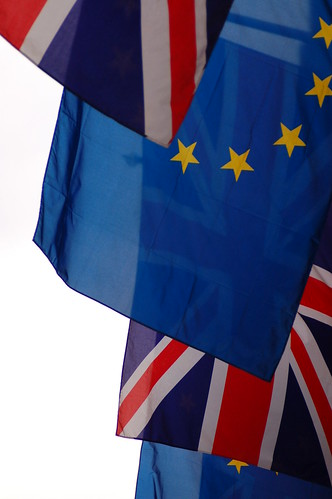
Well he’s gone ahead and done it. David Cameron has made good on his leadership contest pledge four years ago to leave the mainstream centre-right party in the European Parliament and form a new anti-federalist minority party, the “European Conservatives and Reformists” group. Considering the big impact this will have on the UK’s influence in the EU, I’ve been shocked (and frankly a bit disgusted) by the barely perceptible amount of coverage yesterday’s announcement received in the British media.

The new block will be the fourth largest in the parliament, which sounds big until you realize that the parliament is made up of three main blocks (the conservatives, the socialists, and the liberals) and then a whole lot of side parties. Really, it’s a bit like bragging that the Democratic Unionist party is the fourth largest block in the British House of Commons, both in terms of size and influence. Ideologically it would be more like the 7th largest Commons party Sinn Fein actually, considering the Tory MEPs apparently don’t think their constituents should be part of the EU in the same way Sinn Fein doesn’t believe their constituents should be part of the UK.

The Tories’ allies in the party are a ragtag group of mostly Eastern European far-right parties including Poland’s PIS and the Czech Republic’s ODS, but the Tories are the overwhelming majority in the party (they needed to join with MEPs from at least 8 member states to form a Brussels party, and they met the bare minimum). Leaving the EPP, which is currently the largest party in the parliament and is also the party of the Commission President (the most powerful position in the EU), will mean a huge loss of power for the UK in shaping EU policy. Tory MEPs will lose all of the committee seats they had held by virtue of being part of the largest bloc, and as members of a small party they will be unlikely to be chosen as rapporteurs – the people who escort legislation through the parliament and shape the changes the parliament will make. This defection, along with the increased seats for the UK Independence Party and the two new seats for the BNP, means the UK will effectively not be using 30 of its 72 seats.

I nearly spit out my drink last night when I saw the way Channel 4 News mentioned the official formation of the party. It was literally the last item in their quick news roundup, a 10 second sentence tossed in as a seeming afterthought. It was the same on the BBC, and this is after the British media basically completely ignored the issue during the run-up to the Parliament election. Newsnight was the only show I saw that gave the issue more than passing lip service, and that was only in a roughly two minute interview with a correspondent in Brussels.

To the extent that today’s papers have covered the development at all, they’ve tended to focus on salacious details about the unsavoury characters the Tories have chosen to align themselves with, Both the Daily Mail and the Guardian devoted most of their articles to this aspect, rather than on the loss of influence for the UK in Brussels. The Financial Times was the only paper I saw that focused on the loss-of-influence angle, quoting Labour party officials as saying the Tories have ‘moved to extremism in allying with the extreme right’. The FT quotes foreign secretary David Miliband as saying Cameron has throw away influence in Europe "in favour of ideological isolationism".

What’s Next for the ECR?
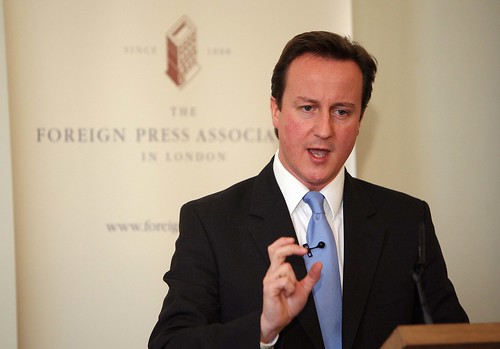
So what was the point of this move? It’s hard to tell what productive purpose this could possibly serve other than scoring political points back home, tapping into the ever-popular Europhobia in Britain. The stated reasoning is that the EPP was too federalist in its attitude, and the Tories wanted to form a new party to oppose moves that would give Brussels any more power, and advance moves that would give power back to the individual member states. That’s all well and good except for the fact that the parliament has very little to do with such issues. The parliament doesn’t make legislation, it merely approves it. It is in the Commission, the EU’s executive branch, where law is made. And it is in the Commission where any decisions about the makeup, membership or structure of the EU are taken. So there’s really very little a minority party could hope to achieve in the parliament in terms of “opposing federalism”.

The Tories argue, however, that losing British influence in the short term is worth the sacrifice if in the long term they can eventually form a viable, strong anti-federalist party that could put the kibosh on Commission attempts to further integrate and harmonize EU law. While this could be true, with the way the parliament works their little party would have to grow exponentially in order to have that kind of influence, and with their lack of interest in Europe it’s hard to see the Tories grabbing the bull by the horns for that project. It’s strange that a national party that is not very interested in Europe and indeed quite internally divided by the subject would choose to take on this quite ambitious project of “reforming” the EU.

And perhaps therein lies the problem with British euroscepticism. So much of what the UK does to resist EU federalism are empty gestures, symbolic grumblings of discontent that do nothing to advance British interests and instead shut the Brits out of influence in Brussels. They are quite simply cutting off their nose to spite their face.
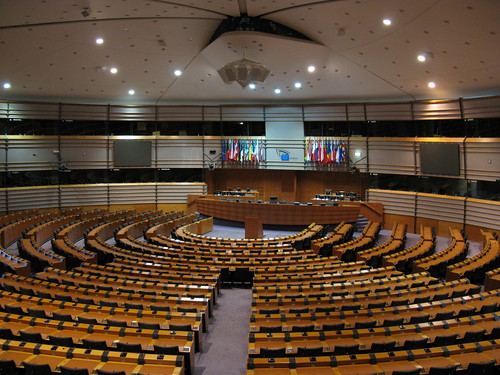
It will be interesting to observe where this drama goes from here, though after months of following this subject I suspect this is the end of the story rather than the beginning. The Tories are unlikely to take much of an interest in this new party they’ve formed, and it will probably sit in the back of the parliament somewhere in stagnation, all but forgotten by the rest of Brussels. A few of the Tory MEPs will probably stop showing up to vote at all now that their position in the parliament has been so substantially weakened.

Who knows, I could be wrong. The far-right fascist parties that were given seats across Europe have given indications that they would like to join, which would not only increase the size of the party but also spice it up a bit. But the Tories are almost certain not to let them in - and why would they, when they already got their requisite number of foreign MEPs from eight countries? I suspect the end goal here was really just to form a party, not for the party to actually accomplish anything.

Saturday, 20 June 2009

Saving the Earth Dutch Style

This week I was in Holland, being shuttled around the country on a press tour showing journalists various environmental projects. I know it’s almost cliché to say this at this point, but coming from the Anglo-Saxon world I couldn’t help but feel a bit ashamed at how much further along countries like the Netherlands are in developing sustainable solutions to climate change. Many of these solutions have been being developed since long before climate change became a prominent issue, and people have largely gotten used to the adjustments they’ve had to make to their daily lives. One example was this houseboat, pictured right.

The other journalists on this tour were an interesting mix, coming within Europe from Brussels, Germany, Denmark, Spain and the Czech Republic as well as further afield from China, India, Brazil and South Africa. It was interesting to hear everyone’s comparisons with what’s going on in their home countries, particularly the developing BRIC countries.

There were also interesting comparisons we could make between countries in the EU, particularly with Denmark and Germany which are also quite far along in developing sustainability projects. One funny detail was that many of the Dutch presenters for the projects would wistfully say that what they have might be good, but it’s nothing compared to what they have in Germany. This made my German colleague laugh, because in Germany apparently they always think of Dutch as having the height of green achievement. Two such modest peoples!

One of the more interesting sites we visited was energy-from-waste incineration plant in Amsterdam called the Waste and Energy Company, a public utility.

Having never seen a trash incineration plant before, I wasn’t quite sure what to expect. But I had plenty of pre-conceived notions about massive industrial plants spewing out plumes of noxious gas they torch piles of needless human waste. When our bus pulled up it looked like this was going to be the reality, as we could immediately see two giant smokestacks pouring white smoke into the air. However once inside and given a tour, I was surprised by many of the things I learned about the plant. The facility, which processes over 1.4 million tonnes of municipal and industrial waste annually, is actually the largest waste processor at a single location in the world. Two freight trains and 600 garbage trucks deliver trash to the facility each day.

Gross right? But astonishingly, the facility is able to recycle nearly 99% of the waste it receives. It does so by using the heat produced from burning the garbage to generate energy, much like a coal plant burns coal to produce energy. The facility produces 1 million MWh of electricity per year, enough to cover three quarters of Amsterdam households. All of Amsterdam’s public transportation is powered from the plant, as well as all street lights. The plant also uses the excess hear generated during the burning to provide businesses and homes with heat and hot water. Thus two environmental issues are solved: what to do with garbage and how to create energy without using finite resources like oil, coal and gas.

That’s all well and good, you may say, but what about the toxic emissions that are produced from the burning process? Well the AEB plant has devised a way to treat this. During the burning process, the steam (which drives the turbine) is separated from the smoke, and the smoke is then extensively filtered through flue-gas cleaning, which actually takes up 2/3 of the whole plant! By a process of separation, new materials are extracted from the gas. The sulphur recovered is used for the production of plaster board and blocks for the building industry, and the calcium chloride extracted can be used to defrost roads in winter. And the metal waste that can’t be burned is extracted, ground into bottom ash, and made into artificial sand for use in the construction of roads and buildings. In the end 99% of the impurities are filtered out. That smoke I saw coming out of the building? Only water vapour.

Still, energy-from-waste plants remain highly controversial. Many argue that although they do reduce CO2 emissions, they provide perverse incentive for governments to do nothing about the amount of waste generated by their societies. Additionally, such plants will always generate some pollution and the facilities can also be dangerous if there are accidents. Green groups in the UK have been particularly aggressive in opposing such plants, defeating plans for them in every council that has considered it.

Another interesting site we visited was a house outside of Amersfoort which generated its own energy. Apparently this has been increasingly done with new home construction in the Netherlands, as the government has started a feed-in program where homes that generate excess electricity can give it to the power grid and be paid for it. With this particular home, the solar panels and wind turbine on the roof generate more electricity than the house needs during the day, so that electricity is sold to the state and put into the wider grid. At night, when the sun is down, the house buys electricity from the grid, but it buys less electricity than it sells during the day so the homeowner actually makes a profit. The house also has many other energy-savings tricks including a special type of insulation made of Styrofoam (pictured left). But at the same time it looks like any other house, with a typical 1930's boxy Netherlands design (pictured above).

All in all it was an interesting trip. It was especially interesting talking to all the other journalists, especially the ones from Brussels. It actually made me excited for my move there in the Autumn. This weekend I'm in Zurich, Sunday is Father's Day in the US and UK so I thought I'd come here for it. I'm basically living at Heathrow Airport these days! After this I have a few straight weeks in the UK though. Well, at least 2 weeks. Hopefully we'll get some sunshine in London finally.

Monday, 15 June 2009

Prince-on-Prince Contact

In a shock turn of events, it was revealed on Friday that Prince Charles has been successful in his bid to stop the Qataris from constructing modernist apartment blocks on the site of the old Chelsea Barracks, which is across the street from my flat. As you can imagine my flatmate, who has been intimately involved with the negotiations between our building’s residents and the Qataris, is none too pleased that the concessions he’s worked for two years to get have now gone up in smoke.

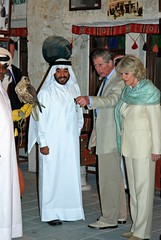
So what did it take for Qatari Diar (a real estate firm owned by the Qatari royal family) to abandon their planned development, designed by one of the worlds most prominent architects for a site that they purchased in the most expensive land transaction in British history? From the looks of it, it was a little princely camaraderie. The decision follows communication between Prince Charles and the Emir of Qatar in which the Prince of Wales asked him to stop the modernist development and instead start over with a more classic, traditional design.

So is this really the result of some royal influence, or is the royal contact angle just an over dramatisation by the British press? Right now it’s a bit unclear. As I wrote about in my previous post on this topic, the letter my flatmate received from the prince last month seemed to indicate that he probably didn’t want to see his royal name too associated with this mess - an effort that, judging from the headlines on Friday, clearly failed. One can easily see why he wanted to avoid it though. The heir apparent has been the target of considerable anger following this news, particularly from architects who say he should stop his “meddling”.

However the fact is that Charles was not really the driving force behind the opposition to this plan. The resistance was led by a proactive and energetic residents association (one that my building wasn’t a part of). It was that group, the Chelsea Barracks Action Group, that commissioned the ‘alternative’ Chelsea Barracks blueprint by traditional architect Quinlan Terry that much of the media has presented as being the brainchild of the prince (the one on the right in the above photo, compared to the planned design on the left). The prince, in fact, was really just peripherally involved in this whole dispute, from the looks of it. This was really a victory for CBAG chairwoman Georgie Thorburn, who has pursued this issue with almost messianic zeal over the past year.

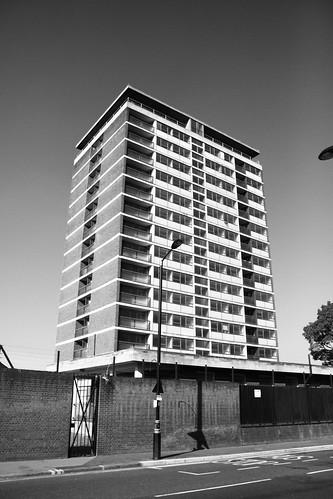
But as peripheral as his involvement may have been, was Prince Charles the factor that tipped this in CBAG’s favour in the end? We’ll probably never know, as the intimate chats between royalty aren’t usually public knowledge, especially in Arabia! But what is for certain now is that the Chelsea Barracks site is back to the drawing board, and will continue to lie as a giant pit in the middle of posh Chelsea, with its two abandoned high-rise barrack dorms sticking up like rotting teeth. Not so great for the neighborhood’s aesthetic, but hey, at least I’m not going to be woken up by construction equipment in the morning any time soon!

Incidentally I’m in Amsterdam this week for work, on a press tour of some environmental projects throughout Holland. I’ll try to write a little bit about some of the things I’ve seen later in the week.

Wednesday, 10 June 2009

Euroelection: BNP Overshadows the Real Story

Europe’s centre-left is licking its wounds this week after the European Parliament vote, and nowhere is the pain being felt more acutely than by Labour in Britain. But perhaps the larger significance of the poll results for this island nation, which the British media have so far failed to pick up on, is the fact that the British will not be using 60% of their potential voting power in the new European Parliament.

Anti-EU parties did enormously well in Britain’s European Parliament vote. The UK Independence Party, which believes that Britain should secede from the EU, got 16.5% of the vote, beating Labour and coming in second with 13 seats. With the far-right British National Party – which also wants to exit the EU – gaining two seats, Britain will be sending 15 MEPs to represent them in the European Parliament who don’t believe the institution should exist at all. And of course “sending” is perhaps a misleading term here, since all 15 of these MEPs are unlikely to ever show up in Brussels to cast a vote, preferring to remain in Britain in protest.

Yesterday I was at a sustainability conference in London’s Docklands, and was listening to an opening speech given by Tory MEP Caroline Jackson, who represents Britain’s Southwest region. She said she was dismayed that British voters had chosen to waste 15 of their seats in parliament. Those 15 seats which will remain conspicuously empty for the next five years, as the British people have elected them in based on an issue that has absolutely nothing to do with the European Parliament, which decides neither which countries are in the EU nor the makeup and structure of the union.

Jackson went on to point out that with the departure of the Tories from the main centre-right group European People’s Party (EPP), the reality was that the UK has now effectively relinquished 30 out of its 72 seats.

Fulfilling a pledge he made back when he was campaigning for the Conservative Party’s leadership, David Cameron is taking the Tories out of the EPP, the largest block in the European Parliament with all the continent’s centre-right parties – including those of Angela Merkel and Nicolas Sarkozy – saying that the block is too federalist. He is instead trying to form a new Eurosceptic party, finding strange far-right allies from Eastern Europe to join him. Jackson, who has decided to leave the parliament after this term, could barely conceal her disdain as she listed these parties, which include the Czech Republic’s ODS (which she pronounced o-di-ous) and Poland’s PIS (which she refrained from making into a word). “Rather unfortunate acronyms” she observed dryly.

“It’s a sad moment for me, as a Conservative, to find that the Conservatives have put themselves in this bottom group, leading effectively nowhere,” she said. She isn’t alone in this observation. Many Tory MEPs have pointed out that this decision will put the Conservatives on the fringes of Europe, with no influence in the parliament and shut out of decision-making. If they had stayed in the EPP, the Conservatives would have been one of the largest parties in the EP’s largest block. It would have been a powerful position in an increasingly powerful body within the EU, which now controls the majority of British policy in the areas of environment, agriculture and trade.


As it stands, the second-largest country in the EU will have just 42 real usable seats in the European parliament (minus 30 wasted seats), compared to Germany’s 99 effective seats and France’s 68 (minus their 4 wasted seats from fringe parties). While the rest of mainstream Europe is fully engaged in the EU as it works to solve problems that cannot be solved nationally - such as climate change, terrorism and the financial crisis – Britain will have taken its toys and gone home. They’ll remain part of the EU, governed by its laws, but refusing to actively take part in shaping its policy.
The Tories are now going to lose most of their ranking seats on the parliament's committees. Representatives of British industry and NGOs will now have few MEP to go to to influence EU policy in Britain's favour. Essentially, the UK has cut off its nose to spite its face. Many in Brussels are scratching their heads at what could motivate what they see as an idiotic, irresponsible decision.

Far-Right Ascendance in Britain

However the fact remains that a vast swathe of the British people have yet to be convinced that the EU serves any purpose, and they see no reason why the UK can’t single-handedly solve these large problems all on its own. And there is a growing segment of the country that believes the “British race” would also be better off on its own.

The British Media hasn’t taken much notice of the diminished influence the UK now has in the parliament. They’ve instead focused on the fact that the British National Party, the far-right group that doesn’t allow non-whites as members and espouses the ideas of Adolph Hitler, won two MEP seats. The victories, which were won in the North of England, have caused alarm and revulsion across the UK. When notorious BNP leader Nick Griffin tried to hold an impromptu victory press conference outside the houses of Parliament yesterday he was confronted by a group of anti-fascist protestors who pelted him with eggs. The anti-fascist group says they will trail the far-right leader wherever he goes to remind the public of his extreme racist views, but the reality is such protests will probably bring him more attention than having the seat will.


Of course Britain won’t be the first EU country sending far-right MEPs to Brussels. Jean-Marie Le Pen’s Front National has long been sending elected members to the body, and there are far-right MEPs from Eastern Europe that have called for the mass deportation of Roma (gypsies). But this is the first time that Britain, the mother of all Democracies, has sent a fascist representative to Europe. In fact, this is the first high office that the BNP has been elected to (so far they’ve only managed to get seats on local town councils), and without a doubt it gives them some legitimacy (if not any actual power since they’re unlikely to ever make a trip to Brussels to cast a vote, lest they mix with the foreigns).

Such a win for the BNP does great damage to the nation’s psyche because it challenges many of the narratives the British people have for themselves. Most British people forget that there was significant fascist movement here during the 1930’s that in the end was unable to wrest power. The sad reality is that this win means the BNP is now a bit player in British Politics that isn’t going away, but they are unlikely to become a significance force with anywhere near the reach of Oswald Mosley’s fascists of the ‘30s.

The British people’s attitude about the irrelevance of the European Parliament has enabled two fascists to sneak into their representation in Brussels. In the long-run, the more important consequence of that will be the European disengagement and isolationism that one day Britain may look back on and regret if it finds itself alone and irrelevant in the 21st century. “And all we were talking about was the bloody BNP,” they may remark with a larf.