Friday, 29 May 2009

Emperor Silvio

It’s been many times that this blog has predicted the imminent political demise of Silvio Berlusconi, but with the Italian leader now openly cavorting with a 17-year-old girl and throwing bizarre teen slumber parties in Sardinia, has the most powerful man in Italy finally overstepped the mark?

This week I’ve been watching old episodes of I, Claudius on DVD, an old miniseries the BBC produced about the Roman Empire (specifically the Julio-Claudian dynasty and the first four emperors of Rome). It’s a fantastic series, and it’s been interesting to see how differently the British portray the Romans from the Americans (I never knew the Romans were so effete!). I have to say that watching this tale of decadent, power-mad Italian emperors has seened a bit familiar as I concurrently watched “Noemigate” unfold in Italy this week.

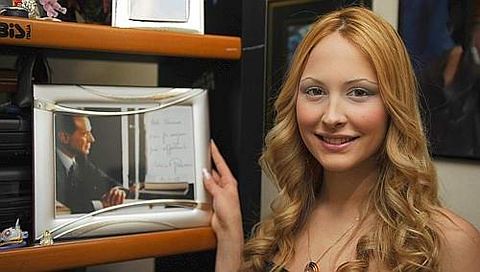
Really this is just the climax of a long unfolding scandal. After months of increasingly criticizing her husband in public for his philandering and his choice to put forward bikini-clad bimbos as Italian Senators, Berlusconi’s wife, Veronica Lario, finally decided she had had enough this month and publicly demanded a divorce from the eccentric prime minister. At first Italians weren’t paying all that much attention to the affair, as it was typical of the high drama involved in the prime minister’s personal life. But when Ms. Lazio revealed what the final straw had been, everything changed. She was finally leaving the 72-year-old Berlusconi, she said, because he has been unabashedly and publicly carrying on a relationship with a 17-year-old girl.

Incredibly, Berlusconi doesn’t deny it – though he insists the relationship has not been sexual. The young model at the centre of this storm, Noemi Letizia, has hardly been low-profile either. Giving an interview to the newspaper Corriere del Mezzogiorno, she giggled, “I often sing with Papi Silvio at the piano, or we do karaoke”. As the FT’s Tony Barber noted earlier this week, it’s hard to know who to feel more sorry for in this sad spectacle - Lario, Noemi’s ex-fiancĂ© Gino Flaminio who was dumped once the prime minister came-a-calling, or the entire 60 million Italian people.

The official line from the prime minister’s office is this: Berlusconi knows Noemi’s father Benedetto Letizia, a functionary for the city of Naples, and he started a friendship with the young girl after meeting her through him. But the story the cast-away Flaminio told newspaper La Repubblica on Sunday – and the far more likely scenario - is that the prime minister first called Ms. Letizia last fall after seeing her picture in a modelling catalogue. Then, given that Berlusconi is the most powerful man in Italy – controlling both the government and the media – the parents kept silent about (and possibly even encouraged) the budding relationship between the two, and Noemi wasted no time in dumping Flaminio. Both Flaminio and Noemi's aunt have said Berlusconi and Mr. Letizia never knew each other before he decided to call their home to arrange a "meeting" with Noemi.

Berlusconi then invited Noemi and a schoolmate to a party at his private villa in Sardinia where other teenage girls were present. But finally, when Berlusconi showed up at the Noemi's 18th birthday party earlier this year, his wife decided she would end their marriage, which at 19 years began even before Noemi was born (and that was already Berlusconi’s second marriage!).

Now this is hardly the first time Berlusconi has embarrassed his country with his behaviour. His past sins include humping a random stranger in the street, manhandling the presidents of Russia and America at the G20, and his notorious pinching of every female bottom within a ten foot radius. And each time it happens, Berlusconi’s adversaries inside and outside Italy are driven to exasperation by the fact that his approval ratings only seem to go up. Even after a British corporate lawyer was convicted last month of accepting a $600,000 bribe from Berlusconi and then covering up the crime to protect the prime minister and his Fininvest holding company (Berlusconi himself cannot be tried because he passed a law last year that gives him immunity from prosecution), the Italians still support him. And yet in any other Western European country Berlusconi would have been driven from power long ago for any of these discretions.

Even the Catholic church is too intimidated to criticize the most powerful man in Italy. The Italian Bishops Conference this week refused to comment on the matter, and when asked the bishops would only say that each person’s conduct was a matter “of individual conscience.” Oh really? That’s a new one coming from the Catholic Church!

Of course in the end the problem isn’t just about Berlusconi’s sex life, or his unbridled arrogance. It’s the fact that nobody seems to be paying any attention to Italy’s deep structural problems. The country’s economy is in a shambles. Reconstruction after an earthquake in central Italy left 70,000 people homeless has yet to begin in earnest.

The leader one Italian opposition party recently compared Berlusconi to Nero, fiddling while Rome burned. Yet Italians have convinced themselves that Berlusconi, though he may be increasingly losing his grip on reality, is the only man who can hold the country together. The situation bears more than a little resemblance to the BBC miniseries that’s been occupying my evenings this week.

Thursday, 28 May 2009

Still, After All, a Centre-Right Country

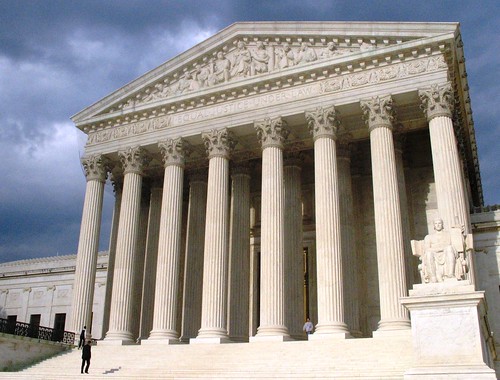
Europe could be forgiven for thinking that now that Americans have put their government entirely in the hands of Democrats, the nation itself has made some sort of fundamental ideological shift. But as the opening stages of President Obama’s Supreme Court nomination show, the American political spectrum is still firmly grounded to the right.

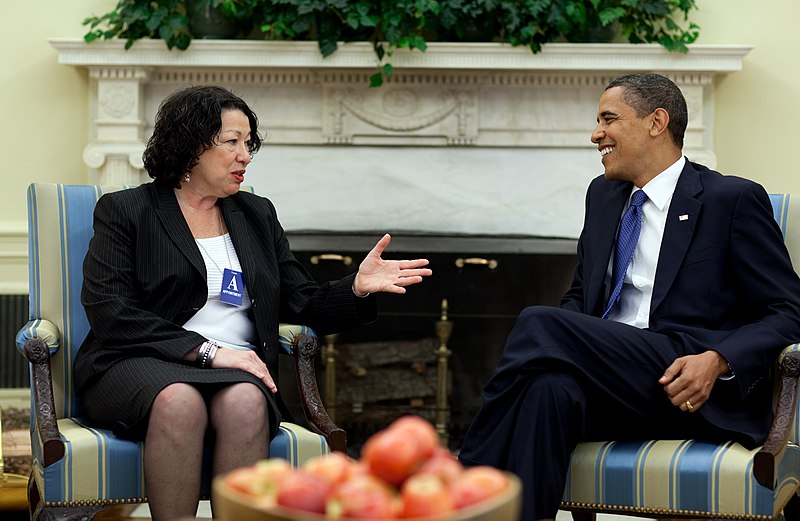
Following the retirement of Justice David Souter, generally considered to be on the left side of moderate in his votes on the court, Obama has nominated Sonia Sotomayor, a moderate appellate court judge who would be entering the highest court in the land with more experience on the bench than any of the current justices. The media has focused largely on Sotomayor’s personal history, having been born to Puerto-Rican parents on a housing estate in the Bronx. She would be the first Hispanic person to serve on the court, and only the third woman.

Bizarely the right has latched on to this detail of her background to make the case that she is a “liberal activist judge,” even though her judicial record, largely moderate or unclear, doesn’t seem to reflect this. Apparently for the right, the fact that she is a Hispanic woman who was born poor means she'll make it illegal to be a white man and redistribute wealth. Obviously!

Funny enough, when arch-conservative justice Clarence Thomas was up for confirmation, his history of having been born a poor black man was considered an asset by the right.

Perhaps this kind of talk from the hard right was inevitable. In fact it wouldn’t even be worth talking about were it not for one other interesting development – in selling their supreme court nominee, the Obama Administration’s talking points have been actively stressing Sotomayor’s conservative credentials.

The Obama administration has wove a conservative narrative around Sotomayor, using much of the same language as Bush did to sell his supreme court nominees, in order to appeal to middle America. The administration has been at pains to point out how moderate she is, pointing out at every opportunity that she voted with conservative judges 95% of the time. They’ve also pointed out her anti-abortion rulings, such as when she upheld a ban on federal funds going to family planning groups that provided abortions overseas, or when she ruled in favour of a group of Connecticut anti-abortion protesters who asserted that police used excessive force against them at a demonstration.

Does anyone else find this a little bizarre? Barack Obama was elected in a landslide victory. The American public kicked the Republicans out of both the House and the Senate, handing the entire government over to the Democrats. Currently only 21% of Americans identify as Republicans. You would think that was a pretty big mandate for change right? So why does the Obama administration (and Congressional Democrats, as evidenced by their recent cave on closing Guantanamo Bay) seem to be bending over backwards to please a practically non-existent Republican party?

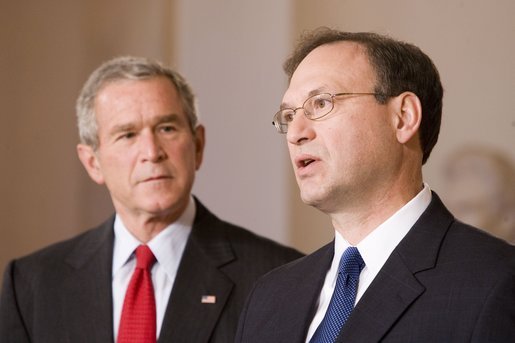
Can you imagine George W. Bush, when he nominated his two Supreme Court Justices, issuing talking points about how frequently they voted with their liberal colleagues, or highlighting cases in which they voted for abortion rights? The very idea is laughable. When the Bush administration went to sell their nominees they used the language of their base, talking about how Alito and Roberts represented “solid American values” and touting the conservative credentials, especially when working to sell the nominees to the religious right (at some points they even seemed to be implicitly promising that the two would vote to overturn Roe v. Wade).

And yet George W. Bush entered office having lost the popular vote, put into office by a Supreme Court ruling. By the time he was nominating his justices he was already spiralling down to the lowest approval rating of any US president in history. But was there serious talk of him selecting a moderate justice as a copromise with liberals? None.

And even though W appointed two unabashedly conservative justices (to join the other two ultra-conservative justices Scalia and Thomas already on the court), it seemed to go without saying before Obama made his selection that an unabashedly liberal justice wouldn’t even be a consideration. Given that following Bush’s appointments the court is now skewed fundamentally to the right (4 conservatives, 2 liberals and 2 moderates without Souter), adding another moderate to the mix isn’t going to significantly change the conservative direction of the court. If it’s unquestioned that a Republican president can appoint a conservative justice but a Democratic president can only appoint a moderate, it won’t be long before the idea of a “liberal justice” goes the way of the dodo. Rachel Maddow had a funny metaphor discussing this on her show Tuesday night.


This isn’t an isolated incident. Throughout the Obama presidency it’s been incredible to watch how many times the Democratic president and congress have caved in to an imaginary opposition. But here’s the explanation – while the political opposition may be imaginary – the popular opposition is not.

On a global political spectrum, the US political spectrum is still positioned firmly to the right. For instance in Europe, the Democrats would be centre-right and Republicans would be the hard right (and sometimes even the far right). This pretty much reflects the political ideology of Americans, a formula which has long favoured Republicans in US elections. This is, after all, a country where “liberal” and “Left” are still dirty words that most Democrats are loathe to identify themselves as. Even after Bill Clinton’s New Democrats shifted the party to the right (followed by Tony Blair doing the same with Labour across the pond) the Democrats seem to constantly be on the defensive, unable to stand up for progressive policies even when they occupy the presidency. Now that the Democrats control both the legislative and executive branches for the first time since the Carter administration, it seems their old curse is again rearing its ugly head. Even when they’re in power, Democrats are unable to push progressive policies on a fundamentally conservative population.

So Europeans shouldn’t fool themselves into thinking that the American political spectrum is inching back their way. For 40 years the only thing that’s gotten Democrats elected into the White House is the ineptitude and corruption of their predecessors (two Bushes and a Nixon), and once they've put him there there’s been little achieved for the Left.

Strangely, even when the American left is in power, they remain isolated, ineffective and ignored.

Friday, 22 May 2009

Should Britain Become America?

As the debate over the “complete overhaul” of British democracy has unfolded this week, I’ve been surprised (ok maybe not all that surprised) at how quickly the conversation has turned to starry-eyed wistful gazing across the pond toward Washington. Despite there being plenty of examples of democracies that function better than Britain’s just across the English Channel, it seems that virtually every article about the possibility of a “quiet revolution” in the UK following the expenses crisis now contains an inevitable comparison to the US system. An increasing number of (mostly Tory) MPs are also making the comparison. Considering the fact that it took an enterprising American journalist to finally expose the expenses system for what it is, perhaps its not surprising that the British are looking across the pond for guidance at this humiliating time. But is it a productive exercise?

Putting aside the fact that I’m not sure how helpful it is to be comparing a parliamentary system to a congressional system, I’ve also noted a lot of inaccuracies being stated about the supposedly awe-inspiring success of American democracy. Granted, I’ll be the first to admit that American government is much more efficient, logical, stream-lined and accountable than UK government. But considering the dysfunctional state British democracy has found itself in, I’m not sure that’s saying much! Still, I thought it would be helpful to look at the arguments comparing the two governments. To be honest I think it might be more productive to do a side-by-side comparison with some continental parliamentary democracies like Germany’s or the Netherlands’, but I’m not exactly an expert on those – plus you’ve got to give your readers what they want!

Argument: A written constitution as in the US would prevent power concentration
My Response: Yes and no

Much of the trouble with British government is that it is the only democracy in the world that is completely uncodified. It is also the mother of modern democracy, and because it was formed slowly over centuries and inventing as it went along, it operates on a set of assumptions and traditions rather than on a constitution. Therefore the Queen is the head of state and technically can still wield some significant power, but it is ‘understood’ that she won’t use it.

The effect of this over the long term has been that the lack of a constitution has allowed governments to make up the rules as they go along. Since World War I, prime ministers have taken more and more power away from the broader parliament and concentrated it in the hands of the government. The result has been the emergence of a sort of “presidential prime minister” who has most of the same powers of a unitary executive yet is not directly elected, instead being nominated by his party. This has left backbench MPs with pretty much nothing to do, functioning just as a rubber stamp for the government. I can tell you it makes British politics pretty boring to watch, because there isn’t any conflict on an executable level. There is one government - composed of the prime minister and his cabinet - which makes all the decisions. The rival parties merely form “shadow cabinets” with no actual power, so all they can do is say what they would do if they were in power. The monarch no longer executes any authority, leaving the prime minister as the sole, unchecked authority. The UK doesn’t even have a Supreme Court to check the government’s power!

Many in Britain have pointed out that in the US, the constitution has acted as a bulwark against those who would wish to monopolize power, maintaining a system of checks-and-balances with three theoretically co-equal branches of government - the executive (president), the legislative (congress) and the judicial (the Supreme Court). While it is true that this has been the sacred formula of US government, it is also true that the presidency has grown unprecedentedly powerful since World War II, turning into the so-called “imperial presidency”. More and more power has been taken away from congress and instead given to presidential agencies, and more and more is done these days by executive order. And when you have an acquiescent congress of the same party as the president - as existed during the Bush Administration - congress becomes in practice little more than a rubber stamp itself. Still, the rubber-stamp congress of the past eight years was more of an anomaly, whereas the rubber-stamp nature of the British parliament seems to be built into the system.

Argument: There are too many people in the British parliament
My Response: Well duh!


Here’s an embarrassing comparison for you - there are 535 members of the US congress representing 307 million people, and there are 1,384 members of the UK parliament representing 62 million people. Seems a little screwy no? In fact, British citizens are the most over-represented people in the world. And it gets worse. The majority of those parliamentarians (738) serve in the House of Lords, a historically unelected, hereditary institution for the landed aristocracy. The UK’s method of dealing with this strange relic over the past century, rather than majorly reforming the House of Lords or getting rid of it, has been instead to just strip it of almost all its powers and giving them to the House of Commons. Today the House of Lords is basically useless (other than a select few “Law Lords”, the UK equivalent of the Supreme Court), and its seats are handed out to anybody who have donated money or composed some catchy tunes.

Most of the members of the House of Lords don’t even bother to show up to the chamber. Many have called for the House of Lords to be replaced with a US-style popularly-elected regional senate. I would point out, however, that US Senators weren’t popularly elected until the mid-20th century. Before that, they were chosen by their individual state’s legislatures. At the time it was thought that this kept them out of the dog-and-pony show that is political campaigning and made the upper chamber a more deliberative, intelligent body. Personally, I think the US senate would function better if members were elected by state legislatures once again.

Argument: British MPs should be as independent as their American counterparts.
My Response: Maybe

It might surprise some Americans to learn that British MPs marvel at the way American congressmen and women are allowed to be so independent of their party. It may not seem like it sometimes, but the US congressional system actually allows independent lawmakers to vote their conscience in a way that would be impossible in the UK. The whips in the British parliament are extremely powerful, and it’s basically impossible to vote against your party. In fact on the rare occasion that party members vote against their leader in a parliamentary democracy it often causes the downfall of the government. Many here in the UK have been arguing over the past week that the independence of US congressmen makes them more directly accountable to their constituents. While this may be true, rogue lawmakers can often make passing legislation extremely difficult, and a lack of party unity can slow progress in the US congress to a glacial pace. I would strongly disagree with the some in the British media who have claimed this week that the US congress works much quicker than the British Parliament. On the contrary, my observation has been the many independent egos needing to be wooed in the US means legislation can be much harder to pass than in the UK where an all-powerful government can railroad things through with a simple rubber stamp from MPs. While this may seem anti-democratic, it does mean that the UK government can act (and respond to crises) much quicker than in the UK.

Argument: MP candidates should be selected by a popular primary as in the US, rather than by the party.
My Response: This leads to celebrity politics and mob rule


Another increasing demand this week is that MP candidates should be selected in party primaries like in the US, rather than being put forward by the party to which they belong. After this exciting (and egregiously long) US presidential season of two years, I can see why Brits might be a little jealous that they don’t get the excitement of these primaries deciding party candidates by public votes. But I would posit that these primaries do not result in the selection of the best, most able candidates but rather the most recognized, attractive, personable and pandering. The whole idea of public primaries was another thing that didn’t emerge until the mid-20th century in the US. Before then candidates were selected by local party officials just like in the UK. Slowly various state parties started offering the public the chance to cote for the nominee, and after public pressure soon every state had followed suit. In my view this has lead to an increase in personality-driven politics, the selection of candidates based on their ability to charm people or their name recognition rather than on their actual skills and merits.

Some here in the UK have argued that forcing sitting MPs to undergo a challenge to their seat in a local primary would make them more accountable to voters and dislodge the complacent or ineffective. But this has not been the case in the US. With the exception of the 2006 and 2008 elections, which were in extraordinary circumstances, usually 98% of sitting congressmen are re-elected in each US election.

Argument: The prime minister should be popularly elected and serve a fixed term.
My Response: Don’t throw the baby out with the bath water.

Gordon Brown has now been prime minister for nearly two years, and yet he was never directly elected by the British people as a whole. That’s because no prime minister in any parliamentary system is ever popularly elected to that position, he or she is chosen by the MPs of whichever party obtained a majority in the election. Because Tony Blair led Labour to a re-election in the 2006 elections (and then stepped down in the summer of ’07 handing the reigns to Gordon Brown), Labour does not have to call another election until June of 2010. Many have argued that allowing leaders to pick and choose when they’re going to call an election gives them an unfair advantage (because they can call it whenever would be most politically advantageous) and allows leaders to serve without a mandate from the public.

I’ve been increasingly hearing this rather silly argument from people, but what they’re proposing is giving the UK a president. But that’s a different system of government! The fact is the prime minister does operate with a mandate from the public whether he was the face of the party during the last election or not, because the people elected the party and he is the representative of that party.

When people propose this idea, I don’t fully understand what it is they’re suggesting. The UK is a parliamentary democracy, like every other country in Europe with the exception of France. This is the way parliamentary democracies work. And in my opinion, a system in which elected MPs select the leader of a country rather than the public is better able to place the most skilled, able people into the leadership rather than the most attractive, personable or convincing. One only needs to look at the last eight years in the US to see how the public can often make very bad decisions when selecting a leader, preferring someone they could “have a beer with” (the famous quote from exit polling of people who voted for Bush in 2000) over someone who seemed smarter than them. Increased direct democracy – as Tory MP Douglas Carswell is advocating for - does not always lead to a better-functioning democracy. In fact it usually ends up being much worse. Just look at the paralysis of government in Switzerland, or California’s inability to pass desperately needed budget cuts by public referendum this week.

In the end, it would be hard to argue that the British government doesn’t need reform badly. And the reform should really come in the drastic category and not through the little tweaks that some MPs are suggesting. There’s differing theories on which of the party leaders would be best-equipped to do this (Brown is universally acknowledged to have basically no chance of winning the next election, so why not drive home drastic reforms in the next year as long as he’s got nothing to lose?). But in any event, Britain would be best advised to look to other parliamentary democracies for ideas rather than to the US. Parliamentary democracy can and does work. At the moment, it just doesn’t work in Britain.

Wednesday, 20 May 2009

Panic at the Parliament

I woke this morning to my clock radio blasting some BBC commentators hailing the “revolution” unfolding this week in the UK. Nothing jolts you out of bed like a little social unrest! While all this talk about how the expenses controversy is going to completely change the way the British government works may be a bit of hyperbole, after hearing a first-hand account of yesterday’s tumultuous events from The Times’ parliamentary sketch writer Ann Treneman last night, it does seem that, just maybe, a little political earthquake is indeed unfolding this week in Westminster.

Treneman had stopped by a gathering of young journalists in Soho, fresh from watching the dramatic resignation of the Speaker of the House of Commons Michael Martin. The announcement was the result of increasing demands from a paniced parliament in the face of a steady drip-drip-drip of news about the ‘second home allowance’ expenses British MPs have claimed over the past four years. The revelations, being published in the Telegraph newspaper, are the result of a years-long effort by journalists to get access to the data under the newly-enacted Freedom of Information Act in the UK (sidenote – not called a “foya” here, but instead an “F.O.I.” – crazy Brits!). The parliament fought tooth and nail to resist releasing the list of expenses claims, a fight led by the Speaker of the House, who oversees the finances department that approves the expenses. But in the end the media won, the expenses are being published, and resignations could turn from the trickle seen thus far to an avalanche. Already it looks like Gordon Brown could lose a big chunk of his front-benchers, and the other parties seem equally culpable. Tory leader David Cameron called an emergency press conference early in the week to compel all members of his party to immediately write checks paying back the taxpayer for their expenses, or be immediately expelled from the party.

But no matter howThe Speaker of the House position in the British House of Commons is not akin to its American equivalent, a position currently occupied by Nancy Pelosi. The British speaker is in charge of the functioning of the house but not its policy, deciding when and for how long people can speak and running the everyday procedural minutia of the Houses of Parliament, in which he lives. It’s generally considered to be a neutral role above politics. But as the shocking revelations about expenses came pouring in, there was increasing pressure for parliament to do something, anything, to quell the growing tide of public anger. They chose to take the speaker’s head on a platter to the bleating mob. In reality, this is unlikely to satisfy them.

Through the allowance designed for work-related expenses for the MPs to maintain a second home in London (in addition to their house in their home constituency), it’s been revealed that MPs have claimed thousands of pounds for big-screen TVs, remodelling, vibrating chairs, Persian rugs and even “moat maintenance”. In the most egregious cases, several MPs have been shown to have made a profit off the taxpayer by expensing the mortgage on one home, then switching the “second home” status to their other house, selling the first home and making a tidy profit.

American Comparison

From my vantage point I can’t decide which I find more absurd, the ridiculous claims made by a minority (the British media seems to have lost this detail) of MPs, or the ridiculous system of remuneration this country has designed for its governing officials. The trouble really started back when the last Conservative government, unpopular and heading for a likely election defeat in the mid ‘90s, didn’t have the political courage to give MPs a necessary inflationary pay raise. So they instead invented a clandestine system of expenses for MPs to pay for their accommodation in London. MPs today make £64,766, not exactly poverty level but certainly not enough to maintain two homes. Compare this to the $174,000 (£120,000) made by their counterparts across the pond in Washington. And here’s where my inevitable American comparison begins.

I have to say I’ve learned about the second home allowance system here with a mixture of bemusement and incredulity. It’s a little confusing to me why all of the MPs need a London home at all. This is a (comparatively) tiny country, and most of its citizens live in the Southeast region around London. Certainly at least a third of the MPs live within a distance at which it is not unreasonable to expect them to commute in three or four days a week. Yet these MPs, even some of the ones who represent London, have actually been charging taxpayers for a second home!

In the US congressmen and women represent constituencies literally thousands of miles from Washington. In fact the nation’s capital doesn’t even have a voting member of congress (as it is a district and not part of any state), so unlike London there isn’t a single voting congressman who lives and works in the same city (compare that the UK – where 73 out of the 646 MPs represent London).

But despite the geographic distances that all 535 American congressmen and senators have to travel to be in Washington, guess how many of their Washington homes are covered by the US taxpayer? Zero. There is no such thing as a “second home allowance” in the US. Instead, US congressmen must pay for their DC residences out of their own pocket. If they want a nice second home in DC and they have the private financial resources to do it, they’re welcome to. But most opt for makeshift accommodation in DC which they rent, not own. In fact many congressmen live together in modest apartments. The most famous example is the four high-powered senators Chuck Schumer, William Delahunt, Richard Durbin, and George Miller that share a house together.

The only items US congressmen are able to expense from the taxpayer are costs for their offices, not their homes. This would include their constituency offices in their home state, the personnel to run them, and postal charges for official business. All of those expenses are available to public scrutiny.

Now granted, politics in the US is big business in a way that it is not in the UK. Quite a few members of the US Congress were millionaires before they entered office, as increasingly that is the kind of money required to get one elected in America. Rather than amassing their fortunes from the taxpayer, US politicians often amass them from corporations in the form of campaign contributions. And everyone knows that the time a US congressman really makes money is once he leaves office and takes a lucrative position at a lobbying firm, using his connections and the rule allowing all former congressmen access to the house and senate floors. But efforts to fix these issues are currently underway by the Obama administration, including a mandatory waiting period of several years before an exiting congressman can work for a lobbying firm.

Today a new system is being debated in the House of Commons that would reform the expenses system, but its hard to see how any reform can work without a pay increase for the MPs. With the toxic atmosphere toward parliament on the part of the public and the media at the moment, its hard to see how any such pay raise could be voted in. Yet as the Times’ Daniel Finkelstein pointed out yesterday, it is counter-intuitive that the public seems to be, “looking at the MPs we've got, deciding they are all inadequate and determining that therefore we should be paying them less.” As the saying goes, you get what you pay for.

Tuesday, 19 May 2009

The West is Back

One of the big flaws of this blog is that I have a tendancy to forget to write updates after I write about an upcoming event, so I thought I’d just give a quick update on the Eurovision results. Yes it is a little silly that this is my third entry about Eurovision in a week, but indulge me for a moment! I admit I’m unjustifiably fascinated by it.

As expected Norway came away the winner, but what was perhaps not expected was the huge margin by which they won (the largest in Eurovision history). In a distant second came fellow Scandinavian country Iceland with a lovely slow song called “Is it True,” and in third place was, inexplicably, Azerbaijan (huh??).

Western Europe can be pleased that it’s once again in the running, but lest people start to object that it seems to be only the Nordics that still have a shot from the West, take a look at the next few rankings. The UK came in an impressive 5th place, a far cry from the low scores it had the last few years. With Andrew Lloyd Webber penning this year's entry, it shows that a little effort can pay off. And France came in 8th, pretty good considering its entry was one of the only songs not in English and was decidedly Gallic and un-Eurovisiony in nature (Patricia Kaas definitely brought a touch of class to the proceedings!)


Some of the contest’s lowest scorers did much to show that the new voting system has ended the Eastern Europe dominance. Much to my dismay, Ukraine came in a dismal 12th (I favoured it because I met Svetlana in London awhile back but if I’m honest it wasn’t of the highest musical calibre – but what a show!). The Czech Republic was the only country to score the dreaded nul points, proving that even their Slavic heritage and Eastern geography couldn’t save them from the discerning eye of the new judging panels. Latvia, which had decidedly the worst entry in the whole competition, somehow managed to get 7 points.

So it would appear the new voting system worked. Norway should certainly put on a good show next year. Hell, maybe I’ll even see if I can get tickets. I’ve still never been to Norway. As for how the show was for the UK without broadcasting legend Terry Wogan, I couldn’t tell you. I was watching the show at a party and couldn’t hear any of Graham Norton’s narration, anyone catch it?

As regards the fears of violence on the Moscow streets over a gay rights protest, it appears nothing got out of hand, though the police were predictably heavy-handed. It appears they also made arrests of the Orthodox and skinhead counter-demonstraters as well though.

Friday, 15 May 2009

Eurovision Riot in Moscow?

Moscow is alive with excitement for tomorrow night’s Eurovision final, but the real drama could unfold tomorrow afternoon if violence breaks out at an illegal gay rights march in the city. With Western cameras thronging the city for the yearly song contest, Russian authorities seem astonishingly blasĂ© about the very real possibility of some embarrassing scenes on the day of the final.

The notoriously kitsch song contest has for years been a favourite of gays and lesbians, in fact it’s often been said that the only people left in the UK who still watch Eurovision are gays (an exaggeration I’m sure). Wherever the contest is held, gays usually flock to the city to see it live. Moscow has been no different, with local hotels reporting a large number of European male couples booking rooms. But Russia is without a doubt the most gay-unfriendly place to have hosted a Eurovision Song Contest since gay rights came to the forefront of public consciousness.

Russia has ranked up there with the nations of the Caucasus and Poland for being one of the worst countries to be gay in Europe. The post-Soviet legacy has left Russian gays attacked from many sides. During the communist period homosexuality was demonized as a “Western capitalist decadence,” and many Russians see gay rights advocates as foreign intruders into Russian society (even if the activists are Russian themselves). Homosexuality was an actively prosecuted crime in Russia until 1993. At the same time the Russian Orthodox Church, which has grown increasingly powerful since the fall of Communism, considers homosexuality to be one of the worst sins imaginable. Add to that a sizable neo-Nazi presence in Russia and you have three groups ready to disrupt any gay pride march tomorrow with violence. Even the police have said they will get tough with any protest, and stories were rife three years ago of police beating marchers during an attempted pride march. Gay rights activists have an enemy in the Russian media as well, which frequently equates homosexuality with paedophilia and refers to gays as dangerous people. The Pew Research Centre has found that only 20% of Russians believe that homosexuality should be accepted by society. Gay activists are still actively prosecuted in Russia for, “homosexual propaganda towards minors” in one instance merely for holding a sign that said “homosexuality is normal”.

Gay rights activists have applied to have a march in Moscow on Saturday but their request was denied by the city’s mayor, who has described gay pride parades as "satanic”. But the activists say they will go ahead with their March tomorrow, sensing a once-in-a-lifetime opportunity with Eurovision bringing the world’s eyes (many of them Western gay eyes) to the capital. The march is set to be the largest gay mobilisation in Russia’s history, prompting the mayor to legally authorize several counter demonstrations by the Orthodox Church and neo-Nazis. The roughly 1,000 estimated gay rights activists who will march tomorrow (many of whom will be Western foreigners) will be met by 1,000 members of United Orthodox Youth. Bizarely, the counter-demonstration by the Orthodox Youth is legal, the gay march is not. The leader of the Orthodox Youth is openly saying that violence is likely.

And if the past is any indication, the result could be very embarrassing for Russia, or at least the elements in Russian government that want good relations with the West (a demographic that seems to be quickly dwindling). Two years ago the UK media reported on the story of British gay rights activist Peter Tatchell, who was badly beaten by skinheads at the first attempted gay rights parade in Moscow in 2007. After being beaten he was arrested by the police who allegedly taunted him with homophobic jokes while letting his assailants go free.

The top levels of Russian government have appeared to be completely ambivalent to the potential for violence tomorrow, but if the images are bad it would certainly be a blow for the country’s relations with the West and it could possibly even cause the expulsion of Russia from Eurovision. After Russia has poured money into this year’s contest (the most expensive in Eurovision’s history), this is probably not the outcome they were looking for. Then again, lately Russian leaders don’t seem too bothered about offending the West.