I'm off to the North of England for the next week, doing a road trip with two American friends to further our knowledge of this crazy place we live in. I've wanted to do this road trip forever, as the North was the big gap in my visitation of Britain. I've been to most places in Southeast England, Wales and Scotland - but never to the North.
We're starting in Manchester, taking a train up there tonight. We'll spend all day tomorrow in Mancs before renting the car on Sunday and spending the day in Liverpool. We'll then drive to Leeds where we'll spend Sunday night, before heading out to do Yorkshire on Monday, taking in Harrogate and York (the old one). Tuesday we're going to do some Yorkshire castles and then head up to the North York Moors. We'll then drive up to Northumbria and spend Tuesday night in Durham, and then on Wednesday we'll head up to the ruins of Hadrian's Wall, the ancient dividing line between Roman Britain and the great Celtic beyond (later the border between England and Scotland). We'll finish out the day in Newcastle before taking a train back to London that night.
It should be interesting, I'm looking forward to seeing both the gritty industrial Northwest as well as the bucolic moors and dales of the Northeast. I'm also looking forward to hearing all the crazy accents they have up there - we'll be hearing Scouse in Liverpool, Manc in Manchester, Tyke in Yorkshire, Teesside in Middleborough, Pitmatic in Durham and Geordie in Newcastle. It's incredible that such a small area could have so many different accents - we're travelling less than 300 miles! Just goes to show how incredibly different the UK is from the US in terms of accents.
If anyone will be in any of these cities while I am let me know!
View Larger Map
Friday, 28 August 2009

Tuesday, 25 August 2009
Libya and the Devolution Discord
 Over the past few days Brits have been approaching me in hushed, frightened voices to ask the question that seems to be occupying everyone’s minds here right now – “Are they really going to boycott us?”
It would seem everyone is terrified of ending up like France, which was on the receiving end of a notorious boycott campaign (not to mention the renaming of “freedom fries” and “freedom toast”) when they refused to participate in the Iraq war in 2003. But beyond the fact that the 2003 France boycott was actually not economically significant in the slightest, I can assure you that the level of anger in the US about the premature release of the Lockerbie bomber isn’t anywhere near the height of vitriol against France in the run-up to Iraq. Still, the anger is real, and the incident has really gone a long way to illustrate the very deep gulf that exists between Americans and Brits on issues of criminal justice and punishment.
 People here in the UK have tended to have mixed opinions about the decision to release the only person convicted of the 1988 Lockerbie airplane bombing, with most people I know defending the decision to release of Abdelbaset Ali Mohmed Al Megrahi on compassionate grounds - because he is suffering from terminal cancer and has three months to live. My Scottish friends in particular have been insisting that Scottish law has a long tradition of compassion, and that it shows how civilized they are as a society that they would let him go. But you’d be hard pressed to find one person in the US who agrees with this analysis. They are, quite frankly, enraged. Most Americans probably don’t understand why he’s even still alive at all (Texas would have killed him 6 times over by now). Even Chuck Schumer, one of the most liberal members of the US senate, was railing against the decision on Meet the Press on Sunday, calling it a "disgrace".
I must confess maybe it’s the American in me, but I also find myself perplexed by this decision by Scottish Justice Minister Kenny MacAskill. Megrahi was given a life sentence, not a ‘life sentence unless you get sick’. Even if MacAskill felt that it would be cruel to make the convicted terrorist die in prison, surely there was a hospice or hospital in Scotland he could have been taken to. Why on earth did he have to be taken to Libya?
As with most big decisions, you know there’s got to be some more complicated factors at work here. I have no doubt that MacAskill probably genuinely believes it would have been cruel to allow Megrahi to die in prison, but the fact is this probably has more to do with two larger issues – Scottish nationalism and Britain’s diplomatic relations with Libya.
Devolution D'oh!
 Yesterday the BBC24 presenters were speaking with a Time Magazine reporter in Washington about the threats of boycotts against the UK, and one of them asked her in seeming expasperation something like, ‘Surely the Americans realise that this is the Scottish government taking this decision, not the UK.’ The Time reporter seemed a bit bemused (or maybe actually confused) by the question. Brace yourselves for a shock, but most Americans aren’t too versed in the latest news on Scottish devolution – which, after all, is a recent development.
So for my American readers – a bit of backstory. Scotland is obviously part of the United Kingdom, but through a kind of curious accident of history it has always been a separate entity from England and Wales, with its own separate civic institutions – most notably its legal system. The Act of Union in 1707 shut down the separate Scottish parliament and merged it with that of England, but Scotland’s separate institutions persisted. In the early 20th century there were calls for Scotland to be granted home rule along with Ireland, but in the end it didn’t get its own parliament again until 1997, when Labour leader Tony Blair campaigned with a promise to give Scotland a semi-autonomous status through a system known as devolution. Wales and Northern Ireland were eventually also given their own parliaments through devolution, though they have considerably less independence than Scotland. Devolution has led to the bizarre situation today where every ‘country’ of the UK has local parliaments except England (effectively giving every Scottish, Welsh and Irish UK citizen double the representation of any English citizen).
 So who is this Kenny MacAskill, and why is Gordon Brown claiming the British government has no control over what he does? MacAskill is a member of the Scottish National Party, which advocates for the complete secession of Scotland from the UK. The SNP was elected into a majority in the Scottish Parliament (known as ‘Holyrood’) in 2007 – an election result largely seen as a rebuke to New Labour. Therefor all the Scottish ministers are now SNP members - beyond the control of the Labour government in London. The comparable US analogy would be if Texas were to be granted semi-autonomous powers and was not subject to the final authority of Washington. The ‘Texas Independence Party’ could then be elected there and make decisions (in some areas) that Washington would have no control over. In Scotland, law is one of those areas.
(it should be noted that the centre-left Scottish National Party should not be confused with the far-right British National Party, which bans membership for nonwhites and won two seats in the European Parliament in the British Euroelection in June).
In theory, areas of foreign policy and diplomatic relations shouldn’t be at all under the authority of the Scottish government. But in this particular case the area of law had a huge impact on foreign relations, something Labour perhaps didn’t anticipate when they set this up in 1997. Washington sees this as a UK decision, and Gordon Brown’s silence on the issue has been seen as, if not callous, downright incompetent. Yet in actuality, because of devolution, there was nothing Brown could have done about it.
Back Room Deal?
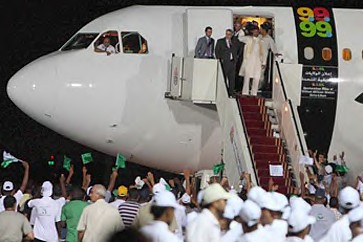 Of course, that’s just one way of looking at it. But there is a much more nefarious theory making the rounds in the US – that the release was part of a secret deal to secure lucrative business contracts with Libya. Only time will tell if that allegation is true, but at the very least it is certain that the detention of Megrahi was a festering sore in relations between Libya and the UK.
The fact is, the majority of people and governments in the Middle East and North Africa believe Megrahi is innocent. Megrahi himself has all along insisted on his own innocence, and his conviction for the terrorist act was both controversial and razor thin. His co-accused was found not guilty, and the evidence against Megrahi was anything but airtight. He was in the middle of a long process appealing the decision when he was released last week. You’d be hard pressed to find any Libyan who thinks he’s actually guilty, and most have viewed him as a political prisoner. It is feasible to believe that there are those in the Libyan political and business community who were refusing to do serious business with the UK until the Megrahi question was settled, particularly as he is so popular in his home country.
Many British people share this view. In fact a number of the Lockerbie victims’ families believe Megrahi is innocent, saying theyblieve that the US and UK governments railroaded through a false conviction in 2002 out of embarrassment at not being able to figure out who was really responsible. Many in Scotland are defending MacAskill’s decision on the basis of their belief that Megrahi is “probably innocent” and therefore doesn’t deserve to die in prison.
Of course if he is indeed innocent, the appeals process is the appropriate venue to prove that case. MacAskill’s decision not only leaves open the question of who actually perpetrated the Lockerbie bombing, it also appears to circumvent the proper exercise of justice.
It’s a mess all around, and now there is even speculation that the controversy could bring down the SNP government. An emergency session of the Scottish Parliament was called yesterday, bringing MSPs back from their summer recess early, so that members could demand that MacAskill explain his actions. He and his fellow party members were defiant, couching the decision in 'Scottish values' and appearing to hope that by presenting this as an ‘us versus them’ question of Celts versus the Anglo-Saxon English and Americans, they can stave off a revolt that would bring down their government. But considering their majority technically rests on just one seat, this strategy may not work. One thing’s for sure, it’s going to be an interesting week in Edinburgh.
Monday, 24 August 2009
Can the British be taught to love Europe?
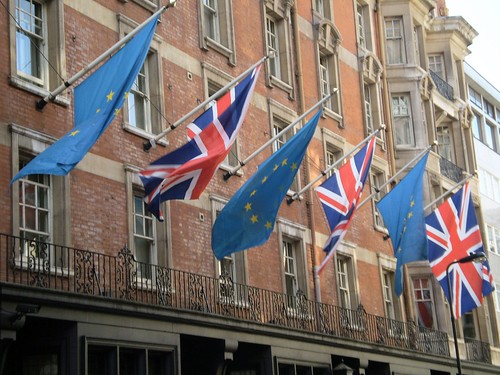 Dominic Brett with the Commission’s London representation office alerted me today to a Eurobarometre study released in July that I hadn’t noticed – surveying the British public’s knowledge of and attitude toward the EU. As Brett notes in today’s E! Sharpweb special, they survey results go a long way in disproving the Eurosceptics’ long-standing denial that it is ignorance which makes the British public dislikes the EU rather than an actual reasoned and thought-out objection. It’s always nice when the raw numbers back up what can be clearly observed anecdotally.
The results, in which 83% of Britons surveyed said they knew “little or nothing” about the EU, were actually interpreted quite optimistically by Brett. He argues in his column today that even if the EU as a concept attracts such animosity in Britain, most of what it actually does meets public approval. He says getting the British public to be more positive toward the EU would just be a simple task of educating people on what it does. Considering that I recently learned that the British education system doesn’t teach pupils anything about the EU system which governs them, perhaps primary school would be the place to start such an outreach.
Friday, 21 August 2009
Don't be so Shocked, Europe - US Healthfight similiar to EU Debate
 You could call it a rude awakening. Over the past few weeks Europeans have reacted with shock and incredulity as they’ve watched the “debate” over US healthcare reform unfold across the pond. How could it be, they’ve asked me in tones of sheer exasperation, that even in the face of a healthcare crisis Americans could be so credulous as to believe the outlandish lies being spread about Obama’s healthcare reform effort. Death panels? Enemy lists? Nazi euthanasia? How, they’ve asked, could anyone be so stupid?
I haven’t had a good answer to give them, except that this is the cold hard reality of the place American politics has found itself in today. As I’ve written about before, many Europeans were lulled into a premature sense of relief when Barack Obama was elected in November. But while the head may have changed, the body remains the same – this is the same American public that elected George W. Bush twice. The combination of powerful vested interests in Washington, a strong right-wing media that dominates civic discourse, and a population that is, let’s face it, rather uninformed, mean that Barack Obama has his work cut out for him if he wants to effect real change. Getting elected was just the first step.
The mobs that have turned up to congressional town halls to shout down any discussion of healthcare reform, waving placards of Obama with a Hitler moustache and screaming about his “Nazi policies”, aren’t actually concerned about healthcare. This is about something much bigger, a general right-wing paranoia and militarism that tends to arise every time a progressive Democratic president is elected. It happened in the 1960’s culminating in a wave of political assassinations, it happened in the 1990’s culminating in the terrorist bombing in Oklahoma city by right-wing fanatic Timothy McVeigh, and it’s happening again now. Progressive Democratic presidents scare the bejesus out of the right-wing fringe inspiring hysteria and violence (although why this didn’t happen with Carter I don’t know, any ideas?).
What’s different this time around is that powerful Washington forces have decided to tap into this right-wing rage and use it to their own political advantage. Fox News has seen an opportunity to define themselves in the Obama era by stoking the flames of hysteria and paranoia, increasing their viewership handily over the past several months. The healthcare and energy lobbies have been able to tap into this paranoid rage by convincing people that attempts to reform their industries are actually part of a grand fascist scheme to enforce a dictatorship.
 The most absurd example of this came yesterday when protesters congregated in Texas to rail against Obama’s “Nazi” climate change bill, which would finally sign the US up to international agreements to fight climate change. At first glance it might seem bizarre that ordinary citizens are turning up to yell and scream about a piece of legislation that doesn’t have much to do with them but rather affects the oil and gas industries, right? Well if you look at the bottom of their placards many read that they are concerned “Energy Citizens”, and if you look into the origin of this group you can see it’s actually sponsored by the oil and gas industry, whose trade organisation was recently revealed in a leaked memo to be suggesting that oil company employees be mobilized for these “grass roots protests” in order to “put a human face” on the resistance to the bill.
The same has been true of the healthcare protest and the “tea-bagging” protests, both organised by powerful Washington lobby groups working with the aid of Fox news, which gets people revved up telling them the healthcare reform bill will kill their grandma.
Is this in the bill? No. Is it rational to say Obama is a racist Nazi because he’s trying to reform the nation’s healthcare system? No. But these myths persist, with the majority of Americans now saying they’re concerned about Obama’s healthcare reform effort. It now looks like the administration is going to take the public option off the table or break up the legislation, which would effectively mean the myth-spreading tactics have worked. Meaningful healthcare reform could be dead.
Don’t Get too Smug, Europe
 But before Europeans shake their heads and roll their eyes at the seemingly hopeless ignorance of the American public, might I remind them that they are not immune to these impulses either. In trying to explain to Europeans the raw emotion surrounding this debate, I’ve been struggling to think of an issue here that brings out the same level of irrationality. It wasn’t long before my mind settled on the EU. When it comes to ridiculous irrational myths, European knowledge of the EU - particularly in the UK - could give these American healthcare protesters a run for their money.
Take the debate over the Lisbon reform treaty. The accusations levelled against it in the UK and Irish media have been absurd almost to the point of self-parody. According to the British media the treaty is a “massive power grab” that will turn the EU into a “totalitarian super-state”. Sound familiar? In reality, the treaty simply makes tweaks to the EU’s governing structure, changes that have been made necessary by the recent EU enlargement. The main purpose of the treaty is to make the EU more efficient and cost-effective, not to give it more power. Its goal, much like the healthcare reform bill, is to help people – not to hurt them. But that doesn't stop the totalitariansism comparisons. Just take a look at this over-the-top video from YouTube.
Euromyths are rampant in the UK. Some examples of completely baseless euromyths spread by the British media: English fish and chips shops would be forced to use Latin names for the fish (The Sun, 5 September 2001), double-decker buses would be banned (The Times, 9 April 1998), British rhubarb must be straight and barmaids would have to cover up their cleavage. (Update April 2010: Here's a recent patently absurd - and easily disprovable - example from the Daily Mail about the EU supposedly changing the name of the British Channel to the "Anglo-French Pond". That story was picked up by numerous other media outlets including the BBC's 'Have I got News for You'.) All of these are widely believed in Britain yet are completely untrue. Many euromyths can be traced directly to deliberate attempts by lobbysists to influence policy in Brussels. And they’re frequently presented in the same kind of screaming-headline, hysterical tone that is now being employed in the US healthcare debate.
And of course, a recurring complaint about both the Healthcare reform bill and the Lisbon reform treaty is that they're too long and complicated for ordinary people to understand. And because they're so long, they must be trying to pull something over on everyone. Because naturally, incredibly complex pieces of legislation should be easily understandable by your local trash collector.
 In the UK, the right-leaning media makes completely baseless and false accusations about the EU and about the Lisbon Treaty, saying it will do things that are not at all in the document such as ban abortion across the EU, mandate an EU army, establish an EU constitution or subjugate member state courts. The public comes to accept these myths as fact. Then when it comes time for a vote, as occurred with the Irish referendum on the Lisbon Treaty last June, the public bases their vote on the misinformation they’ve received about the EU and the treaty. Democracy at its finest.
Can you imagine if healthcare reform were being put to a referendum in the US? It would never have any hope of passing. In fact the only way that this legislation may actually come to pass now is if the US congress does the right thing and bypasses the will of the people, making the responsible informed decision that a vast swathe of the American public cannot make themselves because they are so misinformed. This is how representative democracy is supposed to work – citizens elect representatives and entrust them with the responsibility of becoming versed in issues that ordinary citizens are not equipped to make decisions on themselves. This is why it is irresponsible to put a complex legal document like the Lisbon Treaty or healthcare reform to a public referendum. It is the worst perversion of Democracy – mob rule.
People tend to be pretty gullible, and powerful interests will always be able to manipulate them. Now that the internet has brought us what sociologists have termed the "post-fact society", this misinformation is very easy to spread - be it in America or Europe.
No Appetite for Revolution
 Now to be fair, the level of hyperbole used in mainstream media around the Lisbon Treaty hasn’t reached the alarming heights of the US healthcare debate. And the Lisbon Treaty hasn’t inspired gun-totting mobs to show up at politician’s doorsteps last time I checked. Comparisons to Nazis are rarely used in continental Europe, as the memory of what the Nazis really were is still too raw to throw around the comparisons as lightly as Americans and, to a lesser extent, Brits do. But the difficulties encountered in both efforts for reform show how difficult it can be to change societal systems at the dawn of the new millennium, as we prepare to enter the 7th decade of peacetime in the Western world.
The fact is all of these big social programs, on either side of the Atlantic, were instituted in the years following World War II at a time when the public was still traumatised enough to have the appetite for real massive change. People are living in an era of unprecedented peace in the Western world, and even if there are major problems with system X, it’s working just fine for now thank you very much. Whether it be the EU project or healthcare reform, people in 2009 are just not mentally prepared for big change. Having lived their entire lives in peace, they just don’t have the appetite for risk. And powerful interests have grown up around the existing institutions that will resist change in order to safeguard their own interests.
 Yet in both situations, the seeming comfort of the status quo is an illusion. Neither current situation is tenable in the long-term. In the US, while one out of every five Americans under 65 is uninsured, the majority do have insurance and, since they don’t know any better because they’ve never seen a European healthcare system, they think their coverage is the best in the world (Americans usually by default assume their anything is the best in the world). But the system of employer-funded healthcare is untenable. The US now spends around 15% of its GDP on healthcare, second only to East Timor among United Nations member states. Left unchanged, that number could rise to something like 30% in just a few decades. The current system is literally strangling small business. But all most Americans with insurance see is that they go to the doctor, he treats them, they get better. There is no crisis, they assume.
The same can be said of Europeans and their thoughts about the place in the world of their individual member state. The fact is that in a post Cold War world, with the rising power of India and China and the fact that the US no longer has a strategic long-term interest in safeguarding European defence, no individual European member state can hope to be a significant player on the world stage in the 21st century on its own. Yet your average British person hasn’t come to grips with this fact. As far as they can see, they appear to have a big influence on the world culturally (they often mistake American cultural imperialism and the widespread use of English as somehow attributable to themselves), they are nuclear armed, they have a seat on the UN security council and they are in the G8. But the fact is in 50 years they are unlikely to have any of these things (except perhaps an ageing fleet of dangerous and dilapidated Trident submarines) if they were to go it on their own. It’s a situation where the prospect of the UK separating from the EU could easily appear to be fine to the average British person, but where people with a real knowledge of world events and future projections know that is not a viable option.
In the meantime the media, big business and right-leaning politicians are all too willing to exploit the average person’s ignorance and lack of foresight in order to serve their own interests, convincing them that reform efforts that are meant to help the average person are actually an effort to impose a dictatorial superstate. It’s the situation we find ourselves in at the dawn of the 21st century on either side of the Atlantic.
We are, it would seem, a risk-averse species by nature. And a gullible one to boot.
What’s different this time around is that powerful Washington forces have decided to tap into this right-wing rage and use it to their own political advantage. Fox News has seen an opportunity to define themselves in the Obama era by stoking the flames of hysteria and paranoia, increasing their viewership handily over the past several months. The healthcare and energy lobbies have been able to tap into this paranoid rage by convincing people that attempts to reform their industries are actually part of a grand fascist scheme to enforce a dictatorship.
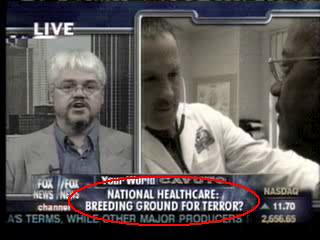 The most absurd example of this came yesterday when protesters congregated in Texas to rail against Obama’s “Nazi” climate change bill, which would finally sign the US up to international agreements to fight climate change. At first glance it might seem bizarre that ordinary citizens are turning up to yell and scream about a piece of legislation that doesn’t have much to do with them but rather affects the oil and gas industries, right? Well if you look at the bottom of their placards many read that they are concerned “Energy Citizens”, and if you look into the origin of this group you can see it’s actually sponsored by the oil and gas industry, whose trade organisation was recently revealed in a leaked memo to be suggesting that oil company employees be mobilized for these “grass roots protests” in order to “put a human face” on the resistance to the bill.
The same has been true of the healthcare protest and the “tea-bagging” protests, both organised by powerful Washington lobby groups working with the aid of Fox news, which gets people revved up telling them the healthcare reform bill will kill their grandma.
Is this in the bill? No. Is it rational to say Obama is a racist Nazi because he’s trying to reform the nation’s healthcare system? No. But these myths persist, with the majority of Americans now saying they’re concerned about Obama’s healthcare reform effort. It now looks like the administration is going to take the public option off the table or break up the legislation, which would effectively mean the myth-spreading tactics have worked. Meaningful healthcare reform could be dead.
Don’t Get too Smug, Europe
But before Europeans shake their heads and roll their eyes at the seemingly hopeless ignorance of the American public, might I remind them that they are not immune to these impulses either. In trying to explain to Europeans the raw emotion surrounding this debate, I’ve been struggling to think of an issue here that brings out the same level of irrationality. It wasn’t long before my mind settled on the EU. When it comes to ridiculous irrational myths, European knowledge of the EU - particularly in the UK - could give these American healthcare protesters a run for their money.Take the debate over the Lisbon reform treaty. The accusations levelled against it in the UK and Irish media have been absurd almost to the point of self-parody. According to the British media the treaty is a “massive power grab” that will turn the EU into a “totalitarian super-state”. Sound familiar? In reality, the treaty simply makes tweaks to the EU’s governing structure, changes that have been made necessary by the recent EU enlargement. The main purpose of the treaty is to make the EU more efficient and cost-effective, not to give it more power. Its goal, much like the healthcare reform bill, is to help people – not to hurt them. But that doesn't stop the totalitariansism comparisons. Just take a look at this over-the-top video from YouTube.
Euromyths are rampant in the UK. Some examples of completely baseless euromyths spread by the British media: English fish and chips shops would be forced to use Latin names for the fish (The Sun, 5 September 2001), double-decker buses would be banned (The Times, 9 April 1998), British rhubarb must be straight and barmaids would have to cover up their cleavage. (Update April 2010: Here's a recent patently absurd - and easily disprovable - example from the Daily Mail about the EU supposedly changing the name of the British Channel to the "Anglo-French Pond". That story was picked up by numerous other media outlets including the BBC's 'Have I got News for You'.) All of these are widely believed in Britain yet are completely untrue. Many euromyths can be traced directly to deliberate attempts by lobbysists to influence policy in Brussels. And they’re frequently presented in the same kind of screaming-headline, hysterical tone that is now being employed in the US healthcare debate.
And of course, a recurring complaint about both the Healthcare reform bill and the Lisbon reform treaty is that they're too long and complicated for ordinary people to understand. And because they're so long, they must be trying to pull something over on everyone. Because naturally, incredibly complex pieces of legislation should be easily understandable by your local trash collector.
 In the UK, the right-leaning media makes completely baseless and false accusations about the EU and about the Lisbon Treaty, saying it will do things that are not at all in the document such as ban abortion across the EU, mandate an EU army, establish an EU constitution or subjugate member state courts. The public comes to accept these myths as fact. Then when it comes time for a vote, as occurred with the Irish referendum on the Lisbon Treaty last June, the public bases their vote on the misinformation they’ve received about the EU and the treaty. Democracy at its finest.
Can you imagine if healthcare reform were being put to a referendum in the US? It would never have any hope of passing. In fact the only way that this legislation may actually come to pass now is if the US congress does the right thing and bypasses the will of the people, making the responsible informed decision that a vast swathe of the American public cannot make themselves because they are so misinformed. This is how representative democracy is supposed to work – citizens elect representatives and entrust them with the responsibility of becoming versed in issues that ordinary citizens are not equipped to make decisions on themselves. This is why it is irresponsible to put a complex legal document like the Lisbon Treaty or healthcare reform to a public referendum. It is the worst perversion of Democracy – mob rule.
People tend to be pretty gullible, and powerful interests will always be able to manipulate them. Now that the internet has brought us what sociologists have termed the "post-fact society", this misinformation is very easy to spread - be it in America or Europe.
No Appetite for Revolution
Now to be fair, the level of hyperbole used in mainstream media around the Lisbon Treaty hasn’t reached the alarming heights of the US healthcare debate. And the Lisbon Treaty hasn’t inspired gun-totting mobs to show up at politician’s doorsteps last time I checked. Comparisons to Nazis are rarely used in continental Europe, as the memory of what the Nazis really were is still too raw to throw around the comparisons as lightly as Americans and, to a lesser extent, Brits do. But the difficulties encountered in both efforts for reform show how difficult it can be to change societal systems at the dawn of the new millennium, as we prepare to enter the 7th decade of peacetime in the Western world. The fact is all of these big social programs, on either side of the Atlantic, were instituted in the years following World War II at a time when the public was still traumatised enough to have the appetite for real massive change. People are living in an era of unprecedented peace in the Western world, and even if there are major problems with system X, it’s working just fine for now thank you very much. Whether it be the EU project or healthcare reform, people in 2009 are just not mentally prepared for big change. Having lived their entire lives in peace, they just don’t have the appetite for risk. And powerful interests have grown up around the existing institutions that will resist change in order to safeguard their own interests.
 Yet in both situations, the seeming comfort of the status quo is an illusion. Neither current situation is tenable in the long-term. In the US, while one out of every five Americans under 65 is uninsured, the majority do have insurance and, since they don’t know any better because they’ve never seen a European healthcare system, they think their coverage is the best in the world (Americans usually by default assume their anything is the best in the world). But the system of employer-funded healthcare is untenable. The US now spends around 15% of its GDP on healthcare, second only to East Timor among United Nations member states. Left unchanged, that number could rise to something like 30% in just a few decades. The current system is literally strangling small business. But all most Americans with insurance see is that they go to the doctor, he treats them, they get better. There is no crisis, they assume.
The same can be said of Europeans and their thoughts about the place in the world of their individual member state. The fact is that in a post Cold War world, with the rising power of India and China and the fact that the US no longer has a strategic long-term interest in safeguarding European defence, no individual European member state can hope to be a significant player on the world stage in the 21st century on its own. Yet your average British person hasn’t come to grips with this fact. As far as they can see, they appear to have a big influence on the world culturally (they often mistake American cultural imperialism and the widespread use of English as somehow attributable to themselves), they are nuclear armed, they have a seat on the UN security council and they are in the G8. But the fact is in 50 years they are unlikely to have any of these things (except perhaps an ageing fleet of dangerous and dilapidated Trident submarines) if they were to go it on their own. It’s a situation where the prospect of the UK separating from the EU could easily appear to be fine to the average British person, but where people with a real knowledge of world events and future projections know that is not a viable option.
In the meantime the media, big business and right-leaning politicians are all too willing to exploit the average person’s ignorance and lack of foresight in order to serve their own interests, convincing them that reform efforts that are meant to help the average person are actually an effort to impose a dictatorial superstate. It’s the situation we find ourselves in at the dawn of the 21st century on either side of the Atlantic.
We are, it would seem, a risk-averse species by nature. And a gullible one to boot.
Thursday, 20 August 2009
Homegrown piracy
 As video was played over European airwaves this weekend of the Russian defense minister proudly reporting to President Medvedev that the navy had gloriously rescued the Russian freighter that had gone missing in the English Channel, there were many in Europe who weren’t feeling as visibly reassured as the Russian president appeared to be. Though Russia has tried to portray the rescue of the apparently hijacked ship as an unparalleled success, the reality is quite different. This hijacking– thought to be the first incident of piracy in European waters since the 17th century – could herald a dangerous new era for European shipping.
Details about what exactly happened in this mysterious ship disappearance have been slow in coming. The 4,000-ton ship, named the Arctic Sea, first left Finland with a load of timber bound for Algeria in late July. However after passing through the Baltic and North Seas, it disappeared from radio contact in the English Channel. There was wild speculation for a few days about what could have happened to it. Because the Russian shipping industry is permeated by organised crime, people immediately thought it had something to do with drug or weapons smuggling, or perhaps political intrigue. Wilder theories speculated there could be nuclear equipment on the boat.
Over the weekend the Russians revealed they had tracked down the ship near the islands of Cape Verde off the coast of West Africa. The 15 Russian crew members were rescued and eight hijackers - from Russia, Estonia and Latvia - were arrested. They said the rescue effort had been a joint Russian, Swedish, Finnish and Maltese (the ship was flying under a Maltese flag) operation, and that no media had been informed about what was going on for the hostages’ safety. According to the Russians, the crew reported that they were boarded by a group of men in an inflatable boat while they were in Swedish waters. The men claimed to be police looking for drugs, but then forcibly hijacked the ship and forced it to go to West Africa. The ship’s insurance company says they were contacted with a $1.5 million ransom demand, threatening to blow the ship up if they didn’t receive it.
Saturday, 15 August 2009
UK Enraged by US Healthcare Portrayal
 The US healthcare debate came to the UK in a very explosive way yesterday, when video of a British politician slagging off the NHS spread across the internets like wildfire. It was the twitterati who first started spreading the word, creating tags like #welovetheNHS to defend the NHS from this particular Tory politician, who happens to be a member of the European Parliament. My previous blog post on this subject has made the rounds pretty heavily on that tag actually.
The US media tour by Conservative MEP Dan Hannan has created a huge headache for Conservative leader David Cameron, who was scrambling yesterday to assert his love for the NHS and describe Dan Hannan as a fringe politician with "extreme views". The message is clear: the British National Health Service is a cherished institution in the UK, and politicians left or right criticise it at their peril. Whether this sort of "love it or leave it" mentality is helpful is debatable, but one thing is clear - any Briton can tell you that Dan Hannan's portrayal of the NHS doesn't bear the slightest resemblance to reality.
His description of the NHS, seen in this video above from Fox News, is so outrageously made-up that the Labour party - long trailing in the polls and virtually guaranteed to lose the next election - has pounced on it to show that the Conservative party can't be trusted with the NHS because they intend to make drastic cuts (Blair used the same argument in '97). The political headache for Cameron grew to such a fever pitch yesterday that some analysts were predicting that Cameron might sack Hannan from the partyand hence he would be out of the European Parliament). I know plenty in Brussels who would be relieved at this prospect, as Hannan has a long history of causing trouble in Strasbourg. But we'll see if the pressure remains through the weekend.
Of course as I pointed out in my previous healthcare blog post, the fact that the US media is focusing on the NHS at all doesn't make any sense. The healthcare plan being proposed by Obama and the US congress is not a single-payer system as exists in the UK Canada or France, but rather a hybrid multi-payer system as exists in Germany. Germany has a universal multi-payer system with two main types of health insurance: the public fund and private funds. Everyone is mandated to have healthcare, which is provided by the public fund to people below a set income level for a low rate. So, the wealthy can pay for exceptional private health coverage if they want to, or they can pay a small amount for the state insurance (many opt to do this). The end result is that everyone is covered and Germany spends 10% of GDP on health care, compared to 16% in the US. Obviously Germany would be the better example for the US media to use, yet the country, to my knowledge, has never been once by the US mainstream media.
 This whole US "debate" (if you can call it that) has just been downright painful to watch, and has reminded me just how lucky I am to live in Europe. What's really unfortunate is that the hysteria and lies in the US are drowning out any actual debate on this bill - which will create one of two results. A bill will be passed without that perhaps lacks restraining measures that would have been helpful to it, or no bill will be passed which will represent the triumph of the mob, the victory of misinformation over reason. It's really a very sad thing to watch.
As for the British, perhaps watching the way this whole thing is unfolding in the US will make them feel a little more European. After all, this is one of those crucial ways in which the UK is much closer to the continent than to America. And the British should be grateful for it.
Subscribe to:
Comments (Atom)