Tuesday, 28 September 2010

‘Red Ed’ elected new British Labour leader

As political theater goes, there’s nothing quite like sibling rivalry played out on the national stage. Such a drama has been playing out in the UK over the past several months as brothers David and Ed Miliband fought it out to become the next leader of the Labour party. This week it all came to a thundering climax as the Labour party conference chose younger brother Ed to be their leader.

The choice was not just between two different branches of a family tree – it was between two differing political ideologies. Or at least that’s the way it was being presented. Older brother David was the anointed successor to Tony Blair, and he was firmly entrenched in the “New Labour” makeover created by Blair and Gordon Brown in the 1990’s. That movement pulled the Labour party to the right to make it palatable to middle England and therefore electable. It came shortly after Bill Clinton remade the Democrats in the same way in the United States, though the term “New Democrat” has become almost an irrelevancy as the Democrats have settled comfortably into their new centrist role. That was never the case in the UK, where a large part of the Labour party resented Blair and Brown for pulling the party to the right and longed for a leader to end the New Labour project and return the party to its socialist routes.

Monday, 27 September 2010

US introduces entrance fee for European visitors

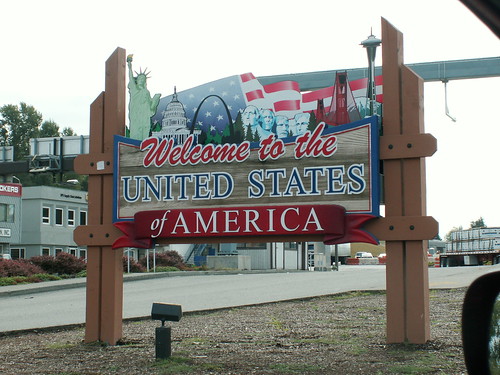
If you are European and wish to visit the United States, starting this month you will have to pay a $14-per-person entry fee for the privilege. The unilateral move by the US has come as quite a shock to the EU, especially since neither Brussels nor individual member states were consulted about it. And European leaders are in equal parts furious and bemused that the fee is ostensibly a “tourism promotion” tax on visitors. Now, the EU is considering a retaliatory measure charging Americans to enter Europe if the US refuses to scrap the fee.

Such a fee levied to visitors from countries that do not require a tourist visa is historically unheard of, and it appears to be a new concept the US is trying to introduce. But it’s an idea that members of the European Parliament meeting in Strasbourg last week were not receptive to, to say the least. Using strikingly strong language, MEPs expressed fury over this new “Electronic Travel Authorisation System” (ESTA), which they say amounts in effect to a unilateral visa.

Monday, 20 September 2010

The mainstreaming of Europe's 'stealth far-right'

The results from yesterday’s general election in Sweden are in – and continuing the narrative of European elections over the past five years, the results are bad news for the left. The centre-left Social Democrats lost 17 seats in the parliament – just the latest blow for a party that until recently had dominated Swedish politics.

But the ruling centre-right coalition, who will hold on to power, weren’t exactly jumping out of their seats last night in celebration. Only Prime Minister Fredrik Reinfeldt's party managed to gain seats, while his three coalition partners all lost seats. This left the coalition just short of a majority, and they will have to ally with the Swedish Greens in order to put them over the threshold. So if everyone seemed to lose seats, where did the votes go? They went to the far-right Sweden Democrats (SD), who will now enter the parliament for the first time after winning 20 seats in yesterday’s election. It's a stunning development for a historically left-of-centre country like Sweden.

Friday, 17 September 2010

As expected, pope visit courts controversy in Britain

This week Pope Benedict XVI is making the first state visit by a pontiff to the United Kingdom. Considering the UK was historically the most anti-Catholic country in Europe (they have a holiday devoted to burning effigies of a Catholic traitor for goodness sake!), no one should be too surprised that this visit is causing some controversy.

In fact from the television coverage, it looks like the pope’s visit could be attracting more protesters than worshipers. The protesters appear to have two objections to the pope's visit. One: because it’s a state visit, the taxpayers are paying for it. Two: they are angry about the child abuse scandal and the Catholic heirarchy’s efforts to cover it up. Those are the ostensible reasons at least. But I suspect that if the Dalai Lama or an imam visited Britain on a state visit it wouldn’t be met with such a protest. Perhaps old historical animosity toward the ‘papists’ has a bit to do with this huge backlash to the visit. A great many public figures and politicians have objected to the visit as well, and the controversy has been raging ever since the visit was first announced. It even became a subject during the prime minister debates during this year's election. Surveys have shown that 2/3 of the British public dissaprove of the visit.

Is Sarkozy losing it?

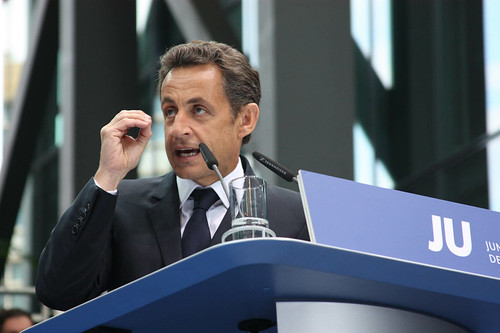
Toward the end of today there was a flurry of speculation among the journalists at the summit of EU leaders in Brussels, when word got around that the Bulgarian prime minister was telling people a violent altercation between French president Nicolas Sarkozy and European Commission president Jose Manuel Barroso had occurred during lunch. The fight, from the sounds of it, was pretty incredible - apparently Sarkozy was screaming so loudly at Barroso it could be heard all the way down the hall.

The altercation came after Tuesday's shockingly strong condemnation of France's deportation of Roma (gypsies) by Justice Commissioner Viviane Reding. Reding had not only accused France of violating EU anti-discrimination law by targeting an ethnic minority for deportation, but also of violating free movement law by deporting "en masse" gypsies who are Romanian and Bulgarian nationals and therefor EU citizens. But what really seemed to make Sarkozy and his cabinet explode in anger this past week was Reding's comparison of France's recent actions to the country's history of rounding up and disposing of gypsies during World War II. One by one this week French ministers expressed their shock and fury at Reding's words, with the country's Europe minister even declaring "This is not how you treat a great nation like France!" But even after Reding apologized for making the World War II analogy, their anger didn't seem to diminish. And apparently, when Barroso told Sarkozy today that he is backing Reding's condemnation and the commission is united on challenging the legality of what France is doing, that's when Sarko lost it.

Tuesday, 14 September 2010

Gypsy exile in Europe mirrors wave of Islamophobia in US

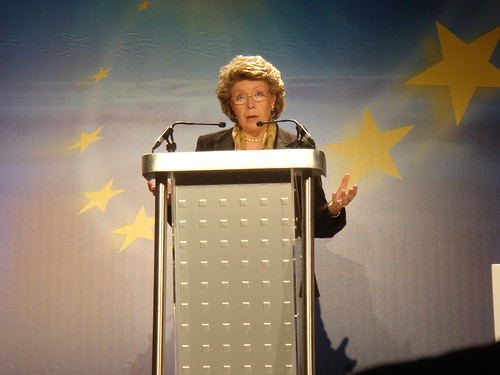
It’s been an intense day of cannon fire shooting back and forth between Brussels and Paris, as the European Commission abruptly broke its silence on France’s deportation of Roma (gypsies) and came out swinging. EU Justice Commissioner Viviane Reding held a press conference this morning calling the French deportations a “disgrace” and said the EU is now considering taking legal action against France for violating EU law. It was a shockingly strong condemnation that caught the Brussels press corps completely by surprise, considering Brussels is usually loath to criticize anything France does. Reding even thumped the podium as she spoke, comparing the expulsion campaign to the persecution of Jews during World War II.

Within minutes Paris was reeling from the shock. At a hastily organized press conference in Paris, a spokesman for the government said they were “astonished” to learn of Reding’s declarations. He then accused Reding of standing in the way of France’s efforts to "improve the situation" of Roma, which he said was “at the heart of the government’s concern and action”. Later in the day, France's Europe minister showed just how unprecedented EU criticism of France is when he warned, "This is not how you speak to a major power like France."

The issue has been on a low boil since August, when French president Nicolas Sarkozy first took the decision to deport camps of gypsies who are foreign nationals (mostly Romanian but also Bulgarian) back to where they had come from. Only problem is, Romania and Bulgaria are now part of the EU, and as such their citizens have the right to free movement within the union. But for weeks the commission was silent on the issue. That is, until today’s explosion from Reding.