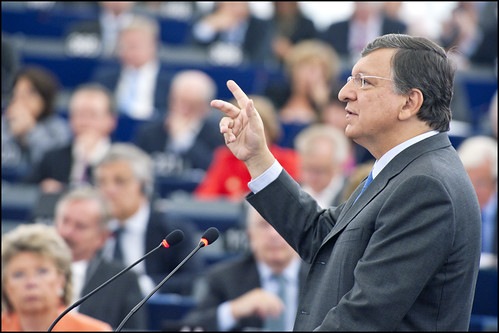
European Commission president Jose Manuel Barroso dared to use the ‘F word’ in his state of the union address here in Strasbourg today – federalism.
“Let’s not be afraid of the word, we will need to move towards a federation of nation states,” he told the European Parliament. “Today, I call for a federation of nation states. Not a superstate.” This federation, he continued, will ultimately require a new treaty, as German Chancellor Angela Merkel had suggested last week. EU leaders, still traumatized by the painful experience of ratifying the Lisbon Treaty in the last decade, have been desperate to avoid this.
“Before the next European Parliament elections in 2014, the Commission will present its outline for the shape of the future European Union. And we will put forward explicit ideas for treaty change in time for a debate.”
Barroso has been hesitant to use the word federal in the past when describing the future direction of the European Union, aware of the images of a power-grab it can conjure up in member states. But in his state of the union addresses, a yearly tradition itself created by the Lisbon Treaty, Barroso has been keen to make the European Parliament happy. He clearly thought that by finally using the F-word, he could do it.
Wednesday, 12 September 2012
Monday, 3 September 2012
A long-distance relationship
There are many clichés used to describe Iceland’s position in the middle of the Atlantic. Torn between Europe and North America – quite literally sitting on the fault line separating the two continents geologically – the country’s location is the most frequently used metaphor. This has been particularly true now that the country is in the process of EU accession.
While in Iceland over the past four days – a stopover on my way back to Brussels from a visit home to New York – the question of EU accession was very much on my mind. In fact I made it a point to ask every Icelander I met how they plan to vote in the coming referendum (what can I say, I’m tons of fun at a party). I planned to write some kind of blog entry on the way back reflecting people’s opinions and concerns, and here I am on the plane writing it.
It’s tempting to start trying to explain Iceland’s reluctance to embrace Europe with an anecdote about geography, since it is so far the European mainland. I could describe the intense sense of isolation I felt while out in the uninhabited lava fields away from Reykjavik. Or I could muse about the feeling of being torn in two directions which I felt while standing in the gorge separating the two continents at Pingvellier Park.
While in Iceland over the past four days – a stopover on my way back to Brussels from a visit home to New York – the question of EU accession was very much on my mind. In fact I made it a point to ask every Icelander I met how they plan to vote in the coming referendum (what can I say, I’m tons of fun at a party). I planned to write some kind of blog entry on the way back reflecting people’s opinions and concerns, and here I am on the plane writing it.
It’s tempting to start trying to explain Iceland’s reluctance to embrace Europe with an anecdote about geography, since it is so far the European mainland. I could describe the intense sense of isolation I felt while out in the uninhabited lava fields away from Reykjavik. Or I could muse about the feeling of being torn in two directions which I felt while standing in the gorge separating the two continents at Pingvellier Park.
Thursday, 16 August 2012
One car, one vote
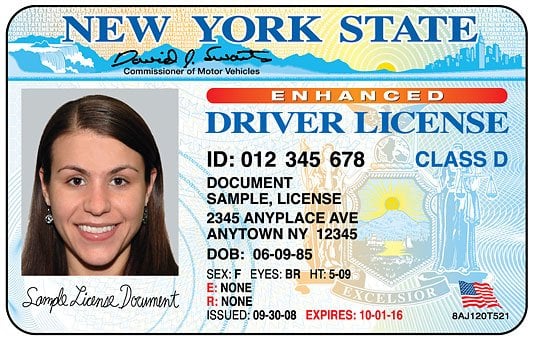
The US presidential campaign switched into high gear this week with Mitt Romney’s selection of Wisconsin congressman Paul Ryan as a running mate. But with a raft of voter ID laws now going into effect in crucial swing states across the country, it’s looking increasingly likely that the result in November could be shaped more by who is allowed to vote than by who is on the ticket. Thanks to these new laws, if an American doesn’t drive, he or she may not get to vote.
Until 2003, no state in America required voters to show a photo ID in order to vote. For Europeans this may seem strange, since showing your national ID is often a requirement here for things as simple as using a solarium. But English-speaking countries tend to not have national IDs. For some reason I’ve never understood, there’s just some deep-rooted Anglo-Saxon distrust of them.
In the United States, this leaves drivers licenses as the only government-issued photo identification most people have. Because such a large proportion of adult Americans (85%) have a drivers license, this has more or less worked out. Many people obtain a drivers license even if they do not routinely drive, in order to have a photo ID.
But that leaves 10% of eligible American voters who do not have a drivers license or any other form of photo ID, according to NYU's Brennen Center for Social Justice. This group is overwhelmingly made up of African-Americans, Hispanics and college students. And these three groups are statistically the most likely to vote Democratic.
Until 2003, no state in America required voters to show a photo ID in order to vote. For Europeans this may seem strange, since showing your national ID is often a requirement here for things as simple as using a solarium. But English-speaking countries tend to not have national IDs. For some reason I’ve never understood, there’s just some deep-rooted Anglo-Saxon distrust of them.
In the United States, this leaves drivers licenses as the only government-issued photo identification most people have. Because such a large proportion of adult Americans (85%) have a drivers license, this has more or less worked out. Many people obtain a drivers license even if they do not routinely drive, in order to have a photo ID.
But that leaves 10% of eligible American voters who do not have a drivers license or any other form of photo ID, according to NYU's Brennen Center for Social Justice. This group is overwhelmingly made up of African-Americans, Hispanics and college students. And these three groups are statistically the most likely to vote Democratic.
Wednesday, 8 August 2012
Bank battle: New York vs London
Yesterday's news that US regulators are investigating yet another British bank for illegal activity has provoked a roar of indignation and incredulity from the City of London. Today a member of the British parliament accused the US government of launching the string of investigations in order to weaken the British banking sector.
“I think it's a concerted effort that's been organised at the top of the US government,” fumed Labour MP John Mann to British media. “I think this is Washington trying to win a commercial battle to have trading from London shifted to New York.”
This week the New York State regulator charged the British bank Standard Chartered of money laundering $250 billion in funds aimed for Iran. The US has a trade embargo against Iran, and under US law all companies publicly traded in the US, including Standard Chartered, must comply. The money laundering went on for nearly a decade, the regulator alleges.
The announcement comes just weeks after the US Congress held highly confrontational hearings of British-based HSBC executives over allegations that HSBC was laundering money for Mexican drug cartels. Earlier this summer London-based Barclays bank was discovered to have been manipulating libor rates – the rates at which banks lend to each other.
“I think it's a concerted effort that's been organised at the top of the US government,” fumed Labour MP John Mann to British media. “I think this is Washington trying to win a commercial battle to have trading from London shifted to New York.”
This week the New York State regulator charged the British bank Standard Chartered of money laundering $250 billion in funds aimed for Iran. The US has a trade embargo against Iran, and under US law all companies publicly traded in the US, including Standard Chartered, must comply. The money laundering went on for nearly a decade, the regulator alleges.
The announcement comes just weeks after the US Congress held highly confrontational hearings of British-based HSBC executives over allegations that HSBC was laundering money for Mexican drug cartels. Earlier this summer London-based Barclays bank was discovered to have been manipulating libor rates – the rates at which banks lend to each other.
Wednesday, 1 August 2012
Romney’s offend-a-thon comes to an end
If the aim of Mitt Romney’s ‘world tour’ over the past week was to demonstrate his ability to tactfully represent the United States on the world stage, it’s safe to say the trip had the opposite effect. Professing to be on a quest to ‘restore relations with America’s most important strategic allies’, Romney managed to cause grave offense in all three of the countries he visited.
It started badly and quickly went from bad to worse. Even before he touched down in London last Wednesday, his campaign had raised eyebrows when an advisor said that Barack Obama was unable to understand the “common Anglo-Saxon heritage” of the US and the UK. Given that in English this term only refers to the Germanic tribes of Southwest England (unlike the "free-market capitalism" meaning it has in France), it came off as shockingly racist – i.e., a black man cannot understand the common Germanic heritage of the English and their descendants.
Romney then managed to enrage the British public by casting doubt on their readiness to host the Olympic Games, telling a US journalist in London that the UK’s preparedness was “not encouraging.” This sent the British media into a frenzy of anti-Romney headlines, such as “Mitt the Twit” (The Sun, owned by Rupert Murdoch) and “Who invited Party-Pooper Romney?” (The ultra-conservative Daily Mail). He even managed to enrage Conservative British Prime Minister David Cameron, who quipped at a press conference, "Of course it's easier if you hold an Olympic Games in the middle of nowhere." (Romney ran the 2002 Winter Olympics in Salt Lake City, Utah). Even London mayor Boris Johnson, himself a gaffe-magnet, used Mitt Romney’s name when speaking to crowds asif describing some kind of panto villain, quickly followed with boos from assembled Olympics-lovers.
It started badly and quickly went from bad to worse. Even before he touched down in London last Wednesday, his campaign had raised eyebrows when an advisor said that Barack Obama was unable to understand the “common Anglo-Saxon heritage” of the US and the UK. Given that in English this term only refers to the Germanic tribes of Southwest England (unlike the "free-market capitalism" meaning it has in France), it came off as shockingly racist – i.e., a black man cannot understand the common Germanic heritage of the English and their descendants.
Romney then managed to enrage the British public by casting doubt on their readiness to host the Olympic Games, telling a US journalist in London that the UK’s preparedness was “not encouraging.” This sent the British media into a frenzy of anti-Romney headlines, such as “Mitt the Twit” (The Sun, owned by Rupert Murdoch) and “Who invited Party-Pooper Romney?” (The ultra-conservative Daily Mail). He even managed to enrage Conservative British Prime Minister David Cameron, who quipped at a press conference, "Of course it's easier if you hold an Olympic Games in the middle of nowhere." (Romney ran the 2002 Winter Olympics in Salt Lake City, Utah). Even London mayor Boris Johnson, himself a gaffe-magnet, used Mitt Romney’s name when speaking to crowds asif describing some kind of panto villain, quickly followed with boos from assembled Olympics-lovers.
Wednesday, 25 July 2012
Romney's 'apology for the apology' tour
Mitt Romney has arrived in London today, the first stop on a three-country tour meant to shore up his foreign policy credentials. His tour opened with a remarkably tone-deaf gaffe by a campaign staffer, who told British newspaper The Telegraph that Barack Obama cannot understand the common “Anglo-Saxon heritage” of the US and the UK.
The advisor was likely using the term in the continental European context, which refers to the free-market economic heritage of English-speaking countries. He was likely trying to make some 'Obama as Socialist' characterisation. But this definition is unknown in the English-speaking countries themselves, where the term is a seldom-used ethnic description of English descent (ie, from the Germanic tribes who settled in Southwest England). So it ended up just coming off as shockingly racist. Stephen Colbert hilariously summed up the bemused reaction of Americans to the comment.
It’s a bad start to what is a very important foreign tour for Romney. Over the next few days he will be meeting with virtually every high level politician in the UK. On Friday he will attend the Olympics opening ceremony, surely excited about the prospects for his horse-dancer in the dressage competition.
The Republican presidential candidate’s choice of three countries for this visit is highly significant. After his visit to the UK he will fly to Israel, where he will make a series of high-profile appearances. He will then finish his tour in Poland. All three are countries which the Romney campaign has accused the Obama administration of at best ignoring, and at worst insulting.
The advisor was likely using the term in the continental European context, which refers to the free-market economic heritage of English-speaking countries. He was likely trying to make some 'Obama as Socialist' characterisation. But this definition is unknown in the English-speaking countries themselves, where the term is a seldom-used ethnic description of English descent (ie, from the Germanic tribes who settled in Southwest England). So it ended up just coming off as shockingly racist. Stephen Colbert hilariously summed up the bemused reaction of Americans to the comment.
It’s a bad start to what is a very important foreign tour for Romney. Over the next few days he will be meeting with virtually every high level politician in the UK. On Friday he will attend the Olympics opening ceremony, surely excited about the prospects for his horse-dancer in the dressage competition.
The Republican presidential candidate’s choice of three countries for this visit is highly significant. After his visit to the UK he will fly to Israel, where he will make a series of high-profile appearances. He will then finish his tour in Poland. All three are countries which the Romney campaign has accused the Obama administration of at best ignoring, and at worst insulting.
Subscribe to:
Posts (Atom)