Monday, 5 September 2016

Merkel's far-right home state

The German chancellor has suffered an embarrassing electoral defeat as the dark cloud of nationalism spreads over Europe. But predictions of her political demise are premature.

Last month, I took a trip with some friends to the Northwest German island of Rügen in the Baltic Sea. It's a beautiful holiday island full of white chalk cliffs and rolling green hills. But when we were there, it was also full of sights of a more disconcerting variety - political ads for the far-right and racist messages splattered in graffiti. 

As we left Berlin on the train and travelled north through Mecklenburg-Pomerania, signs for the far-right Alternative for Germany (AfD) and the extreme-right (neo-Nazi) National Democratic Party (NPD) became more and more frequent. They were all over the island, and were an especially frequent site in the island's departure city, Stralsund. On the posters for the main centrist German parties, Angela Merkel's center-right CDU and the center-left SPD (who are currently governing the country in a coalition), was written a chillingly familiar word in graffiti: volksverräter (traitor to the nation).

The only ads not splattered with grafitti were those for the AfD and NPD, some of which called Germany's new arrivals "rapefugees".

This is Chancellor Merkel's home turf - the constituency which she represents in the German parliament. And like parts of neighbouring Poland, it is not a friendly place for people of color.

Sunday, 4 September 2016

"The UK is over?" - America's view of Brexit

The UK's vote to secede form the EU is still an object of fascination in the US, where views range from pity to bemusement.

Last week, standing at a bar in Savannah, Georgia and drinking a 40-ounce of Miller Light, I found myself engaged in a most unlikely conversation.

I had just been introduced to the roommate of an old friend. He was telling the story of a recent unsuccessful date, aborted because of a lack of intellectual heft. "I mean, he didn't even know what Brexit was," he said incredulously.

I had to check my surroundings to remind myself of where I was. I've been working as a journalist covering EU politics in Europe for a decade now, and it's been rare indeed that I've encountered much interest in the topics I cover during my twice-yearly visits home.

Wednesday, 31 August 2016

The rank hypocrisy of Obama’s ‘Appletax’ reaction

The US claims the EU's Apple decision is “political”, but it is the American reaction that is guided by politics. And US disrespect for EU law has a long history.

In the summer of 2001, the US government was furious with the European Union.

Iconic American firm General Electric had just seen a multi-billion dollar merger with Honeywell, which had already been cleared by the US, blocked by the European Commission on competition grounds. US politicians were furious, business leaders were flabbergasted. 

Two years later, the newly-emboldened Commission struck again. It slapped a €497 million fine on American tech giant Microsoft for abusing its dominant market position. Again, there was much sabre-rattling in Washington.

Thursday, 11 August 2016

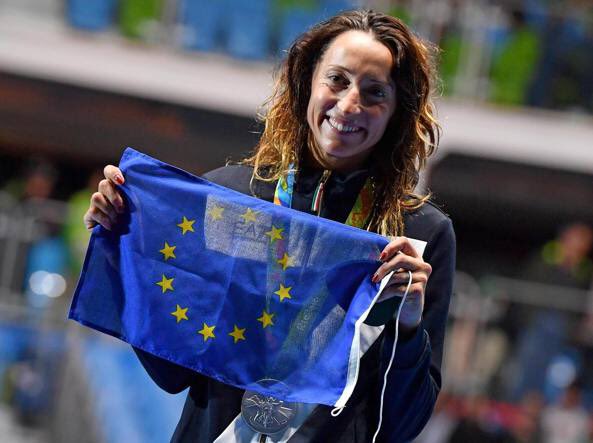
Do the Olympics promote harmony, or suckle nationalism?

An Italian athlete has accepted her silver medal as a European, brandishing the EU flag and declaring "Europe exists!". Why is this such a daring act?

Over the past decade living here in Europe, I've noticed a curious phenomenon every four years. While my American friends back home get wildly excited about the Olympic Games, my friends in Europe seem to greet them with a collective yawn.

This pattern is being bourne out again this year. In the morning, while the Americans are sleeping, my Facebook timeline is bereft of Olympics information. Then, around 2pm, it starts. 'America won this. It lost that. Chinese people are bad at X. Australians are good at Y. Russians are cheaters. This Moldovan athlete is attractive so all Moldovans are attractive. What is Moldova again?' 

I posted this observation on Facebook and asked people why they thought the difference exists. No one in Europe disagreed that Europeans are not so into the games, particularly compared to the Olympics-obsessed Americans. Funny enough, I think Americans assume the rest of the world is watching the games as closely as they are. I certainly did until I moved to Europe.

Tuesday, 9 August 2016

My continuing adventures with the German language

Germany's schlager superstar Helene Fischer
One year on, German continues to frustrate me.

It's been a year since I started learning German and wrote my first blog entry about the language, and some have suggested that I do an update. 

I'm reticent to do so because, to be perfectly honest, my German is really not at a level it should be for someone who started learning it a year ago. But my five-month long winter break in the Americas didn't really aid my process of German-learning. Though I intended to keep studying during my travels via an online course, once I got to Latin America I decided to do a short Spanish course while I was down there instead.

Needless to say, when I got back to Berlin in May and resumed my course, it was an overwhelming first day. I felt like I had forgotten everything from my elementary level class the year before and was starting from scratch. Particularly after having spent a few months learning a MUCH easier language (Spanish), I honestly felt like throwing in the towel. 'There are so many Americans here in Berlin that never bother learning German,' I thought. 'Why can't I be one of them?'

Monday, 1 August 2016

Erdogan’s Germans

Politicians in Austria and Germany are becoming increasingly alarmed over the Turkish president’s influence in their countries.

Yesterday in Cologne, 30,000 German residents amassed in the city center to pledge allegiance to a foreign leader.

The demonstrators, Turkish immigrants or people of Turkish decent, were following a call to action from Turkish President Recep Tayyip Erdogan, asking people to show solidarity against the attempted military coup on 15 July. They brandished iconographied pictures of the Turkish strongman, waved Turkish flags and chanted their fidelity to Erdogan’s Islamist AKP party.

The Turkish president himself was supposed to address the crowd via a live video address, but this was banned by the police for fear that it would cause the crowd to become "overexcited".