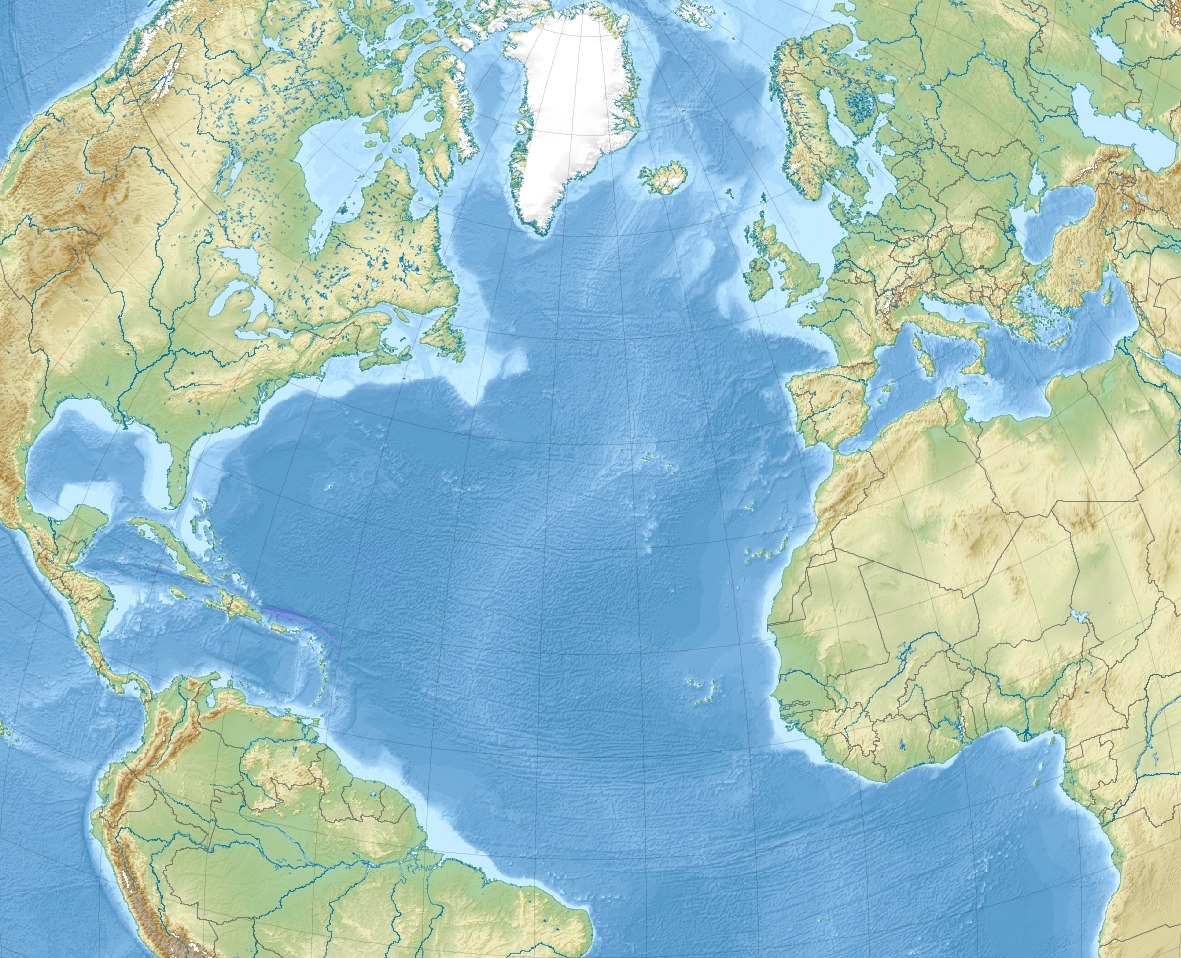
These are not exactly inspiring times for leadership in the Western world. On both sides of the Atlantic, a potential catastrophic default is looming largely as a result of short-sighted political manoeuvring. This is leading some to question whether the 20th century democratic institutions we have built our societies around are adequate to handle the challenges of this century.
In the United States, Republicans are holding hostage an authorisation to raise the amount of money the US is authorised to borrow – normally a routine housekeeping operation done by every congress – until the Obama administration agrees to massive cuts in government spending. The Democrats have offered to give them those cuts, but only if they are accompanied by an increase in taxes on the wealthiest Americans and the closure of corporate tax loop holes. The Republican leadership, terrified of the reaction of their base voters to any tax increase (even if it will have no effect on 98% of Americans) have refused the offer.
If the United States does not raise the debt ceiling by 2 August, it will go into default. This would almost surely have a disastrous effect on the worldwide economy. This weekend UK Business Secretary Vince Cable said that the "rightwing nutters" who are holding the debt ceiling authorisation hostage for their short-term political gain are a bigger threat to the world economy than the problems in the eurozone.
But conservatives in America aren't the only ones playing with fire in order to reap short-term political gain. The same kind of thinking seems to be guiding Cable's coalition boss. Over the past week UK Prime Minister David Cameron and his ministers have been saying that the UK intends to exploit the current eurozone crisis in order to "maximise what we want in terms of our engagement in Europe."
Monday, 25 July 2011
Sunday, 24 July 2011
Europe's Timothy McVeigh
Europe is in shock this weekend after Friday's horrifying act of terrorism in Norway that killed 76 people. Because of the stated aims of the perpetrator, it is already prompting questions over whether Europe has been looking the other way as the far right has grown in numbers and power.
When the news first broke on Friday that a car bomb had gone off outside the prime minister's office in Norway, many people assumed it was an act of Islamic terrorism. But soon after, news broke that the bombing had been followed by a shooting spree at a political youth retreat for the country's ruling Labour party. Then it was clear that this was unlikely to be an act of Islamic terrorism, since it seemed to fit the modus operandi of either a deranged lone gunman or an act of far-right domestic terrorism. In the end, it turned out to be the latter.
The man accused of orchestrating the attack, Anders Behring Breivik, reportedly carried out the attack on the ruling Labour party because he felt that their tolerant attitude toward Islam was destroying the country. It was an anti-government, far-right, fundamentalist Christian act of terrorism - similar to the Oklahoma City bombing in the US in 1995 committed by far-right extremist Timothy McVeigh.
Friday, 22 July 2011
Eurozone agrees second bailout for Greece
Stocks are rising today as the markets digest the news that Europe has taken a step back from the brink of economic disaster. Eurozone leaders yesterday agreed on a second €109bn bailout for Greece, something economists said had to come in the next few days to avoid calamity. Once again, Europe's leaders have taken a small step to narrowly avert disaster. But without a big step to reform the Eurozone, is there any end to the debt crisis in sight?
Greece's private lenders will be forced to participate in the bailout and take an estimated 21% loss on their loans to the country, in what is being called a 'selective default'. But it is still unclear whether the ratings agencies will decide this qualifies as a default or not. The private lender participation was something German Chancellor Angela Merkel wanted, but French President Nicolas Sarkozy and the European Central Bank had been resisting.
Wednesday, 20 July 2011
North Atlantic crisis: US, Europe edge toward economic disaster
Normally at this time of year, politicians on both sides of the Atlantic would be preparing for their August break. But there will be no relaxing getaways this year, in what is turning into probably the most anxiety-packed summer of my lifetime.
Both Europe and the US may be just days away from serious financial troubles. And if situations on either continent spin out of control, a worldwide economic panic could be ahead.
On both sides, there are obvious and straightforward solutions that could avert disaster. But in the US, the recent electoral success of a Tea Party movement that wants to see the US default on its debts has rendered the political process incapable of taking action. In Europe, the recent surge toward nationalism and a lack of political courage has rendered the EU incapable of confronting the debt crisis head on. It is a massive failure of the political systems of the Western world.
Thursday, 14 July 2011
Will NotW shock force rethink of British press accuracy?
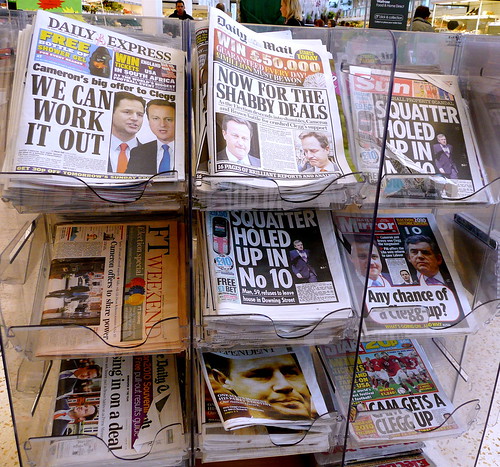
Another day, another euromyth batted about by the British tabloids. Today's little page seven gem, repeated in several papers including the Express and the Telegraph, is that Brussels is planning to force all sports players to wear the EU flag on their uniforms. And like most of the euromyths the British press peddles, this is complete nonsense.
Of course this little piece of news can't hope to compete with the big story this week, the News of the World hacking scandal and the implosion of the Rupert Murdoch media empire in Britain. Commentators are saying that this scandal will erode the public's confidence in the British media. I can't help but think – looking at stories like this EU unform nonsense – that that's probably not such a bad thing. But will this scandal really force the British public to be more sceptical toward the claims made by their printed press, particularly regarding the EU?
As I wrote about in a related post today, the current scandal is not centred around the accuracy of British journalists but rather the methodology used by them in gathering news. The allegations being made may be shocking and sleazy, but not one of them involve false reporting. Will there be a connection, in the public perception, between Murdoch's manipulation of the British political class and his manipulation of the British public? Will people start to think about how their own attitude toward things, for instance the EU, is shaped by the stories they read in the tabloid press? And will they stop being so credulous when reading these things? As I read the comments on this Daily Express article from today, I'm inclined to think little in this respect is going to change.
Why the NewsCorp scandal won't resonate with Americans
The News of the World hacking scandal has progressed with shocking speed in the UK. Yesterday it seemed to reach a fevered climax when Rupert Murdoch withdrew his bid for satellite operator BSkyB after he was ceremoniously denounced by the entire British Parliament in an unprecedented session. It marks an incredible end of an era. Murdoch is effectively being banished from Britain after having held sway over the island's media, government and even police for decades.
Now commentators are speculating that the trouble for Murdoch's media empire News Corp, which also own many papers and Fox News in the US, is spreading across the Atlantic. The shares in News Corp on the New York Stock Exchange came crashing down even before Murdoch's BSkyB bid was withdrawn, and the billionaire himself had to buy up the shares to keep the price from collapsing.
Now there are concerns that the bribery allegations in the UK could get the company into legal trouble in the US, because it is illegal for a company publicly traded in America to pay bribes to foreign officials – which includes police officers. That, combined with new allegations that Murdoch's British papers also hacked into the phones of American 9/11 victims has prompted some Democrats in congress to call for an investigation into the matter. But will the public at large share their outrage?
Subscribe to:
Posts (Atom)