Friday, 30 July 2010

Cameron promises the world to Turkey

This week's speech by UK prime minister David Cameron in Ankara was notably aggressive – not toward his Turkish hosts, but toward Britain’s EU allies. Perhaps it shouldn’t come as too much of a surprise from a leader who promised to be combative with the EU when sticking up for Britain’s interests. But Cameron’s strong (and unrealistic) guarantees to Turkey and his condemnation of Germany and France will set UK foreign relations on a tricky tightrope walk. What exactly is Mr. Cameron playing at here?

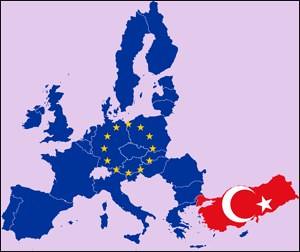
In his speech, Cameron was unusually outspoken about his support for Turkey’s membership in the EU. Of course this is long-held British policy, and the previous Labour government was also supportive of the membership. But Cameron went above and beyond this by ratcheting up the rhetoric. Saying he wanted to “pave the road from Ankara to Brussels,” Cameron stated that “the EU would be poor without Turkey.” Pointing to Turkey’s membership in NATO, Cameron said “It’s just wrong to say Turkey can guard the camp but not be allowed to sit inside the tent.”

By contrast German foreign minister Guido Westerwelle, who was in Ankara with Mr. Cameron, was much more cautious. Westerwelle, the leader of Germany’s Liberal party, also supports Turkey’s membership in the EU. But his party is in a governing coalition with Angela Merkel’s Christian Democrats, who strongly oppose such an accession. He’s already been in trouble with Merkel for being too effusive in his public support for Turkish membership in the union, and this time around it was clear he had learned his lesson. Though he encouraged Turkey to carry on in its efforts to join, he gave a frank assertion that Turkey is “not ready” to join the EU. Even more importantly, he pointed out that the EU is not ready to absorb Turkey.

But guess which speech the Turkish media splashed across the front pages? The Turkish press was positively effervescent over Cameron’s lavish praise for Turkey, and his face was all over Turkish TV screens this week. A quick and easy diplomatic coup for the UK no doubt, which is keen to establish strong ties with Turkey’s new Islamist-leaning government.

Wednesday, 28 July 2010

Do-it-yourself policing and garbage cleanup in Britain?

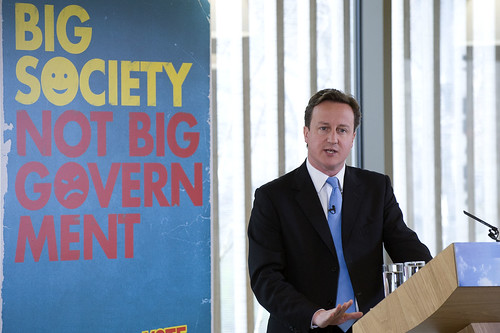
The "big society" initiative, which the new British prime minister David Cameron first came up with during the campaign, has gained sudden prominence in recent weeks. Apparently, it wasn't just a feel-good campaign slogan. The plan, which would devolve local services to voluntary citizens initiatives, managed to take the British media by surprise when it was officially unveiled last week. The plan would entail much more action and restructuring than anyone had expected out of what was thought to be simply campaign rhetoric, and has serious implications for how the UK may organise itself in the future.

"So what's this now," the media is asking, "big society is actually a real thing?" It would be as if Barack Obama, after becoming presient, had set up a "Hope Task Force" in order to monitor and manage the levels of hope in local communities. The media didn't know what to make of it at first, but within days the consensus seems to be that this scheme is merely a cover-up for the massive budget cuts that are about to be made on local community services. Or is it?

Friday, 23 July 2010

Ireland gets civil unions: now only Italy is left

This week the final signature was put on Ireland's civil partnership bill for gay and lesbian couples. For a fervently Catholic country that only decriminalised homosexuality in 1993, this was a big step. But even more importantly, it's reflective of the sudden rapid advancement Europe is making in the area of gay rights. Well, half of Europe anyway. Yes, the fact that this advance was made despite the historic power of Catholicism over Irish government is a promising sign for proponants of same-sex marriage. But could Ireland's change of heart have more to do with geography than a cultural shift? Let's look at the map.

As you can see from the map above, Italy is now the only remaining Western European country to have no form of gay marriage. The vast swathe of what Donald Rumsfeld used to deride as "Old Europe" is now awash in various shades of blue. And some of those light blues are due to change to dark blue quite soon. David Cameron's conservative-libdem coalition has already said they will upgrade Britain's civil unions to full marriage soon. Anything to not be compared to the Irish I suppose.

Wednesday, 21 July 2010

"Ah well, it's Belgium"

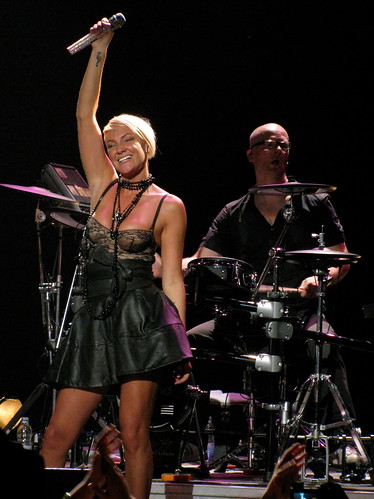
Kate Ryan is a peculiarly Belgian singer. The young Belgian pop tart, who headlined the Bal National celebrations in Brussels last night celebrating the eve of Belgian independence day, might sum up all the contradictions of this strange little country.

Born in Flanders and a native Dutch speaker, she sings in French in order to be understood by her whole country - as Francophones rarely speak Dutch but the Flemish usually speak French. She is also, and I think most Belgians agree on this subject, objectively terrible. Her most well-known tunes are catchy enough, but they are all just dance remakes of old French songs from the 1980's. But she persists in Belgian celebrity status, headlining festivals and somehow considered a national treasure. And yet when she came on stage last night, I couldn't help but notice the profound looks of disinterest on everyone's faces. Ryan, who's had a modest string of hits on dance charts across Europe over the last 8 years, is probably the most well-known Belgian singer of the moment outside the country.The disinterested Belgians at last night's concert seemed less than enthused about that fact.

The celebrations of Belgiumhood went well into the night last night, and I was probably wise to elect to work from home today. At the moment huge fighter jets are flying over my apartment, spraying coloured gas in the form of the Belgian flag. I wasn't even aware Belgium had an air force! The gaseous flag in the sky is hanging over many smaller Belgian flags on the streets below. In fact the past few days have been notable for the huge number of tricolour national flags on display, something I usually never see here.

Tuesday, 20 July 2010

Atheists and Freemasons - best buds?

Is Atheism a religion? A controversial application of the Lisbon Treaty's new requirements for holding regular meetings with all European religious leaders is putting that question to the test.

Yesterday the presidents of the European Commission, European Council and European Parliament held a rather awkward press conference with various religious leaders from across Europe. Watching the leaders crowd together for the 'family photo', there was a temptation to make some kind of joke about a priest, a rabbi and an immam walking into a bar. Inevitably, reporters pressed the EU and religious leaders for their opinions on the upcoming burqa bans in France and Belgium, but the leaders wouldn't take the bait. Both Barroso and Van Rompuy said this was a member state issue that does not involve the EU.

The occasion of this very holy family photo (courtesy of the commission) was the first ‘annual dialogue’ between the EU and Europe’s religious leaders since the Lisbon Treaty came into force. The meeting has actually been taking place every year since 2005, but the Lisbon Treaty has now made the meeting mandatory. This has introduced new political issues that weren’t present before.

Friday, 16 July 2010

Dutch get green light to ban foreigners from coffee shops

The Netherlands has long been known, particularly by many Americans, as a drug tourism destination. For years, the Dutch have complained that while they support the decision to end the prohibition on marijuana use, the fact that other countries don’t have the same policy means the country has become a magnet for wacked-out partiers and troublemakers.

One Dutch town decided it had had enough, and it banned foreigners from its ‘coffee shops’, the name for establishments that sell marijuana. That town is Maastricht, which says it is particularly vulnerable to drug-tourism because of its geography in the thin Dutch tail at the Southeast of the country. Sandwiched between Belgium and Germany, Maastricht, much like its border neighbor Breda, has gained a reputation as the place where Belgians, French and Germans go to buy weed. So Maastricht banned its coffee shops from selling to foreigners, and when a coffee shop was shut down for selling marijuana to two non-Dutch EU citizens, that coffee shop sued.

Right from when they established the law, Maastricht must have known they would have a legal fight on their hands. Banning EU citizens from other countries from consuming a product which Dutch citizens can consume is a blatant violation of EU free movement law, which stipulates that EU citizens must be given equal treatment to native citizens in any EU country. This right is perhaps the cornerstone of the European Union.