The US claims the EU's Apple decision is “political”, but it is the American reaction that is guided by politics. And US disrespect for EU law has a long history.
In the summer of 2001, the US government was furious with the European Union.
Iconic American firm General Electric had just seen a multi-billion dollar merger with Honeywell, which had already been cleared by the US, blocked by the European Commission on competition grounds. US politicians were furious, business leaders were flabbergasted.
Two years later, the newly-emboldened Commission struck again. It slapped a €497 million fine on American tech giant Microsoft for abusing its dominant market position. Again, there was much sabre-rattling in Washington.
Wednesday, 31 August 2016
Thursday, 11 August 2016
Do the Olympics promote harmony, or suckle nationalism?
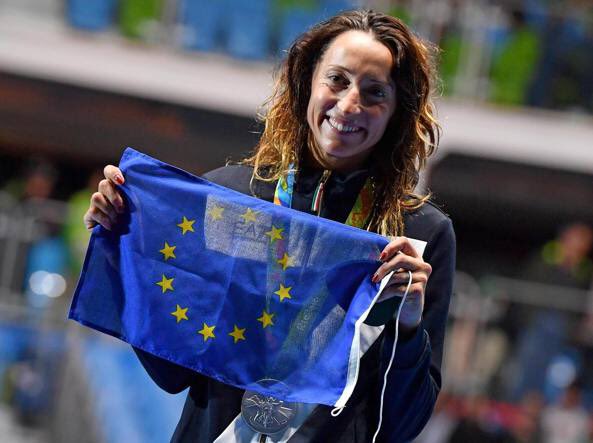
An Italian athlete has accepted her silver medal as a European, brandishing the EU flag and declaring "Europe exists!". Why is this such a daring act?
Over the past decade living here in Europe, I've noticed a curious phenomenon every four years. While my American friends back home get wildly excited about the Olympic Games, my friends in Europe seem to greet them with a collective yawn.
This pattern is being bourne out again this year. In the morning, while the Americans are sleeping, my Facebook timeline is bereft of Olympics information. Then, around 2pm, it starts. 'America won this. It lost that. Chinese people are bad at X. Australians are good at Y. Russians are cheaters. This Moldovan athlete is attractive so all Moldovans are attractive. What is Moldova again?'
I posted this observation on Facebook and asked people why they thought the difference exists. No one in Europe disagreed that Europeans are not so into the games, particularly compared to the Olympics-obsessed Americans. Funny enough, I think Americans assume the rest of the world is watching the games as closely as they are. I certainly did until I moved to Europe.
Over the past decade living here in Europe, I've noticed a curious phenomenon every four years. While my American friends back home get wildly excited about the Olympic Games, my friends in Europe seem to greet them with a collective yawn.
This pattern is being bourne out again this year. In the morning, while the Americans are sleeping, my Facebook timeline is bereft of Olympics information. Then, around 2pm, it starts. 'America won this. It lost that. Chinese people are bad at X. Australians are good at Y. Russians are cheaters. This Moldovan athlete is attractive so all Moldovans are attractive. What is Moldova again?'
I posted this observation on Facebook and asked people why they thought the difference exists. No one in Europe disagreed that Europeans are not so into the games, particularly compared to the Olympics-obsessed Americans. Funny enough, I think Americans assume the rest of the world is watching the games as closely as they are. I certainly did until I moved to Europe.
Tuesday, 9 August 2016
My continuing adventures with the German language
![]() |
| Germany's schlager superstar Helene Fischer |
It's been a year since I started learning German and wrote my first blog entry about the language, and some have suggested that I do an update.
I'm reticent to do so because, to be perfectly honest, my German is really not at a level it should be for someone who started learning it a year ago. But my five-month long winter break in the Americas didn't really aid my process of German-learning. Though I intended to keep studying during my travels via an online course, once I got to Latin America I decided to do a short Spanish course while I was down there instead.
Needless to say, when I got back to Berlin in May and resumed my course, it was an overwhelming first day. I felt like I had forgotten everything from my elementary level class the year before and was starting from scratch. Particularly after having spent a few months learning a MUCH easier language (Spanish), I honestly felt like throwing in the towel. 'There are so many Americans here in Berlin that never bother learning German,' I thought. 'Why can't I be one of them?'
Monday, 1 August 2016
Erdogan’s Germans
Yesterday in Cologne, 30,000 German residents amassed in the city center to pledge allegiance to a foreign leader.
The demonstrators, Turkish immigrants or people of Turkish decent, were following a call to action from Turkish President Recep Tayyip Erdogan, asking people to show solidarity against the attempted military coup on 15 July. They brandished iconographied pictures of the Turkish strongman, waved Turkish flags and chanted their fidelity to Erdogan’s Islamist AKP party.
The Turkish president himself was supposed to address the crowd via a live video address, but this was banned by the police for fear that it would cause the crowd to become "overexcited".
Thursday, 28 July 2016
Despite a gruesome week, Germans keep calm and carry on
Reports in American media of German 'panic' are greatly exaggerated. Most still believe Merkel's refugee policy is the right thing to do.
Over the past week, as Germany was struck by a string of four violent attacks in a row, German Chancellor Angela Merkel stayed on holiday.
It might seem strange for people in other countries. It stands in stark contrast to the political reaction in neighboring France, where French President Francois Hollande rushed to the scene of recent attacks there and made dramatic pronouncements and new policy promises.
It has matched the general tone of the measured response here in Germany, both from the media and from politicians. There has been no hysteria.
Of course, this is largely because the scale and scope of the French and German attacks were very different. The German terrorist attacks were failures, killing no one but the perpetrator. While the attacks in Belgium and France were co-ordinated large-sale attacks by ISIS cells, the events in Germany have been small attempts by lone wolves. While the other attacks have had clear links with ISIS, the Germany links are tenuous or non-existent.
Over the past week, as Germany was struck by a string of four violent attacks in a row, German Chancellor Angela Merkel stayed on holiday.
It might seem strange for people in other countries. It stands in stark contrast to the political reaction in neighboring France, where French President Francois Hollande rushed to the scene of recent attacks there and made dramatic pronouncements and new policy promises.
It has matched the general tone of the measured response here in Germany, both from the media and from politicians. There has been no hysteria.
Of course, this is largely because the scale and scope of the French and German attacks were very different. The German terrorist attacks were failures, killing no one but the perpetrator. While the attacks in Belgium and France were co-ordinated large-sale attacks by ISIS cells, the events in Germany have been small attempts by lone wolves. While the other attacks have had clear links with ISIS, the Germany links are tenuous or non-existent.
Tuesday, 19 July 2016
It's time for the EU to drop the Turkish accession charade
As the implications of the events of Friday night have sunk in, world leaders have started to suggest what they dared not say over the weekend.
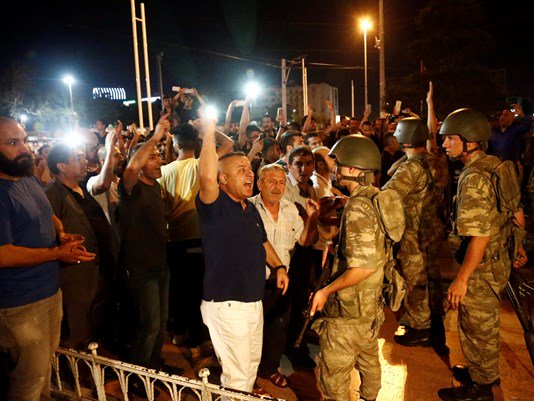
Since Friday Turkish President Recep Tayyip Erdogan has rounded up and arrested more than 6,000 members of the military and judiciary, accusing them of being involved in the supposed coup. "It looks at least as if something has been prepared," Johannes Hahn, the European Commissioner from Austria, said today. "The lists [of people to arrest] are available, which indicates it was prepared and to be used at a certain stage."
"I'm very concerned. It is exactly what we feared," he added.
Hahn's words carry significance because he happens to be the commissioner for EU enlargement. He is directly responsible for Turkey's accession process to join the EU. But in realty, that process is as theatrical and illusory as Friday night's coup probably was (more on that below).
Subscribe to:
Posts (Atom)