This week I undertook a little experiment, asking friends across Europe if and where they learned about how the European Union functions. The response from the British was, if perhaps not surprising, still incredible. And they go a long way in explaining some of the things I’ve observed over the past week.
This week was the first assembly of the new European Parliament in Strasbourg, at which I got to witness the media circus as Nick Griffin, the newly-elected leader of the far-right, whites-only B
ritish National Party, took his seat as a UK MEP. The British media had their
knickers in a twist on Tuesday as they breathlessly reported the act of a man sitting down in a chair. But in Strasbourg it was clear this event wasn’t of much interest to anyone except the throng of British reporters. After all, Mr. Griffin will be joining a dozen other far-right racist MEPs from countries across Europe, including France.
The continent wasn’t all that concerned about Mr. Griffin, they were more interested in the big decisions being taken at this week’s session – the selection of the new parliament president and committees. But I grew frustrated over the course of the day, charged with reporting on the developments in this first meeting of the new parliament, and coming up with only articles about Nick Griffin in my English-language searches on Google News.
As far as the British media was concerned, this was apparently just a Nick Griffin-sitting ceremony.
The fact is once the British media stops focusing on Mr. Griffin’s activities in Brussels and Strasbourg he will probably stop showing up. After all, his main purpose in being there is to get himself more attention back in blighty. I really doubt he has much interest in the Environment Committee, to which he was appointed this week.
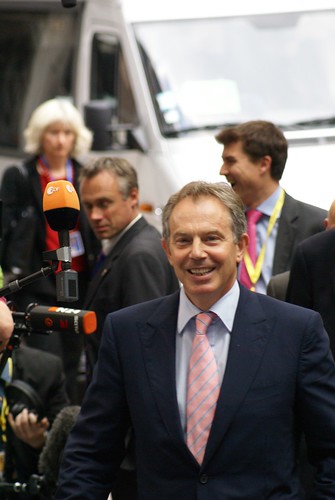
It was yet another illustration of how much the British media don’t understand how the EU works. Faced with the challenge of having to explain the complexities in the formation of a new parliament, they preferred to go with the easy “British fascist takes a seat” story. Their inclination for the easy story was again born out later in the week when Gordon Brown is nominating Tony Blair to be the first “president of Europe” (should such a position be created by the passing of the Lisbon Treaty) further demonstrated the astonishing ignorance of the British on all things European. Last night on Question Time, an audience member asked the guests whether Tony Blair would make a good European president. The panel, composed of senior politicians and journalists, proceeded to descend into a string of bizarre statements that betrayed the fact that they actually didn’t know what the new president position is. For that matter, they didn’t seem to know much of anything about the EU at all.
 The “president of Europe” position, as the British media have dubbed it, is actually merely the presidency of the European Council – one of the three governing EU institutions which is made up of the leaders and top ministers from all the member states. That position already exists, but is currently held by entire countries on a rotating basis for 6-month terms. At the moment, the President of the Council is Sweden. That means that the council’s informal meetings are held in Sweden, and Sweden controls the agenda and the message of the council for that period. For instance next week Sweden is hosting a Council meeting on the environment that I’ll be attending in the resort town of Åre, where all the Environment Ministers (Ed Milliband from the UK) will meet.
So the Treaty of Lisbon will change this position so that instead of being held by a country for six months, it’s held by a single person for 2 1/2 years. That is the position Tony Blair is being nominated for. It is mostly symbolic, and therefore it’s important to get someone in there who has a high profile. However the president won’t specifically make policy, he or she will merely loosely control the agenda of the European Council which is NOT the executive branch of the EU. The executive branch of government in the EU is the Commission, which has a president (currently Jose Manuel Barroso) who serves a five year term. That position is the only thing that comes close to really resembling a “president of Europe”, and it’s already existed for decades.
Last night on Question Time British MP Margot James responded to the Blair question by saying that she doesn’t think there should be a president position because the British public are already funding too many government positions and so one more shouldn’t be created. I found it to be an odd comment, because this European Council presidency position already exists, and in fact by changing it to be one person rather than moving it to a new country every six months at enormous expense, I assume the EU will actually be significantly reducing the cost of the European Council presidency (though the rotating country designation will still exist in abridged form for the council of ministers, thanks Andreas!). I also find it strange for James to blame the EU for having too many government officials when the number of Euro MEPs has actually just been significantly reduced, while the British Parliament continues to heft at a grotesque 1,384 members representing just 62 million people. The European Parliament has 736 members representing 500 million people.
The fact that this panel of high-ranking MPs and media figures seemed to have little idea how the European Union works reflects just how widespread “EU ignorance” is across Britain. In any society the poor and undereducated are likely to know little about the structures which govern them, but what I’ve been shocked by is the almost complete lack of EU knowledge from educated, intelligent people in the UK. Most of my intelligent British friends have no idea what the European Commission is, even though it effectively dictates probably about 40% of the laws that govern them. These same people could tell me inside and out how the American government works, in fact they are probably better versed in American civics than most of my friends in the US. Yet if I talk about anything related to the EU I’m met with a blank stare and a shrug.
Bad Education?
 So why is this? I’ve lived across Europe and I’m not labouring under any kind of delusion that people on the continent know their EU civics inside and out. But in my experience intelligent people on the continent tend to know what the Commission is and how it functions with the other two branches. So why do they know this? I’ve been asking a few of my European friends to find out.
A French friend from Paris, who doesn’t work in politics but takes a marginal interest in it, says his knowledge of the EU (which is good) is shaped by what he reads about it in the media. Ah, there’s the rub. The British media do a notoriously horrible job reporting on Europe. The EU is hardly ever mentioned in British news outlets, and when it is, the reports on it are rife with inaccuracy. By contrast the French media does cover important EU stories, when a piece of legislation will directly effect French people in an important way. But still, EU stories can be fairly boring, and I would be imagine it would be pretty easy for even intelligent French people to tune them out or give them only cursory attention. So that can’t be the entire explanation of the difference.
A German friend from Hamburg told me that though he doesn’t usually read articles about the EU in newspapers (he’ll usually skip them because he thinks they’re boring), he does know the fundamentals of how the EU works because he learned it in school. I tested his knowledge a bit and found that yes, he does have a good mastery of the basics of how the EU works, so I asked him when he learned this. He said he learned it in secondary school, in a required class that was coupled with a course on German civics. Social Studies 101 basically.
Ah ha, so there’s the rub. Education. I suppose it’s understandable that people my age wouldn’t have had extensive education on the EU, as when they were in any secondary school civics course it had only recently become a real significant entity. So I quizzed a few of my British friends on what kind of education they received in school about the structure of the EU.
Again, I was met with blank stares.
I asked several people, and all of them told me they had never received any education in how the EU works, not even as part of a general civics course on British government.
I figured I was getting closer to my answer. British people were never educated in how the EU works and they don’t hear anything about it from their media, so how on earth are they supposed to know what it even is? Yet this is now a body which affects vast areas of their daily life. Education is always a catch-up game I suppose. Perhaps this just takes time to change. Surely young students now must be being taught about how the EU works, given its rapid increase in importance over the past 10 years.
So I asked a friend of mine who teaches in a secondary school here if EU civics is now being taught in school. I was shocked by his response. “Nope, nothing,” he answered matter-of-factly. “Not even in a civics class? Or a government course?” I asked. “I’ve definitely never heard of it being taught,” he answered.
 This situation seems rather incredible to me. This may be a hyperbolic example, but it would be like a school system in Texas teaching students only how the Texas state government operates, and completely ignoring the federal government in Washington as if it didn’t exist. It’s a huge disservice to the students who will have to live in a framework where those laws made at the federal level will have a huge impact on their lives, and they will have no idea how they’re made.
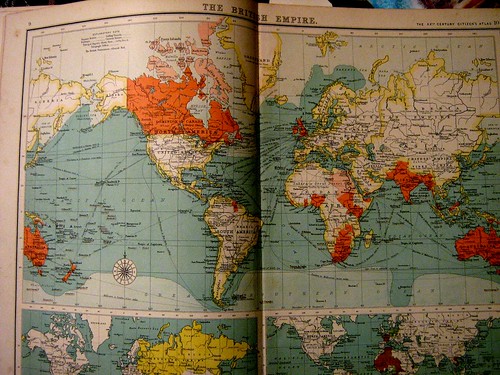
I suppose it’s reflective of the general attitude of educated Britain toward the EU. Deep down they may know its necessary, they may not want to leave it, but they would prefer to just ignore it because to acknowledge that they need it is just too damaging to their national pride. Perhaps it would just be too humiliating for a British history teacher to transition from telling his students about the glories of standing astride the world as the British Empire to telling them the modern reality of being one part of a European coalition. Maybe it’s just a symptom of post-imperial trauma. After all, they say the second stage of any trauma is denial.
But in the mean time, it seems to me the British education system is doing young people a real disservice if they really are ignoring the EU.
 If you’re a Eurobarometre-trolling dork like I am, you may have noticed this fantastic set of polling numbers published this morning looking at why people did and did not vote in last month’s EU elections. A couple of news outlets today are headlining these results with a conclusion about voter apathy, but I actually think that’s probably the least interesting observation you could make about these numbers. “European voters are apathetic” – not exactly mind-blowing news.
 Why did people vote? Interestingly, the numbers show that party identification is playing an increasingly less significant role in voting patterns as Europeans become more and more disillusioned with the political class. Only 43% of respondents said they felt close or very close to a single political party (just 22% in the UK).