Thursday, 22 October 2009

The Pope makes a bid for Anglicans

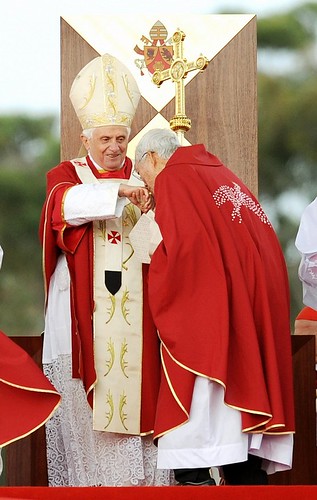
The Anglican Church has been in pandemonium this week, with everyone trying to make sense of the surprise announcement on Tuesday that the Roman Catholic Church is making a bid for their members. According to many religion commentators, the historic invitation from the Vatican is very likely to tear the Anglican Communion (which includes Episcopalians in the US) apart. But considering the opposing sides of the church have been at each other’s throats for a decade now, perhaps this open hand from Rome is just what it needs to facilitate an amicable divorce.

The Vatican announced that it is going to make special arrangements for protestant Anglicans to defect and join the Catholic Church as full members, while still being able to preserve their Anglican traditions and practices including – most significantly – the right for priests to be married.

Many media outlets, including this really interesting article from the BBC, have billed this as a historic and unprecedented decision. Historic it may be, but not exactly unprecedented. Most of the media has failed to note the fact that the arrangement will be similar to that accorded to the Eastern Catholic Churches, the ancient Christian sects of the Middle East which are in full communion with the Catholic church yet retain their own customs, including different baptism rites and the right of priests to marry.

Wednesday, 21 October 2009

US Alarmed by Cameron’s Europe Moves

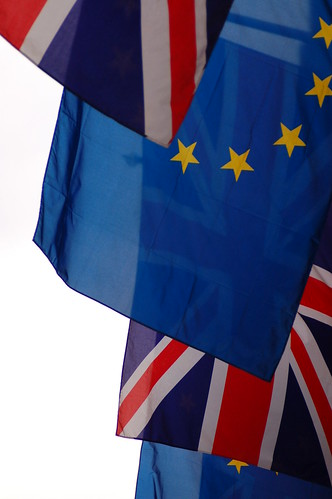
It looks like worries about a future Tory government aren’t limited to Paris and Berlin. Reports are circulating today that US Secretary of State Hillary Clinton expressed concern last week during her visit to Europe over David Cameron’s increasingly combative stance toward the EU, saying the US is worried that the “direction of travel” from what will most likely be the next governing party of the UK could lead to a rupture between Britain and the rest of Europe.

Her concern is not in isolation. The Obama administration has been increasingly questioning the wisdom of Tory leader David Cameron’s recent hostile moves toward Europe, including his decision to take the Tories out of the main centre-right grouping in the European Parliament to form a new alliance with hard-right Eastern European parties and his antagonism toward the Lisbon Treaty. The Times reports today that the US Ambassador to Britain has also been voicing alarm over Cameron’s Europe plans, and that Jewish groups within the Democratic Party are expressing alarm over Cameron’s new ties to anti-Semitic politicians in Poland.

The concerns are further evidence that the Obama administration considers the so-called “special relationship” (a term I’ve never heard used in the US, though it is used almost obsessively in the UK) to be obsolete, and would prefer a united Europe to deal with in foreign policy. This is a sea change from the previous US administration, which notoriously used the idea of the “special relationship” to drive a wedge between the UK and Europe in the run-up to the Iraq war. As The Times notes,

“[Obama] believes that Britain should be at the heart of Europe — a position that has been put in doubt by French and German anger over Mr Cameron’s decision to sever ties with the federalist centre right grouping in the Strasbourg Parliament. Mr Obama is enthusiastic about the idea of a permanent EU president to replace the revolving chairmanship of the EU council, a measure opposed by the Conservatives.”
Wheras the Bush administration was hostile toward the EU and seemed to repeatedly seek to undermine it, the Obama administration has so far been an enthusiastic supporter, as demonstrated by Hillary Clinton’s speech in Brussels earlier this year. In fact I think I could without hyperbole call Obama a European federalist. He wants a strong, united Europe as a partner in combating terrorism, dealing with the financial crisis and providing a counterweight to China.

The administration’s reported comments seem to suggest that Obama has little patience for European leaders who cow-tow to old instincts of nationalism and divisiveness. And he has also demonstrated impatience with some of the more archaic, slow-moving aspects of the EU, and is likely eager for the streamlined reforms the Lisbon Treaty will bring about. Of course this is just speculation, but it’s what his administration’s statements and behaviour seem to suggest.

Indulging in a Moment of Homesickness

Apologies for not having written in awhile, I’ve been away in the US – moving around between different locales so much I didn’t get any chance to write. It was a good visit “home” after having not left Europe for ten months – the longest I’ve ever gone without visiting the US.

I put “home” in quotes because at this point I’m not exactly sure where home is, and the slight disorientation I felt on this trip was a reminder of that. My family is now spread out all across the world, with my dad living in Switzerland and my youngest brother living in Australia, while my mom and my other brother are still in the US. While in Connecticut I stayed in the house in which I grew up, but it’s now empty and tenantless. While in New York I visited Roosevelt Island where I used to live, but I don’t know anyone who lives there any more. My friends kept talking about the new resurgence of witty sit-coms on American TV and I hadn’t even heard of any of them (though I did get to watch them – Glee, Modern Family, Cougar Town – they’re pretty good).

These days New York is feeling like a different city from the one I left. Times Square has been pedestrianised, the west side elevated train tracks have been converted into a park, and there are even bike paths criss-crossing Manhattan now! There were a lot of new things I had to check out. The Times Square refurb was pretty underwhelming, essentially it just looks like they’ve put a bunch of chairs in the middle of the road – not a very pleasant place to sit and eat lunch if you ask me. I was particularly amused by the fact that they’ve painted the pavement in the new pedestrian zone green in order to approximate grass. I appreciate the effort to try to make New York a little more pleasant – one of my biggest complaints about the city is that there’s nowhere to just sit and relax. But they way they’ve done it now just seems to highlight the fact that New York just isn’t a very pretty city. But it is just temporary, and hopefully if they decide to extend the scheme after the end of this year they’ll actually extend the raised sidewalk into the pedestrian area to really separate it from the road.

On the other hand Mayor Bloomberg’s other big effort at urban beautification, the new high line park on the west side rail tracks, was quite pretty. I just hope they really do follow through on extending it, because it’s quite short as it is now (just from 14th to 20th street). But my favourite part is that it provides some great views of the Hudson, which is nice because normally you never see the water in New York (my other big complaint about the city).

Autumn in New England

The second part of the trip was spent in New England, first visiting family in Connecticut and then attending my friend Sharyn’s wedding in Maine. Apparently it now snows in October in New England, it strangely did so twice while I was there. Though it was freezing up in Maine it was also very beautiful, fully demonstrating New England’s reputation for amazing fall foliage.

It was great to see so many old friends from high school and college and get updates on what everyone is up to. Of course every time I visit the US I’m always asked the same question – am I ever going to move back? Over time my answer has softened from a staunch “hell no!” to a more deliberative “I wouldn’t rule it out.” The reality is this: though I don’t see myself leaving Europe any time soon, I have no way of knowing if future circumstances might warrant a move back stateside. Certainly, the election of Barack Obama last November went some way in restoring my faith in my homeland – though the recent ugliness displayed in the healthcare debate has dulled that down to a realistic acceptance that America didn’t change overnight just because Obama was elected.

I usually tell people that I just don’t think I could go back to the US and give up the quality of life I’ve become accustomed to in Europe. I can’t imagine going from getting 30 days of vacation a year to 5 (EU legal minimum is 25 vacation days per year, 5 is how many I was allotted at my last US job). After getting hassle-free guaranteed medical care here, I can’t imagine going back to having to scrounge around for healthcare and then pay huge premiums once I have it. I can’t imagine being back in a culture obsessed with work and advancement, where cultural knowledge and intellectual curiosity is devalued in favour of wilful ignorance and celebrity worship. And I can’t imagine going back to watching a broadcast news media that has reached such epic levels of dysfunction.

The Trade-Off

But despite these downsides to US life, it would definitely be nice to move back to New York – to be back with my friends and family, to have a consistent and stable group of people to surround myself with, and to be able to once again make oblique pop culture references that people would understand! But unfortunately this is what you give up when you move abroad. It’s a trade-off, essentially. The reward is adventure and excitement – the satisfaction of challenging yourself in a new environment where you know no one. The sacrifice is that you give up the stability of life at home. I sometimes feel envious of people who have tight ‘cliques’ – small groups of friends who see each other all the time. Though I have a lot of acquaintances in London I have very few close friends – a reality driven home when I returned here after six months on the continent to find my London friends had pretty much forgotten my existence.

But would I give up everything I’ve experienced over the past three years in order to have that stability? Absolutely not. It may get lonely sometimes, this itinerant life, but the rewards make it worth it. For me at least. But I can also see the value of staying in one place your whole life. It may not be glamorous, but it’s a valuable thing to be able to be surrounded all the time by people who love you and will always be there for you. Living abroad, I have to be content with getting that in small doses when I visit my family and close friends.

But, it’s always a nice feeling when I’m able to do so.

Thursday, 8 October 2009

"We Face an Aggressive Secular Attack"

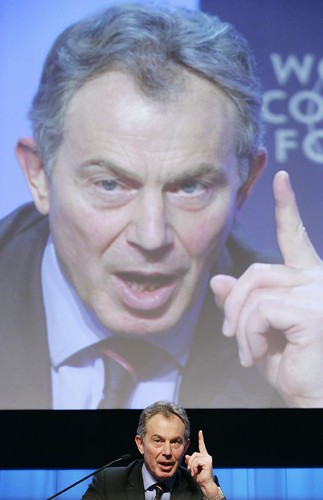
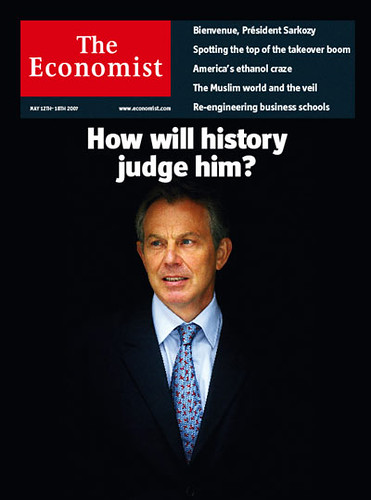
The words above raised some eyebrows when they were bellowed yesterday at a conference at Georgetown University in Washington, but they weren’t from a fiery American evangelical – they were from former UK Prime Minister Tony Blair. The same Tony Blair who is currently the bookies’ favourite to become the first “president of Europe”.

Continuing my look
at the factors in the choice of the first person to take up the President of the European Council position, I thought I'd look at how these comments yesterday might affect the debate. Considering he is currently lobbying to be the symbolic leader of largely secular Europe, the speech seems remarkably ill-timed in its vitriolic attack on atheism (full text of the speach here). According to the Times, Blair said of the world’s religions:
“We face an aggressive secular attack from without. We face the threat of extremism from within.” Arguing that there was “no hope” from atheists who scorn God, he said the best way to confront the secularist agenda was for all faiths to unite against it. “Those who scorn God and those who do violence in God’s name, both represent views of religion. But both offer no hope for faith in the twenty first century.”
Apparently to Blair, Atheists and terrorists are two sides of the same coin. To call the comments incendiary is an understatement, and they may well come up during the difficult deliberations over the next month over who should take up the position of Europe’s first symbolic “president”. And it certainly won’t help Blair with secular Europeans that his speech was delivered in ultra-religious America.

Indeed it is Blair’s ties with America that are proving the biggest stumbling block to his candidacy, particularly his relationship with former President George W. Bush. The European left already reviles him for tearing Europe apart in 2003 by being an unquestioning defender of the Iraq war.

For me personally, there is just no way I could support someone for this position who said those words above. So my hesitation is over, I can unequivocally say that putting Tony Blair in that position would be a bad move for Europe, and it would not be worth the celebrity and energy he would bring to the role.

Contrary to the conclusions already drawn by the British tabloid media, I actually don’t even think it is very likely he will get the position. As the Economist’s Charlemagne column points out today, the fact that Tony Blair's name has been connected with this position for two years now actually works against him, as front-runners rarely secure euro-jobs in the end. And the reasons for various and disparate groups to oppose him are too high in number to see how he could overcome them easily. Small states don’t want to see the position go to anyone from the big three. The left hates him for the Iraq War, his abandonment of socialism to win UK elections and his sudden conversion to aggressive religiosity. The continental right is at best lukewarm toward him and at worst jealous of his celebrity. The British right reviles him. Who exactly is supporting this man?

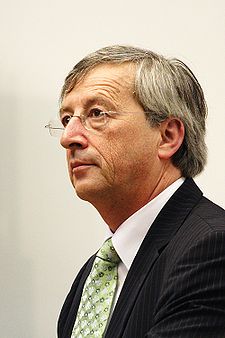
So who am I backing? He may not be famous or charismatic, but my hopes are being placed in Luxembourg’s Jean-Claude Juncker. As leader of the Eurozone finance ministers he is keenly placed to help Europe through the recovery and to put in place new safeguards and regulatory regimes to prevent another crisis. Of course there are significant hurdles for him to overcome as well. Both Labour and the Tories hate him for his unabashed federalism, and Sarkozy reportedly thinks he bungled the start of the financial crisis.

So even though I was on the fence, there’s just no way I can hold my nose and cast my lot for Blair after hearing what he said in Washington yesterday, no matter how much his celebrity would give the EU some much-needed glamour and cache. Juncker may not be a Barack Obama, but given the disillusion many American progressives are now feeling about that presidency across the pond, maybe celebrity presidencies aren’t all they’re cracked up to be.

Tuesday, 6 October 2009

Both the Best and Worst Man for the Job


Now that the Irish have passed the Lisbon Treaty and it’s set to be ratified within months, the British press has transferred its characteristically ferocious obsession to what the treaty will do. And to hear them tell it, the sole purpose of this document is to make Tony Blair the “President of Europe”. Of course that is not true, and in reality no such position is being created. The position being referred to is the President of the European Council, which has always existed but will now go to a person rather than to a country (Sweden currently holds the presidency). The position doesn’t come imbued with much specific power like an American president, it's more of a symbolic coordinator role like the Secretary General of the United Nations.

But though it doesn’t come with executive power, the intention of the position – to designate a high-profile figure who can speak with one voice for all of the EU - is ambitious. Right now, the member state holding the Council presidency is unable to do that because they can essentially only speak for themselves, and they don’t have much time to develop a cohesive presentation of EU objectives given that they only hold the position for six months. So having an actual person in place for a longer term will make a big difference, although he is essentially "working for" the 27 European heads of government that make up the Council, not the other way around. He can only speak when he's been given permission by the entire council, a position he may find frustrating since he is used to the unilateral system of Westminster government.

The de facto “leader” of the EU up till now has been the president of the European Commission, a position currently held by Jose Manuel Barroso. But given that the Commission (made up of independent commissioners) and the Council (made up of the prime ministers of each member state) are often in conflict, Barrosso has never been able to convincingly speak for all of the EU even when he’s sitting in as its representative in bodies such as the G8. The Commission has no control over member states’ foreign or military policy. Of course the President of the European Council won't be able to unilaterally make foreign policy decisions (and nether can the new position of EU High Representative on Foreign Policy). The president is subject to the prime ministers of the member states, but he can work to attain a consensus amongst them and then announce and coordinate that policy (much in the same way Switzerland's executive branch works).

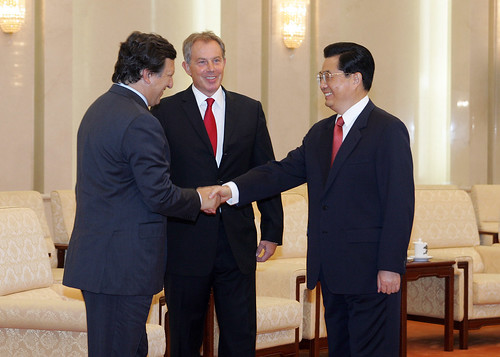
So the new presidency position calls for someone who has talents in two distinct areas: he or she needs to know how to work a room and twist arms in order to reach group consensus, and they need to be a high-profile, charismatic figure who can represent the EU on the world stage. Obviously, Tony Blair meets both of these requirements.

The problem is he also has one giant albatross hanging around his neck: Iraq. The fact that he was prime minister when the UK followed the US in its war with Iraq hasn’t endeared him to the British public or to Europeans in general. The centre-left of Europe is deeply mistrustful of Blair because of his role in the war, and this is a stigma he is never likely to live down. And in the UK, as has been evidenced by the vitriolic reaction by the British press to the likelihood of his presidency, Blair is still widely reviled by both the left and the right. The right hates him because he presided over the humiliating defeat of the Tories and pushed for a marginal social democratic agenda, the left hates him because he acquiesced to American power, and because they feel betrayed by many of New Labour's policies and promises it did not fulfil. He’s also become an openly religious Catholic since leaving office, and that doesn’t exactly endear him to the secular left either in Britain or on the continent.

Given the painful divisions that emerged in Europe in 2003 over the Iraq War, and how those divisions exposed how weak and incoherent Europe still is in the area of foreign policy, picking someone as president who conjures up those memories may at first seem like something Europe would want to avoid. But the reality is there just isn’t any other logical choice – such is the dearth of high-profile, charismatic politicians in Europe. The runners-up? Jan Peter Balkenende of Holland, François Fillon of France, Herman Van Rompuy of Belgium and Jean-Claude Juncker of Luxembourg. Not exactly household names.

Hated at Home

With this reality in mind I had long ago concluded that despite the Iraq problem Blair was probably the best pick. But in the past few days speaking with some of my friends here in the UK, I’m starting to get the full sense of how the wounds of the Iraq war have still not healed here. Even my most liberal friends have reacted with horror to the idea that Blair will assume the presidency, saying that after the British public and media worked so hard to push him to resign it would be an insult to see him appointed to an unelected position where he seems to be lording over them.

A recent survey showed that a majority of the British public (53%) is opposed to Blair becoming president. Perhaps even more surprising is the fact that only 66% of Labour party members want him to get the job. At their party conference this week the Conservatives seem to be content to make a bogeyman out of Blair, with Boris Johnson saying Britain is faced with the prospect of Blair “suddenly pupating into an intergalactic spokesman for Europe”. The media has been almost salivating with hostility toward the idea as well, with the Telegraph newspaper actually referring to a proposed British referendum on the Lisbon Treaty in a headline yesterday as the “Stop Tony Blair Referendum”.

Certainly, these fears are misguided. Logically the Tories should be rooting for the first president of the council to be British – that would give the UK the influence in Brussels to be able to push through the EU reforms they claim they are so intent on achieving. Opposing Blair is certainly a case of the Tories cutting off their nose to spite their face, perhaps succumbing to mob-pleasing populism over sound policy.

But this isn’t just the usual British paranoia about the EU revealing its ugly head. There is a real feeling of ill will toward Tony Blair in this country, and I’m starting to wonder if its really worth it for Brussels to further antagonize the British, who are already so hostile to the EU. It’s a bizarre situation – Blair being president would undoubtedly be a good thing for the UK (the vast majority of respondents to that survey admitted as much), but he remains so controversial in his home country that the appointment would infuriate many in the UK – particularly the liberal left which the EU so badly needs in its corner.

Perhaps this initial discomfort with the choice of Blair will go away after a short while, and the British people eventually will come to remember what it was that inspired and enthused them about Blair in the first place. If that were the case Blair could actually serve as the ambassador for Brussels who could finally make the British like Europe, or at least make them finally accept that they need Europe. It was always a shame that the Iraq War intervened to derail Mr. Blair’s hopes of making Britain a fully active and contributory member of the EU. Perhaps this is the opportunity for him to finally see out that goal. It would be one failed promise that New Labour could belatedly deliver on.

Monday, 5 October 2009

Ireland Rejects British Influence

As news breaks that the UK will soon be shut out of a new G4 group of major economies and could lose its seat on the board of the IMF, the bizarre reaction to the Irish referendum by much of the British press continues to look more and more out of touch with the realities of the modern world.

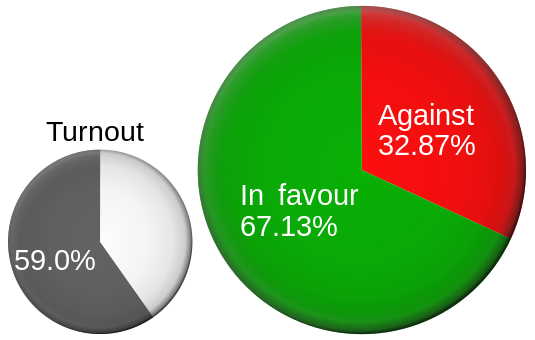
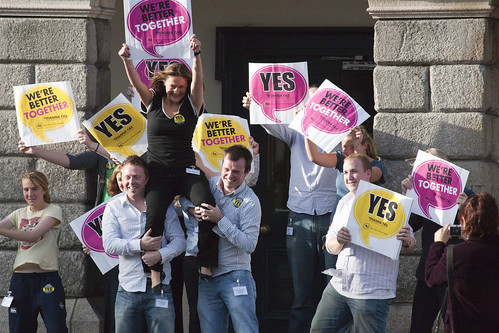
Europe-wide ratification of the Lisbon Treaty is imminent following Ireland’s massive endorsement of the EU reform agreement with a ‘yes’ vote of 67%. It looks as if Czech President Vaclav Klaus has lost his nerve and is ready to end his grandstanding talk of refusing to sign the ratification passed by the Czech parliament – a move which would have been constitutionally questionable anyway. So barring any unforeseen complications, it looks like this long effort to reform the EU to something more appropriate for its current size has been completed.

If the British media is to be believed, after rejecting the treaty in the first referendum in June 2008 Ireland voted yes this time around out of fear. Terrified by their vulnerability in the global economic downturn, the British narrative goes, the Irish have allowed themselves to be bullied into accepting dominance by Brussels, having lost confidence in their own ability to govern themselves. Under this narrative, the Irish made a courageous choice in the 2008 referendum when the treaty was, as the British press frequently puts it, “resoundingly defeated” (never mind the fact that the 2008 ‘no’ vote actually just squeaked by with 53%). Apparently in 2008 a slight majority indicated massive popular will by courageous people against an oppressive super-state, but in 2009 a large majority is the illegitimate result of misguided voters swayed by fear and intimidation. The Irish, it would seem, are only right when they agree with the British.
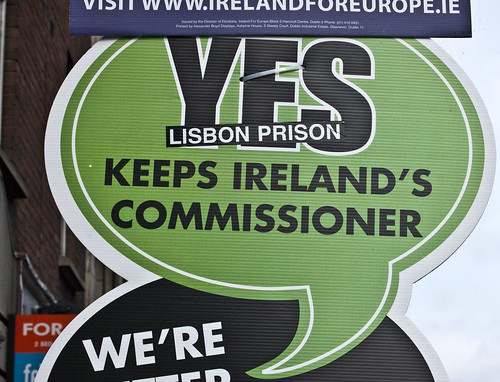
What is never mentioned in the British press is that after the June 2008 result Ireland has been given a basket of concessions and guarantees – the most significant being that the proposal to shrink the size of the European Commission from 27 commissioners to a more manageable size of around 20 has been abandoned. Under existing treaties each country is guaranteed a commissioner in the EC – even though commissioners are not supposed to represent national interests but rather fulfil a specific role of expertise such as trade, environment or energy. The large number of new member states that have joined in the past 10 years has meant there is now an excessive number of commissioners, with new remits for them being invented such as “Commissioner for Information Society and Media” and “Commissioner for Multilingualism”.

However even though it is supposed to be irrelevant which countries these commissioners come from that does not always prove true in practice, and the Lisbon solution to rotate a certain number of Commission seats between the small member states had caused some concern. There was a lot of misinformation spread in the 2008 ‘no’ campaign in Ireland, but this issue was one of the verifiable legitimate concerns that the ‘no’ campaign had – fearing the treaty would lessen the influence of small states in the EU’s executive body. So they won this concession, there will remain 27 commissioners.

While it is true that the actual text of the treaty has not changed (doing so would have required re-ratification by all 27 states and would have held up passage by another five years) the Irish have been given binding guarantees that these changes will be inserted at the time of the next Europe-wide ratification issue, likely the accession of Iceland and Croatia.

The British press also doesn’t mention that this time around there was a much more extensive education campaign on what is actually contained in the treaty – a response to the fact that the exit polling in the 2008 referendum revealed that the most frequently cited reason for voting ‘no’ was a lack of information on what the treaty is. Turnout this time around was also about 10% higher than before.

The British roots of the ‘no’ campaign were also more exposed this time around, making the claim that a ‘no’ vote was a vote for the spirit of dead Irish republicans seem laughable. As the Guardian pointed out in an article last week before the vote, the ‘no’ campaign was full of Brits who flew over to urge a rejection of the treaty, led by Tory lobbyists and Rupert Murdoch’s newspapers. All this prompted fears that a ‘no’ vote would result in what Irish Labour leader Eamon Gilmore called a “two-speed Europe” where there would be “a mainland Europe and the British Isles, where we fall under the influence of Britain." So much for a ‘no’ vote honouring the dead Republicans who fought against the British.

The Tories’ Eurochaos

The ‘yes’ vote was exceedingly bad timing for British Conservative leader David Cameron, as it means the Conservative Party conference this week will be dominated by the ‘Europe issue’, a quagmire that continues to cause rifts between different factions of the party. Cameron had promised to hold a referendum on the treaty in the UK if it remained unpassed by the time they (most likely) come into power next April. However now it looks like the treaty’s changes will be adopted by the EU by the end of the year – and the British parliament already ratified the treaty.
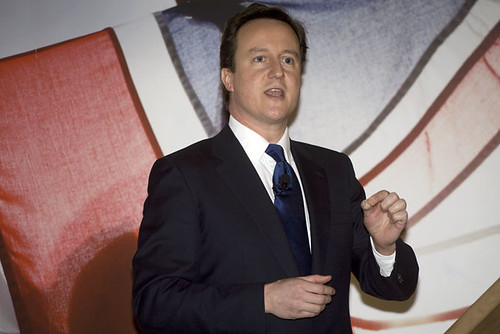
The Eurosceptic wing of the Conservative party is demanding that Cameron hold a referendum on the treaty anyway, asking the public whether Britain should retroactively pull out of a treaty it already signed and which has already gone into effect. The problem is this would not only be illegal under international law, it would also be impossible. If Cameron were to hold such a referendum and the result is ‘no’ (which is the position he has advocated), there is no longer a ‘treaty’ to vote on, the treaty has become the EU. So at that stage, a ‘no’ vote on the Treaty would be a ‘no’ vote on the EU, and the British would have to secede from the union.

This is not an issue Cameron wants to put to a referendum, as the risks of a ‘no’ vote would be too great. Britain pulling out of the EU, as I’ve written about before, would mean it would have to completely renegotiate almost all of its international treaties in trade, labour and markets. It would very likely cause an immediate collapse in the pound, and investors would flee the UK like rats fleeing a sinking ship.

So Cameron has an uncomfortable reality to deal with this week. Trying to throw a bone to the Eurosceptic wing, he has hinted ahead of the conference that the Tories will launch a “public consultation” instead of a referendum, with the aim of moving significant powers away from Brussels and back to Westminster. Party insiders are saying he will announce this week an intention to “repatriate” powers involving social powers, employment and justice to a national level. Of course what he effectively would be asking for are more UK opt-outs, which would be almost impossible to attain retroactively, requiring the approval of all 27 member states. Many of those member states would surely question why the UK deserves special treatment, and would laugh any Tory who demanded such a concession out of the room. Considering Cameron has already enraged the French and German conservative governments by leaving the mainstream centre-right EPP grouping in the European Parliament to form a new alliance with the Eastern European hard right, he has few friends in Brussels or other Western European capitals these days.

UK Shut Out of World Bodies
All of this Tory talk seems particularly incongruous with reality considering that just this weekend it emerged that, following the death of the G8, the US is planning to form a new G4 group of the world’s leading economies that will not include the UK. The new group would be composed of the US, China, Japan and the Eurozone. The Eurozone, remember, does not include the UK because it does not use the Euro currency. Alistair Darling has reportedly been begging for the new group to instead include all of the EU rather than the Eurozone, but US officials have reportedly rebuffed this request saying that the member needs to be able to control a unified monetary policy. The news comes at the same time that Britain is fighting to maintain its seat on the board of the International Monetary Fund.

It was amusing to see the Daily Mail try to spin this as Gordon Brown’s fault, rather than the fault of the isolationist impulse the Daily Mail and papers like it have championed over the past two decades. The fact that it is inevitable that the UK by itself will not be able to justify its seat on these international bodies in the 21st century seems to be lost on them. The paper declines to mention the fact that were the UK on the euro, it would have a seat on this new G4 body and could maintain a board seat in the IMF. Nor does it mention that France and Italy are also in the same boat now that the G8 is being dissolved, yet they will have a major place in the G4 and IMF because they are part of the Eurozone. The comments below the story would be hilarious if they weren’t so jaw-droppingly ignorant, with each commenter deciding that this news is somehow evidence that the UK should leave the EU. Come again?
It will be interesting to see how the ‘Europe issue’ is handled at this week’s Conservative Party conference. Considering Cameron’s populist tendencies, he could probably just get up on the podium and say ‘Europe’ and have the whole hall boo and jeer in order to have a successful day. But Cameron’s crowd-pleasing rhetoric on Europe is on a collision coarse with reality. His recent defection from the EPP is probably but a first instance of this.

Hopefully, Europe can now put this treaty nonsense behind it and focus on more important things, getting on to the real work of guiding the continent through the economic recovery and leading the world in the effort to combat climate change. That is, if the Tories can let a sleeping dog lie.