Thursday, 22 April 2010

Should the EU reimburse ash-stricken airlines?

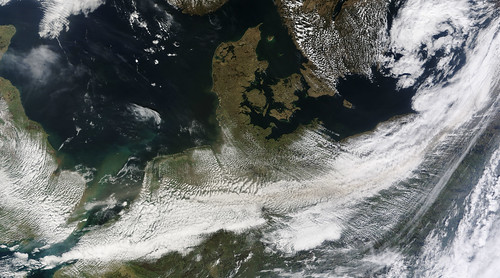
Things are slowly returning to normal here in Europe, with air travel resuming across the continent. Thousands of passengers are still stranded in various destinations, but already the finger-pointing has begun for this enormously costly fiasco. And all of the chaos and recrimination has some asking the question - would a pan-EU aviation authority have averted this mess?

Flights have just gone back to 100% operation this afternoon. But the embarrassing reality is that they are not resuming because the ash has suddenly disappeared, but because a continued air travel ban was no longer economically sustainable. Now everyone is holding their breath to see if one of them falls out of the sky. So far, so good.

It's looking increasingly likely that an investigation will conclude that the flight ban, the biggest disruption in the history of civil aviation, was an unnecessary overreaction. If that is indeed the case, then the fight over who should shoulder the burden for the enormous losses the airlines have suffered is going to become fierce. A heated argument was developing yesterday between Ryanair and the EU over whether the ultra-budget airline would reimburse passengers for the hotel and meal costs they incurred while stranded by the volcanic ash cloud. CEO Michael O'Leary told Irish newspapers yesterday that it would refuse to comply with EU rules requiring airlines to reimburse passengers for these costs in the event of flight delays or cancellations.

Monday, 19 April 2010

Europe versus the volcano

As you're jetting around the world this week, Americans, think of us poor souls in Europe, trapped in our respective cities. We're now in the 5th day of the flight ban caused by the giant ash cloud covering Europe, and many are the stories of the "ash refugees" spread across not just Europe, but the entire world. I have a colleague trapped in Norway, my father's stuck in the US, and I have friends stuck in Southern France, Spain, Ireland, Bangkok, you name it.

The stories of people making long and bizarre treks across Europe via ground transport have been numerous. Saturday night I went to a friend's going-away party in Antwerp, and people there were full with stories about how they had made last-minute arrangements to get to Belgium by train after their flights were canceled.

Friday, 16 April 2010

The big debate

The UK election debate last night focused on domestic policy, so sadly I didn’t get my EU fix from them. Still, it was very interesting to watch the first-ever televised political debate in British history after having watched so many in America.

There was a lot of skepticism in the UK over whether this was really a useful exercise. After all, the party leaders already have a televised debate every week with prime ministers questions, when the full parliament sits and the leaders ask each other questions for 30 minutes. PMQs get very raucous, with hooting and hollering, accusations, jeers, laughter, you name it. Over the years they’ve gotten increasingly theatrical and bombastic, to the point where these days it seems a lot more like political theatre than legitimate debate.

There have been calls for the UK to start doing American-style televised debates during their general elections for decades, but every prime minister from Thatcher to Blair has always refused. It was, according to conventional wisdom, the sitting prime minister who had the most to lose by participating in a debate that would put them on an equal playing field with the opposition. But this year Gordon Brown relented, and of course, there’s no putting the lid back on that jar. Last night was the dawn of a new era in British politics. Never again will a sitting prime minister be able to avoid a televised debate.

Thursday, 15 April 2010

The UK election and the EU – a stark choice

It’s really an incredible thing to witness – British elections apparently don’t slowly emerge and gather pace, but instead arrive with a loud thud. Last week Prime Minister Gordon Brown called an election, and on Monday the Queen ceremoniously dissolved parliament. Almost on cue, my Facebook feed suddenly lit up with status messages from Brits asking who they should vote for.

It’s strange, because it’s been known for months that the election would be at some point in May. it’s literally the last moment at which Gordon Brown could have called an election since the last one was 5 years ago. But I guess it isn’t ok to start thinking about how you will vote until the Queen tells you to!

This will be the first UK election I will have observed since moving there. The process is extremely different from that in the US. Once the parliament is dissolved, MPs have just a few weeks to rush home to their constituencies to campaign. On 6 May the Brits will go to the polls, and whichever party gets the most votes will be able to appoint the prime minister. But one part of this year’s election will be very American. For the first time ever, the leaders from the three main parties will take place in an American-style TV debate. The first one will air tonight.

Monday, 12 April 2010

What next for decapitated Poland?


I literally gasped this weekend when I turned on the TV in my hotel in Amsterdam and saw that a plane carrying the Polish president and 95 top officials in the Polish government had crashed in Russia. Before long the reports had been verified – the Polish government has been virtually decapitated by this mysterious crash.

It’s safe to say the notorious Polish president Lech Kaczynski was not much-loved in Brussels. His fierce Euroscepticism and opposition to climate change efforts had made him public enemy number one here for awhile. But you wouldn’t know that from the way the EU capital is reacting today. EU flags are flying at half mast, virtually every EU leader has issued statements of shock and sadness, and a moment of silence was observed during today’s midday press briefing. Whatever disagreements existed between Kaczynski and Brussels, it seems to have been forgotten in the face of this shocking event.

Thursday, 8 April 2010

The Black Forest

This weekend I was able to see firsthand the effects of a number of European environmental policies I’ve been reporting on while taking a scenic drive through the Black Forest in Southwestern Germany.

I’ve lived in Europe four years now, yet every year I seem to forget that we get a 4-day weekend for Easter here. So every year I end up scrambling to find some impromptu thing to do, which usually ends with me heading down to my dad’s house in Zurich and we go on a road trip somewhere. One year in was Venice, another it was Geneva. This year we decided to drive up through the Black Forest in Germany to Baden-Baden and Freiburg.

The Black Forest, or “Schwarzwald” in German, is popular tourist destination known for its hiking and skiing. It gets its name from the closely-packed pattern of the trees, which makes the forest look very dark when you look into it. Because they get no sunlight in the interior, the trees have no leaves on them for most of the bark, creating this eery world within the forest. It sits on a low-level mountain range over the Rhine valley, so it also commands astounding views. The vast majority of the tourists who go there are German (though when we were there I overheard a lot of French Alsatians), and English was in short supply. I’ve heard from my German friends that they can’t understand any of the local Swabian dialect there, and they even have trouble understanding people in the forest when they speak high German because of their strong accents. Incidentally, the Black Forest is also the birthplace of the cuckoo clock, and of course, black forest cake.