Wednesday, 12 May 2010

An unholy alliance

Well, that was a crazy couple days. But last night it all came to a dramatic and sudden end as Gordon Brown abruptly drove to Buckingham Palace to hand in his resignation to Queen Elisabeth II, making Conservative leader David Cameron prime minister. So now it’s all done and dusted right? Hardly.

The excitement started Monday afternoon when, as the Conservatives and Liberal Democrats were still holding their negotiations, Gordon Brown emerged from 10 Downing Street to announced that Lib Dem leader Nick Clegg had approached the Labour Party to see what they could offer instead. And, most dramatically, Brown announced that he would be resigning as leader of the Labour Party.

That announcement soon sparked breathless speculation throughout the media. Gordon Brown stepping down was considered by many to be a precondition for a Liberal Democrat – Labour coalition. Surely, the media inferred, Brown would not have made that dramatic (and rather humiliating) announcement unless some kind of deal had been worked out. For the rest of the day Monday the assumption was that some kind of Lib-Lab coalition was being formed. The problem of course was that a Lib-Lab union would still not meet the threshold of reaching a majority in the parliament.

Monday, 10 May 2010

Brussels holds breath as leaked Tory memo shows plan of attack

It’s safe to say that EU leaders have bigger things to worry about today than the UK general election. But a leaked memo about the Conservatives’ Europe strategy is likely causing extra heartburn throughout Brussels today. And it’s likely also added an extra dose of complication to the fertive negotiations going on between David Cameron and Nick Clegg.

The talks are proving difficult because the two parties are so far apart on major issues, and it’s going to be difficult for them to come to some kind of an understanding on how they can govern together. One of those major issues is Britain’s relationship with the EU, and hopes of agreement in this area were dramatically undermined last night when a top-secret letter from shadow foreign secretary William Hague to David Cameron was leaked.

The letter, written last week, assumed a Tory victory on Thursday and outlined a plan for a brash and aggressive introduction of the new UK government to EU foreign ministers at a meeting today. According to the document, Hague planned to tell the foreign ministers "the British relationship with the EU has changed with our election". Hague then planned to tell the ministers there would be no further integration of the UK with the rest of Europe. Instead, the UK would be clawing back national powers over criminal justice, social policy and employment policy during the first term of the Tory government. He also planned to tell the foreign ministers bluntly "we will never join the euro".

Angie’s anguish

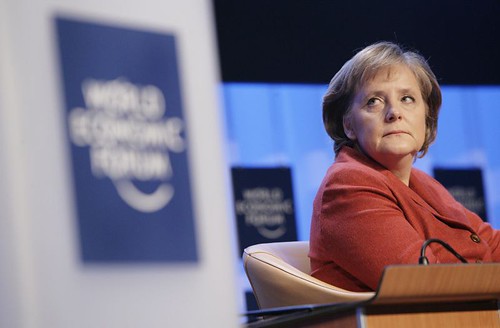
Poor Angela Merkel. You do have to sympathize with the conservative German chancellor, trapped between a rock and a hard place. The dire situation in Greece requires her to commit tons of German money to keep the crisis from spreading throughout the eurozone. But a bail-out of this Meditteranean nation that has behaved so badly is enormously distasteful to the German public.

It’s a bit like the fable of the grasshopper and the ant. Germany has held down wages and been frugal in its spending, while Greece has been profligate and irresponsible, spending far more than they had while at the same time not bothering to collect taxes appropriately. For the average German, it’s enfuriating that the squirell will now have to bail out the racoon.

But perhaps the more appropriate literary counterpart for Angie is Hamlet. Her foot-dragging and indecision during this crisis has been blamed by many for making the crisis get far worse. In the end she had to relent - so the delay accomplished nothing but exacerbated the problem. This weekend EU finance ministers agreed to establish a €962bn emergency crisis fund. It’s designed to stop the financial market turmoil as the situation in Greece deteriorates, reassuring jittery investors that the problem will be solved. Yet many are concerned that this fund is too late, and should have been agreed weeks ago before the situation got out of hand. Back then, it was Merkel who was the lone EU leader standing in the way. She knew the German people would punish her for agreeing to a bail-out.

Saturday, 8 May 2010

The British election explained

Nick Clegg is holding intense talks with David Cameron today, and it looks like these negotiations could go on for days. At the heart of the complications is this fact - even if the two men can work out an agreement and trust between them on how they would join together to form a government, they would still need to get that agreement approved by their parties. And given the big political differences between the Conservatives and the Liberal Democrats, that could be a herculean task.

Many Americans I've talked to have been confused about what exactly is going on here, and I can certainly sympathize. First they were hearing that this was the Liberal Democrats' year, that following the televised debates the "Clegg effect" was going to transform this election and make the UK's third party politically relevant for the first time in decades. But then when the results came in Thursday night, Americans heard that the Liberal Democrats had suffered a stunning defeat, actually losing seats in the parliament. Oh well, so much for that then. But wait, come Friday they learn that the Liberal Democrats are now the most important factor in these post-election days, as they will be selecting who will be prime minister. So how does someone lose so badly and yet end up selecting who the winner will be?

Friday, 7 May 2010

Westminster in chaos

It was a long night, and it was only just a moment ago that the BBC was finally able to declare an official UK election result – or non-result, as the case may be. For the first time in decades, a British election has yielded a hung parliament. No single party has a majority, with the Conservatives falling well short of the 326 seats they needed to form a government. Now the clock is ticking as politicians scramble to come up with some kind of solution.

It’s looking as if a Liberal Democrat – Labour coalition may not be enough for a majority either, which may rule out that option. It was a disastrously disappointing night for the Lib Dems and their supporters. Despite all the speculation after the first televised debate that this could be their year, the Lib Dems actually lost seats in this election. It’s truly stunning.

Of course along with all the polling showing surging support for the Lib Dems after the first debate came notes of caution that the pollsters did not know how the increased support would affect the actual vote. UK elections still use a peculiar first-past-the-post system for their elections which heavily favours the two main parties. This type of electoral system is normal in the presidential system of the US, but it is unusual in a parliamentary system. Most other parliamentary democracies use a ranked voting system where people indicate your first choice and then a second choice. The Lib Dems have made switching to a proportional representation or ranked system a cornerstone of their campaign, and recently Labour agreed to put it to a referendum. The Tories have refused to consider such a change, but it is likely that the Lib Dems would demand this if they were to enter into a coalition with the Conservatives..

Wednesday, 5 May 2010

Populism, David Cameron, and the gulf oil spill

The election campaign is in its last heated days here in London, and it really is inescapable. I’m just here for a few days staying with my partner, and it seems like it’s been all anyone can talk about. Sarah Brown, the prime minister’s wife, even made a bizarre special appearance at a Vauxhall gay club Saturday night. Hey, gotta get those votes wherever you can! But I found it amusing that the next morning she was up early to attend mass at a black church in South London.

I’m on the Eurostar back to Brussels at the moment and feeling pretty bummed to be leaving right before the big day. I have a feeling the real excitement is going to begin Friday when the parties have to somehow hash out how they form a government from a hung parliament.

If I had to sum up the mood of my London friends in one word it would be anxious. They all come from various political stripes, but interestingly most everyone I know is planning to vote Lib Dem. Whatever their political ideology they have one thing in common – David Cameron makes them very nervous. They fear the former PR-turned-politician is all window-dressing with little real policy ideas, and in reality it will be the “nasty Tories” of the 1990’s that will be taking power. Having not lived through this period in Britain I can’t entirely relate, but some of them feel very strongly about this fear. But an opinion piece in the Independent this weekend compared the situation with the campaign of George W. Bush in 2000. He also promised "compassionate conservartism" but in the eyes of many he turned out to be just a populist front man for a Neo Conservative cabal with a very specific agenda. That agenda included going to war with Iraq.