Monday, 17 January 2011

Britain hurt over Obama's warm words to France

A compliment from President Barack Obama used for his French counterpart Nicolas Sarkozy during a state visit in Washington last week has raised more than a few eyebrows in the UK.

Speaking after his meeting with Sarkozy, Obama told assembled journalists that, “We don’t have a stronger friend and stronger ally than Nicolas Sarkozy and the French people.” Almost immediately the British press went ballistic. After all, the UK is supposed to be America's number one ally in the world through their so-called "special relationship" (a term used ad nauseum in Britain, but one I've never once heard in the US). The Daily Mirror wrote, "It shatters the idea that Britain still has a special relationship with the US." The Daily Mail wrote that the words are "evidence that Mr Obama does not cherish the special relationship." An editorial in The Telegraph wrote that the statement, "represents an extraordinary sea change in US foreign policy," adding that "such a remark is not only factually wrong but also insulting to Britain, not least coming just a few years after the French famously knifed Washington in the back over the war in Iraq."

By contrast, in France the statement barely registered with the media. The only thing the French media reported about the comments was that Obama called France an "exceptional partner". Any gloating about France supposedly overtaking its long-time rival as America's best friend was absent from the French press.

Friday, 14 January 2011

Chaos around the Mediterranean

The explosion of violence this week in Tunisia, the smallest and most affluent country of North Africa, is just the latest unrest to affect the shores of the Mediterranean Sea. From East to West and North to South, the region seems to be on the brink of becoming a hot zone for political crisis.

Rolling riots have broken out against Tunisia's authoritarian president, and the government has cracked down on the protests in such a violent way that the country appears to be headed for political collapse. Across the sea, the government of Lebanon collapsed on Wednesday, and the situation threatens to descend into violence as the various factions vie for control.

Not too far away in Greece, the country is still reeling from massive protests against the government's austerity cuts that have been forced by the debt crisis that has plunged the country into political and financial chaos. And at the western end of the sea, Spain continues to face protests over its own austerity cuts in response to its debt crisis, and the country hangs by a thread as it desperately tries to avoid financial collapse.

Wednesday, 12 January 2011

UK throws a spanner into EU integration

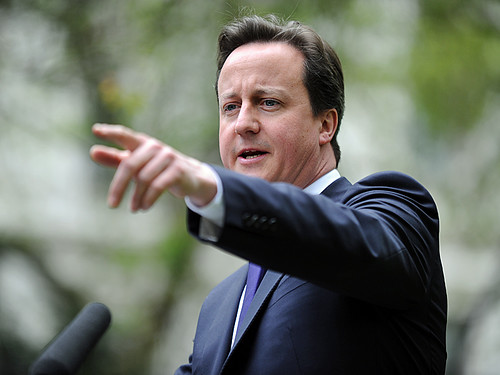
British prime minister David Cameron survived a potential party revolt last night after successfully guiding his "European Union Bill" through a key vote in parliament. The bill, which honours a campaign promise to require every EU Treaty change be put to a public referendum in Britain, has been derided by the Conservative Party's hardcore Eurosceptic wing as being a soft touch.

The hardcore Eurosceptics are furious that the bill would make an exception for "minor" treaty changes, such as the upcoming establishment of a permanent financial rescue mechanism to aid faltering Eurozone states. The Tory leadership has insisted any designation of a treaty change as "minor" would be open to challenge by citizens, but the Eurosceptics counter that the final decision would be made by a judge and therefor the bill is not really "putting power back in the hands of the people" as Cameron claims. The rebel MPs say that what Cameron promised during the campaign was to submit every change, no matter how small, to public vote. They are alleging that the bill has been watered-down to appease the pro-European Liberal Democrats, who the Conservatives are now in coalition with.

But in a showdown vote last night the Eurosceptic rebels were only able to convince 39 coalition MPs to vote against the bill. The opposition Labour Party also voted against it, though they weren't exactly profiles in euro-defending courage in doing it - saying only that it was a 'distraction' from more pressing issues. The bill sailed through this stage of the process and looks set for passage.

Today the British media are heralding a victory for Cameron over the hardcore Eurosceptics who were unable to intimidate the prime minister into enacting a harsher bill. So hooray hoorah, on to the next subject. Brussels must be elated to have been spared this harsh retribution, right?

Monday, 10 January 2011

Mexico on the Aegean

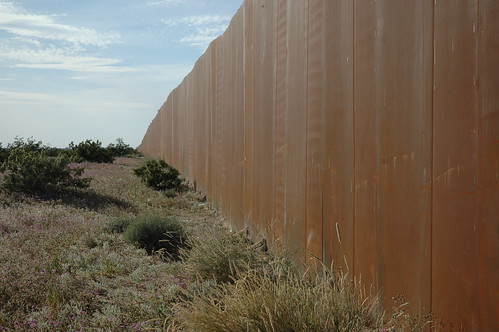
Is there anything more controversial than a wall? From Berlin to Palestine to Mexico, border walls have often proven to be as incendiary as they are ineffective. Recently, Greece signaled to the European Union that it wants to build a wall along its border with Turkey similar to the wall that has been partially built along the US-Mexico border. But the European Commission was quick to shoot down the idea last week, saying walls and barriers are merely short-term measures that cannot solve the EU's immigration problems.

Greece has been struggling to deal with a huge influx of illegal migrants trying to cross its land border with Turkey after the EU cracked down on illegal sea crossings from Africa to Europe via the Mediterranean over the past two years. According to the Greek government, 200 illegal migrants are crossing its land border with Turkey every day. These migrants aren't Turkish, instead they have crossed through Turkey from countries further afield in Central Asia and Africa. And since Greece is in the passport-free Schengen Zone, once the migrants get in they can travel to almost all other EU countries (with the notable exception of the UK and Ireland who have opted out of Schengen) without having to show identification.

America unhinged

Perhaps the only thing more depressing than this weekend's assassination shooting of US Congresswoman Gabrielle Giffords was the fact that it was so utterly unsurprising. The shooting, which for the moment remains an attempted assassination as its intended target fights for her life in hospital, so far has a death toll of six out of 20 people shot. For many observers in the US, the shooting is the culmination of two years of incendiary rhetoric from the right, an episode of far-right violence that people have been warning was coming soon. When you have mainstream American politicians telling people that the government is trying to establish "death panels" in its healthcare legislation and that there has been a "Socialist takeover" of the government that can only be brought to an end using "second amendment remedies", it was only a matter of time before some unhinged person on the far right acted out in violence.

The motives of the shooter, Jared Lee Loughner, are not yet clear. In fact authorities are looking into the possibility of a second shooter. It is not yet known whether Loughner had any specific ties to the Tea Party movement, whether he was an admirer of Sarah Palin, or whether he was a fan of incendiary Fox News hosts such as Glenn Beck and Bill O'Reilly. But from his online postings and notes, it already seems clear that Loughner subscribed to far right ideology. His online postings and YouTube videos rant against government tyranny, using language that is eerily reminiscent of the language the mainstream right has been increasingly using. In one of his postings, Loughner refers disparagingly to 'currency that's not backed by gold or silver' - an idea that is the subject of regular rants on Mr. Beck's show (right before his commercials for gold investment). This idea that a non-gold-backed currency is unconstitutional was also a main focus of the anti-government 'patriot movement' of the 1990's that was responsible for violence in the middle part of that decade. Loughner also went on long rants about immigration, particularly Hispanic immigrants in Arizona.

Wednesday, 5 January 2011

Belgium's 'invisible' EU presidency comes to an end

As the clock struck midnight last Friday, it wasn't just 2010 that was coming to an end. Here in Brussels, the new year also meant the end of Belgium's six-month period at the helm of the EU, as the country handed over the baton to Hungary. It was an interesting period for the rotating presidency, held for the entire six months by a country with no government. Yet despite the domestic political chaos, the presidency actually seemed to run fairly smoothly - or at least there weren't any noticable disasters. In fact if you weren't looking for it, you might have missed the Belgian presidency alltogether. It was a low-key, almost invisible affair.

Perhaps this was exactly the type of presidency that the EU needed at this time. After all, the Lisbon Treaty's creation of the new posts of President of the European Council and High Representative for Foreign Affairs was meant to downgrade the role of the rotating presidency to that of just a coordinator. Spain was the first country to take over the presidency after the treaty's adoption 13 months ago, and for those first six months of 2010 there seemed to be some confusion about the rotating presidency's new role. The Spanish foreign minister got in hot water a few times for appearing to speak for EU states when that role is meant to now be held by the new EU foreign affairs chief Catherine Ashton. And Spanish Prime Minister Jose Luis Zapatero, effectively the last Socialist leader left in power in Europe, seemed to be pushing for high-profile agenda items in a way that overlapped with the role of the new European Council president Herman Van Rompuy.

Contrast this with Yves Leterme, who is temporarily holding the Belgium prime minister position as a caretaker while the country continues to struggle forming a government. Leterme was pretty much invisable during the entirety of the Belgian presidency. At the European Councils he was happy to hand the reigns over to Van Rompuy, who as luck would have it is not only a fellow Belgian but also a member of Leterme's own political party. And I'm not even aware of the name of the Belgian caretaker foreign minister, I never heard from him or her at all last year. Given that the caretaker government is not authorised to propose new policy, perhaps this is unsurprising.