Today is Ash Wednesday, a day when Roman Catholic areas can witness in equal number people with ashes on their forehead and those with bags under their eyes. It is the first day of lent – the 40-day fasting period leading up to Easter. But it is also the day after Mardi Gras and the carnival week, a period of revelry which can lead to some serious hangovers at the finish.
This year I went to the carnival celebrations in Cologne, Germany – the largest street festival in Europe (pictured above). I think I’m going for a record at this point – I’ve now been to carnivals in six cities on three continents (I’m not sure if that’s a brag or an embarrassing confession). The carnivals that I’ve seen in Rio de Janeiro, Salvador, New Orleans, Venice, Binche, Maastricht and Cologne have all been remarkably different – reflecting the diversity of the global Catholic community.
An American asked me yesterday if Europeans celebrate the “American holiday of Mardi Gras.” In fact it’s Americans who are celebrating the European tradition of carnival, with Mardi Gras just being a local New Orleans variant. Carnivals have been celebrated in Europe in the days before Lent begins for 1,000 years. The term comes from the Latin carne vale, which means “goodbye to meat”. Traditionally during Lent Catholics were supposed to refrain from drinking or eating rich foods such as meat, dairy, fats and sugar. They were also not to engage in any partying or celebrations, to mark the 40 days that Jesus spent in the wilderness. So in the days before Lent, all rich food and drink had to be disposed of.
Wednesday, 22 February 2012
Friday, 10 February 2012
UK court ends prayer in town councils - but on technicality
A UK court issued an interesting ruling today – finding that it is not lawful for town councils to say prayers before meetings. What makes it an interesting case is that the UK, unlike the US, does not have a legal separation between church and state.
In fact England has an official state religion – the Church of England. So having local government say Anglican prayers before a government meeting might not seem so unusual. But an atheist counsellor in a town called Bideford in Southwest England decided to challenge his council’s practice of saying a prayer before meetings. The legal challenge, brought by the National Secular Society, said that prayers have no place in "a secular environment concerned with civic business".
Because the UK has no formal constitution, and no domestic legal guarantee of religious freedom, the NSS cited the European Convention on Human Rights - which protects an individual's right to “freedom of conscience” and protects against discrimination. The ECHR (transposed into British law through the 1998 Human Rights Act) is often cited in British cases involving human rights because there is no British constitution to appeal to. This lack of a legal code for human rights often means that Britain is more subject to the non-binding verdicts of the European Court of Human Rights (which guarantees the convention) than other countries.
In fact England has an official state religion – the Church of England. So having local government say Anglican prayers before a government meeting might not seem so unusual. But an atheist counsellor in a town called Bideford in Southwest England decided to challenge his council’s practice of saying a prayer before meetings. The legal challenge, brought by the National Secular Society, said that prayers have no place in "a secular environment concerned with civic business".
Because the UK has no formal constitution, and no domestic legal guarantee of religious freedom, the NSS cited the European Convention on Human Rights - which protects an individual's right to “freedom of conscience” and protects against discrimination. The ECHR (transposed into British law through the 1998 Human Rights Act) is often cited in British cases involving human rights because there is no British constitution to appeal to. This lack of a legal code for human rights often means that Britain is more subject to the non-binding verdicts of the European Court of Human Rights (which guarantees the convention) than other countries.
Friday, 3 February 2012
UK gets ready for ‘American’ mayors
In three months, on 3 May, citizens of some of England’s largest cities will hold a referendum on whether or not they want their cities to be run by mayors. Though it may not seem like a revolution-in-the-making, it would represent a big change. American-style ‘mayors’ are an new concept in the UK.
London was the first British city to adopt the concept, creating an elected mayor position for the first time in 2000, a position now held by Boris Johnson. Before a devolution referendum was approved by Londoners in 1998 the city was ruled by 32 local boroughs with drastically less power than the current mayor enjoys. The referendum essentially created ‘London’ as an entity that had never existed before – a ‘Greater London Authority’ with its own government controlling the entire London area.
The ‘City of London’, the historic city where the financial centre now is, has had, and still has, a ceremonial ‘Lord Mayor” – a position which has existed since 1189. But actual elected mayors with powers have been unknown, largely because the UK is such a unitary state. It's one of the reasons some posit the British are so hostile to federalism at the European level. Given they have one of the lowest levels of local government in the western world, the concept of federal entitites sharing power rather than having it "dictated" to them from Brussels might be hard for them to understand.
As opposed to a federal state like the US, most decisions in the UK are taken centrally by the British Parliament – even painfully local things like new building authorisations or roads. But atr the turn of the century the government of Tony Blair made a huge decision - devolving powers to four regions through a process called devolution. Scotland and Wales were ‘devolved’ and given their own parliaments to make local decisions in 1999 (Northern Ireland has had a devolved government off and on since 1921, but a new one was established in 1999). London – which could be considered a ‘region’ in its own respect considering it has a larger population than Scotland and Wales put together – was also given devolved powers at the same time.
London was the first British city to adopt the concept, creating an elected mayor position for the first time in 2000, a position now held by Boris Johnson. Before a devolution referendum was approved by Londoners in 1998 the city was ruled by 32 local boroughs with drastically less power than the current mayor enjoys. The referendum essentially created ‘London’ as an entity that had never existed before – a ‘Greater London Authority’ with its own government controlling the entire London area.
The ‘City of London’, the historic city where the financial centre now is, has had, and still has, a ceremonial ‘Lord Mayor” – a position which has existed since 1189. But actual elected mayors with powers have been unknown, largely because the UK is such a unitary state. It's one of the reasons some posit the British are so hostile to federalism at the European level. Given they have one of the lowest levels of local government in the western world, the concept of federal entitites sharing power rather than having it "dictated" to them from Brussels might be hard for them to understand.
As opposed to a federal state like the US, most decisions in the UK are taken centrally by the British Parliament – even painfully local things like new building authorisations or roads. But atr the turn of the century the government of Tony Blair made a huge decision - devolving powers to four regions through a process called devolution. Scotland and Wales were ‘devolved’ and given their own parliaments to make local decisions in 1999 (Northern Ireland has had a devolved government off and on since 1921, but a new one was established in 1999). London – which could be considered a ‘region’ in its own respect considering it has a larger population than Scotland and Wales put together – was also given devolved powers at the same time.
Monday, 30 January 2012
What’s wrong with a transfer union?
The eurocrisis has introduced a plethora of strange words into our everyday vocabulary: ‘Contagion’, ‘technocrats’, ‘moral hazard’, ‘austerity’ and of course the derisive description, ‘transfer union’. This last term is used by those in Northern Europe who warn that bailing out the economies of Southern Europe will lead to a European Union where money steadily flows from rich states to poor states and the North loses out. Many argue that, in fact, this is what the EU has always been.
Such feelings are at the core of the German public’s resistance to the Greek bail-outs – emotions that have turned what is normally one of Europe’s most pro-EU countries into a relatively more eurosceptic place these days. “Why should we work hard just to see our money flow to lazy people in the south?” some Germans are asking.
Their resentment is fueled by charts like the interactive diagram below, found in the Guardian newspaper’s new ‘Europa’ section (a truly fantastic project with five other papers that I’m very excited about). It shows which countries are net ‘payers’ into the EU, and which are net ‘receivers’. The statistics are familiar and often brought up when people talk about the European Union – the biggest recipients of EU funds are in Southern and Eastern Europe while the biggest contributors are in Northern Europe.
Such feelings are at the core of the German public’s resistance to the Greek bail-outs – emotions that have turned what is normally one of Europe’s most pro-EU countries into a relatively more eurosceptic place these days. “Why should we work hard just to see our money flow to lazy people in the south?” some Germans are asking.
Their resentment is fueled by charts like the interactive diagram below, found in the Guardian newspaper’s new ‘Europa’ section (a truly fantastic project with five other papers that I’m very excited about). It shows which countries are net ‘payers’ into the EU, and which are net ‘receivers’. The statistics are familiar and often brought up when people talk about the European Union – the biggest recipients of EU funds are in Southern and Eastern Europe while the biggest contributors are in Northern Europe.
Thursday, 26 January 2012
Europe’s SOPA?
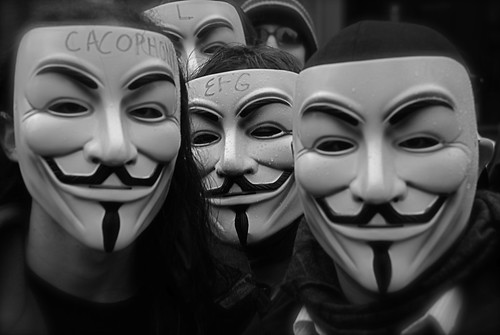
The European Parliament’s website has been shut down by hackers today, allegedly in a denial-of-service attack from Anonymous in protest of imminent anti-piracy legislation restricting internet freedom. But as the IT folks in parliament scramble to fix the problem, the functionaries are sitting around scratching their heads in confusion. Did we pass internet piracy legislation?
Their confusion is warranted. By all accounts the EU has been on the internet-freedom-lovers side during this debate. During the fallout from the Wikipedia ‘blackout’ last week, US politicians weren’t the only ones beating a path to the door to distance themselves from the now toxic SOPA legislation on internet piracy. On Friday the EU’s Digital Agenda Commissioner Neelie Kroes tweeted that she was “glad the tide is turning on #SOPA,” adding “speeding is illegal too: but you don't put speed bumps on the motorway”.
Home Affairs Commissioner Cecilia Malmström also tweeted against the US legislation, noting that ‘sopa’ in Swedish means garbage. Notably, no public statements about the US anti-piracy bills had been made before the Wikipedia blackout. It’s quite unusual for the EU to make comments about US legislation. But such was the effect of the blackout – which was, after all, global (Eurocrats felt quite helpless without Wikipedia last week!), that even politicians not involved in US lawmaking felt the need to make a statement about it.
Their confusion is warranted. By all accounts the EU has been on the internet-freedom-lovers side during this debate. During the fallout from the Wikipedia ‘blackout’ last week, US politicians weren’t the only ones beating a path to the door to distance themselves from the now toxic SOPA legislation on internet piracy. On Friday the EU’s Digital Agenda Commissioner Neelie Kroes tweeted that she was “glad the tide is turning on #SOPA,” adding “speeding is illegal too: but you don't put speed bumps on the motorway”.
Home Affairs Commissioner Cecilia Malmström also tweeted against the US legislation, noting that ‘sopa’ in Swedish means garbage. Notably, no public statements about the US anti-piracy bills had been made before the Wikipedia blackout. It’s quite unusual for the EU to make comments about US legislation. But such was the effect of the blackout – which was, after all, global (Eurocrats felt quite helpless without Wikipedia last week!), that even politicians not involved in US lawmaking felt the need to make a statement about it.
Monday, 23 January 2012
Croatians vote to join EU
Amidst all the bad news, the EU can feel at least a bit reassured following the strong endorsement given by Croatians this weekend to their country joining the European Union. Though you'd be forgiven for getting the impression from the English-speaking media that the EU is now a toxic project that few want to be associated with, 67% of Croatians voted on Sunday to join the union.
An accession agreement was already signed by the country's government in December, and they are set to become the 28th member state at the end of this year. But the accession required a public referendum to go through. There were some rumblings of concern last year that the eurozone crisis could deliver a surprise no from the Croatian people. Brussels received a pleasant surprise last night when news came that the referendum had not only passed, it had passed by a large majority.
The vote comes a year after Estonia's decision to join the euro currency. Both decisions show that even in the midst of the eurozone crisis, the European project continues to move forward - not backward. Of course, both of these things were planned and in motion before the eurozone crisis hit. The real test may come next year when the people of Iceland vote on whether to move from their status as a pseudo-member-state in the EEA to a full member state of the EU. Opinion polls are already showing that referendum could have a hard time passing, particularly as the Icelandic economy recovers from their crisis as the eurozone slips further into its much larger crisis.
An accession agreement was already signed by the country's government in December, and they are set to become the 28th member state at the end of this year. But the accession required a public referendum to go through. There were some rumblings of concern last year that the eurozone crisis could deliver a surprise no from the Croatian people. Brussels received a pleasant surprise last night when news came that the referendum had not only passed, it had passed by a large majority.
The vote comes a year after Estonia's decision to join the euro currency. Both decisions show that even in the midst of the eurozone crisis, the European project continues to move forward - not backward. Of course, both of these things were planned and in motion before the eurozone crisis hit. The real test may come next year when the people of Iceland vote on whether to move from their status as a pseudo-member-state in the EEA to a full member state of the EU. Opinion polls are already showing that referendum could have a hard time passing, particularly as the Icelandic economy recovers from their crisis as the eurozone slips further into its much larger crisis.
Subscribe to:
Comments (Atom)