Wednesday, 6 July 2011

EU sets goal to abolish roaming charges by 2015

European consumers will soon have the option to choose a separate mobile carrier for when they are in other EU countries, under a proposal put forward by the European Commission today. The goal is to stimulate competition in the market to make the phone companies stop charging the exorbitant rates for voice and data with which they sometimes make up to 99% profit.

The move is just the latest in a long-running battle between the mobile operators and the EU, but this is the most aggressive move yet. It is also an acknowledgement that the caps the EU set in 2007 and then extended in 2009 have not been successful in fixing the dysfunct in the market. Those caps lowered roaming rates to 45 eurocents (c) per minute within the EU. Previously the rate had been, on average, around 2 euros per minute.

Under the new plan, from July 2014 operators will be forced to open their networks to upstart competitors who can offer customers cut rate charges for roaming. They will also have to allow their customers to sign up to a seperate carrier for roaming if they so choose. The customer's phone would automatically switch to the other carrier when they go abroad, but they would keep the same number and sim card. They would then receive a separate bill from their 'roaming carrier'. Before it becomes law, the proposal must first be approved by the European Parliament and member states.
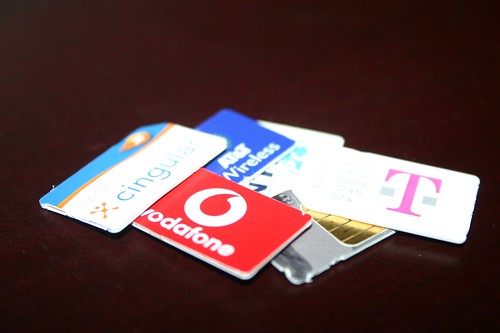
The new plan is intended as a long-term fix that will permanently alter the market. The commission hopes it will lead to a situation by the end of 2015 where the caps are no longer necessary. because healthy competition has made the large carriers offer their customers roaming rates that are the same as domestic rates. Opening the networks will also provide incentives for large mobile companies to operate across the EU. The long-term objective is to get to a situation where there is no longer 'roaming' within the EU, in the same way that there is no roaming charge when you go to a different state in the US (though when mobile phones first came out, there were such roaming charges within the US. Competition within the market eventually made those go away).

Tuesday, 5 July 2011

Tory Euro-MPs defy Cameron on climate change

British Conservatives in the European Parliament rebelled against the climate change policy of their party leader today and cast the deciding votes against a resolution calling for the EU to increase its commitment to reduce greenhouse gas emissions by 2020.

By a margin of ten votes, the parliament voted today to remove the call for the EU to up its commitment in UN negotiations from 20% to 30% from a resolution, prompting the resolution's collapse. Conservative British Prime Minister David Cameron could have swung the vote the other way if he had been able to convince even just a few of his 26 euro-MPs to support the call for 30%. But he was unable to do so, despite considerable effort. Cameron has made action on climate policy a cornerstone of his political platform and he took the lead among EU leaders in calling for the increased commitment.

Last week Cameron sent his energy minister to Brussels to tell the euro-MPs to vote for the measure, but they refused. It's an uncomfortable setback for the British leader and an indication of just how little control he has over his rebellious motley crew in Brussels. They are, as one London-based Tory told me, "completely beyond London's control". The political wild west in which Tory euro-MPs operate has caused problems for Cameron in the past, particularly when their actions seem to clash with the progressive social agenda Cameron has adopted in order to bring the party back into the British mainstream. He has been criticised in the past for allowing Tory euro-MPs to vote against pro gay rights resolutions in the European Parliament.

But the British Conservatives weren't the only ones bucking their party leadership on this issue. The centre-right leaders of Germany and France have also called for the EU to raise its commitment to 30%. But Merkel and Sarkozy's party members in Brussels also defied their party leaders' positions and voted with the centre-right grouping in the parliament to block the resolution. The seeming incongruity will be an awkward reality for those leaders as well. But neither of them have made the environment such a core issue of their political appeal like David Cameron has. And he is being heavily criticised by the left-leaning British press today as a result.

Monday, 4 July 2011

France rocked by new twist in DSK case

Revelations last week challenging the credibility of the New York chambermaid who says she was raped by former IMF chief Dominique Strauss-Kahn have triggered a whirlwind of speculation, recrimination, and of course good old-fashioned America-bashing in France.

Even before the revelations on Friday and DSK's subsequent release from house arrest, there was already widespread doubt in France that he was guilty. Polling indicated that 57% of French people thought DSK, who was until his arrest the leading contender to challenge Nicolas Sarkozy in next year's presidential election, was set up. The French media was scandalised by the US media's coverage of the case, which they said seemed to be presuming DSK's guilt. They were particularly outraged by the so-called 'perp walk' of a handcuffed DSK in front of the news cameras, something that is illegal to show in France if someone has not been convicted of a crime.

The case against DSK now looks almost certain to be dropped after it emerged that the woman has allegedly worked as a prostitute in the past. It also came to light that she had changed her story to investigators. Rather than reporting the incident to the hotel right away, she actually cleaned another room after the alleged attack and then went back to Strauss-Kahn's room to finish cleaning it.

Wednesday, 29 June 2011

Dutch to ban halal and kosher animal slaughter

The Dutch parliament has voted overwhelmingly to ban ritual slaughter of livestock that does not stun the animal beforehand. This would ban the production of halal and kosher meat in the country, which is the only kind of meat that can be consumed by strictly religious Muslims and Jews, respectively.

The fight has made for some strange bedfellows. The campaign against the bill has seen an unprecedented unification of the country's Muslim and Jewish populations, who both say the bill puts animal rights ahead of human rights. On the other side stands an unusual pairing of animal rights activists and the country's anti-Islamic far right.

The controversy over the bill, which came despite its widespread support in the parliament, persuaded the Dutch government to promise that no ban would go forward without the approval of the Senate (an approval not legally necessary in this case). They also inserted a provision which would allow religious groups to apply for a permit to kill animals without stunning them first. But this would only be granted if they can prove that the animals do not suffer more than in ordinary killing. But legal experts say this would be nearly impossible for the halal and kosher butchers to prove, and the burden of proof is on them. Agricultural bodies such as the British Farm Animal Welfare Council have concluded that halal and kosher killing causes severe suffering to animals.

Monday, 27 June 2011

US getting worried and impatient over euro crisis

The Greek parliament is voting this week on the drastic austerity measures that have been ordered by the EU as a condition for the country receiving the rest of its bailout money. As Washington watches the situation unfold with unease, US officials are voicing an increasing amount of frustration that European leaders do not seem to have the situation under control. And the officials know that if the euro collapses, it could easily take the US economy down with it.

As Quatremer noted today, the euro has become such a powerful currency (now the second reserve currency of the world) that if it runs into trouble it would have a devastating impact not just in continental Europe but throughout the world.

Back in the 1970's when the US took the decision to take the dollar off the gold standard, the situation was watched intensely by the rest of the world. As the US treasury secretary noted at the time, "the dollar is our currency but your problem." Now, with the euro being used by a common market larger than America's, the opposite could be said to America. And the increasing grumblings suggest that American officials don't like being at the whim of decisions being taken across the Atlantic.

Friday, 24 June 2011

Commission laments 'rising xenophobia' as Schengen unravels

The June summit of EU leaders has wrapped up here in Brussels – the blockades are being removed from the streets and the whirl of helicopters overheard is slowly starting to dissipate. As expected, the council voted to establish a "safeguard mechanism" in the Schengen passport-free travel zone that would allow member states to reintroduce internal EU border controls in exceptional circumstances.

The final text adopted today says the border checks should only be reintroduced "as a very last resort" in a "truly critical situation where a member state is no longer able to comply with its obligations under the Schengen rules as concerns the prevention of illegal immigration of third country nationals."

Such a mechanism was demanded by Italy and France earlier this year when the two got into a row over illegal immigration happening as a result of the Arab spring. France accused Italy of deliberately sending Tunisian migrants to France and issuing them bogus identity cards because they wanted to get them out of Italy as soon as possible. France said it should be allowed to set up border controls with neighboring countries who are failing in their duties to protect the EU external border. But existing rules forbid member states from imposing border controls at internal EU borders. Italian PM Silvio Berlusconi wholeheartedly agreed, as if to say "Yes, we're completely incompetent. Please allow France to set up protections against us."